
Translated material
The birth of a dictatorship
Because of the coronavirus, the prime minister of Hungary Viktor Orban Dali was almost unlimited power. In Europe, they are outraged
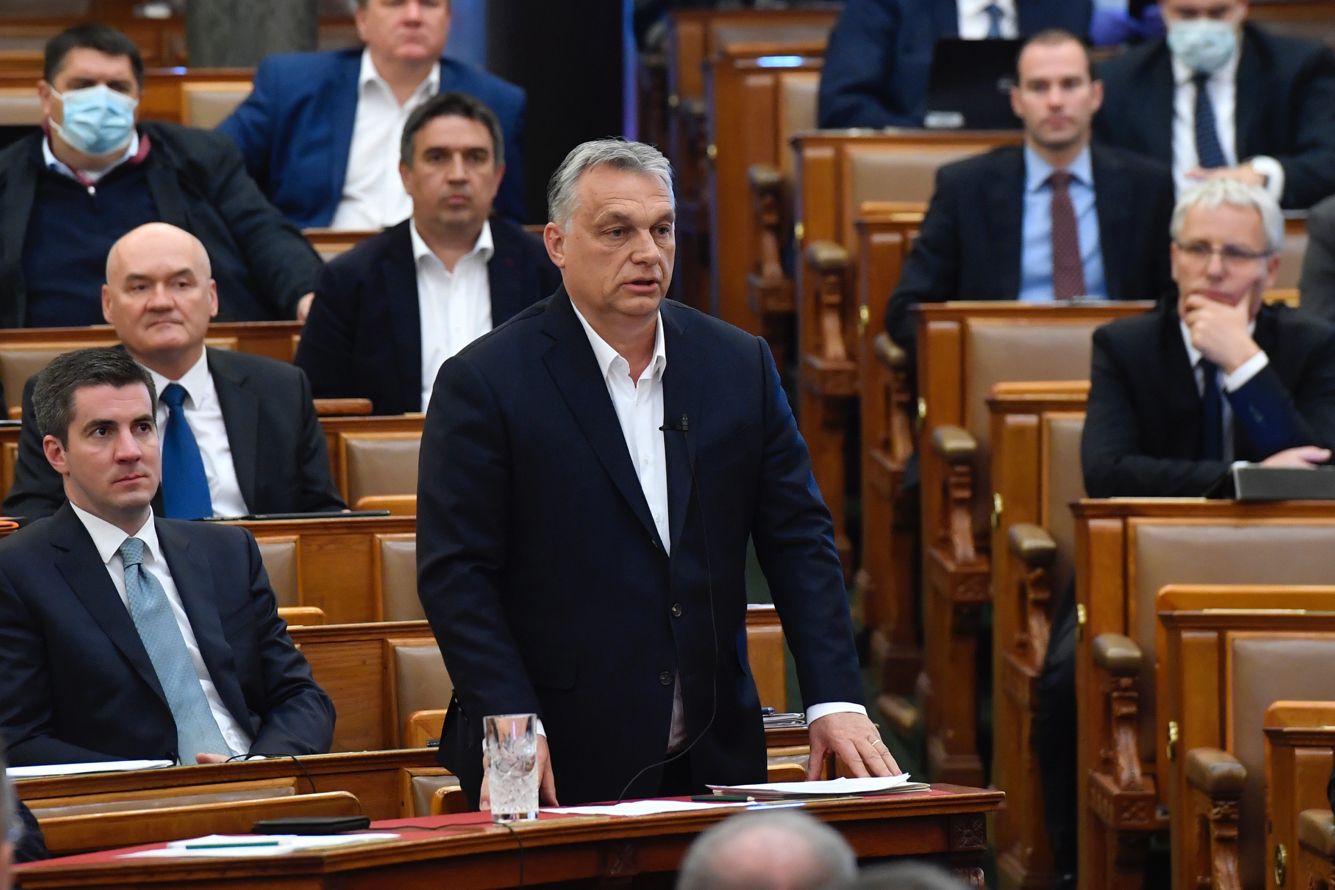
The National Assembly of Hungary approved the law on the fight against coronavirus (in the country, according to April 1, 525 infected and 20 deceased), which gives the prime minister of the country Viktor Orban and his office wide additional powers. Two -thirds of the parliament deputies voted for the document, most places in the Fidesa party led by Orban. Next, the law was signed by the President of Hungary, Janos Aer.
The law for an indefinite time extends the state of emergency, introduced in Hungary on March 11. During the state of emergency, the country is canceled elections and referendums, and Orban can “suspend the effect of certain laws, deviate from legislative provisions and adopt other emergency measures” to protect citizens. The law also introduces a punishment of up to five years in prison for the dissemination of false information about coronavirus and up to eight years in prison for non -compliance with quarantine.
The Hungarian opposition parties and human rights organizations said that the law has retired parliament from power and can be used against journalists of independent media, which the authorities have already accused of fakes. Critics of the law are also afraid that Orban will not want to weaken its own power after the end of the epidemic (the emergency regime, introduced during the migration crisis in Europe, is still preserved ). The parliamentary opposition wanted to limit the emergency mode 90 days with the possibility of extension, but this amendment failed.
Opponents of Orban believe that he took advantage of the epidemic, as he fears the fall of his own popularity. So, the opposition won the election of the mayor of the capital of the country of Budapest in the autumn of 2019.
The Hungarian government claims that all attacks are unfounded. The president, who is called the prime minister, said that the additional powers of Orban concern only measures to combat coronavirus and eliminate the consequences of the epidemic, and after it ends, it will be recalled (two -thirds of the vote of parliament and the signature of the president will be needed again, Politico notes ). According to Ader, the new law does not contradict the Hungarian Constitution and the country's international obligations.
Nevertheless, the expansion of Orban's powers caused concern not only within Hungary, but also in the European Union. The chairman of the European Parliament David Sassoli said that "no one was allowed to use the pandemic to trample our freedoms." The head of the European Commission Ursula von der Lyain reminded the EU member countries that emergency measures to combat coronavirus should be adequate threat and temporary. True, the word “Hungary” was not mentioned in the statement of von der Layen, and drew the attention of The New York Times.
Other Western politicians spoke tougher. Luxembourg Foreign Minister Jean Asselborne announced the emergence of a “dictatorial regime” in Hungary and called for excluding the country from EU governing bodies. The former Italian Prime Minister Matteo Renzi and former US National Security Advisor Suzan Rice called on to exclude Hungary from the European Union. This is unlikely - at least because the exclusion procedure is not provided for in the constituent documents of the European Union, Foreign Policy notes .
Viktor Orban, who headed the Hungarian government in 1998-2002 and returned to power in 2010, has a reputation as one of the most consistent critics of Western European liberal democracy. Orban himself is accused of infringing on the rights of migrants and LGBT , an advance to academic freedom , strengthening control over the media and courts . In 2018, the European Parliament launched a penalty procedure against Hungary due to the alleged violation of the EU values. If the violation is proved, the country is threatened with sanctions up to the suspension of the right to vote in the EU Council .
Olga Korelina