
Translated material
Everything is calculated: the amendments to the Constitution of the Russian Federation "popularly approved" - 77.92% of Russians voted "for"
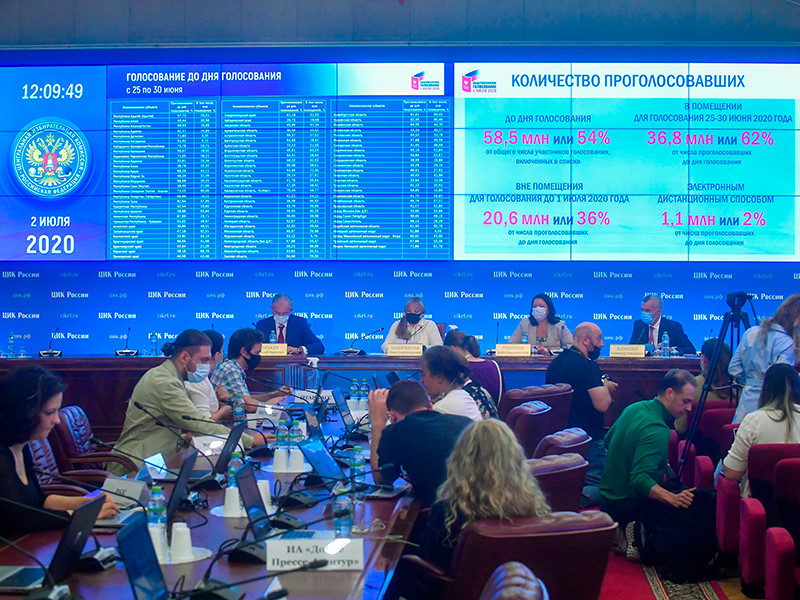
By 10 hours Moscow time, July 2, the CEC of Russia processed 100% of the voting protocols to amend the Constitution of the Russian Federation. According to official figures published by the election commission, 77.92% of Russians voted for the “Putin” amendments that expand its power and zeroing its terms , and 21.27% voted against it. According to the CEC, the all -Russian turnout amounted to almost 65 percent.
In almost all regions of the country, according to the authorities, citizens voted "for", except for one single region - in the Nenets Autonomous Okrug, more than 54.5% of voters voted against amendments . Initially, the CEC also reported a protest vote in Komi, but then the numbers in the region quickly changed towards the support of the Kremlin amendments. And the region, which most actively supported the amendments (98% for "), traditionally became Chechnya, whose leader suggested that Putin be approved by the President of the Russian Federation for life .
Opposition activist Dmitry Gudkov, who conducted the exit polls from the sites, is sure that at least Moscow and St. Petersburg, these two strongholds of anti -Putin sentiments also voted against amendments. But official data contradict this: in Moscow - more than 65% "for", in St. Petersburg - almost 80% "for".
- "You witnessed one of the outstanding electoral scams in the history of mankind"
- "The Kremlin believes that without trust, they will do well"
- for what kind of future the Russians "voted"
The results of voting on amendments to the Constitution, which were announced by the Central Election Commission (CEC) - “fake and huge lies”, said Alexei Navalny. According to him, these results "have nothing to do with the opinion of Russian citizens," he calls voting "invalid" and "illegal".
“Putin lost this“ vote ”before it began. After all, he refused to hold a real referendum according to all the rules with observers. Because he understood: there will be rules and procedure - he will lose,” Navalny wrote on his blog. The opposition urged to participate in a "smart vote" in September and "if they steal voices again, then go to the streets and stand as much as we can."
How the regions of Russia voted
In almost all regions of Russia, Russians, according to official figures, supported amendments to the Constitution:
Chukotka: for - 80.3%, against - 18.6%.
Sakhalin: for - 74.84%, against - 24.04%.
Jewish Autonomous Region: for - 77.3%, against - 21.39%.
Kamchatka Territory: for - 61.76%, against - 37.16%.
Magadan region: for - 63.03%, against - 36.62%.
Khabarovsk Territory: for - 62.28%, against - 36.64%.
Amur Region: for - 70.42%, against - 28.25%.
Primorsky Territory: for - 78.86%, against - 20.24%.
Altai Republic: for - 66.16%, against - 32.83%.
Khakassia: for - 69.52%, against - 29.28%.
Tuva: for - 96.79%, against - 2.99%.
Tomsk region: for - 64.86%, against - 34.09%.
Kurgan region: for - 69.58%, against - 29.53%.
Buryatia: for - 71.95%, against - 26.49%.
Irkutsk region: for - 64.28%, against - 34.84%.
Krasnodar Territory: for - 88.92%, against - 10.57.
Novosibirsk region: for - 67.59%, against - 31.30%.
Sverdlovsk region: for - 65.97%, against - 32.96%.
Perm Territory: for - 70.75%, against - 28.27%.
The Republic of Komi: for - 65.08%, against - 33.94%.
Karelia: for - 70.46%, against - 28.58%.
Volgograd region: for - 83.39%, against - 15.86%.
Kalmykia: for - 84%, against - 14.95%.
Chechen Republic: for - 97.92%, against - 1.94%.
Chelyabinsk region: for - 69.54%, against - 29.55%.
Samara region: for - 80.55%, against - 18.68%.
Astrakhan region: for - 86.73%, against - 12.73%.
Orenburg region: for - 73.6%, against - 25.29%.
Sevastopol: for - 84.6%, against - 14.6%.
Khanty -Mansi Autonomous Okrug: for - 69%, against - 30.05%.
Bashkiria: for - 88.68%, against - 10.6%.
Trans -Baikal Territory: for - 72.92%, against - 24.22%.
Kemerovo region: for - 87.29%, against - 12.03%.
Rostov Region: for - 83.54%, against - 15.94%.
Tyumen region: for - 85.57%, against - 14.04%.
Krasnoyarsk Territory: for - 70.1%, against - 28.96%.
Udmurtia: for - 68.92%, against - 30.1%.
Two strongholds of anti -Putin sentiments
According to the newspaper The Financial Times , the Kremlin has recently been afraid of strengthening public dissatisfaction with President Vladimir Putin, which began to grow even before the pandemic due to the lack of improvements in the standard of living.
Such a deterioration could contribute to the actions of the president in the fight against the spread of coronavirus, or rather, his inaction.
Due to the unconvincing reaction of the authorities during the pandemic and modest assistance to private companies, many of which were forced to close during quarantine, the president’s approval rating sagged.
The unofficial ecestollas conducted by opposition groups showed that voters in Moscow with a slight advantage rejected changes, and residents of St. Petersburg abandoned them in the vast majority. These two largest cities in Russia are a stronghold of anti -Putin sentiments, writes FT.
“In the past, he openly denied that he was preparing for something like that. It is clear that he was crossing the red line, which he had not decided to cross before,” the expert of the Moscow Center of Carnegie Alexander Baunov wrote on Twitter about Putin’s decision to extend his powers.
“Behind this red line is a vacuum of legitimacy, and he needs a popular vote to confirm the legitimacy of this unprecedented, even by Russian standards, a step,” the publication quotes his publication.