
Translated material
3 reasons why the conflict between Armenia and Azerbaijan could develop into war
3 reasons why the conflict between Armenia and Azerbaijan could develop into war
24 July 2020Vakhtang Maisai
Military expert, political scientist
On July 12, on the state border between Armenia and Azerbaijan, in the area of the Azerbaijani city of Tovuz, fighting suddenly broke out. The new focus of tension is located about 300 km from Nagorno -Karabakh, whose territory Armenia and Azerbaijan have been disputing for more than 30 years. A wave of hostilities gradually came to naught, but the situation remains explosive (conflict outputs occur even in Moscow, where yesterday there was a collision with the participation of several dozen people). The military expert Vakhtang Maisai explains why this conflict is not like the previous ones and what factors can develop to its outcome in a full -scale war.
Both countries, de facto and to some extent de jure, have already stepped over that “red line”, behind which preparations for a real war at the regional level begin. The “regional dilemma” may be about to turn into a “regional impasse”: today Armenia and Azerbaijan are in such a political state when any decision made at the highest state level is even more inflated by the situation both within the country and beyond. For example, on July 14, in the center of Baku, a spontaneous mass rally resulted in a march in support of the National Army and in memory of the military who died during the last exacerbation of the situation on the border with Armenia. And during the rally, its participants demanded to resume the war for the territory of the Nagorno -Karabakh, not controlled by the Azerbaijani authorities. The highest officials of the government could not calm people - and thus power became a hostage of the situation. But the same passions were in full swing in the capital of Armenia. The conflict has not yet reached a critical limit, when the situation may get out of control of the authorities, and the consequences will be unpredictable. But it's time to figure out what is the reasons for this sudden conflict between the two countries and what can be done in this situation.
The fact that the armed clash between Armenia and Azerbaijan has already gone beyond the Nagorno -Karabakh and put the entire Caucasian region on the line of local war, there are several prerequisites. The first important reason, in my opinion, is the arms race, especially an offensive nature.
Both states began a powerful arms race immediately after the April war of 2016. Then, within five days (from April 1 to 6), intensive hostilities were going on between the defense forces of the Nagorno -Karabakh and the units of the Armed Forces of Azerbaijan, which almost grew into a full -fledged war between Yerevan and Baku. During these battles, Azerbaijan tested some of the many weapons new products acquired for their arsenals. According to the results of this lightning-fast war, Armenia reported the death of 64 of its military and 13 reservists, and Azerbaijan recognized the death of 31 soldiers, including the crew of the shot down Mi-24 helicopter.
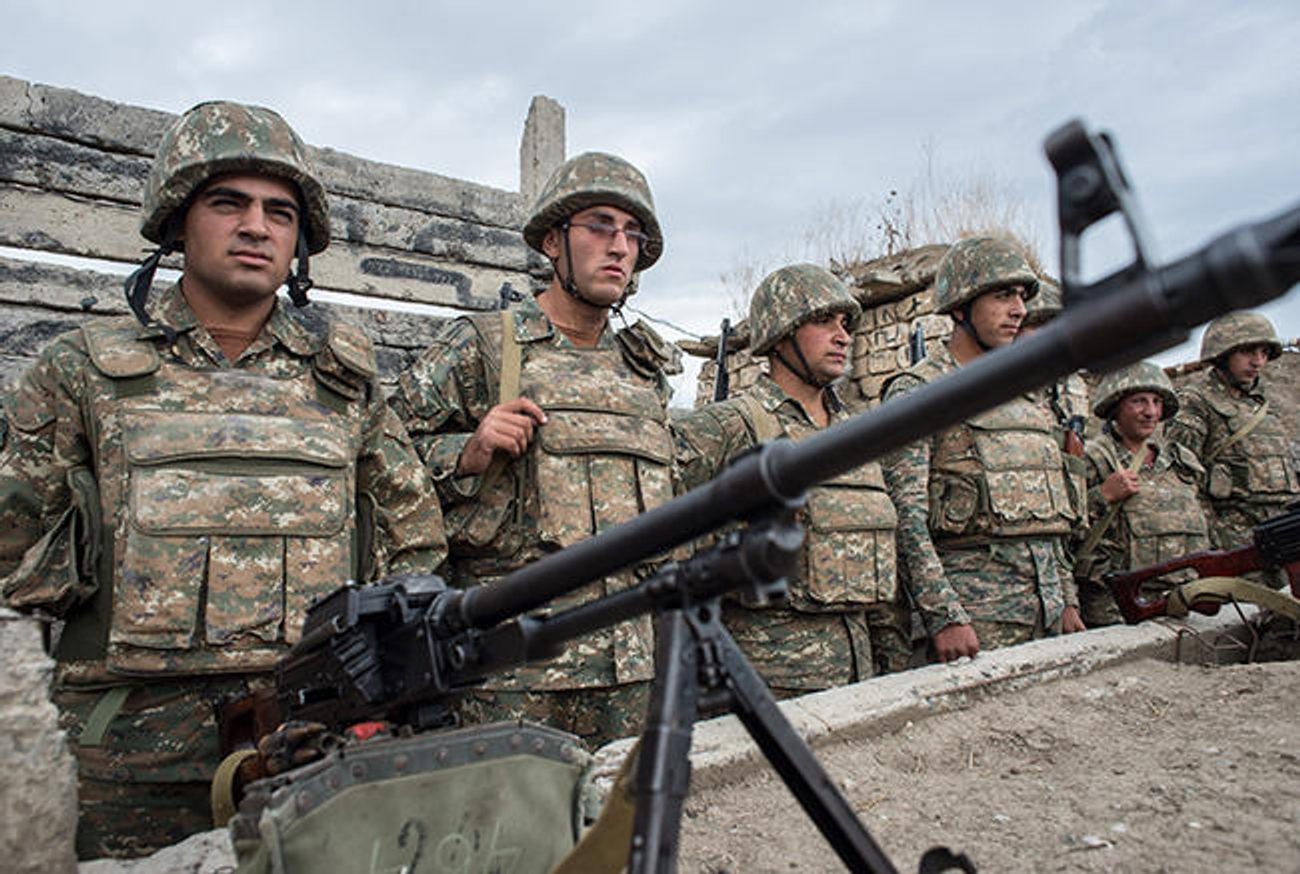
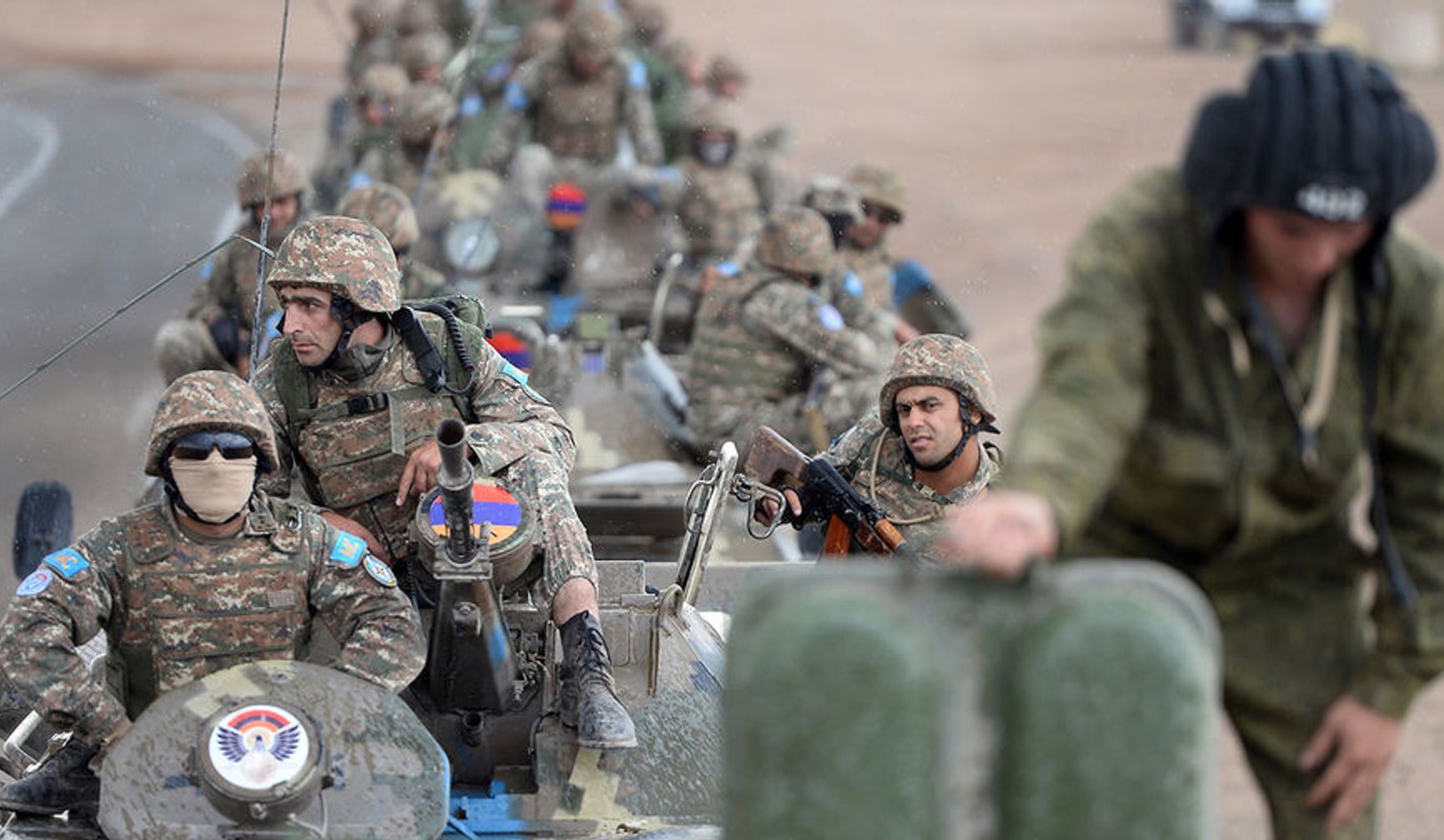
Over the past conflict, Armenia has seriously updated its armed forces and military equipment for four years. Yerevan agreed with Moscow on the allocation of approximately $ 200 million and for this money acquired anti-aircraft complexes of the average radius of the “Buk-M1-2” and small “TOR-M2KM”. Foresting Igla-S and Verba, as well as the Kornet-E anti-tank missiles, and electronic warfare equipment, were purchased for armament of the infantry. In December 2019, the first four of the 12 ordered Su-30SM multi-purpose fighters ordered. In addition, back in 2016, after a five-day war, Armenia received the Iskander-Tactical Rocket Complex with a range of about 280 km. This range allows you to keep a significant part of the territory of Azerbaijan under the sight, including objects of strategic significance and military structures around Baku. The military budget of Armenia in 2019 amounted to about $ 529 million compared to $ 468 million in 2018. In addition, already in 2017, according to the bilateral Russian-Armenian agreement, on the basis of the 102nd Russian military base and the 5th Army Corps of the Armed Forces of Armenia, a combined group was created.
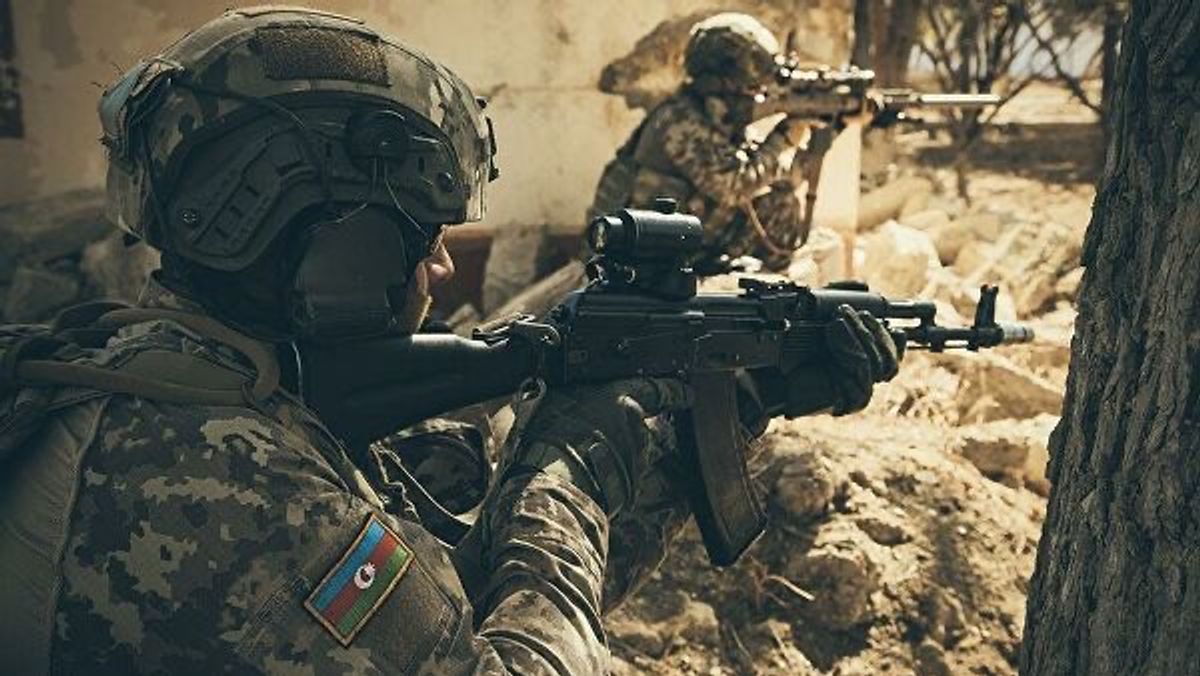
Meanwhile, Azerbaijan developed military cooperation with both Russia and a number of other countries: Israel, Pakistan and Belarus, but the main military ally of Baku, of course, is Turkey, with which a strategic partnership and mutual assistance agreement was signed back in 2010. Article 2 of the contract states that if one of the parties is subjected to armed attack or aggression by the third state or group of states, then the parties will provide mutual assistance using all opportunities. And Article 3 provides for close cooperation in defense and military-technical policy. It was within the framework of this contract that Türkiye just the other day, on the night of July 16 to 17, that put six shock-tactical unmanned aerial vehicles (UAVs) Bayraktar TB2 of its own production Azerbaijan. In fact, the parties designed a bilateral military alliance as opposed to the Russian-Armenian, including along the CSTO line.
At the same time, the new direction accepted the cooperation of Azerbaijan with Belarus. The beginning of the new wave of arms race at the regional level can be considered the transfer of the Minsk Baku missile system of volley fire (MLRS) “Polones”. This type of weapons has a “dual -purpose”. The new controlled high -precision rocket M20 used has a combined inertial and satellite control system, which provides a maximum firing range of 280 km. The combat unit weighing 480 kg has a power corresponding to the charge of 560 kg of trinitrotoluol. This means that “polonaise” is not only the MLRS, but also the operational-tactical missile system, which theoretically can carry a small nuclear warhead and therefore equal to strategic weapons.
At the same time, Azerbaijani Air Defense Forces received two divisions of the S-300PMU-2 Favorit anti-300PMU and several batteries of the TOR-M2E anti-aircraft system from Russia. The country's Air Force received 60 Mi-17 transport helicopters and 24 Mi-35M shock helicopters. In total, Azerbaijan was armed with the start of hostilities, there were 16 drones, including the Israeli production apparatus of the Hermes-900 Generations of 3+ worth $ 30 million. By the way, it was shot down by the Armenian Complex of the OSA-AKM air defense system on July 14. Recently, Baku has purchased modern high -precision ammunition Spike and Skystriker from Israel. In total, since 2016, Azerbaijan spent about $ 3.7 billion on the purchase of specific types of weapons, including an offensive nature.
The presence of such serious weapons on both sides automatically leads to the escalation of a conflict that can grow to a regional disaster. The so -called security dilemma arises here - a paradoxical situation in which measures to ensure the national security of one state are perceived by another as a threat of own security. And this obviously follows, for example, from the statement of the representative of the Ministry of Defense of Azerbaijan of July 16: the aircraft of this country can strike a missile blow to the Armenian nuclear power plant if the opposite side attacks the dam of the Minhechevirsk reservoir.
It is important to note the fact that for the first time in 30 years, after the two main phases of the armed confrontation between Azerbaijan and Armenia (the first phase-in 1992-94, and the second-2016), the military conflict of low intensity (as military experts determined) did not occur around Nagorno-Karabakh. This time, combat clashes differed both in essence and in the form of conducting hostilities. They occurred precisely on the state border of both states, and the regular troops of Armenia and Azerbaijan directly participated in them (in contrast to the “April War”, when the conflict was between the forms of defense forces of the Nagorno -Karabakh and the Armed Forces of Azerbaijan).
For the first time in 30 years, the conflict occurred precisely on the state border between the two countries
The second reason for the current exacerbation of the situation is to reduce the intensity of negotiations on Nagorno -Karabakh. From the moment of coming to power in Armenia in 2018, Nikola Pashinyan, they have practically not been carried out. Moreover, during this time there were no direct contacts between the leaders of the two countries, which also affected the course of peace negotiations held in the format of the Minsk group.
The Minsk Group of Organization for Security and Cooperation in Europe (OSCE) on Nagorno -Karabakh was created on the initiative of Russia to combine interns. Discussion of the status of Nagorno -Karabakh at the OSCE level allowed representatives of the unrecognized republic to call this education “the most recognized among the unrecognized”. In 1996, the Minsk OSCE group appeared the Institute of Co -Chair. The first co -chairs were to be Russia and France, but Azerbaijan insisted on the introduction of the United States. On November 29, 2007, in Madrid, the co -chairs of the Minsk OSCE group proposed the Presidents of Armenia and Azerbaijan basic principles of the peaceful settlement of the Karabakh conflict, called the Madrid principles.
The third reason for the conflict lies in the fact that the influence of the West is noticeably weakened in the region. From the moment of the collapse of the USSR and the emergence of new independent states, the EU and the United States has always shown great interest in the region in three main directions: the prevention of ethnopolitical conflicts, the implementation of large energy projects and the use of the region’s geostrategic status to combat asymmetric military threats (the fight against international terrorism, illegal trafficking in drugs and weapons, human trade, and so on). But the European Union states, covered by the crisis caused by the Covid-19 and economic problems, have ceased to pay due attention in my opinion. It is primarily about those states that were involved in the Minsk format for Nagorno -Karabakh. And the aggravation of the political situation in the United States and especially the neo -isolationist foreign policy of the President Trump administration, in particular in relation to the Caucasian region, involuntarily contributed the escalation of the conflict between Yerevan and Baku.
As a result, the July military clashes between the countries demonstrated that already at the regional level, a very dangerous “game” with strategic weapons, which could once destroy stability in the region, began.
This formidable perspective should cool the ardor in Yerevan and Baku and make them think about the peaceful resolution of the conflict. The possibility of the Minsk OSCE group and international and regional organizations has not yet been completely exhausted. As part of the Minsk group, Russia could more actively prove itself. And at least Moscow should think about what the arms race in this region can turn out - what will later be the price of Yerevan and Baku weapons. Perhaps the mediation of Tbilisi. With Georgia, both states have friendly partnerships. Do not forget that among Georgia citizens there are at least 600 thousand Armenians and Azerbaijanis. Georgia may make an initiative to convene a peaceful regional conference with the participation of the leaders of Armenia and Azerbaijan, as happened in 1919 when the then head of the Democratic Republic of Georgia, a similar initiative to convene a peaceful conference in the Caucasus. And then this really led to the establishment of the short-term world, until the Bolsheviks occupied and annexed the region in 1920-21. Today, Georgia could again play an important intermediary role in a peaceful settlement.
We really need your help
Subscribe to regular donations