
Translated material
ITSHNIKS against Lukashenko. Why did the most prosperous Belarusians rebelled
Protest shares in Belarus are gathering hundreds of thousands of participants for the third week. Among the first protest, the first -supported protest was openly supported by apolitical founders of technological companies. Alexander Lukashenko was always proud of the Belarusian highlight. Why did he turn against the president? To answer this question, The Bell journalist Anastasia Stogus went to Minsk. We also talked with the creators of the most successful IT companies with Belarusian roots in London and New York, protest leaders and economists. Their interviews were included in the special issue of the YouTube channel “Russian norms!”.
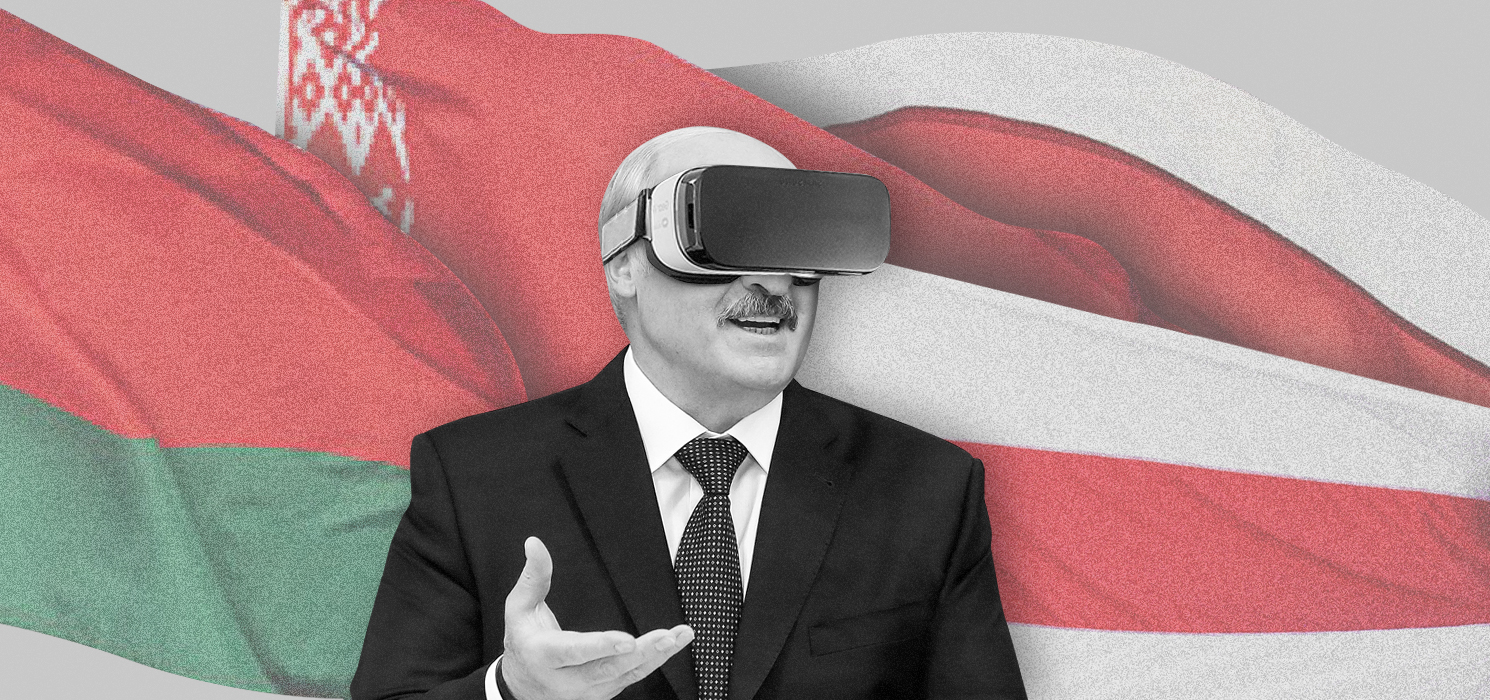
What's happened
“How much did you, bitch, paid? How much do you earn? Are you not enough? Wanted to change? Now there will be changes to you, ”the riot police yelled, beating Mikhail Chuprinsky, a co -owner of the Belarusian startup Rozum Robotics. Chuprinsky was detained on the first night of protests in Minsk, from August 9 to 10, at the entrance of his house. “They broke me, but not prohibitively - rather professionally detained,” the entrepreneur recalls. He was pushed into a car Zak (“It was tough, but not cruel”) and delivered to the infamous ATS on the street of Oskrestin. Then everything was much worse.
Mikhail Chuprinsky is a representative of the unique class of Belarusian society: ITISHNOV. Alexander Lukashenko sold the idea of the Soviet Republic for 25 years, which succeeded in: collective farms are not collapsed, factories were not sold to oligarchs, there is no poverty, people feed exclusively with natural products. But in reality, the Belarusian economy has long been in the best form (we talked about its problems here ). In recent years, only one economic indicator has grown rapidly: external debt (mainly to Russia). And only one sector of the economy in recent years has developed a noticeable pace: it. The main world media, including The New York Times Forbes , Financial Times and Wired , wrote about the technicock of the “last dictator of Europe”.
50%
The growth of the Belarusian GDP is provided by an IT sector
IT growth was largely provided with tax benefits for the residents of the Belarusian “Skolkovo”, created on behalf of Lukashenko of the High Technology Park (PVT). It would seem that the Belarusian ITSHNIKS must support their president. However, it is in this professional environment that protest moods are now especially strong. On August 12, hundreds of managers and thousands of employees of Belarusian IT companies in an open letter demanded to stop the police violence and hold new transparent presidential elections.
High -tech holiday in the scenery of the Soviet stagnation
“I remember myself as a teenager - I had two choices: to come to terms that I will earn on average up to $ 500 per month, or go to study for a programmer,” says Mikita Mikado, founder of an American startup with the Belarusian roots of Pandadoc. - There is little in Belarus. [Oil] pipe and potassium salt ... still agriculture, incredibly ineffective. And the dilapidated Soviet plants. "
A similar choice in Belarus is made by many talented people. About 60 thousand people are employed in the local IT sector. The local market is small, so most companies work for export. Having achieved success abroad, they, as a rule, leave at least development in Belarus. Among the famous residents of the PVT Belarusian "daughters" of companies such as EPAM, Viber and Wargaming. The main Pandadoc office of Mikita Mikado is located in San Francisco, but the Belarusian legal entity is also a resident of the PVT.
In 2017–2019, the export of IT services from Belarus grew by almost 2.5 times-to $ 2 billion. In 2019, technological companies provided Belarus by almost 50% of GDP growth. In general, their share in GDP is 6.1% (in Russia - less than 1%). In recent years, the share of IT in the GDP of Belarus has grown faster than in other developing countries. According to this parameter, Belarus has circumvented even India, follows from the UN conference for trade and development for 2019. By 2022–2023, the share of it in the Belarusian economy can grow up to 10%, the Minister of Economy of Belarus Dmitry Krutaya assured in February.
The Belarusian IT-fairy tale with outsourcing began, and it is still an important component. “Educated people wanted to earn at least something-and enterprising Belarusians-emigrants began to hire them as programmers,” Mikado explains. The most successful IT-auto-proper with Belarusian roots is EPAM. In 1993, this company was founded by classmates Arkady Dobkin and Leonid Loster. For a long time, EPAM has been based in the USA. Back in 2012, the company held an IPO on the New York Stock Exchange.
The creation of PVT accelerated the development of the market. The most successful companies like the same EPAM have a real incentive to create new jobs in Belarus. Actually, the co -founder of EPAM Arkady Dobkin is one of the ideologists of the PVT. We talked with him about it.
Alexander Lukashenko
President of Belarus
“Everyone wants to be ITSHNIKS. But you all will not be ITSHNIKS. In this area - I created it from scratch in Belarus and I know well - not everything is so good and lovely. "
How the Belarusian "Skolkovo" was created and what is its secret
PVT is not so much a specific place (only 4 thousand people are sitting in the park) as a set of benefits. Residents are exempted from most taxes, including income taxes, value added and real estate. Instead, they transfer PVP 1% revenue once a quarter. Income tax for employees is reduced from 13% to 9%. By July 2020, 886 companies became residents of the PVT, in which more than 63 thousand people work.
With the idea of such a tax regime, Arkady Dobkin in 2005 came to his former chief from the state scientific and production association of powder metallurgy. He by that time became vice president of the Belarusian Academy of Sciences. The former boss introduced Dobkin to the president of the Academy Mikhail Myasnikovich and Valery Tsepkalo, who was then not an opposition politician on the run, but an assistant to the president.
“These two managed to convince that this is [PVT], in general, not a completely unreal idea,” Dobkin recalls. Then Myasnikovich and Tsepkalo went to convince Lukashenko. The president also reacted favorably with them - and in the same year he signed a decree on the creation of the park. “They brought the documents, I signed without looking. Why look? " He recalled later.
How did it happen that Lukashenko agreed to develop an independent IT sector in the country where his whole economy is literally on manual management ? Opinions diverge on this subject.
“He simply did not understand what it was that it could become such a cool industry,” said Maria Kolesnikova, one of the leaders of the opposition forces, the head of the applicant’s headquarters for the post, the president of Belarus Viktor Babariko.
Dobkin with this opinion, in general, agrees: 15 years ago, the IT industry in Belarus was too small to seriously fear that it could become a focus of freedom. By noticeable losses for the budget, tax benefits were not fraught with the same reason. On the contrary, if successful, they even promised an increase. “We said that we can attract external money without spending a lot of resources,” Dobkin explains. - It would not work - they would not have lost anything. Why not try? " Valery Tsepkin was appointed PVT.
There is another version. In 2011-2014, Lukashenko as a whole was concerned about the liberalization of the business environment, “he was convinced that strong dependence on Russia is bad in politically, so it is necessary to create something of their own, to increase people's income so that they do not look at other countries,” the senior researcher at the Beroc Analytical Center reasoned.
Popper IT sector, I must say, not immediately. “15 years ago, when it all began, it was a formal story-only recently some movements began,” said Mikhail Chuprinsky, founder of Rozum Robotics, a PVT resident. With his other company, he tried to get to the PVT in 2012, and “it was terrible”, it looked like “they were doing a favor”. The business plan, which was demanded of Chuprinsky, was “the thickness of the dissertation” and “was called“ Business Plan. Version 5.2 ”.” His study took eight as many months. But other companies waited even longer.
The interlocutors of The Bell say that much has changed in 2017, when a new decree on the development of a digital economy was released. Business planes with a volume of fifty pages in the PVT stopped demanding. The attitude towards potential residents has become this: "Guys, how to help you, what to do so that you are more likely to be?" In addition, the PVT began to delve into the specifics of the work of his wards, took up the solution to the problems that they complained about.
“Until recently, those who sold applications should have issued a paper act under Belarusian legislation [for each deal],” Chuprinsky gives an example. “[Now this is gone.] The approach was replaced by serious pressure of very specific people, one of whom was [one of the most famous Belarusian businessmen, the country's largest taxpayer] Viktor Prokopeni .”
“Prokopenya is a person who can literally afford to open the door of Lukashenko’s office from his feet,” says the interlocutor The Bell, who advises the Belarusian government.
How Belarusian ITSHNIKS TE
Although in Belarus, “not every second, and not even every third is ITSHNIK,” this is a significant sector for the economy, Lviv from Beroc believes. In recent months, the average salaries in the country have not fallen precisely due to the growth of salaries in IT. Often they are nominated in foreign currency. “ITSHNOVERS A average of a hospital live many times better than everyone else,” says Lviv. - I think, if you conduct a hundredth among the youth, who they want to become in the future, the majority will say that ITSHNIKS. Being an ITSHK in Minsk is fashionable, stylish and youth. ”
At the same time, the development of IT spurred small and medium -sized businesses - trade and service sector. “The more successful things are, the more people care about their comfort,” Kolesnikov argues. - And not only at home. Another infrastructure begins to want, some other feeling on the street. ” In her opinion, it is thanks to the boom in IT that the infrastructure of cities began to become more comfortable.
All the interlocutors of The Bell to the question of the role of Lukashenko in the success of the Belarusian IT answered the same way: the president has nothing to do with it. “This is the only industry to which it has nothing to do, so it is successful,” Kolesnikova is convinced. Yes, and Lukashenko himself sometimes admits : “No one should imagine a great person from himself that he did something there. This was done by ITSHNIKS, and I am grateful to them. "
The PVT took place not only not thanks to, but even contrary to Lukashenko, Chuprinov from Rozum Robotics believes: “Park [in its current form] tried to create much earlier on fundamentally different conditions. In order to squeeze out by the end, the main threat was just Lukashenko. ”
At the same time, the most free and prosperous part of society did not openly formulate the request for political changes before this summer. They spoke about the president either well or nothing.
In 2017, when the PVT began to change, the IT-Schools had a “timid thought”: maybe something will change in the state, Chuprinov admits. His Rozum Robotics got into the PVP just in 2017-in total “from 15 pages of text in a business plan”. Registration took only two weeks.
Once Chuprinov was invited to participate in an event with Lukashenko’s participation - successful startups were demonstrated to the president. “We are often used to demonstrate the achievements of the Belarusian IT. [Including Belarusian officials], ”says the entrepreneur. “Applications and services [of other PVT residents] are difficult to hit the imagination, even if they save lives, and we have robots: they move, buzz, they can be touched.” All those who were at that event, according to Chuprinsky’s memoirs, “hung their ears” - the president was able to charm them. Then the charm was dissipated, but there was no desire to protest until recently.
Mikita Mikado
Founder Pandadoc
"ITSHNIKS - free people who earn worthy money and are not connected by serfs with employers"
IT -Schools on the barricades
The last straw for many Belarusians - not only for ITSHNIKS - was a pandemic, which Lukashenko called “coronapsychosis” and stubbornly ignored. It was then that there was a sharp deterioration against society to the state. The authorities relieved his responsibility, and then “the current president began to humiliate people who die or get sick with Covid,” says Kolesnikov. According to her, the Covid-19 affected absolutely all segments of the population, including workers and people from small towns and villages. At some point, "they all woke up."
“I wanted more reasonable people in the country, including in an IT sector,” Lukashenko explained in an interview with the reason for the creation of the PVT. As a result, these reasonable people turned against him. IT entrepreneurs began to speak about falsifying the results of elections in social networks, collecting money for the victims during protests, hiring and retaining the dismissed activists.
At protest rallies, you can find people who, instead of posters, carry the keyboard, painted under the white-red-white, Belarusian flag of the keyboard. Chuprinov from Rozum Robotics says there are a lot among the protesters. He explains this by a “simple economy”: “If you have a salary of $ 300, of which 30% is a bonus, you are afraid to howl, because the bonuses will definitely be deprived of you. Week of strikes - a quarter of salary. It is very expensive. The ITSHD can afford to goach for a week, an employee of the state -owned enterprise in the district center is not. ”
“All my friends want to do and help,” says Pandadoc founder Mikita Mikado. He himself promised the security forces who decide to quit, material assistance. Mikado says that he received hundreds of applications, and the Assistance Fund raised more than a million dollars in just four days. Money is needed not only because, having quit, the security forces will be corny without a source of income. It’s impossible to just quit the power structures, having worked there for less than five years: you need to pay a “output allowance” (a similar system in civilian universities). The debt on the Belarusian scale is unbearable, says Mikado: $ 20-30 thousand. For comparison, the IT education at Belarusian universities, according to him, costs about $ 6 thousand: “In fact, people harnessed to Baba, in a slave system that simply does not let them out”
Rozum Robotics hits people who were fired in small cities due to protests: there are few chances to get somewhere in place. They can either study or engage in volunteer work for three months and at this time look for alternative ways to earn a living, explains the founder of the company Chuprinsky. And, of course, ITSHNIKS, like other Belarusians, lined up in the chain of solidarity, went on strike and went to rallies.
Some ITSHNIKS “fit” into the fight against the current government before the start of protests. The campaigns of opposition candidates - primarily Viktor Babariko - were quite technological.
Maria Kolesnikova gives several examples:
The first is the platform, nicknamed “Drogiko”: people who wanted to subscribe to Babariko left applications in the Telegram Chatter network, volunteers picked up the applications closest to them, came and received a signature. The threshold of 100 thousand signatures for registration Babariko confidently overcame: “Half a million signatures were collected in three to four weeks,” says Kolesnikova. However, the candidate Babariko was still not registered.
Another example is the Voice platform (for an honest counting of votes), “bison” (for collecting violations) and “honest people” (for organizing observation). One of the creators of the Voice was the director of the Digital Strategy & Experience Design EPAM Practice Pavel Liber. All three projects are horizontal structures without a single leader. “This is a classic startup that has passed the evolution of five to forty people in just three weeks, and also gained 1.2 million users. Most startups did not even dream of this, ” says Liber about Voice.
$ 1869
a month is the average salary of an IT company employee in Belarus-according to the "girl Bai Media"
"These are my fifth elections Lukashenko, I am not ready to wait another five years"
On the night of August 10, Mikhail Chuprinsky, along with another 46 detainees, ended up in a five -seater cell of the police department on the surroundings. People began to complain that they did not have enough air - and gas began to be allowed into the camera to “stimulate breathing”. The next night, Chuprinsky and his cellmates "heard that there was a war in the city - the explosions did not stop." The entrepreneur recalls that people were brought constantly. Before abandoning the cameras, they beat. The screams did not stop until the morning. Those who could not move were pulled to the side. Chuprinsky says that he saw two body covered with tissue.
They also beat the businessman himself. Most of all, he got during transportation from the surroundings to prison, located in Zhodino, a town near Minsk: "We were loaded into a car carrier, which was already with riot police, and there they jumped over their heads, beaten with sticks." Chupepinsky spent the next night in the prison courtyard: the detainees did not fit in the cells. “We spent the night on the street, played in the Antarctic penguins, poured to each other to at least somehow warm up.” In the morning, people nevertheless showed off the cameras: “There were 22 people in an eight -seater cell - almost a resort. There were mattresses, we were already sleeping in turn. ” A day later, Chuprinsky was released.
The interlocutor The Bell admits: having left Zhodino prison, he thought about emigration. “These are my fifth elections in Lukashenko, I am not ready to wait another five years,” he says. Chuprinsky believes that many will leave: “Now all the chats are full of discussions, which country is the best, where it is easier to leave. The most popular question is about interviews: what do you have with relocation, where can you evacuate? The current employees also ask. ”
What's next
Mikhail Chuprinsky expresses a common mood. EPAM co -founder Arkady Dobkin predicts "the largest outcome from the country over the past 30 years." His company is also “considering different options”. The Russian Yandex began to evacuate his employees from Belarus. The closing of the office in Minsk was announced by Viber.
Of course, ITSHNIKS just leave. They can work from from anywhere, so they need serious arguments to settle down. Mass emigration is also waiting for Mikita Mikado from Pandadoc. He says that in an internal survey about 80% of employees spoke out for moving. However, the ITSHNOVs still continue to hope for changes. And to the question of The Bell about whether he will return to the country if Lukashenko ceases to be president, Mikado answered without hesitation: necessarily.