
Translated material
Crime and expectation. Harry Kasparov about why the Kremlin is afraid of sanctions, and the West is afraid to apply them
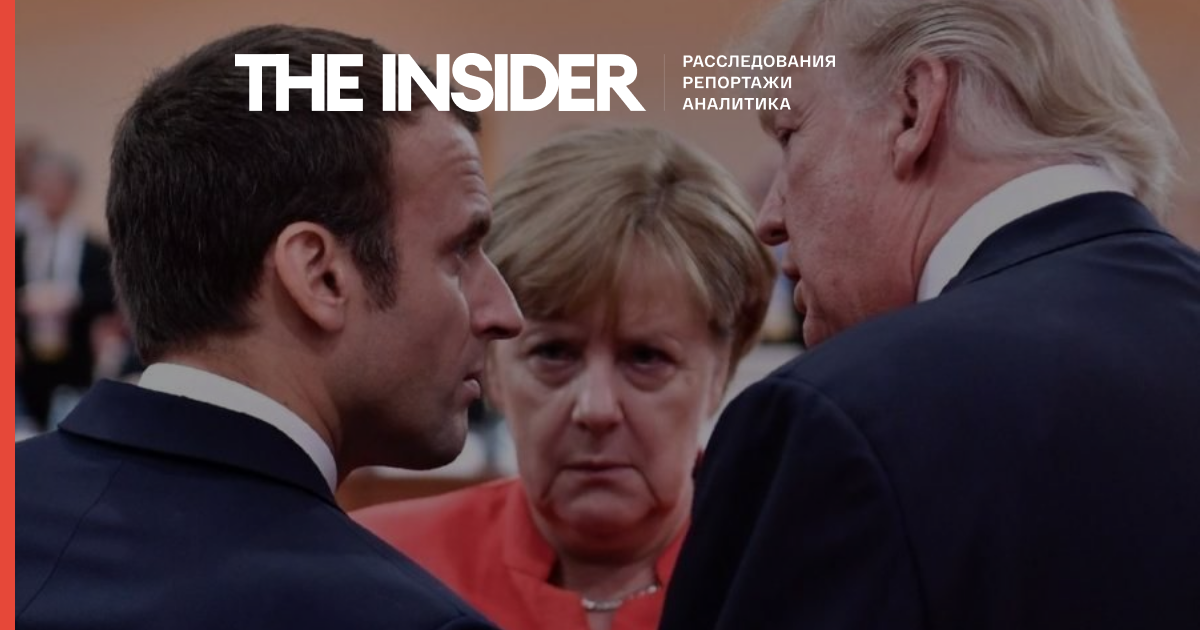

Crime and expectation. Harry Kasparov about why the Kremlin is afraid of sanctions, and the West is afraid to apply them
11 September 2020Harry Kasparov
The poisoning of Alexei Navalny with a combat neuro-paralytic substance from the Novice group again forced the West to return to the topic of sanctions against Russia. German Chancellor Angela Merkel did not even exclude the stop of the construction of the North Stream-2 gas pipeline. Harry Kasparov explains why Western leaders are so reluctant to sanctions against the Kremlin, and why the Russian authorities, despite the ostentatious indifference, are so afraid of sanctions.
Sanctions are not only economic, but also psychological in nature. And those against whom the sanctions are directed, draw their conclusions based on the assessment of the specific goals of the sanctions policy. You can introduce a wide variety of sanctions, but at the same time diplomatically “wink”. Yes, sanctions are introduced because there is no other way out, because, for example, you annexed Crimea, poisoned the opposition leader, supported the dictator of a neighboring country. But at the same time there is an unspoken understanding: no one is going to go to the end - to use sanctions as intended, namely, to stop the criminal practice of this regime.
Therefore, the sanctions that are used against the Putin regime are dual in nature. For the most part, this is a reaction to public opinion and an attempt to preserve the face. And Putin perfectly understands this. No matter how much Russian propaganda screams that the purpose of the sanctions is the change of regime, no one even sets such a goal. Western leaders are evading as soon as they can take those sanctions that could truly hit the stability of the Putin regime, and are trying in every possible way to preserve, as they say, “channels for communication”.
Even in the situation with Belarusia, the leading European countries refuse to include Lukashenko in the list of Person Non Grad, which, in fact, contradicts their non-recognition of the results of the falsified elections, in which Lukashenko has lost her devastated. It seems to be a favorable moment - and still inconsistency in actions! And even in the obvious, seemingly situation with an attempt on Navalny, given the “credit history” of the Russian regime, still various diplomatic maneuvers are visible, the purpose of which is to mitigate the consequences of sanctions. The West is afraid of confrontation, and Putin understands this.
The West is afraid of confrontation, and Putin understands this
Obviously, today Lukashenko is an unamitable figure. But the West is panicky afraid of uncertainty. He is so comfortable, he is already used to a certain algorithm: yes, there are dictators and modes that do not suit us, but we somehow get out in this situation. Yes, maybe there is an opportunity to gradually move Lukashenko, whom Putin will persuade to a compromise figure - a conditional Babarico, which will look like a decent replacement. At the same time, Western politicians do not at all consider the Belarusian people as a subject, who voted 80% against Lukashenko and who is now leaving the streets, despite repressions. And the will of the Belarusian people is clear than ever: he does not want either Lukashenko or joining Russia. Obviously, the youth of Belarus is fully focused on Europe. Under these conditions, the behavior of European leaders is cowardly and, of course, helps dictators find additional opportunities for maneuvers.
The question is not what sanctions will be imposed. Primary political will. When the American administration used various sanctions, especially under President Ronald Reagan, it was clear that it was a strict confrontation. No one was going to break out the diplomatic municipality with the USSR, to stop negotiations to reduce strategic weapons. Nevertheless, there was a clear goal: to force the Soviet Union to stop an aggressive war in Afghanistan, to stop the undermining of Western democracies, financing of ultra -row movements, the so -called supporters of the world and disarmament.
Now the palette of political groups that openly support Putin has become much wider and includes the ultra -right, which, by the way, have become even more desirable “clients” from the point of view of the Russian mafia regime. Therefore, Putin looks at these “sanctions” body movements of the West, grinning and sees that there is still no real threat. He had seen eight years of the policy of Barack Obama, who, even after Georgia, tried, no matter what, to establish relations with the Kremlin. Sanctions after Crimea were also quite conditional, and Germany, on the contrary, sharply increased the purchases of Russian gas. Therefore, Putin, evaluating the situation as a whole, comes to the conclusion: they will make a joke, shout - and what's next? Therefore, both Lavrov and Peskov today are quite sincerely perplexed by the sharp reaction of the West. After all, the poisoning of Navalny after Georgia and Ukraine, the murders of Politkovskaya, Litvinenko and Nemtsov, Khangoshvili and other Chechens, the attempt on Skripal is not a reason to spoil the relationship. In addition, Navalny survived.
Articles on the topic
The Prosecutor General of Germany confirmed the conclusions of The Insider about the connection of Krasikov, who killed Khangoshvili in Berlin, with the Russian authorities
Solberetsky. The Bellingcat and The Insider managed to confirm the involvement of Petrov and Boshirov in the special services
The West could not even fully respond to bombing in Syria, where hundreds of thousands of people were killed, and millions fled to Europe. But Bashar Assad is also a Russian client who, incidentally, actively used chemical weapons against the Syrian people. And here, too, an interesting question arises: where did this chemical weapon, which Assad had to destroy under the supervision of Russia? Given the Russian practice, to sign the contracts and not to fulfill them, I suspect that it is safe and preserved in the wings.
The principality of the West in the confrontation of absolutely gangster methods is largely a PR character. In addition to Russia, China also uses this. The genocide of the Uyghur people is going on with might and main - so what? The Hong Kong sovereignty is trampled because China found that now a favorable moment has come to violate its international obligations. It is unprofitable to Beecin now. And what? Nothing too. Therefore, the question of what sanctions should be, unfortunately, is still secondary. And the question remains in the first place: is the West ready to go to those sanctions that will really strangle the regime?
The palette of such sanctions is diverse. Firstly, the West in the last 20 years could get rid of dependence on Russian oil and gas-at least sharply limit it. Could, but did not. Moreover, a lot of money was invested in order to aggravate this dependence. Secondly, Western intelligence knows very well where all the money of the Russian elite is stored. It is clear that Roldugin's cello is an iceberg. If desired, the West can carry out the surgery operation per day, if not to eliminate 90% of the assets of the Putin elite.
If desired, the West can halve or even 90% eliminate the assets of the Putin elite by 90%
But the problem is that it is already integrated into the West, which ignored this process for many years. More precisely, he just put up with this, because it was so beneficial. Therefore, Russian oligarchs could buy football, basketball and hockey clubs, invest money in a variety of infrastructure of Western countries. Hundreds of billions of dollars have already become part of the Western world with the direct connivance of the leaders of Western countries, many of which, by the way, themselves did not disdain the participation in this economic and financial process. The adoption of truly strict sanctions associated with a sharp restriction of the purchases of Russian oil and gas, or with the elimination of access to SWIFT, requires political will, which is not visible now. And this once again confirms the old simple truth: every day of delay in the reflection of aggression, albeit in this case in hybrid wars, increases the price of the issue. It is clear that the Second World War could be well warned in 1936 and in 1937, and, perhaps, even back in 1938. But at some point it becomes too late.
The peculiarity of the current situation is that the West itself fell into such a collision when something needs to be done. Navalny poisoning, since chemical weapons were again involved, cannot be ignored. It is impossible to pretend that this is an internal business, as, say, in the case of the murder of Boris Nemtsov. And the Kremlin cannot blame some Chechens - it is clear that such an operation could be carried out only with permission at the highest level. And the West, it seems to me, came to understanding that such things are authorized personally by Putin. Navalny's poisoning - a test on how far the West is ready to go. The answer to it will be received in the coming months - depending on the results of the US presidential election.
If Trump again becomes the president, then, of course, Putin will be inaction of Europe with the inaction of this topic “to play”. But if Trump is not re -elected, then, judging by the current intensity of the presidential campaign in the United States, in which Putin plays a role, America may again take a leading position in the issue of sanctions. The West has all the possibilities to break the ridge to the mafia regime in Russia. The regime is unstable, there are enough problems within the country. It is quite obvious that Khabarovsk is only one of the pain points. And if political will is demonstrated, it is possible that the system will crack.
Articles on the topic
Andrey Zubov: "Russia did not extract a lesson from world wars"
Far Eastern fire. Sociologist Sergei Belanovsky about why Khabarovsk can infect all Russia with protest moods
In a difficult situation today, the German Chancellor Angela Merkel was also the German Chancellor. It was her government who tried in every possible way to hush up the history of Khangoshvili in the center of Berlin and even tried to extradite the killer to Russia. But under the pressure of public opinion and publications in the press, the German leadership still had to investigate on its territory.
Now Merkel must maneuver. Her career is coming to an end, and many questions remain to her - first of all, precisely in regard to her attitude to Russia and personally to Putin. To disgrace herself now, too, is not with her hand. The Russian authorities, categorically refuting the version of poisoning, drove the situation into a dead end. It is possible that under these conditions Merkel will have to go to extreme measures, because it will not be possible to play history. In the Bundestag, the opposition is growing, like Merkel itself inside the party. It is clear that on the side of Russia there is still a powerful lobby of German industrialists and the former Chancellor Gerhard Schroeder with ties in the Social-Democratic Party. But even this may not be enough, because public opinion requires actions-all the more so since Navalny in Berlin and has just left the coma.
It is clear that this story will not end quickly - Navalny will not come out of this clinic soon. It is already impossible to dismiss this story. But, by and large, besides Northern Stream-2, Germany has no more arguments. And if this attempt to kill remains unanswered, then this will mean the total surrender of the Western world. I think, by the way, neither Merkel nor Macron are ready for her. They are ready to play along, but not to surrender. Perhaps the current suspended situation will be resolved to the American elections. But maybe Paris and Berlin will wait on November 3.
At the same time, the indecision of the West, no matter how much it lasts, is not a reason for the Russian opposition to refuse to promote sanctions as an effective method of combating the Putin regime. As Boris Nemtsov loved to repeat, in conditions when there are no other methods for evaluating opposition activities, the only objective criterion is the reaction of the authorities. With what frantic energy and anger Putin and his henchmen are trying to discredit the sanctions themselves, how much effort, energy and money is spent on fighting the "Law of Magnitsky", suggests that the sanctions, of course, pose a serious threat to them. The sanctions undermine the “sacred cow” of the authorities, because the Putin government is based, as in any mafia association, at a guaranteed opportunity to rob and store the loot in exchange for one hundred percent loyalty. Putin is supported by power elites and the bureaucratic apparatus in Russia Rivne because loyalty to the Supreme Leader, Head, Pahan - no matter how he call him - this is the only criterion for evaluating their effectiveness. And while you are loyal, you can freely engage in the robbery of the subordinate population and the export of the loot.
Sanctions create a problem because they question Putin's ability to protect what was loot and posted around the world. This is a serious blow to his authority, a demonstration that he no longer controls Western partners. And this potentially creates voltage sources. Therefore, the oligarchs are so zealously trying to either lower the degree of sanctions, or somehow get out of the sanctions regime. But while these sanctions are point and in front of them is not a goal for Russia to change its behavior, they are not a collapsible nature. In principle, everyone understands this. But they also understand something else: if the conditional red button is pressed and the real hunting for capital will begin - not just for the oligarchs, but for families, wives and children - the situation can radically change. That is why the sanctions regime, in principle, causes such a frantic negative reaction in the Kremlin.