
Translated material
Whip or gingerbread? Experts that Biden's presidency will mean for Russia and the world
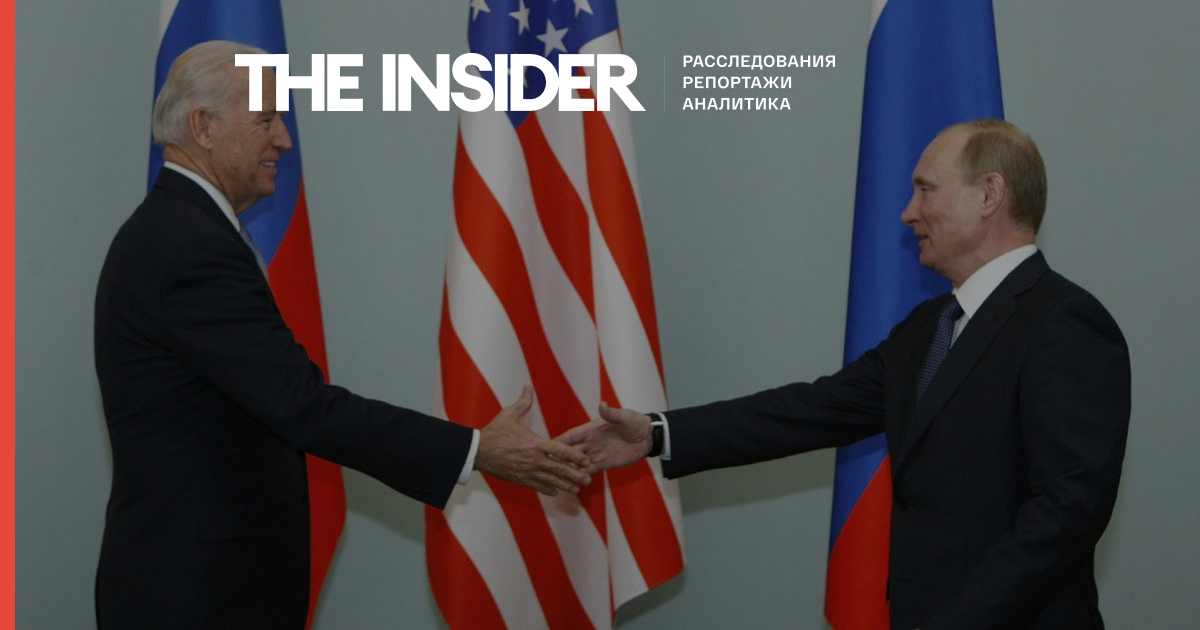

Whip or gingerbread? Experts that Biden's presidency will mean for Russia and the world
The Insider
December 4, 2020The victory of Joe Biden in the US presidential election caused a sigh of relief in many countries of the world. What Washington’s foreign policy will change, and what will remain the same by The Insider, Jeffrey Gedmin, a senior researcher at the Diplomatic Service of the University of Georgetown, Linas Coyala, the director of the Center for Eastern Europe (ESC) and the international observer Konstantin Eggert.
Biden and Russia
Jeffrey Gedmin: First of all, the new administration will be loaded with a solution to internal problems - this will prevail over foreign policy in all directions, including Russian. Covid, Covid, and again Covid. Economics, economics and economics again. As well as infrastructure, healthcare and polarization of American society. And this should be understood as allies, there are US rivals.
As for Russia, Tony Blinken as Secretary of State and Jake Sullivan as an assistant to the president for national security of Pragmatics and for the most part realists. They are not that they reject the protection of democracy and human rights, but they strive to create a balance in relations with Russia, so there will be a desire for predictability and stability, but taking into account all available problems. In my opinion, it will be the policy of Knut and the Gingerbread - in the spirit of the Democratic Party. You should not expect either the Crusade against Russia in terms of protecting human rights, nor purely Kissinger Realpolitik. Thus, this will be a balanced foreign policy taking into account the calls of national security.
Konstantin Eggert: Joe Biden is not loved in the Kremlin because they consider him the main actual actor of the politics of Barack Obama and Michael McFola for the development of relations with President Dmitry Medvedev. However, Biden speaks very often hard, but does not make sudden movements. And in a new quality, when he is the commander in chief and a person who forms foreign policy, he will have to make decisions. In the Senate, anti -Krelev sentiments exist on both sides of the party spectrum, so Bauden will have to take specific actions in the Russian direction.
I suppose that one of the main challenges of his presidency, and at the very beginning, will be a decision on the North Stream-2 pipeline. On the one hand, there is a bicaparty consent in the Senate that this project should be blocked as profitable to Putin. On the other hand, Baiden relies on the development of relations with the allies after they were very cool during the presidency of Trump. And to extend the angel Merkel's hand of friendship and at the same time report that the US Nord Stream-2 will be blocked, it will be quite difficult.
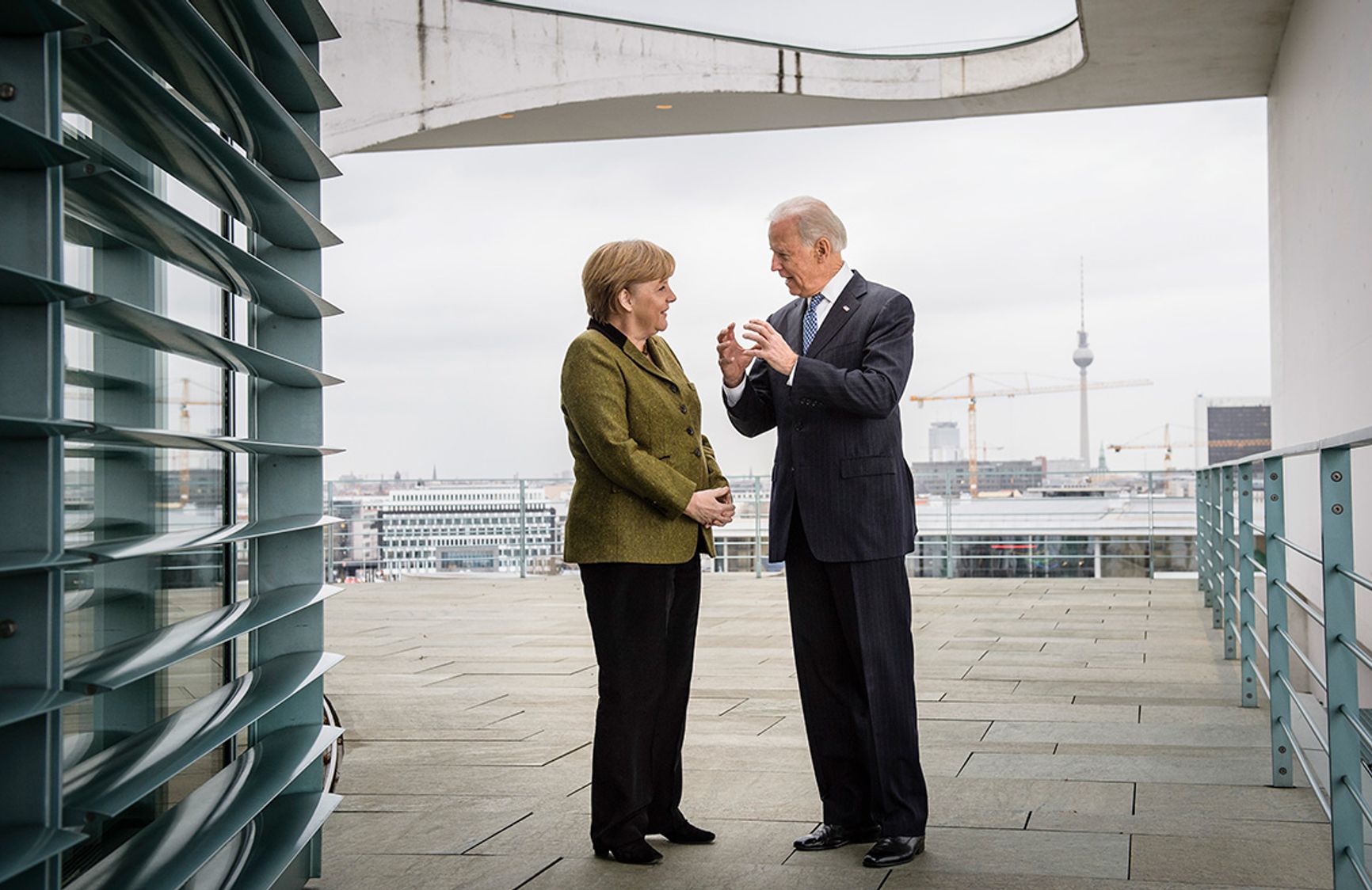
Angel Merkel and Joe Biden
In addition, from time to time in the agenda in different forms, the question of sanctions against various legal and individuals associated with the Kremlin will continue to appear. And here Biden will have to abandon the experience of the Obama administration, which was rather soft against the Kremlin. It is enough to recall that the sanctions imposed by Washington after the annexation of Crimea were very modest. And only the war in eastern Ukraine forced Washington to take certain measures.
I believe that Baiden will definitely try to change the PR collection of his Russian policy. His rhetoric in relation to the Putin Kremlin will be much tougher, he will defiantly accept Russian oppositionists in the oval office. In addition, most likely, Biden will replace Trump's leadership of the US Agency for Global Media (US Agency for Global Media), which is subordinate to the Voice of America and Radio Liberty. Therefore, new elements in American information policy against Russia are possible.
Biden will probably defiantly accept Russian oppositionists in the oval office
Obviously, the Biden administration will at least in words pay more attention to human rights in general and minority rights especially. On the other hand, most likely, religious minorities, such as “Jehovah's Witnesses”, will receive less support, because the topic of religious freedom is much less interested in the democrats in general and the Biden administration. After all, it seems that it will be under the gaze of the left wing of the Democratic Party, which in all aspects of foreign policy related to religious freedom sees cultural imperialism. So in this regard the accents will be displaced.
It is also quite clear what Biden can have positive achievements in the Russian direction. He will inherit the need to negotiate with Moscow to conclude a new agreement instead of SNV-3, which was concluded 10 years ago by Obama and Medvedev. I think Moscow and Washington will go to these negotiations, which are doomed to success. Why? Despite Putin’s poserity, obviously, Russia today is not ready for the new arms race and does not want to be the second, but the third nuclear power, at least from the point of view of technology. In addition, for Putin this will be an absolutely official undeniable reason for direct communication with the American administration. In Moscow, as you know, they appreciate the topic of disarmament that this has always been a kind of exclusive “chip” of Russian-American relations, which highlighted the importance of Russia, in all other respects losing international relevance. Maybe for the sake of this, Putin will even soften his rhetoric against the United States - these negotiations are very important for him.
There are several unknown in Russian-American relations. The first is all that concerns Ukraine. The legacy of the Obama-Biden administration in this direction is not the best. And here, first of all, it is worth noting the refusal to sell lethal weapons to Kyiv. Today, this weapon is sold, but a certain distrust of the Democrats in Kyiv still remains. Therefore, appointments in this direction will be very important. The second is how the Biden administration will behave in relation to Iran. If, as it is now assumed, the White House will re -sign an agreement on the Iranian nuclear program, from which Trump came out two years ago, then in Moscow it will be regarded as a manifestation of weakness and as a license to continue anti -American policy in the Middle East.
The third important point, which remains great unknown: everyone believes that Biden, unlike Trump, will lead a softer line in relation to the communist regime in China. What policy the White House will choose on relations with Moscow. The biggest mistake that this administration can make is continuing to talk on a topic that periodically arose in the Trump administration, namely: how good it was to attract Putin to the fight against Beijing, because the Kremlin should understand that China is a challenge to Russia. If suddenly such a line prevails, this will allow Putin to manipulate his relations with the United States, put pressure on America in other directions and delay the process in order to get maximum dividends from this.
Over the past 4-5 years, it was fashionable to talk about who Moscow puts in the United States. But the main bet of the Kremlin is Mr. Chaos. And she is purely practical. The more internal problems in the United States, the fewer two -party consensus, the less any American administration will pay attention to Putin, Patrushev and Company. Therefore, you can be sure that through agents of influence, through social networks, through the agents of the Putin regime will continue to crack American society, create social and political problems.
Linas Koyala: It can hardly be expected that the Biden administration will be interested in a new restart of relations with Russia. On the contrary, the elected president will most likely support diplomatic and economic sanctions against Moscow, some of which were expanded under the Trump administration. Biden will also be more critical of the personality of Vladimir Putin, which has not always occurred in the last four years. It is not surprising that Putin has not yet congratulated Biden. However, it is still unknown whether Biden will continue, striving for a closer dialogue with Germany, to insist on sanctions against Northern Stream -2 - a pipeline that should connect Russia with Germany and strengthen Europe's dependence on Russian gas. However, the Biden maneuver space can be limited by Congress, whose members - both democrats and republicans - unequivocally support additional sanctions designed to stop the construction of the pipeline.
One of the possible points of interaction with the Kremlin at the very beginning of the presidential period of Biden will be a new agreement on a reduction in strategic offensive weapons (START) between the United States and Russia. Despite the almost complete absence of bilateral dialogue, both countries seem to have enough incentives to achieve new agreements before the expiration of the current date in February 2021.
The foreign policy of the United States also depends on the elections to the Senate. The struggle for two places in Georgia, where the first tour ended without a clear winner, will decide which party will control the upper house of Congress. If the Republicans retain the majority, then Biden will have a struggle for the senators of his political appointments to the senators. Moreover, the legislative agenda of his presidency can be blocked. Because of this, Biden’s political capabilities can be significantly weakened before its inauguration.
Biden and NATO
Jeffrey Gedmin: This is the case when two approaches are possible at the same time. I think that in the relations of the USA and NATO we will see more love - Biden’s election was perceived by allies with relief. Indeed, surrounded by Biden is confidence that the Trump administration behaved meanly, intimidated and forced. And in such important relationships, especially if you are applying for leadership in the Alliance, you need a special approach - you can not behave like a mafia don. At the same time, even in the circles of the Democratic Party and specifically among people who will constitute a new Biden administration, it is recognized that the separation of financial burden of defense costs is a painful issue.
The mood of the American public - on both sides - is gradually changing: patience is reduced, and the expectation that European allies will begin to spend the due 2% GDP on defense grows noticeably. The United States fought in Kosovo and Bosnia, it was from them that they expected assistance in Ukraine. I think that many Americans, whether democrats or republicans, say: "Ok, Europe, please lead the lead, but then risk and sacrifice it." So in the relationship there will be more charm, more than a constructive, positive language of gestures, but with regard to defense costs, the Biden administration, I think, will be very tough.
Linas Koyala: Among the vital issues for Europeans are the security and attitude of America to the allies. For example, almost three quarters of the Americans say that they support the US obligations to NATO. However, more than half (57%) surveyed by the Chicago Council for World Affairs is supported by the decision of the Trump administration adopted in the summer of 2020 to reduce the number of US troops in Germany, and another 16% advocate a complete withdrawal of American troops from Germany. This opinion prevailed, despite the wide criticism of the withdrawal of troops with leading experts on foreign policy and security. In fact, Trump's call to Europeans is more on defense enjoys significant support among Americans. Although there is no doubt that Biden will try to restore the image of America as a country committed by NATO's allied obligations, he will also continue to put pressure on European governments so that they will tighten their defense costs up to 2% of GDP. This is exactly what the administration achieved both Bush and Obama.
In Poland and the Baltic countries, they suggest that such pressure will be combined with a more practical approach. For example, Trump’s decision to reduce the number of troops in Germany (not yet implemented) means that some military personnel could be transferred to Poland (or even to the Baltic). This decision was explained by Trump’s personal relations with Warsaw, as well as the proximity of the ideological attitudes of the US President and the ruling party of Poland. The presenter of the Polish expert Slavomir Dembsky believes that Bayden has fewer incentives to give Poland preference to Western Europe. However, the extension of the contingent in Poland will allow Biden to show that its administration takes into account the risks that threaten the region adjacent to Putin Russia, and remains committed to the policy of holding on to the eastern borders of NATO. In the end, the theme of Central and Eastern Europe is not a stranger for Bayden. In addition, his team will probably also consist of experienced diplomats .
By the way, for the European Union, all these actions, as well as the long -standing personal ties of Biden with such leaders as the Angel Merkel, mean more stable and predictable relations. So, in general, it is likely that the level of trust in the world to the Institute of the US President, which has fallen to a historical minimum, will grow again.
Konstantin Eggert: Naturally, Bayden is very waiting for the return to NATO, whom most European leaders of the alliance countries know for many years, he knows that he is a firm Atlantist, that he will not make unpleasant statements in relation to the Allies, to subject the alliance to doubt. However, if we look at political realities, and not the current rhetoric of the outgoing administration, we will see that, firstly, NATO never threatened, because the North Atlantic Treaty has been ratified by Congress, and the president cannot unilaterally come out of it. Secondly, despite the fact that Trump does not obviously understand how NATO is built as an union, nevertheless, everything that he spoke about increasing military spending up to 2% of GDP was not new. Bill Clinton began to talk about this. And after him-both George Bush Jr., and Barack Obama. They resembled every NATO summit of this, and at each such meeting at the highest level, most of the European allies managed to evade the realization of this promise.
What exactly does American leadership see in the Biden alliance? What was it during the Cold War, or at Clinton, or under Bush, when the United States was a moral, political or military-technical leader of the alliance? Or Biden will like the idea to slightly divide the responsibilities, give Europeans the opportunity to take care of their security a little more, roughly speaking, to transfer to Europe more strategic initiative, how would Emmanuel Macron like this? I can’t exclude that Biden’s rhetoric will be the way Bush or Clinton had, and real actions may be reminiscent of the current administration. He will not offend anyone, but objectively the interest of the Americans is gradually moving to the direction of the American-Tikhookean theater. Even the Middle East is interested in America less.
And in this sense, the main verification of what the real policy of Biden in relation to NATO will be his attitude to the front -line countries, such as Poland, Lithuania, Romania, his willingness to develop a missile defense system in Eastern and Central Europe, his willingness to support the promises of the Trump administration to transfer part of the American military from Germany to Poland and, most importantly, the practical reaction of his administration to any The body of the Putin Moscow in the region. In this sense, the new president may very quickly come to the very first test if Putin gives a green light to the plan to destabilize Moldova after the victory of the pro -European candidate of Maya Sandu in the recent presidential election (by the way, she already announced the need to withdraw Russian troops from Transnistria). It immediately turns out how Washington is ready to help in the region to those whom it will directly affect. First of all, Romania.
The Biden administration has a historical opportunity to look with a fresh look at the post-Soviet space, which gets out of the Kremlin’s control before our eyes and, possibly, take a bold step-try to convince allies in the alliance to provide an action plan to prepare membership in NATO at least Georgia. Then Biden would show real leadership and show Putin his firmness. But I think this will hardly happen.
Biden and China
Jeffrey Gedmin: I suspect that China will be in the spotlight of the new administration. I do not think that it will continue an aggressive policy: it is unlikely to do something that can be regarded as a confrontation or even deterrence. I think that the White House will carefully listen to the allies in the region, primarily to Japan. It is not yet clear whether Biden will continue Trump’s policy in the field of tariffs, it is quite possible that there will be no strong changes in this regard. Но во всяком случае придется признать, что старая стратегия, нацеленная на то, чтобы преобразовать Китай в ответственного международного партнера, имела в итоге ограниченный эффект. Поэтому все в известной формуле «кнут и пряник» придется увеличить долю кнута, поиграть мускулами, чтобы добиться от Китая ответственного поведения на международной арене.
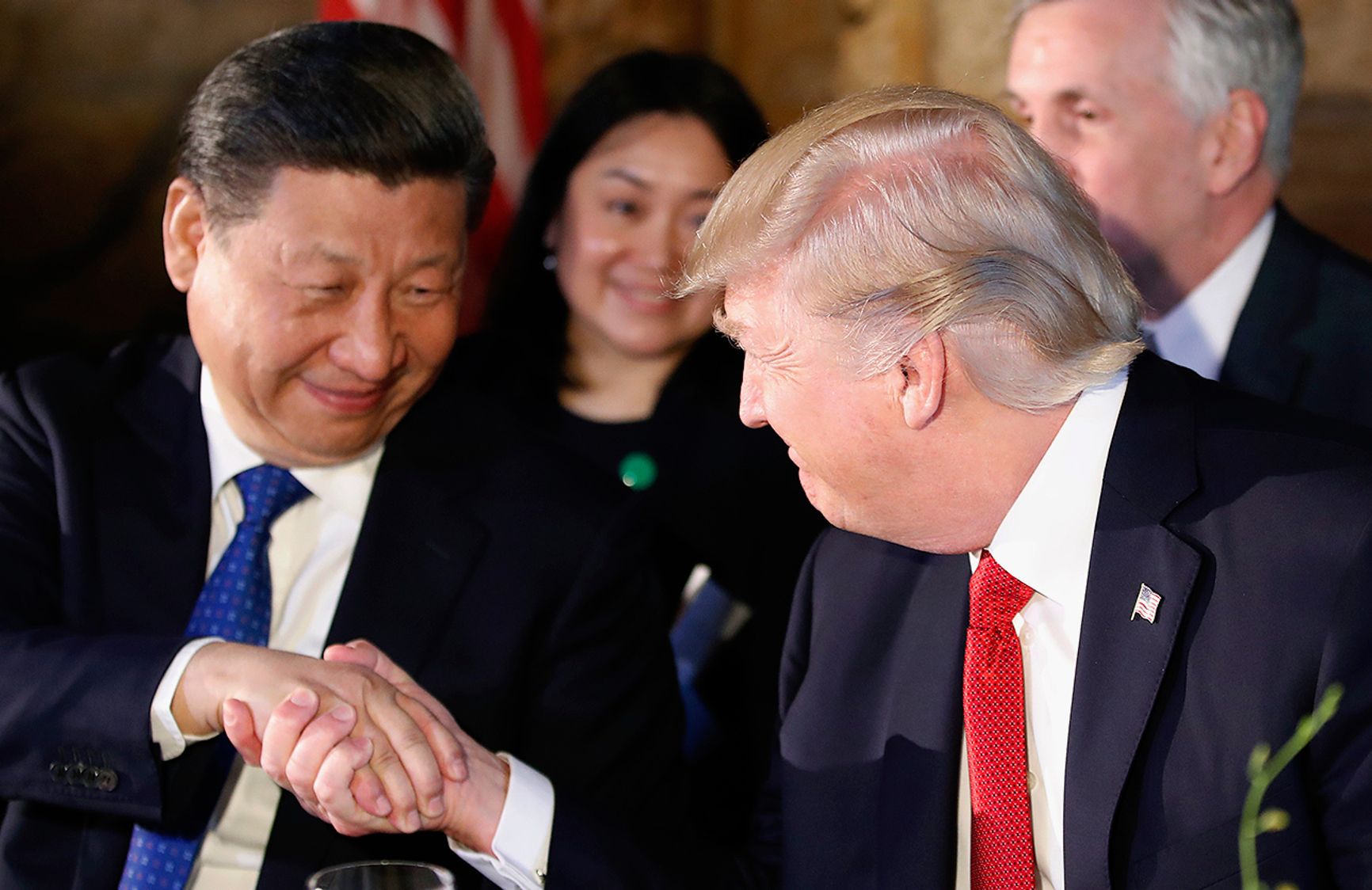
Си Цзиньпин и Дональд Трамп
Константин Эггерт: Сбудется ли мечта демократов и получат ли они вместо «Трампа 1.0» администрацию «Обама 3.0» в лице Байдена и Харрис? Ответ на этот вопрос также дает ответ на вопрос о тот, какой политики будет придерживаться новый президент в отношении Китая. Известно, что Барак Обама стал первым американским президентом, который заговорил о Китае как о главном вызове XXI века для США. Но на этом направлении было мало что сделано. Более того, по сути дела, США продолжали политику, согласно которой максимальное вовлечение Китая в международные дела, экономические, политические и многосторонние институты будет вести к смягчению китайского режима и его демократизации и превращению в ответственного участника мирового концерта великих держав.
Вне зависимости от политики администрации Трампа, все что делал Китай за эти четыре года показывает: эта политика провалилась. И любая попытка ее возобновить будет воспринята в Пекине как слабость, как повод давить на Соединенные штаты в разных точках мира и вести против них экономическое и политическое пропагандистское наступление. Полагаю, что политический инстинкт Байдена – это инстинкт переговорщика, он больше склонен искать консенсус. Насколько я понимаю, те люди, которые будут ему советовать на китайском направлении, придерживаются похожих подходов. Однако как Конгресс США, так и политическая реальность, заставят Байдена занять более жесткую позицию в отношении Пекина. При этом вовсе не обязательно впадать в риторические крайности Трампа. И вполне возможно продумывать свои шаги лучше, чем это делала администрация Трампа. Но возвращения к прошлому быть не может. Как история концлагерей для уйгуров, так и политический террор против гонконгских демократов должны были послать необходимые сигналы Байдену и его команде, что в одну и ту же воду дважды войти нельзя. Вода уже не изменилась.
Линас Кояла: С Китаем прорыв маловероятен. Опрос, проведенный Pew Research Center, показал, что избиратели обеих партий относятся к Китаю неблагосклонно: 83% республиканцев и 68% демократов критикуют вторую по величине мировую экономику. А поскольку стандартный набор проблем – геополитическая напряженность в Южно-Китайском море (из-за претензий Китая на 90% его территории), торговля и тарифы, 5G и права человека в Синьцзяне (где преследуют уйгуров) и Гонконге – вряд ли решится, то и напряженность, похоже, сохранится. Хотя Байден может быть более предсказуемым партнером, чем Трамп, он все равно говорит о соперничестве с Китаем: «Чтобы выиграть конкуренцию за будущее против Китая или кого-либо еще, мы должны усилить наши инновационные преимущества и объединить экономическую мощь демократий по всему миру для противодействия злоупотреблениям в экономической сфере». Тарифы, введенные администрацией Трампа, тоже вряд ли скоро исчезнут .
Байден и Турция
Джеффри Гедмин: Турция уже не впервые становится страной, с которой США, как говорится, не могут жить вместе и не могут обойтись без нее. Нельзя отрицать, что геостратегическая позиция, история и культура Турции делают ее одним из ключевых членов НАТО. И в этом не может быть сомнений. Однако эта убежденность базируется на уверенности в том, что Турция – в основе своей прозападное государство, в особенно проамериканское, что она может действовать с США заодно и противодействовать амбициям соперников или региональных игроков, которые не готовы к конструктивному диалогу.
Но в последние годы поведение турецкого руководства становится все более неоднозначным и в некоторых аспектах весьма проблематичным. Конечно, можно себе представить, что кто-нибудь в администрации Байдена скажет: давайте уже порвем с Турцией, она ненадежна, давайте выкинем ее и из НАТО. Но, с другой стороны, это не решит принципиальной задачи – приблизить Турцию и сделать так, чтобы она действовала в согласии с американской политической линией: взглядами США, их целями и внешней политикой. Сделать это очень сложно, но новой администрации придется над этим потрудиться. А еще сложнее оказать воздействие на Анкару в плане смены курса внутренней политики.
У нас, американцев, есть проблема. Мы думаем, что изменить мир – это инженерная задача. Если мы возьмем доску, маркер и нарисуем диаграмму и что-то в ней исправим, то сможем изменить мир к лучшему. Но иногда эта задача требует десятилетий. Новый возможный госсекретарь Тони Блинкен, как и многие американцы, верит в моральное лидерство США. Тут важно уравновесить уверенность в себе, в своих силах и в ценностях, с некоторым смирением, осознанием ограниченности наших возможностей и пониманием того, что каждая конкретная страна определяет собственные интересы. Даже те люди, которые в России или в Германии, Афганистане или Египте в целом настроены проамерикански, не просыпаются утром со словами: «Как мне снова сделать Америку великой?». Поэтому, когда мы пытаемся говорить с миром, надо учиться смотреть на себя со стороны.
Линас Кояла: Администрации Байдена, возможно, придется решить, вводить ли санкции против Анкары из-за того, что ее государственный банк не соблюдает санкции США в отношении Ирана. Более того, С-400, передовая ракетная система, которую Турция купила у России, рассматривается как угроза системам обороны НАТО, поскольку не может быть интегрирована в противовоздушную и противоракетную оборону альянса. Однако и администрация Байдена, и Турция могут быть склонны к прагматическому диалогу. Поскольку избранный президент США более открыто критикует Россию и нуждается в союзнике на Ближнем Востоке, значимость Турции становится очевидной. И в этой ситуации многое будет зависеть от готовности президента Турции Реджепа Тайипа Эрдогана пойти на уступки по важным для Вашингтона вопросам.
Константин Эггерт: Ближайшие годы станут очень важными для серьезного анализа политики в отношении Турции. Дело в том, что активная экспансионистская деятельность Эрдогана в зоне ответственности НАТО вызывает все большую тревогу. Можно было бы говорить, что ни Ливия, ни Сирия, ни даже Азербайджан с Карабахом и Арменией не относятся напрямую к этой зоне. Но визит Эрдогана на Северный Кипр в середине ноября 2020 года и его призыв к фактически разделу острова касается напрямую другого члена альянса – Греции.
Полагаю, что США придется теперь значительно больше уделять внимания Турции. Думаю, что первый инстинкт будет любой ценой сохранить турок в рамках альянса. Но, с другой стороны, сделать это будет не так легко, ведь Эрдоган добился смены армейской верхушки, которая теперь полностью ему лояльна. Он был переизбран на пять лет в 2018 году, но вполне способен остаться у власти и после 2023-го года. Администрации Байдена предстоит пережить немало – гораздо больше, чем предыдущей – не очень неприятных минут с Анкарой, потому что Эрдоган продолжит эту линию на возрождение международного престижа Турции, на демонстративное игнорирование интересов Запада, на политику ситуативных альянсов, в том числе и с Путиным.
Сохранить Турцию в НАТО будет нелегко
Пока что все ситуативные ходы Эрдогана были хорошо продуманы, он не выходит за рамки союзнических обязательств. Даже одноразовая покупка С-300 у Москвы (в ответ в том числе на покупку Грецией комплексов ПВО для защиты Кипра) вряд ли что-то принципиально изменила. Но в политическом плане Эрдоган будет все больше посматривать на Черное море как на внутреннее турецкое море. И тут у НАТО могут появиться новые вызовы.
Байден и торговля
Джеффри Гедмин: Думаю, что с приходом новой администрации в этой сфере образ мышления принципиально не изменится. Как в правых, так и в левых кругах преобладает понимание, что мы не можем остановить процесс глобализации и ничего поделать с взаимозависимостями в мировой экономике и свободной торговле. Это значит, что необходимо найти способы смягчить последствия этих явлений, что мы должны защитить наших работников, которые наиболее уязвимы в условиях стремительных экономических, социальных и технологических изменений. Попытки это сделать уже предпринимались в прошлом. Именно поэтому так много избирателей проголосовало за Трампа, и именно поэтому на праймериз 2016 года серьезную поддержку получил Берни Сандерс. Это был протест, желание показать Вашингтону, Уолл-стрит, крупным банкам, компаниям и технологическим гигантам, что большей части населения все изменения даются слишком тяжело, они слишком быстро происходят, а пользу приносят ограниченному кругу лиц. А людям нужны рабочие места и соцзащита.
Разумеется, люди, которые составят будущую администрацию Байдена, прекрасно понимают, что они не могут остановить процесс глобализации и свободную торговлю и вернуть мир на 30-40 лет назад. Но, подозреваю, что они будут подвержены тенденциям внутри Демократической партии, направленным на защиту производств и, может быть, будут готовы рассмотреть возможность внедрения политики, которая даже будет называться протекционистской.
Линас Кояла: В США, похоже, растет скепсис в отношении принципов свободной торговли. Согласно опросу Gallup, хотя «широкий взгляд американцев на торговлю является наиболее позитивным за последние четверть века», американцы считают выгодные торговые сделки более важными, чем международные права и сотрудничество. Напомню, что в 2016 году из-за споров вокруг издержек и выгод глобальной торговли Хиллари Клинтон лишилась поддержки в штатах «ржавого пояса», таких как Пенсильвания, Висконсин и Мичиган. Именно они стали полем битвы Трампа и Байдена.
Поэтому Байден заявляет о необходимости «гарантировать, что будущее «создается для всей Америки» всеми американскими рабочими» и что «американские рабочие могут превзойти кого угодно, но их правительство должно бороться за них». С учетом этого всесторонняя торговая сделка с ЕС кажется маловероятной. Начавшиеся при Обаме попытки подписать «Трансатлантическое торговое и инвестиционное партнерство» (TTIP), похоже, сойдут на нет. ЕС недавно объявил о планах ввести пошлины на товары из США в размере $4 млрд. Даже если этот шаг рассматривать как ответ на ранее введенные Америкой пошлины на товары из ЕС, он показывает: чтобы что-то изменить, потребуется немало времени. И хотя новых пошлин в ближайшем будущем ждать не стоит, новая большая торговая сделка США-ЕС кажется сейчас маловероятной. Вдобавок, в начале своего срока администрация Байдена будет перегружена внутренними американскими проблемами.
И это, кстати, плохая новость для Великобритании. Борис Джонсон стремится подписать новое торговое соглашение с США, доказав тем самым, что Brexit означает улучшение торговых отношений с третьими странами. Однако, похоже, это не входит в число приоритетных задач Байдена, по крайней мере, на начальном этапе. Более того, Байден, кстати, ирландец по происхождению, подчеркнул свою поддержку Белфастского соглашения 1998 года, известного также как соглашение Страстной пятницы, о политическом урегулировании конфликта в Северной Ирландии, «заключенного при посредничестве президента Билла Клинтона и положившего конец десятилетиям межрелигиозного кровопролития». Следовательно, если «развод» Британии с ЕС не пойдет более или менее гладко, то ее сделка с США также может столкнуться с трудностями.
Константин Эггерт: Насколько я понимаю, Байден в целом сторонник свободной международной торговли. Однако, думаю, что и здесь внутриполитические условия в США не позволят ему броситься сломя голову в фритрейдерство образца 2004 года. Более того, есть целая серия очень серьезных вызовов. Например, соглашение о свободной торговле с Великобританией, которое тесно увязано с условиями, которых Лондон добьется в отношениях с ЕС после Brexit. Объективно серьезные проблемы существуют в переговорах с ЕС по аналогичным вопросам. Где будут изменения, так это в отношении Азиатско-Тихоокеанского региона. Здесь у Байдена более позитивный взгляд на вещи, чем у Трампа. Но тут вновь встает вопрос, какую линию Байден будет проводить в отношении Пекина.
Вопрос о возвращении производств в США, об ограничении китайского демпинга, о защите американских работников был поставлен так остро и настолько очевидно является важной темой в том числе в ряде штатов, которые Байден отбил у Трампа, что сделать вид, что этих четырех лет не было и что можно вернуться к прежним подходам, полагаю, у Байдена просто не получится. По чисто домашним причинам он должен быть в экономическом плане несколько большим даже националистом, чем протекционистом, чем бы он инстинктивно хотел.