
Translated material
We will not calm down to the last
How do telegram chats “programs” that help detainees on shares in support of Navalny work

On the shares in support of Alexei Navalny on January 23 and 31, as well as on February 2, thousands of people were detained (the exact number is still unknown). Many of them were arrested and sent to specialists, where they kept in inhuman conditions. The arrested was helped by human rights activists, as well as volunteers from telegram charts with the general name of the “program”. "Medusa" found out who and why organized the work of chats, what coordinators and volunteers do and what the detainees themselves say about the chats.
“People kept the night in buses and basements, selected the phone, threatened to break their fingers if the prints did not pass. We handed over to the prisoners food from McDonald's-the employees ate half, ”says Ivan Ostapchuk, the administrator of the Chat“ Transfer ”in St. Petersburg. And this is only a small part of everything that the detainees encountered after the rallies, he says.
Ostapchuk, who in “Peaceful” works as a programmer in a brokerage company, was not interested in politics two years ago. His believing parents had pro -government views, and the young man himself sincerely believed that the opposition was paid for visiting rallies. Everything changed in the summer of 2019-during protests due to elections to the Moscow City Duma Ostapchuk “for the sake of interest” he went from St. Petersburg to Moscow. During one of the rallies, he “passed by” the shares, he was detained and taken to the police department, where he spent ten hours.
Ostapchuk recalls how in the police department he received a transfer with food and drinking water - from strangers who helped detained demonstrators. Such support was impressed by: “[The former] world began to crumble when after that I first watched Navalny’s video. I felt that they would come for me right now, since I was becoming an enemy of the people. There was a restructuring of personality. ”
"Transmission is like first aid"
The program that Ostapchuk received in 2019 was organized by volunteers in the telegram-chat "Transmission. Moscow". It unites people who want to help detainees and arrested at rallies - they help relatives find people who disappeared after the action, take them water, food and necessary things, meet them at the insulator after liberation. Now there are more than seven thousand people in the chat.
This chat was created by journalist Elizabeth Nesterova. According to her, in March 2017 - after the action “He is not Dimon” - the Moscow police department, as now, was crowded. The detainees lacked food and water. Then Nesterova wrote a post on Facebook in which she asked if someone was ready to travel along the ATS with programs. “And just a day my phone was not silent,” the journalist recalls.
Nesterova created a chat in a telegram, where it would be possible to coordinate people who are ready to help. Then Antonina Zikeeva joined her, with whom they were already familiar. By education, the actress, and is now organizing filming films. She herself could not go to the rally on March 26 due to her leg injury, but decided to help the detainees.
“Lisa and I in this story went to meet each other. I saw that because of her post she was filled up with comments, and realized that I needed to help everything with the organization, ”recalls Antonina in a conversation with Medusa. Zikeva became a chat coordinator and took on organizational issues - for example, made up signs of those who are ready to help, and those who need help.
The girl notes that both of them have been becoming more and more recently. So, after the rally, the number of chat participants increased one and a half times, and after the shares of January 31 and February 2 - three times.
The second chat of “programs” - it is called “programs. St. Petersburg ”and was created in the summer of 2020-increased even more. According to Ivan Ostapchuk, until January 23 there were only 200 participants in it, now more than 3500.
The chats of Moscow and St. Petersburg are almost not connected, but when Ostapchuk decided to create a St. Petersburg branch, he consulted with Nesterova, how to organize work correctly. Antonina Zikeev in a conversation with the "Medusa" calls this the work "on the franchise": "They simply adopted experience, we do not control them in any way."

People from small cities often ask them to advise in how to create a chat, says Zikeva. “We explain that it’s easier to gather the court, go around all the ATS and feed people. Comb (we ourselves are not needed, and we ourselves are wound up from any attempts to build a vertical and be called the organization. Almost everyone should be able to make programs - it is like providing first aid. We can simply teach how to do this first aid so that there are fewer mistakes and more efficiency, ”Zikeva explains.
Now - in the wake of mass detentions of the beginning of 2021 - in addition to the Moscow and St. Petersburg chats, there were “programs” chats on separate special receptionists and even separate cameras - they have relatives of prisoners who are sitting in the same cell can more quickly learn news about their loved ones. There is also a bot, through which people are looking for people in all the ATS.
"We will not calm down to the last"
Chat work is arranged as follows. Coordinators (about 80 for all chats) are prepared in advance for each action. They determine who and when will be on duty in the chat, are associated with the OVD-Info project and agree who will keep in touch with human rights activists.
“There is a big plus of our cooperation with the“ OVD-Info ”that we are informing [about the detainees] to them, they are us, and we will double-check each other. And when the “fortress” plan begins to include, we attach to them those who can break through this plan: municipal deputies, lawyers. This does not mean one hundred percent success, but the main thing is to show [security forces] that we will not calm down to the last, ”says Zikeeva.
If a person was detained at a rally, he himself or his friends can write in the “transfer” of the name of the detainee, his year of birth, time and place of detention, police department (if it is known where a person was taken away), and whether the person needs medicines-and other individual points.
After that, the Coordinator on duty comes in touch with the chat. He advises people what and how to do in the first place. For example, if a person from another city reports that his friend or relative has just been detained in Moscow, then the coordinator will tell you that you need to wait a few hours. “The detainees can be released - especially minors. It makes sense to break away if you are in another city, only if it is a child whom there is absolutely no one to pick up, ”Zikeva explains.
Three hours after the detention - if a person is not released - the coordinator again associates with relatives and is looking for volunteers who are ready to give the program: food, water, hygiene products and the necessary medicines. All this is bought by the volunteer himself, but if necessary, they can return the money. Other participants in the “programs” do this directly to volunteers, after they provide checks for purchases.
At the same time, the chat coordinator is associated with the OVD-Info project and other human rights activists. If the detainee needs legal assistance, he is looking for a lawyer, if they are transported to another police department, they are looking for volunteers who are ready to get to a new place with the transfer, if a person is released, they order a taxi to the house.
Coordinators also help people look for their loved ones in the police department and special receivers: human rights organizations, volunteers who managed to get through to special receivers, as well as other detainees and their relatives, who transfer information about the cell neighbors, help to recognize this information.
Coordinators in the chat "Transmission. Moscow ”can only become those whom Zikeev or Nesterov personally know, as well as volunteers to whom they trust: girls fear that unfamiliar people will gain access to the discharge database collected by the organizers and use them in their interests. Zikeva says that people of various ages and professions are becoming coordinators: teachers, programmers, housewives, students and entrepreneurs. They are united only by support of protests, Antonina emphasizes.
Volunteers in “programs” usually support demonstrations, but sometimes begin to help detained for their unobvious reasons, says Zikeva. One volunteer several weeks ago died from Covid two relatives at once - and he decided to survive stress, helping others. Another volunteer was the woman whose daughter was detained for shares. “Her mother comes to us, and we are already waiting for a curse on our heads or that she will ask to help separately, and she says:“ My daughter is rang out here, she had to volunteer. Let me be instead of her, ”recalls Zikeeva.
Ivan Ostapchuk says that there are a lot of volunteers now-if you need to help with something, sometimes 15 people respond at once. “These people cannot go to the action for various reasons and help this way,” Ivan explains.
“There was no other life except chat. I slept every three days "
Since 2017, the work of “programs” has changed a lot, says Antonina Zikeva. Previously, the main problem was that promotions happen very often: “You will feed some, and there was already a second action. There was a conveyor. " And now everything has “blocked” the total number of detainees, she notes.
“They take the ATS for 20 hours at the stage of detention. They conduct “tour” when people are transported from one police department to another. They bring such a number of people that no ATS can digest. People disappear for three days or more - this was not there before. Now a huge number of missing. There are people about whom we still do not know where they are, ”says Zikeva.
As a result, chat coordinators have to work almost around the clock. Even his birthdays at the end of January and early February Antonina Zikeeva and Lisa Nesterova spent in courts and traveling along special receptions. Ivan Ostapchuk from St. Petersburg also notes the grown load: “There was no other life, except for the chat of the programs. The whole apartment was in power engineers, slept every three days. ”
“This season [rallies] is most surprised by the human superlace: to withstand, come, break through, achieve. Volumes grow, rigidity is growing, but people are heroes. They run, freeze, stand, break down in the night, exposing themselves to risk for the sake of completely strangers - this is the main miracle that happens, ”adds Zikeev.

In total, after three shares in support of Navalny at the beginning of this year, volunteers of the “programs” made about 200 programs detained in the police department and at least 1,500 programs arrested in special receptionists. And together with the Falanster bookstore, the book was transferred to specialists.
43-year-old Valentin Fedkin works as an anesthesiologist at the Moscow Scientific and Practical Center for the fight against tuberculosis. He was detained on January 31 on the way to work, and then arrested - for participating in the action. In the special detention center in Sakharov, Fedkin was until February 7th. In a conversation with Medusa, Valentine recalls that when he was given the phone in Sakharovo and he called his wife, she told him about the “program” chat.
“She said that the people are cooperating and even there is a chat of our camera, there relatives gather and discuss what to bring and when to meet. When you sit alone and without communication with the outside world-only false guards who constantly disinform for some reason-and here, it turns out, they don’t forget about us, wait, hope, remember-this is a great joy for thecardic. We lacked food and water, and we already knew that they knew about this outside and the program was being prepared, ”the doctor recalls.
According to Fedkin, the most important thing was water - in his cell there was a man with urolithiasis, and from the water that was in the special receiver, his back and kidneys began to hurt. The special receiver in Sakharovo was not ready for such a number of detainees, the doctor emphasizes: "The guards directly said that they did not know what to do with us." Only five days later, employees at least a little set the work on receiving the programs, he says,
“People stood all day, 100-200 people, and programs were processed very slowly. In Sakharov, there was a big chaos, the workers were very not ready for such an influx of guests, ”recalls Maxim Orishchenko, who was also detained on January 31. The young man went to the action with his friend, the police stopped them on the way and invited them to present backpacks for inspection. Orishchenko had a memo from the OVD-info about what should be done during the detention at the rally. The police called it "agitation" and took the young people to the police department. The court appointed a young man seven days of arrest under an administrative article 20.2 hours 6.1.
Orishchenko says that his relatives used the “programs” chat to understand when it is better to organize the program. But the young man did not have time to get her: on February 4, the court abolished the arrest at the appeal. The transfer came after the release, other detainees received it on shares.
On February 2, Muscovite Boris Krotov was detained 22-year-old daughter, who stayed under arrest for five days. The most useful in the chat, in his opinion, were signs with information, which of the detainees in which camera is located - they helped organize individual chats to their family and friends of the arrested chambers. “And the OVD-Taxi chat (they are looking for cars for people who get out of special receptions) to many helped a lot,” recalls Krotov.
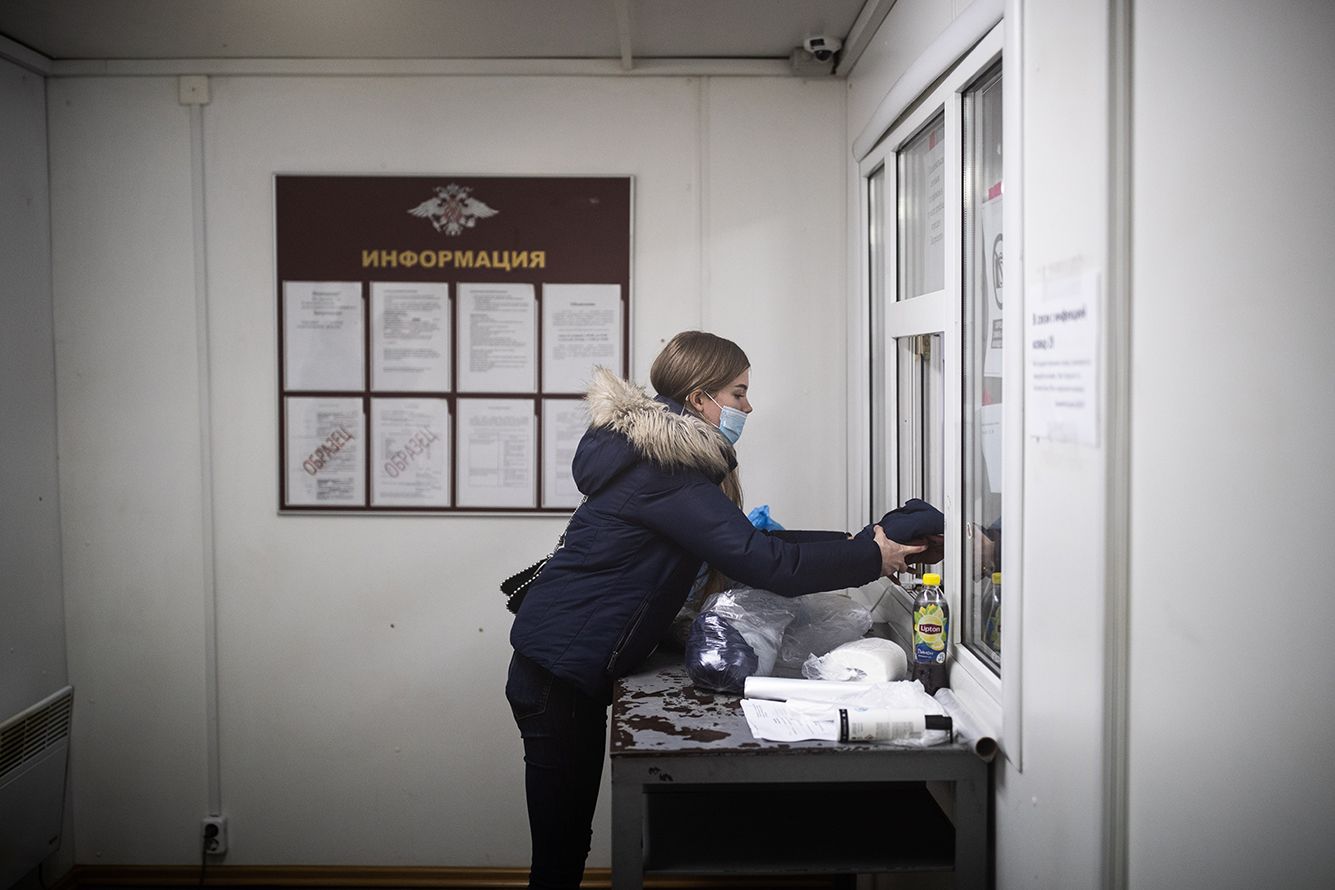
Antonina Zikeva notes that the security forces generally negatively perceive volunteers who come with the programs: “They are treated as potentially detained. Respect is rare, and this is more likely from employees who will not stay here for long. ” On one of the last nights, the special -reception officers drove off the cars with volunteers from him, claiming that otherwise “riots” can begin in Sakharovo.
***
According to Antonina Zikeeva, another difference between the latest actions and the past - more and more people turn to activists for psychological help.
“Farm calls who did not expect at all and are far from rallies. We have to talk with the young detainees who are in great stress from how they treat them, ”she says. According to the “programs” coordinator, not only them faced this, but also the “OVD-info”, as well as other human rights organizations that work during rallies.
According to Zikeeva, in the near future in conjunction with “programs”, “OVD-Info” and other human rights activists will begin to work by psychologists who will help the detainees. In the meantime, for those who have already left the special reception, the “programs” created a separate chat.
“This chat is therapeutic in nature. If people will write in a common chat, they will interfere with us to work, but here they come, tell, they can share valuable, speak out, ”says Zikeeva. In it, people thank for help and give advice: who and where they release, what certificates should be received and how to behave, when the arrest ended. Called the chat "life is not Sakharovo."
Alexandra Sivtsova