
Translated material
Sandarmokh remembers everything. Tamara Eidelman that the pursuers of Yuri Dmitriev want to make us forget
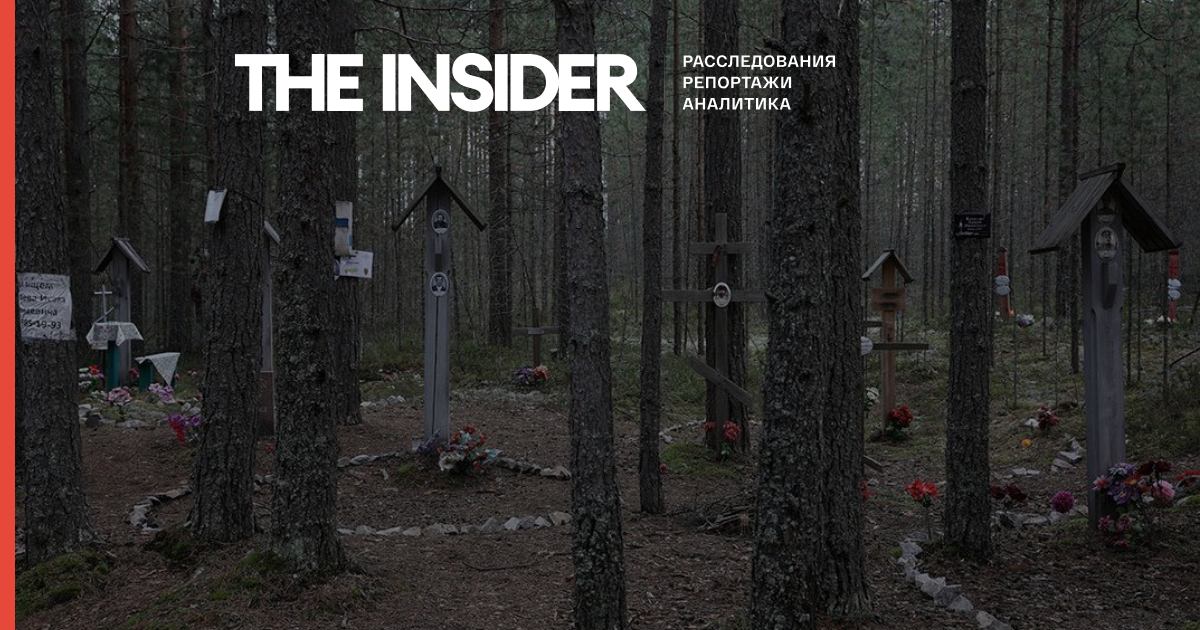

Sandarmokh remembers everything. Tamara Eidelman that the pursuers of Yuri Dmitriev want to make us forget
26 February 2021Tamara Eidelman
historian, Honored Teacher of Russia
Last week, the next court upheld the sentence to the researcher of Sandarmokh Yuri Dmitriev: 13 years of colony. Four hundred cultural figures, thousands of fellow citizens spoke out in support of the researcher of mass burials of the victims of Soviet repression in Karelia. However, the heirs of the executioners, among whom may be the assistant to the president, modern Chekist Anatoly Seryshev, are adamant in his desire to kill Dmitriev behind bars. The historian Tamara Eidelman thinks why Sandarmokh is the most important place of Russian historical memory, and why, contrary to everything that happens, Dmitriev’s business continues and will continue to live.
The windows of my apartment overlook the worship of the mountain. When we moved here - in 1978 - there really was a park, it was already called Victory Park. Trees grew there, the old people sat on benches, in winter you could even go skiing. And in the center there was a small monument. There were no special artistic merits in it, but it seemed to me then a deep and good meaning - around the place dedicated to the memory of the dead in the war, there was a calm life - parents with children went, older people could sit down and remember the past ...
Then they began to create what we see now. It was the most terrible to see how the trees were taken out of here-they were uprooted with the roots and taken away-it seems to be transplanted somewhere, but the feeling was painful, as if they were doomed to death. Then the mountain was covered with concrete slabs, built a huge museum building, where the role of Comrade Stalin was abundantly represented (just in case I remind you: not Stalin won the war at all), they put a church, mosque and synagogue in vast space, and in the most prominent place - a giant obelisk, many times higher than any Egyptian, is an absurdly woven figure. At first, next to Kutuzovsky Prospekt there was a terrible type of sculptural group “The Tragedy of Peoples” - despite the bashfully internationalist name, everyone believed that it was a monument to the killed Jews. Now he was moved to the depths - they say that the mayor of Luzhkov, passing by, was so horrified by the appearance of this work that, despite his friendship from Cerethel, he ordered the sculpture to push away - for which I personally will be forever grateful to him.
Now about this place is a monument to the soldiers of the First World War. Here, on the slope of the hill, they sometimes arrange a flower clock, and in winter, also ice slides, where people stand in line for an hour to roll from them once. Nearby kiosks with souvenirs. And there are tanks of the time of the Second World War and the Fountain Complex, which once “Rossiyskaya Gazeta” awarded the title “The most patriotic”. The number of jets that beat from them corresponds to the number of weeks of war, sometimes they are highlighted, and they acquire a bloody red color.
And here are "festivities." Already in the morning of May 9, thousands of people reach here - young and old, sober and tipsy - more and more are more than the tipsy in the evening. Young girls go, for some reason rushing into an old military uniform, parents lead children in caps. The metro works only to the exit. What all these people do on this huge, cold and soulless space, I cannot understand. What kind of commemoration, what lively memory can we talk about among terrible sculptures, a huge, suppressing man of the museum building and tanks strings? Here you can walk, ride rollers, look at military equipment - but do not remember in any way. The commemoration is personal, family, and not at all state. The state can (and must) provide the opportunity to recall the dead, that's all ...
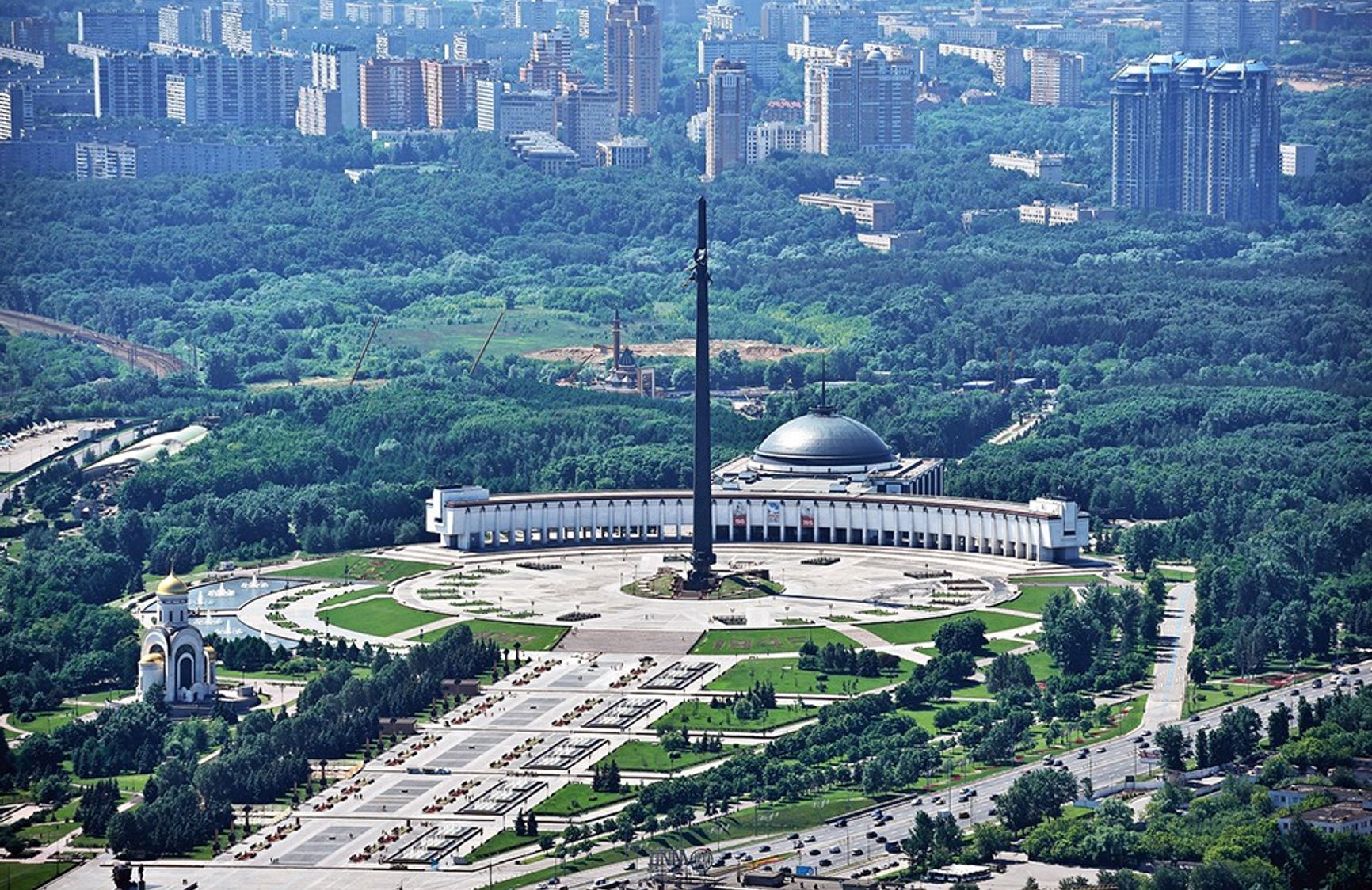
Victory Park in Moscow
Among all the monuments to the victims of fascism, my heart is most touched by the memorial to dead people from the people of Roma, whom we are used to calling gypsies. It is located in the very center of Berlin, not far from the Bundestag, but is essentially a small garden, in the center of which is a small lake, where the sky is simply reflected. Around there is a winding path, covered not by powerful slabs, but by their fragments - like a broken road along which gypsy codes rolled for centuries. Many of them have written the names of those places where the Nazis destroyed Roma. And the most amazing - from time to time from the trees surrounding the memorial, mournful music is heard. And then it seems that nature itself cries about the dead.
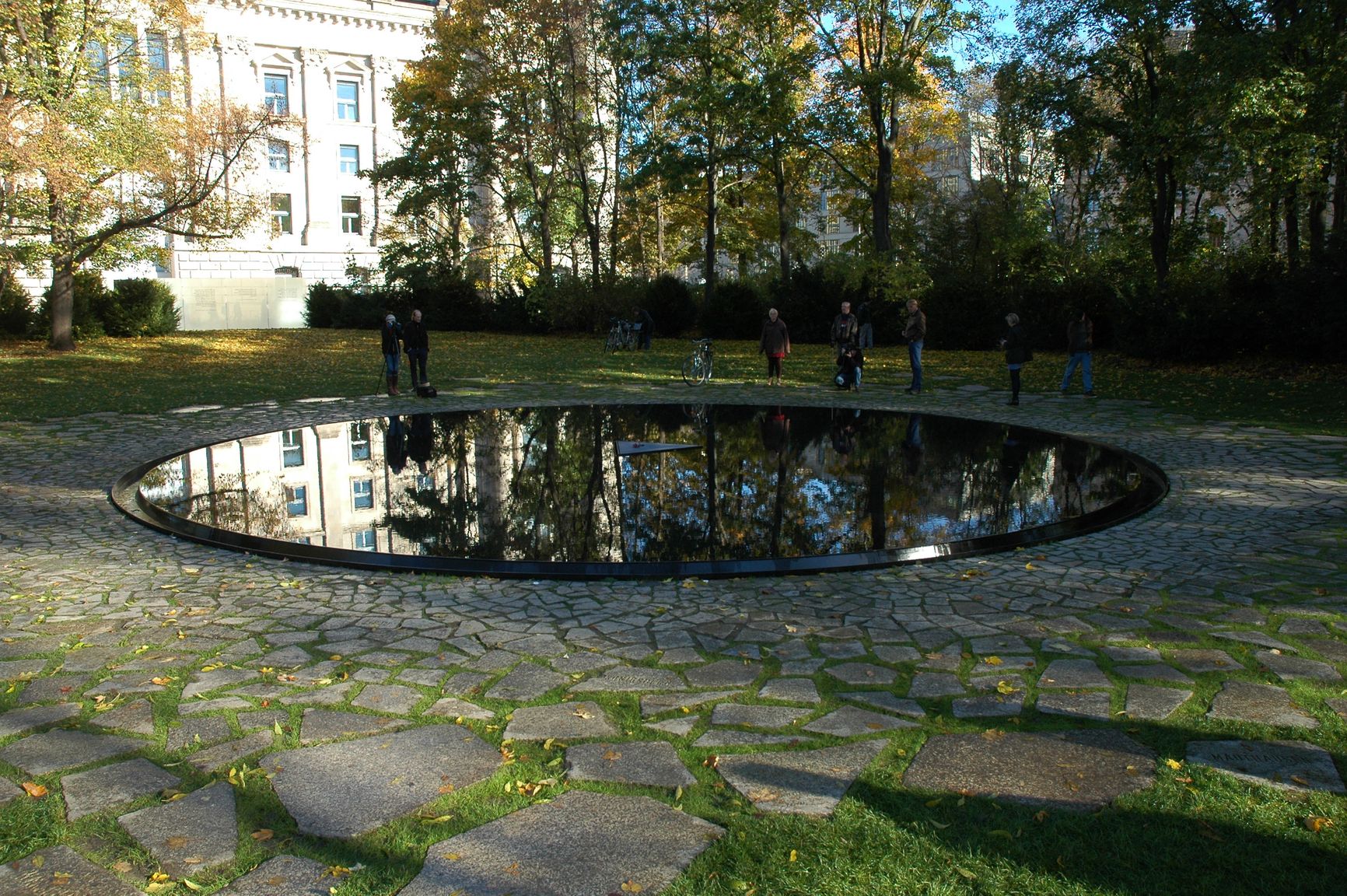
Berlin. Memorial in memory of the peoples of Sinti and Roma
The famous “stumbling stones” - tiles on the sidewalks next to the houses, from where people were taken away to death, also make an equally strong impression. Some Jewish communities of Germany objected-they said that it was not good if people would walk on these tiles, but it just seems to me again a strong thought that a person suddenly, walking along the street about his business, sees under his feet a memory of a former tragedy. This idea is rethought in our country in a remarkable project “Last address”, where signs with the names of the victims of the Stalinist terror are placed on the walls of houses. And this is also an incredibly strong personal message, important not only for relatives - a person goes past the house and sees the name of another person who lived here, rejoiced, grieved, loved - and then disappeared. It is no accident, by the way, there are houses where today's residents protest against the establishment of signs - a memorial on Poklonnaya Gora can simply not be noticeable, turn away from a giant obelisk, but the name, a specific name of a particular person cannot be noticeable on the wall of his house is already much more difficult.
And if we are talking about personal memory, about those memories that are not imposed on top, are not broadcast in official programs, but live in the hearts of people, then the memorials installed in the places of executions are immediately recalled. And, of course, a word that has already entered the history of our country immediately arises, and no one will never be able to delete it - Sandarmokh.
This is a strange, incomprehensible Finnish word, the meaning of which no one has yet explained, it seems that it will remain a symbol of terrible tragic events - both the thirties and today. Sandarmokh is one of the largest burials of Stalinist repressions, at least from those that we are known today. I do not exclude that others will be found later. But in any case, this place in the Karelian forest is near the Medvezhye Gora station, and today - next to the city of Medvezhyegorsk, will remain one of the strongest symbolic places associated with memory - historical and personal.
They brought people here - today it is known about more than 6 thousand - but who knows how else this figure will change? -In 1937-38, but it is possible that this was done before-it was painfully “convenient” this place-not far from one of the largest camps in the local places of Belbaltlag, not very far from the railway, where prisoners could also be delivered from other places, for example, from nightingale. Here they - connected - were shot and buried in the ground, condemning to eternal oblivion.
But there was no oblivion. It was not possible to take with their lives from these people - peasants and workers, fishermen and professors, artists, scientists, and military - their names, it was not possible to kill memory.
Today, Sandarmokh is associated primarily with the name of Yuri Dmitriev, who gave many years to his life in order to create a memorial complex here and find out the names of those executed in Sandarmokh. Now the old tragedy has been a new one - the fate of Dmitriev himself, slandered and thrown for many years in prison by those who do not want the memory of past atrocities to be preserved.
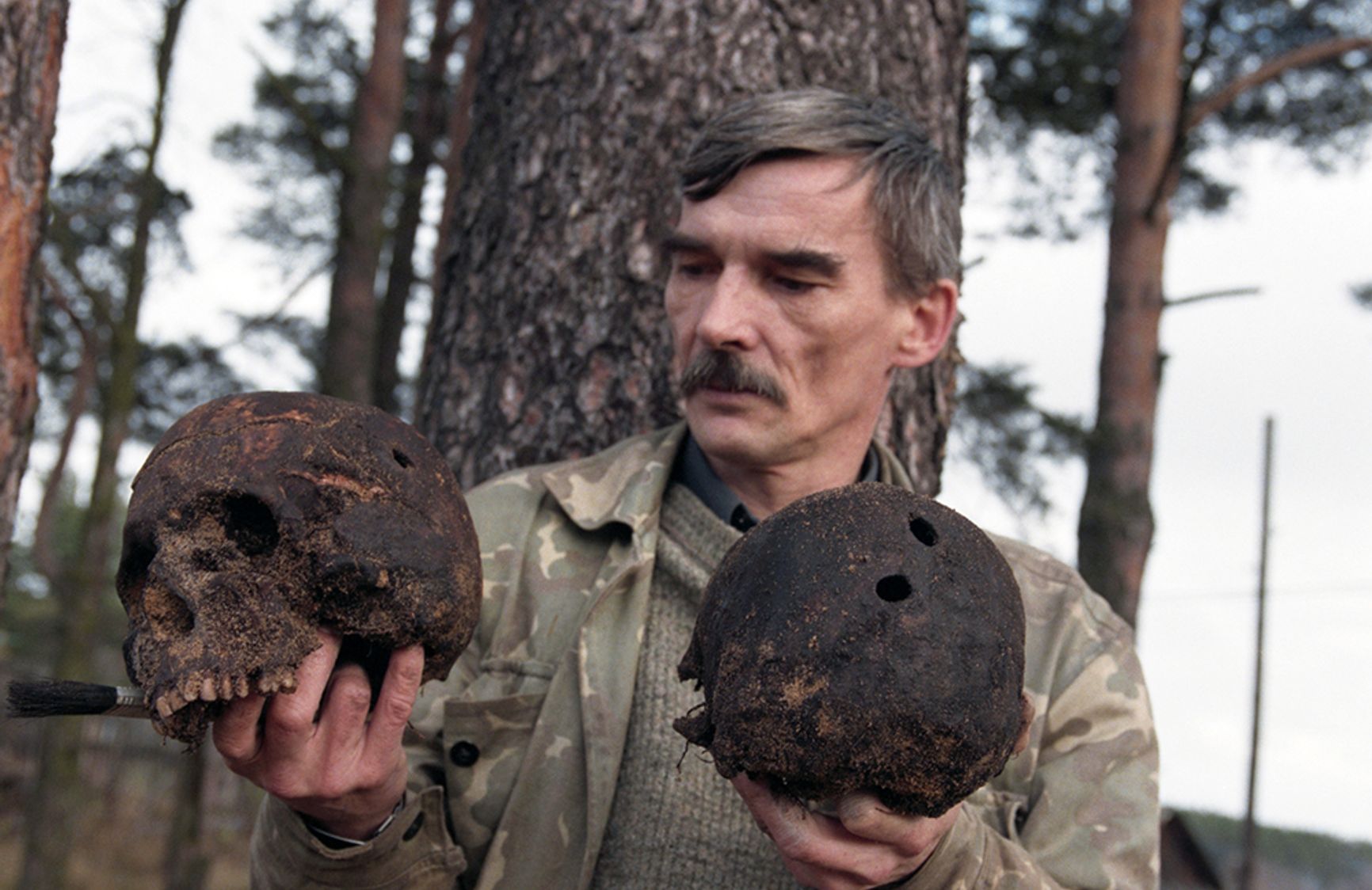
Yuri Dmitriev, 1998
TASS
But only Sandarmokh is a matter of life not only Dmitriev. When you begin to read about Sandarmokh, then you see that the revival of memory occurred thanks to the efforts of a huge number of people. Petersburg historians Veniamin Iofa and Irina Fliga devoted many years to the search for people who were taken out during the years of large terror from the Solovetsky camp - and disappeared into the unknown. Yuri Dmitriev and Ivan Chukhin in Petrozavodsk long before excavations at Medvezhyegorsky began in 1997, made up a book of memory, collecting the names of the victims of terror in Karelia.
And then to these efforts of several remarkable and courageous historians who broke through, despite all the obstacles, into the archives of the NKVD, who worked with documents for years, from one touch to which it becomes scary, added the efforts of many people who participated in excavations in Sandarmokh and in the structure of the memorial. Those who continued to search for new and new names, return people from oblivion of the fate of people. Those who also wrote books about Sandarmokh and compiled lists of the dead.
The books of Yuri Dmitriev “The place of the shooting of Sandarmokh” and “The place of memory of Sandarmokh” - this is far from just lists of executed - although already in order to compose them, a huge job was needed. It also published stories about individuals who died in Sandarmokh - about the actor and the poet, sailor, engineer, accountant ... They were written by relatives of the dead or those who, for one reason or another, began to study the history of the family destroyed by terror. And this seems incredibly important to me. The activities of Chukhin and Dmitrieva, Iof and Fliga became a magnet, attracting dozens of people who also searched in archives, collecting memories, who also did not want to disappear about the dead, disappeared without a trace.
And then this is the core of those who were looking for, remembered, revived, attracted hundreds of people to themselves - those who come to Sandarmokh today and leaves the photos of their relatives there, attachs notes to pine trees rising above the graves, puts crosses or simply remembers - and turns the bright Karelian forest storing gloomy secrets - into a real huge cathedral, into a giant memorial, into a giant memorial Filled by the memory of the past. The same memory, without which it is impossible not only to move into the future, but simply to live.
The procession of the path that Yuri Dmitriev is taking place today also became part of the history of Sandarmokh, and people who are united today to help the historian to attend the court hearings to sign letters in defense of the slander, or simply disseminating information about this wild process - this is also another layer of those whom Sandarmokh brought together, another ring that arose around the first core, composed of several heroic historians. As if a huge planet of good and memory is overgrown with new and new rings, and it depends on these rings how we will live on.