Date
Author
Анастасия Якорева, Дмитрий Кузнец, Светлана Рейтер
Source

Preserved copy
Translated material
"Videos with humor" for young people. "Lyrical videos" for those for 55
The state launches an advertising campaign in support of vaccination. The authorities believe that the "satellite" in the country is already enough - but not everyone wants to be vaccinated
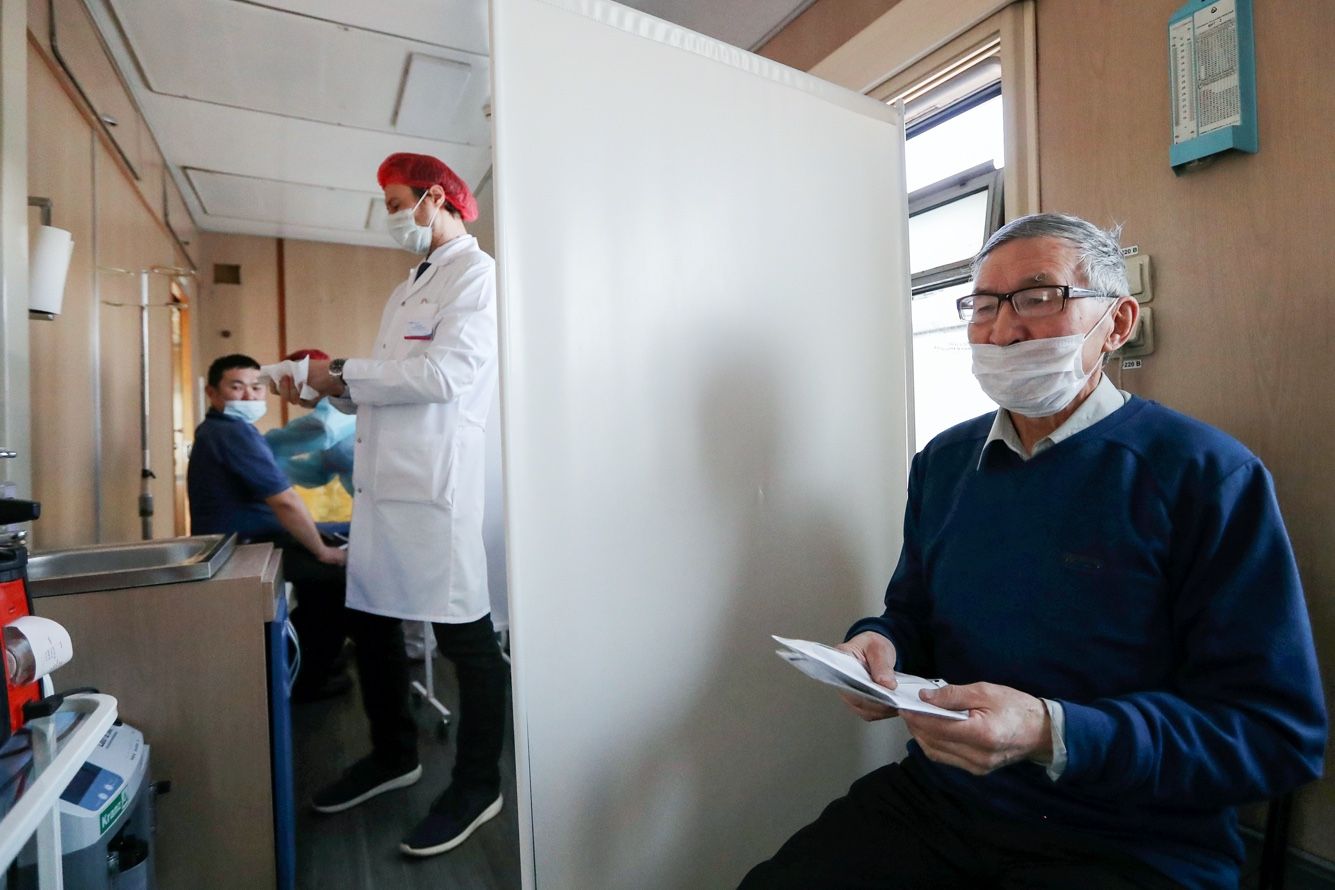
The production of a vaccine from coronavirus in Russia is growing: if 12.5 million sets were produced in March, then in April 17 million will be produced, and in the first half of 2021 as a whole-about 80 million. According to the authorities, now the main problem is not a lack of a vaccine (although in the regions people stand in lines to get a “satellite”), and people's reluctance to vaccinate. It is planned to solve its authorities, including using a large -scale advertising campaign “on all buttons” of the TV, which starts in the near future.
By the end of March, only about 4.5% of the population or 6.3 million people were vaccinated in Russia from coronavirus, President Vladimir Putin said at a special meeting on the course of vaccination on March 22. 4.3 million citizens are vaccinated with two components of the vaccine, and the vaccine was the first component two million more, he added.
Upon maintaining the current vaccination, the country will reach collective immunity only in August 2021, the Deputy Prime Minister Tatyana Golikova warned . “The required level of vaccination is determined by scientists: without taking into account the already overgrown, as well as children under the age of 18 years, this is 60% of the Russian population, or 68.6 million people,” the Deputy Prime Minister explained .
Therefore, the pace of vaccination needs to be increased, for which it is necessary to direct “sufficient volumes of the vaccine” to the regions and continue to inform people how to get vaccinated - this is how Putin formulated the task at the meeting.
At the same time, according to the interlocutor of Medusa, close to the Ministry of Health, by about the end of February the “narrow place” was precisely the lack of a vaccine within Russia: the doses were simply not enough to ensure all regions - the source did not call specific numbers.
The queue for vaccination is in the Kaliningrad region, the interlocutor in the regional government told Medusa, previously reported two -month lines in the Novosibirsk region, about many thousands of lines in Sakhalin and in Crimea . 40% of doctors interviewed by Levada said they did not have enough vaccine to cover the demand for it. At the same time, Moscow doctors, on the contrary, encounter an excess of free slots available to those who wish.
The problem with the insufficient production of the vaccine has already been resolved, the Minister of Industry Denis Manturov reported at a meeting on March 22: in March, its production increased to 12.5 million sets of vaccines , in April 17 million sets should be released, and 80 million in six months. In mid -March, the “active breakdown” of the vaccine in the regions began, at the same meeting, the head of the Ministry of Health Mikhail Murashko said (but whether as a result of this line behind the vaccine in the regions, it was unknown).
“In the near future, a narrow place will be the readiness of the population to be vaccinated,” said the source of Medusa, close to the Ministry of Health. This is also evidenced by the data of the Levada survey: doctors see the reason for the low rate of vaccination in the distrust of people with existing vaccines and in a negative attitude of society to any vaccinations in general.
Russia was in last place in the level of trust in the domestic vaccine among the eight largest developing countries, the Credit Suissesurvey showed. Similar results are given by the IPSOS study : out of 15 countries in Russia, the most categorical opponents of vaccination - 33% of respondents turned out to be the most categorical opponents. “Therefore, a massive promotion of the idea of the need for vaccination will be included,” adds Medusa interlocutor close to the Ministry of Health.
Putin himself was vaccinated (which vaccine was not reported) the day after the meeting on vaccination. Medusa could not find out whether the president was vaccinated part of the vaccination advertising campaign.
"On all buttons"
In mid -April, several videos will be released on Russian television channels in support of mass vaccination as such - there will be no names of vaccines in them. The production and promotion of rollers is engaged in the ANO “National Priorities” , which is also conducted by the Stopkoronavirus.rf project. The former deputy head of the Secretariat of Deputy Prime Minister Tatyana Golikova Sofia Malyavin is headed by ANO.
The VTsIOM survey conducted at the end of 2020 showed that about 38% of Russians are ready to vaccinate from coronavirus, but basically these are people of the older generation. 52% of the survey participants do not plan to vaccinate, most of them are young people 25–34 years old, and the main reason for the respondents called the insufficient knowledge of the vaccine.
According to the interlocutor of Medusa, close to ANO, for young people they will release “videos with humor”, for the older generation - “lyrical videos” with heroes aged 55+. The videos are made, in particular, for two target groups: people who are afraid to vaccinate, because they have chronic diseases, and those who have not yet made a decision in principle.
“The task of the information campaign is not to convince those who are not ready to vaccinated, but in that those who are ready did not postpone this decision for an indefinite period,” Medusa said in ANO.
Employees of National Priorities made videos on their own, says a source close to ANO. There was no money for promoting videos - by agreement, television channels will show them for free.
The video in support of vaccination will be broadcast on “all buttons”, depending on the target audience-on the first, “Russia-1”, TNT, STS and other channels. The representative of ANO “National Priorities” told Medusa that ANO “will contribute to the implementation of an advertising campaign for vaccination at the federal level and in the regions.”
At the same time, part of the television channels has already made its own videos “in support of vaccinations”: for example, Channel One shot a video with TV presenters Igor Kirillov and Leonid Yakubovich; These videos are laid out on the channel website. Vaccination at the first is also advertised by actor Dmitry Dyuzhev, actress and founder of the Life Foundation Chulpan Khamatova and other celebrities. In each video there are direct calls: “Please take a vaccine” (Valeria Kraslaev) or “be sure to vaccinated” (Chulpan Khamatova). Russia-1 and STS also informed Medusa that they made videos with their stars and leading in support of vaccination.
“The advertisement began on all channels a week ago, before that we did not have a vaccine advertising,” says Medusa interlocutor on one of the federal television channels. “But this is a common thing: so far they could not provide [the desired volume], it was quietly, as soon as it appeared, the campaign immediately began.”
Anastasia Yakreva and Svetlana Reuters with the participation of Dmitry Kuznets