
Translated material
A year of house arrest: how residents of European countries survive quarantine
A year of house arrest: how residents of European countries survive quarantine
The Insider
April 9, 2021In Russia, quarantine restrictions, even if they still exist in some form, are poorly observed - people stop wearing masks (especially in the regions), restaurants and shopping centers are open around the clock, fitness clubs and cinemas are open, and concerts are held in the crowded Luzhniki in honor of the “annexation” of Crimea. Most of Europe has been living under strict quarantine conditions for more than a year now - with a short respite for the summer: people cannot move around the country, and sometimes even go far from home, and dinner in a cafe or shopping is out of the question. The Insider found out from residents of France, Germany, Belgium, Holland and Italy how they dealt with the year of lockdown.
Content
Daria Mazi, France
Arkady Sukholutsky, Belgium
Marina Tomnikova, Germany
Vitaly Aniskova, Italy
Joseph, Netherlands
“Parisians are not used to sitting in their small rooms”
Daria Mazi, France
On April 1, France went into general quarantine for the third time since the beginning of the pandemic: movement in the country is limited, shops (except food stores) will not be open for at least a month, and schools are closed.
For France, the announcement of the third lockdown was not a surprise: we were systematically moving towards this and knew that sooner or later it would happen. Where other European countries, including, for example, Germany, introduced quarantine, we were content with some targeted tightening of measures. It is clear that it was President Macron’s personal desire to avoid a lockdown at all costs. This “bet,” as it is called, was not destined to come true - the lockdown came.
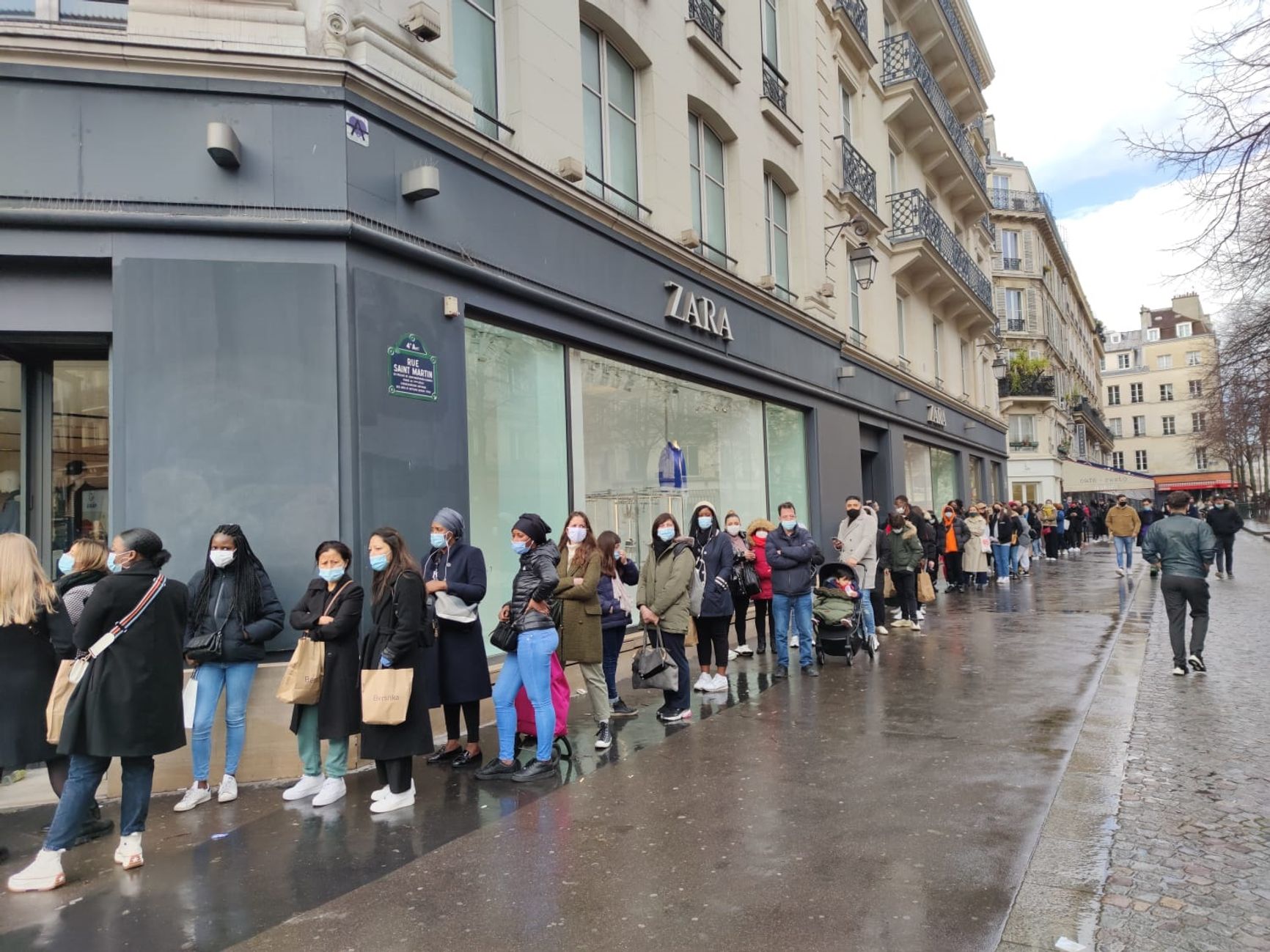
Queue at Zara before another lockdown
Apparently, the quarantine was introduced late, because in some regions, including the Paris region (Ile-de-France), the situation in hospitals is already critical, with a huge burden on the entire medical system and intensive care units.
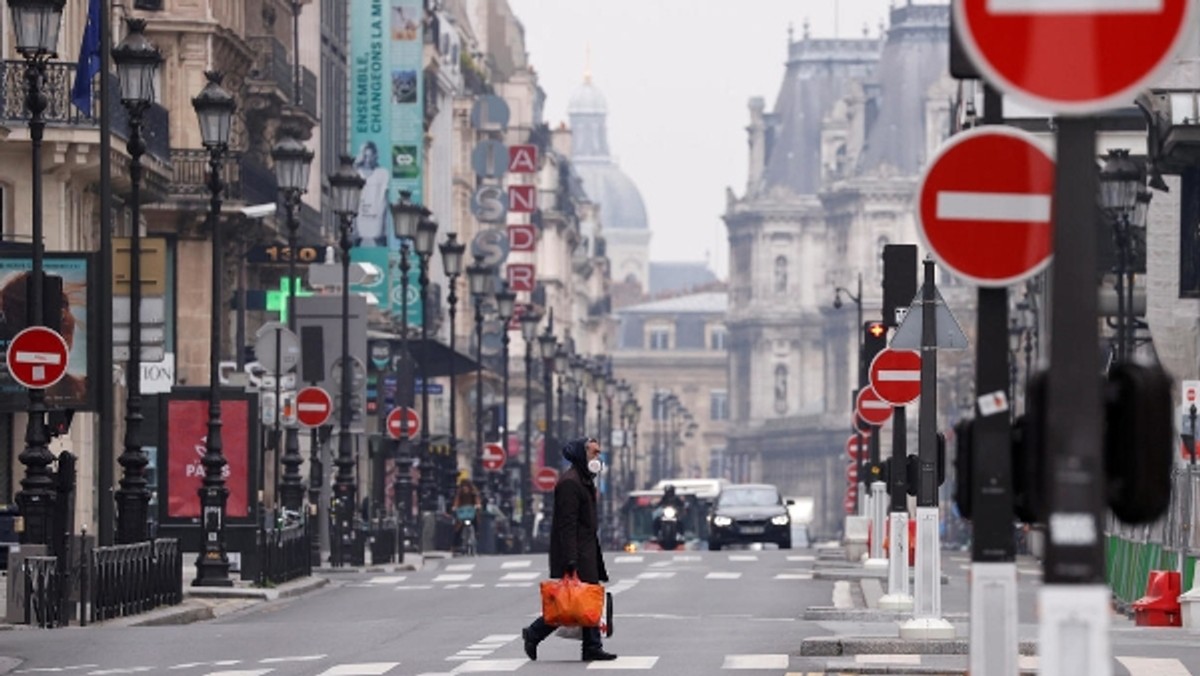
As for the French attitude to restrictions, opinions are now beginning to diverge. At first we saw unity in the face of a common threat, and now we are all very tired. The second lockdown began at the end of October, and since then the country has been living in a virtual state of siege. All restaurants and bars are closed, as well as all cultural life. Parisians are accustomed to spending a lot of time outside, in public places. This is the specificity of life in the capital: apartments here are often very small, many live in studios of literally 9 square meters, and it is clear that here you need to go outside, sit in a cafe, go to the theater in order to enrich your life.
Now city residents are deprived of this, and morally this inability to go out in public puts a lot of pressure on and affects the mood of the French. This is not just about going to a cafe or eating in a restaurant - in fact, apart from work, study and family life, people no longer have any life left - no hobbies, no sports activities - all swimming pools and fitness clubs are closed, as well as hobby groups. There are only some training courses left - no chess and anything else that is considered a hobby and not study.
Metro-home-work has been the norm for several months now, and the French are gradually starting to lose their temper, and a protest movement, still weakly expressed, is rising. Because for many the situation is becoming simply unbearable. So far, the French have been lucky - schools have been open since last spring, which makes life much easier for parents. But it doesn't make life easier for everyone else. For many, quarantine has resulted in financial losses - store closures and job losses. Unemployment benefits are, in principle, not bad, but they are still not enough to cover all costs. Plus, these benefits are not taken out of thin air - but from taxes, and the main fear of the French now is who will pay the bills for all these compensations and subsidies to enterprises. All this is taken from the pockets of the people themselves, and how deep they will be is still unclear.
“In Belgium, police tracked illegal pizza parties.”
Arkady Sukholutsky, Belgium
Two weeks ago, Belgium imposed a third COVID-19 lockdown. At the same time, the court of first instance in Brussels on March 31 ordered the government to mark emergency restrictive measures “that violate the fundamental rights of citizens” within 30 days, with a fine of €5 thousand for each day of delay.
According to statistics, more than 23 thousand people died from coronavirus in Belgium during the year, we have about 900 thousand infected out of a population of 11 million. Now 60% of those hospitalized with COVID have the more contagious UK strain. People are just wildly tired of all this. But we see that the decision on restrictions ultimately depends on virologists and experts, they are constantly shown on TV, everyone knows them, and there was not a single virologist over the last week who did not say: “We are urgently tightening measures, we have already lost time.” This is not something that politicians decide the way they want. There was monstrous pressure from the scientific community, and from famous people - heads of intensive care units of hospitals, deans of medical faculties.
Yes, we are not like in France, we have a fairly light history, but since it lasts a long time and the shops have been closed since October, and the Belgians love to eat and drink, it is already starting to freeze out. Belgians are very emotional. If tomorrow they begin to cut off social payments everywhere, then out of despair people may begin to smash shop windows. <After the interview was recorded, thousands of Belgians gathered for a non-existent music festival, the police had to use water cannons to disperse - The Insider>.
People generally understand and accept the actions of the authorities, but many measures, of course, undermine trust. For example, during the first wave, each resident of the country was sent two reusable masks in a large paper bag. Failure to wear a mask on public transport resulted in a fine of 150 euros. In the summer, everyone was given two more masks, which I wore all this time. And recently the government officially announced that these masks should under no circumstances be used anymore because they contain components that can be harmful to breathing.
Former Prime Minister Sofia Wilmès relied on the number of available beds in hospitals - as soon as statistics improved, measures were relaxed. Between the first and second waves, bars, cafes and restaurants opened. The new government decided to rely only on the opinion of experts. Now in Belgium all non-essential shops are closing until April 25. The rest can be visited by appointment. There are two options. First: you call, order a queue and you will have a slot when you can come, for a maximum of half an hour. Belgium is, like France, a country that has conquered the Internet. The Internet here is very bad, so you can’t sign up online. The second option is when you approach the store, you ask to bring a specific product to the checkout. Previously, you could try on a thing, but now you can’t. By the way, Abercrombie in Brussels offered to try on everything at home, and eventually went bankrupt and closed due to the pandemic. Night shops that make money from selling alcohol were allowed to remain open until 8 p.m. That is, their entire meaning is lost, there is no revenue.
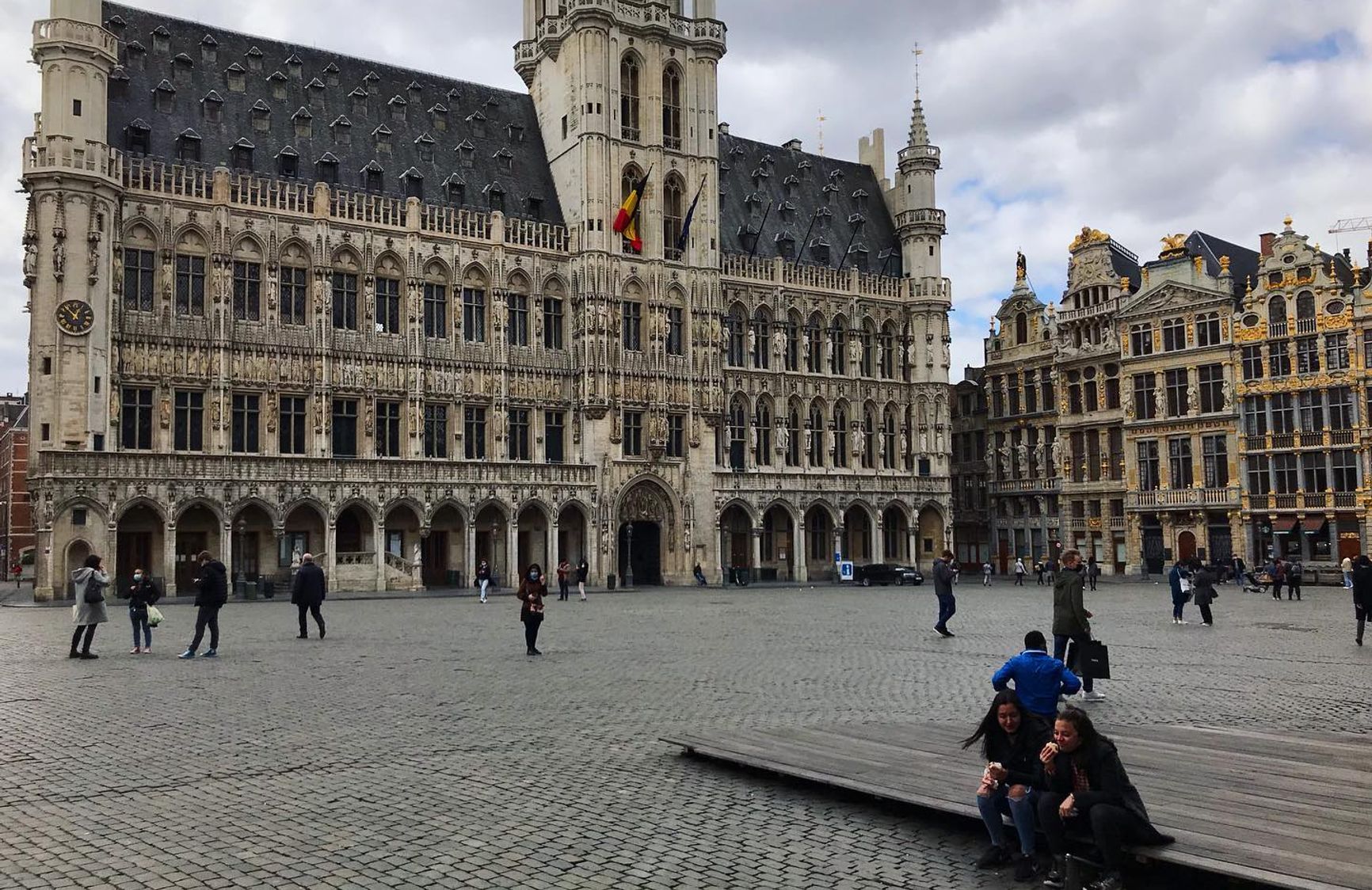
Square in the center of Brussels without tourists
https://t.me/yourmaninbrussels
The borders are closed until the end of the Easter holidays so that you and your children do not travel anywhere, because it is believed that the first wave of coronavirus was brought to Belgium by people who began returning from ski resorts a year ago. Belgium is a multicultural country, everyone has relatives abroad, everyone travels back and forth. Now you can go abroad, but you must have an important reason and you must register on the website of the local Rospotrebnadzor.
If you have been abroad for more than 48 hours, you will have to quarantine. Moreover, inspectors can call to check directly from your front door. My friend had this story - they asked him: “Are you in quarantine?” - “Yes” - “What are you doing?” - “I’m surfing the Internet” - “Can we go up to your house? You have two options - either we go up to you now, or you come down to us now. We are standing downstairs in your entrance." If I weren't at home, I'd pay a big fine.
Rallies of up to 50 people are allowed, but you cannot meet on the street with people in a group of more than four people. Previously, this social bubble was 10 people. That is, it was possible to gather in the park with a group of two or three families, but now only four of them, not counting the children. The police do not immediately approach the violators - first a drone begins to fly over you, which in three languages - French, Dutch and German - says: “You cannot gather” and all that. If you don't react, the police may approach or drive up.
Recently, protests against the lockdown swept across Europe. We also had a similar event - there weren’t thousands of people there, a couple of hundred came. It’s not like we have some yellow vests walking around ready to fight the police. This is not the case because people receive benefits, many are happy to work from home.
Then we have had it for many months now, and this also infuriates many people, there is a curfew in Brussels from 10 pm to 6 am. Uber drivers say that at night the police can stop the car and ask the passenger where, where and why he is going. A typical excuse is that there is a pharmacy on duty, so many people along the way ask their friends, just in case, to plan a route so that there is a pharmacy along the way.
You can gather at home, but each family can invite only one person. Before Christmas, police monitored illegal pizza parties: if there were too many boxes, it meant there was a large group. In this way they covered 2-3 pre-Christmas parties.
Belgium, like many other European countries, is lagging behind in vaccinations, despite the fact that we have AstraZeneca and Pfizer factories. About a million people, that is, 10% of the population, have received one dose. From April, it seems, Johnson & Johnson will be supplied, which requires one dose, not two. The problem is that Belgium does not want to pay exorbitant prices for the vaccine, like the United States or Israel, which bought it for 50 euros, although it costs 19. Flanders, where 6 million of the 11 million Belgians live, plans to vaccinate everyone by June 1.
Belgium is lagging behind in vaccinations, despite the fact that we have AstraZeneca and Pfizer factories
The saddest thing about this whole story is what is happening to the restaurants. Between the first and second waves it worked a little. And from October 19, bars, cafes and restaurants are officially closed. At first they said that the verandas would open in March, then in April, and now we understand that it is unlikely that they will open in May either, because the current tightening of measures is until April 25. Belgium is not a very technological country, and there are a lot of old restaurants and places where they won’t bother with delivery. We don’t have such a thing as “Kitchen in the area.” No one ever thought that these cafes, bars and restaurants could be closed for many months. Of course, some won't survive. If you receive help from the state and have established delivery, then okay, but not everyone can do that.
Before the stores closed, I went to buy some cologne for myself. Everything lies under some kind of film, to try the smell, you have to call the seller. How is this even possible? Everyone is wildly tired of this. In our country you can no longer go into the supermarket without taking a trolley, even if you are not buying anything, because this helps to maintain social distance.
“In the best case scenario, we will have a vaccine in Germany within a year.”
Marina Tomnikova, Germany
Our chances of vaccination are hypothetical - next year. People who are not at risk will have no chance this year. If you are at risk, you can get vaccinated with AstraZeneca relatively quickly, but you will still have to wait for Pfizer. For some reason, there is a terrible shortage of vaccine in Germany, despite the fact that we produce it. This is a shame, because in Israel, as my friends from there tell me, the thawed and unused drug is sometimes even thrown away. True, their lockdown is stricter.
A year ago, on March 16, quarantine began in Germany, schools were closed until the holidays. Since August, children returned to school and studied until about the end of October, then everything was closed again. It’s very interesting with a first-grader in distance learning - they send assignments, and the parents have to explain everything. There was Zoom, of course, but once a week for half an hour. The child looked at the monitor with a bored look and did not seem to understand what was happening at all. Now schools are gradually opening, children study for 2 days one week, three days the second. Moreover, these are different days for our children, I printed out the schedule and put it on my desktop so as not to get confused about who goes to school today and who doesn’t.
My husband and I work remotely. The husband can, if desired, reserve a place in the office, where the tables are deliberately placed far from each other. He went there for a couple of months, but people became sick there, and he decided to return to remote work. So he works from home, constant meetings, you walk into a room and you have 10 people saying something from the screen. There are children here. And so it has been for a whole year.
It’s no longer clear whether to cry or laugh. Some people are very afraid of getting sick, while others are tired and believe that all measures are useless, at least in their current form. Our museums are closed, and public transport is jam-packed. Grocery and bookstores, pet stores, household chemical stores and libraries are open. Everything else is closed. Restaurants are open for takeout only. The main entertainment is to sign up in advance, get a voucher and get to IKEA.
There was a silver lining in the summer and fall: on Halloween we went to a bar, and that was the end of it. From an ironic point: the Berghain club now has a rapid testing point for Covid. And Kit Kat too. Although underground raves, they say, exist. In winter, an underground casino was broken up.
The Berghain club now has a rapid testing point for Covid
Now twice a week in specially designated places you can do a free rapid antigen test. Before going to a public place - for example, to a hairdresser, which we recently opened - it is recommended to take a test. But I only walk to the grocery store - it’s 8 steps from the entrance. Because I simply don’t want to go anywhere anymore, I don’t need anything anymore. At first, perhaps, there was a feeling that you were being kept on a leash, but now the perception of reality has simply completely changed, and you no longer want anything.
You can move freely within the city; there is no curfew. Parks and playgrounds, unlike last spring, are open. But movement between lands is prohibited. We have been flying to Russia since routes through Turkey opened in August, but our parents cannot fly to us because they are considered tourists. The bride, groom, boyfriend, and minor children can enter Germany and obtain a visa by attaching, for example, general photos of some German landmark as proof, but grandparents and grandchildren cannot. Now flights are starting to be canceled again.
“In Italy everyone is tired, there is no strength, but now it’s easier than a year ago”
Vitaly Aniskova, Italy
Of course, you get used to quarantine, you live as if in a spacesuit - it seems like there is a quarantine, but it seems like it’s already normal. Since the beginning of isolation, I managed to carry and give birth to a daughter, she is already 5 months old. Now the third wave has begun, measures are being tightened again, but this, of course, is not as scary as a year ago - then no one knew how to treat coronavirus, everyone was simply locked up and it was only possible to move 200 meters from home. Now we can travel on various bureaucratic matters, factories are open, children's stores, manufactured goods, and construction stores are open. Hairdressers and clothing stores are closed.
Our summer was generally similar to a normal pre-Covid one - like in a dream. But still, those who, for example, hung out in bars without masks, were almost photographed and discussed in local communities. Since autumn, Italy has been divided into quarantine zones. Yellow - the least restrictions, red - everything is bad, schools and many shops are closed. Since the beginning of March, almost the entire country has been in the red zone. You can only move within your own region, and throughout the country only for a compelling reason. For example, to work, or in my case to the consulate in Milan. Unlike Austria, we didn’t have a ski season.
Knowing that Italians love to get together, before major holidays the authorities in almost all regions introduce a “red” regime. This is fair: everyone mostly gets infected at home, around Christmas, around Easter, and so it was with us. Until the last moment, our family was not affected by the pandemic - while in Moscow it felt like almost everyone had gotten sick, here many didn’t know anyone who had gotten sick. Before the start of the third wave at the end of February, my father-in-laws unexpectedly fell ill - they were almost 70, my husband and his brother fell ill. At the same time, we - our wives and children - had a negative test; I did it four times. Later, the test showed that I had formed antibodies long ago. The father-in-law was taken away with low saturation, he lay under oxygen for almost a month, the other day he was intubated, doctors say that there is little hope for recovery.
On the one hand, everyone is tired and has no strength. But now, of course, it’s easier than a year ago. It seems like a quarantine, but people are walking, and it’s cool. You can go, buy ice cream and eat it - last year you could only order it at home. People travel on business, to institutions, to work. This is a kind of window into the big world - despite all the craziness, you are busy, settled, distracted from everyday life, from children's affairs. Moreover, there is no maternity leave as such in Italy: if you work for someone else, you can stay with your child for six months, but if you work for yourself, you are not entitled to leave.
We did not and do not have control over passes and applications like in Moscow. If you are very unlucky, the police may catch you and ask for something confirming the need for the trip. Last year, literally drones were used to monitor people who secretly went for a run near their house and fined them. Now, thank God, you can play sports without a mask. But in general, everyone here wears masks, even on deserted streets. Only people are probably walking through the fields as before.
In Italy everyone wears masks, even on deserted streets
It's hard to say when there will be relief. Everything about vaccines is terrible. AstraZeneca secretly supplies to non-European countries and does not fulfill its obligations to the EU.
“If the quarantine is extended for a long time, I’m thinking of leaving the Netherlands”
Joseph, Netherlands
Currently, only shops are closed in Amsterdam, but places to eat and delivery are open. And from time to time new establishments open, for example, gyms. But you can only come there by appointment.
Since I work in delivery, I have not spent a day in isolation. But the hardest thing for me personally was that I, an adult man, found myself in the position of a child - I had to observe a curfew, etc. This is actually the worst.
Since the beginning of the pandemic, everyone's lifestyle has changed. I can't travel anymore. Even just meeting friends is now much more difficult than before. All my plans that were before the start of quarantine collapsed.
When all the restrictions are lifted, I just want to walk down the street at night, feel freedom, feel like I was before the pandemic.
Yes, the government is trying to help us - allocating money and giving advice. But this is not the case, because people just want to be free. Therefore, I am seriously thinking that if the quarantine continues for another six months a year, maybe I will go to live in another country where the restrictions are not so strong - for example, somewhere in Africa.