
Translated material
Uzmable voting
Without political competition in the country, there will still be no competent deputies
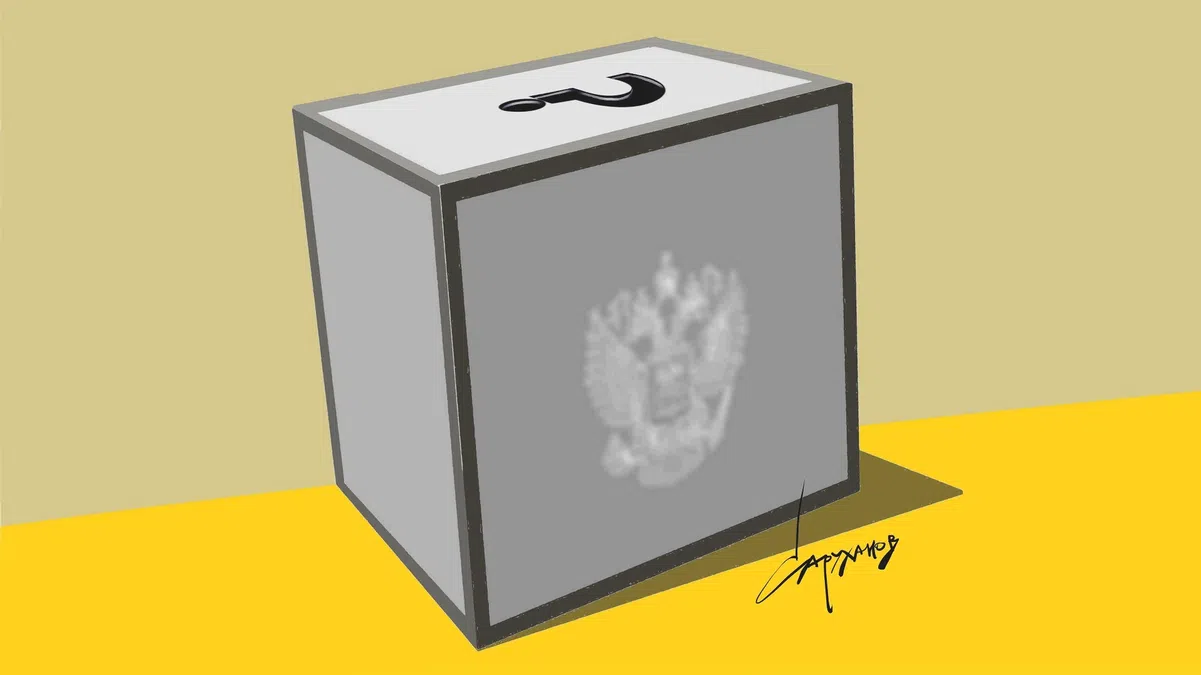
To make strategic conclusions from the only case means making a mistake of false generalization. However, academician Yamburg allowed : he did not like the position of two representatives of the Communist Party of the Communist Party in the Moscow City Duma on the issue of distance learning in schools, he rightly concluded that these deputies are incompetent in this topic, and sentenced the Smart Voting as a whole.
I can develop this reasoning further, supplementing it with another example. In the elections to the Moscow City Duma in the 45th district in 2019, Valery Kasamar, the vice-rector of the Higher School of Economics, was supposed to win. She walked like a self -nominated man, but led a giant election campaign, literally the entire territory of the Basmann region of the capital was filled with its portraits and election slogans. As a result of consolidated protest voting (you can not call it “smart”) in the district, the little -known representative of Fair Russia Magomet Yandiev, an associate professor of the Faculty of Economics of Moscow State University, who seemed to not conduct agitation at all.
The absence of Kasamara, most likely, became a big loss for the commission on the education of the city parliament, which Yamburg writes about the work.
It is difficult to imagine a more competent person for such a commission: most Russian educational innovations of recent times come from the Higher School. And what Yandiev does at his post is not entirely clear. He seems to have not created any high -profile information reasons over the past years, although he meets, votes and makes speeches in a disciplined. It seems that this is another reason to curse a “smart vote” that left a good specialist outside the parliament?
Everything is not so simple, modern political science tells us. Electors want not only to choose the best candidate from the available ones, they strive to protect their fundamental right to choose - the Institute of Democracy itself. If independent candidates are not regularly allowed to the elections, and the leader of the opposition on far -fetched charges is in prison, then to those Russian citizens who do not want to directly or indirectly support such Status Quo, it remains to make a “protest choice”. That is, to vote for a candidate who is least convenient for the authorities, even if his pro -government competitor is a good expert in his business.
The subject of political struggle here is actually very simple. People do not want them to decide for them to decide who is more worthy to represent their interests.
And strategically voters are right. Even if, in a particular case, a “smart vote” gives a worthless result, the very lack of political competition will lead through several electoral cycles to an even greater degradation of the deputy corps. How it works, we perfectly see the example of the eighth convocation of the State Duma, and previously seen on the example of the state of the "Soviet policy" of the era of stagnation. But if, as a result of the “protest voting”, the unpredictability of the elections will remain and the authorities will not be able to reassign their favorites, then the discussion about quality education will be able to remain meaningful - it will simply be disposed of in it, and these people will represent the people.
All this is not news. Ultimately, it is for political competition, and not for some other mystical properties, we value democracy. It is simply that in developed dictatorships it is sometimes necessary to invent rather unnatural ways to protect their legal rights. To do not even smart, but abstruse voting, breaking through thousands of bossy prohibitions, like the futurist poets a hundred years ago went through the thickness of the tongue.
By the way, in 2019 I voted for Yandiev.