
Translated material
Changered cut: how Kremlin propaganda uses the Bosnian genocide for its own purposes

Changered cut: how Kremlin propaganda uses the Bosnian genocide for its own purposes
Julia Petrovskaya
April 20, 2021 The deputy head of the presidential administration Dmitry Kozak recently stated that Russia would defend its citizens in the Donbass if the situation there will develop according to the scenario of the massacre in the Bosnian Srebrenitsa in 1995. In Russia, the murder of 8 thousand Muslims, which the International Court in 2007 recognized as genocide, is often called into question. At the same time, the Kremlin uses this tragedy to justify its actions against Georgia (in 2008) and Ukraine, but at the same time supports forces that deny war crimes in the Balkans.
Content
Signal to the Western elites
What is said in the documents?
Western standards are cream
Alternative picture
25 years later
Moscow troll the victims?
Signal to the Western elites
The statement of Dmitry Kozak is largely a repetition of Vladimir Putin’s statement at the session of the Valdai discussion club in October 2017. The Russian president then said that the closure of the border between Russia and the unrecognized republics of the DPR and the LPR "will lead to the situation along with the Srebrenitsa." Dmitry Peskovspoke in more detail on this topic after several years when he was asked to explain why the Russian side draws parallels between the situation in the Donbass and the Bosnian conflict of the 1990s. As it turns out, the Kremlin made his conclusion “on the basis of uncontrolled actions of various units of the Armed Forces of Ukraine, as well as the dominance of nationalist sentiments and inciting absolute hatred of the population of the self -proclaimed republics.”
It is clear that the words of representatives of the Kremlin administration are addressed primarily to the Western elites, for which Srebrenitsa is a proven and the most terrible crime in Europe since the Second World War. More than 8 thousand Muslim men, including adolescents, were killed in Srebrenitsa in July 1995, after this city, formally under the protection of the UN, was controlled by the Serbian formations of Ratko Mladic. Most prisoners and civilians were shot during mass executions. By the time of death, about 500 of them did not reach the age of 18. As the investigation established, many victims were later repeatedly reburied to hide traces of mass reprisal.
For the West, Srebrenitsa is a proven and worst crime in Europe since the Second World War
What is said in the documents?
The fact that in Srebrenitsa exactly genocide took place (that is, actions performed with the intention to completely or partly destroy any national, ethnic, racial or religious group) was established by the International Court of the UN in the Hague in 2007. Another court - the International Tribunal for the Former Yugoslavia - brought 20 accusations on this case, at least 25 sentenceswere carried out in the region: in Bosnia and neighboring Serbia and Croatia itself. In total, 47 people were sentenced to 700 years in prison, including four sentences of life imprisonment.
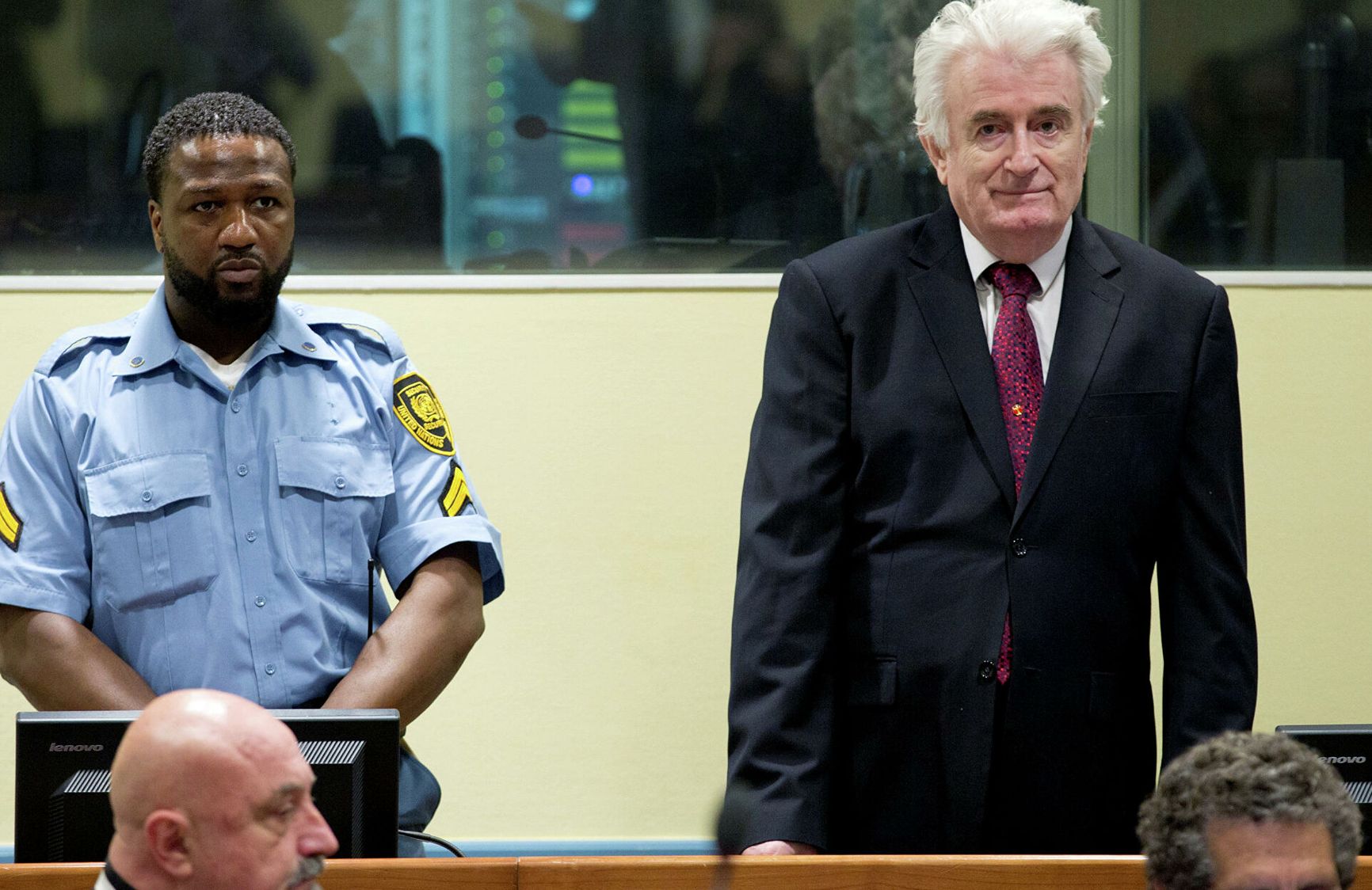
Among the most famous convicts is Ratko Mladic, who received a life sentence in November 2017, and the former leader of the Bosnian Serbs, Radovan Karadzhich, who was sentenced to 40 years in 2016, and in 2019 this sentence was tightened to a lifetime.
The goal of the Karadzhich and Mladic campaign, as stated in the documents of MTBU, was to completely purify the Bosnian Muslims and the Croats of the territories, which the Serbian leaders considered their own. Among the evidence of genocide intentions, their own statements are also given. So, Karadzhich declared before the start of the war that the desire for independence "will bring Bosnia to hell, and the Muslim people may disappear." A few years later, on July 11, 1995, Mladich openly stated in Srebrenitsa that it was time to “take revenge on the Turks”. The former commander of the Drinsky corps, General Radislav Krstich, sentenced to a 35-year term, indicated during the trials of Mladich as one of the main organizers of the residents of Srebrenitsa.
Radovan Karajich
According to the investigation, most prisoners and civilians were killed within a few days after the crossing of the cut under the control of Mladic. About a thousand unarmed men and adolescents were separated by Serbian military from the total mass of refugees who accumulated near the UN base in Potocarii in anticipation of help and evacuation. The remaining several thousand are refugees and military divisions of the BIG Army, who, after the fall of the Srebrenitsa, tried to retreat into the Tuzla, in the territory under Muslim control. Some of them died under the shelling, the rest were captured in skirmishes or surrendered to Serbian formations that promised to save their lives. Most of the prisoners before executions were kept at various objects (mainly farms or schools) near the settlements of Nova Casaba, Sandichi, Orakhovats, Bratunats, Petkovats, Pilitsa, Branevo. To the places of executions, many were delivered in a exhausted state, with hands tied with wire and tied eyes. Some of them were killed in Kravitsa using hand grenades and grenade launchers. Personal things and documents were destroyed.
This picture of events was confirmed by the Government Commission of the Republic of Serbian in Bosnia and Herzegovin in 2004, based on information from internal sources - the army, the General Staff, the police and other law enforcement agencies, as well as the documents received from Serbia, Montenegro and MTBU. The commission concluded that from July 10 to 19, 1995, thousands of Muslims were killed in conditions of gross violation of international humanitarian law and that the executors of this crime tried to hide it by moving the bodies. The report reported data on 32 mass burials with the remains of Muslims, which before that was not known, and the number of people who disappeared in Srebrenitsa in July 1995 was estimated at 7-8 thousand people.
Western standards are cream
Russian diplomacy, at least until 2008, recognized the events in Srebrenitsa with a genocide, later Moscow moved away from this wording, preferring the more neutral word “tragedy” or “crime”. For Moscow, this is in any case - someone else's grief, and all the post -war years she avoided a detailed discussion of these events, urging "turn the gloomy page." The parallels between armed conflicts always look artificial, but for Moscow a comparison of the situation in the Donbass with Srebrenitsa is just part of the propaganda campaign in which the Kremlin is trying to apply the same estimates, values and standards that the West refers to.
Before the events in eastern Ukraine, Russian diplomacy tried to use the most famous Balkan tragedy to justify its actions in relation to Georgia in 2008. “Our peacekeepers will not allow the repetition in South Ossetia what happened in Srebrenitsa, when the peacekeepers from the Netherlands could not prevent genocide,” said Foreign Minister Sergei Lavrov in August 2008. Then the Russian side was not yet embarrassed by the word “genocide”, which she finally refused in 2015, vesting the British draft resolution with the condemnation of the crime in Srebrenitsa at the UN Security Council.
In disputes with opponents, the Russian authorities often use the bloody episodes of the Balkan conflicts of the 1990s. Most often it is said about the bombing of Yugoslavia in 1999 or the proclamation of the independence of Kosovo as a rude violation of international law. At the same time, the state and Zamrevelesk media sometimes meet the most primitive interpretations of the 1990s conflicts, and all responsibility for the collapse of Yugoslavia has, for example, to the Pentagon and European Neo-Nazis, who tried to undermine the influence of Serbia and its “historical ally” of Russia. Such publications are a mixture of fiction, real facts and radical versions in order to strengthen anti -Western moods and promote views inherent in the extremely nationalist part of the Serbian political scene.
At this angle in Russia, mass reprisals in the Scraper are often considered. At the level of diplomacy, Zamremlin media and the “brain centers” all these years, work was underway to discredit court decisions against key accused, and in addition, attempts were made to reduce the scale and significance of the events of July 1995. Prochrevsky analysts easily question the number of victims and the results of the examinations, bypassing the proof.
In such articles or official Russian statements, there is no recognition of any merits in this large -scale investigation. And the main role here belongs to the International Commission on missing persons (ICMP), which was able to identify seven thousand victims out of 8,000 using DNA examinations. She presented key evidence that the remains of mass burials were moved three times or even four times, sometimes ten kilometers from the place of murder in order to hide the crime.
Alternative picture
The events of July 1995 are well documented, but the Russian public in this information stream will be more likely not to documents and evidence of their participants, but a set of rumors and difficult facts with an indispensable anti -Islamic accent. The blocking of the project of the British resolution in 2015 in Moscow is more likely to be interpreted as a good opportunity to conduct a new, impartial investigation. Say, with the current investigation, something is wrong: "In addition to the murder of a number of people, everything else is in question."
Participants of this information campaign cannot offer a certain picture that would refute the fact of mass executions in July 1995. Therefore, accents are simply shifted to previous events, primarily to the attacks of Muslims on Serbs in East Bosnia since 1992. Trying to reduce the scale of July 1995, supporters of the alternative picture withdraws male age -old men from the list of “innocent” victims and shift the main responsibility to the Bosnian Muslims themselves and Dutch peacekeepers who did not provide full demilitarization of the cut and did not take care of the local population.
In addition, assumptions are made to the fore that the executions were not the initiative of the army generals, but by some Serbian volunteers who "independently equipped and did not observe discipline." How individual “volunteers” were able to create dozens of mass burials in a short time, some of which cannot be explored so far, this version is not explained.
25 years later
For mourning events related to July events in Srebrenitsa, tens of thousands of people and many politicians come together every year. There are no famous Russian representatives there (it’s hard to say, for political reasons or because of fear for their safety). Russian politics is often associated exclusively with the support of the local Serbian leadership - no matter how controversial it is, as well as with the denial of the genocide and sympathy for those who were convicted of mass reprisals and deportation. By the way, it is still unsafe to come to Srebrenitsa for some political figures.
Say, the current president of Serbia, Alexander Vuchich, was forced to flee on the 20th anniversary of the tragedy. Relatives of the victims tried to throw it with stones, remembering him radical youth and calls to kill a hundred Muslims for one Serb.
The emotional attitude to “their” victims and the denial of “strangers” in the Balkans is still the norm. Most people in the region are configured to reconcile and calm life, but politicians from the conservative-nationalist camp are constantly trying to endure the conflict past to the present. The contesting of the wording of “Genocide” in the official recognition of the fact of reprisal in Srebrenica is one of the significant components of the political course of the leader of the Bosnian Serbs Milorad Dodik, who is a close partner of the Russian authorities.
Dodik distances from liability, which in 2004 took upon itself the previous leadership of the RS, led by President Dragan Chavich and in every possible way tries to challenge the mentioned report of the government commission on the victims of the Srebrenitsa. However, his views have seriously changed in recent decades.
At the turn of the 1990s, Dodik supported the reformation, and during the war he was opposition to Karajich, accusing him of communications with crime and actions that were qualified as war crimes. After the war, Dodik was indignant that Karadzhich and Mladic put on the wanted list did not want to come into the hands of international justice: "Let everyone himself be responsible for the crimes committed." After the issuance of the Verdict of the International Court of the UN in 2007, Dodik called the “indisputable” the fact that genocide would have been committed in Srebrenica.
Moscow troll the victims?
Today, Dodik has other views. His current course and the search for support in the conservative-nationalist environment involves the use of symbols of the military past and the support of those who stood at the source of the Republic of Serbian. The marginalization of the victims of the silver is part of this policy. Now Dodik says that these events must be investigated again. As if the whole previous work of thousands of specialists, all the information and documents collected over the past time, certificates of the participants in the reprisals and survivors have no importance. The Russian authorities in this polemic, as much as possible, support their important partner, by the way, the only high -ranking politician in the Balkans who recognized the annexation of Crimea.
The main service that Moscow has provided for Dodik in recent years is to block a resolution in the UN Security Council on genocide. For this, local nationalists thanked Russia with a monument to the former Russian representative to the UN Vitaly Churkin with the inscription “Thank you for the Russian no”.
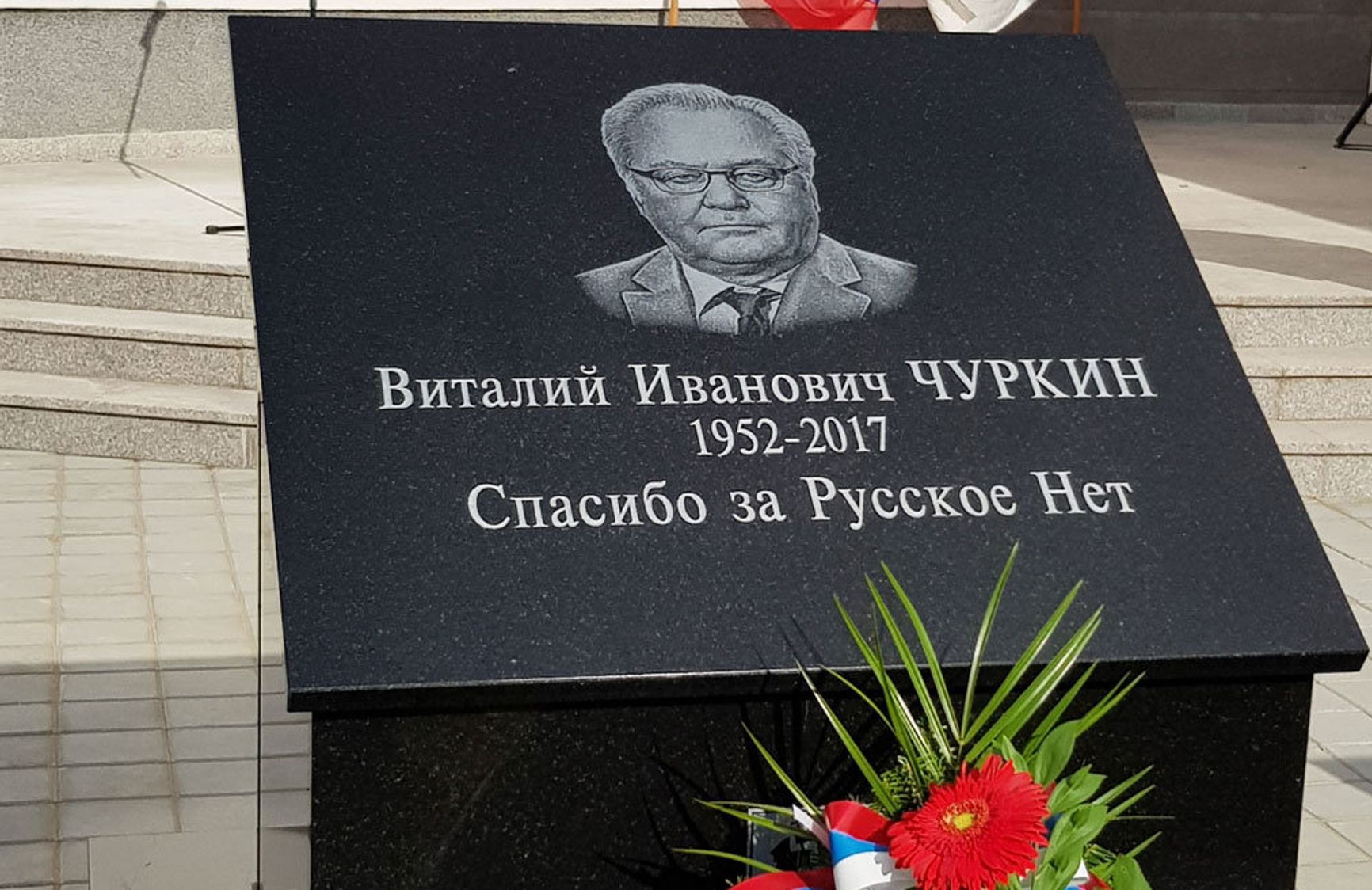
Initially, it was supposed to establish this controversial from an artistic and political point of view in the Srebrenitsa itself, but the mayor of Malant Gruichich abandoned this idea, citing a possible strengthening of interethnic tension. As a result, the monument was erected in an inconspicuous place in Eastern Sarajevo, and the delegation arriving from Moscow is laid to it. Given the local realities and the scale of the crime, which Moscow recognizes as “one of the Terrible” is difficult to perceive differently than rude trolling. But the Kremlin, obviously, has its own calculation.