
Translated material
Relations between Russia and the Czech Republic on the verge of zeroing. And in everything again “Petrov” and “Boshirov” are to blame
What did they still arrange there? And how does all this threaten Moscow?
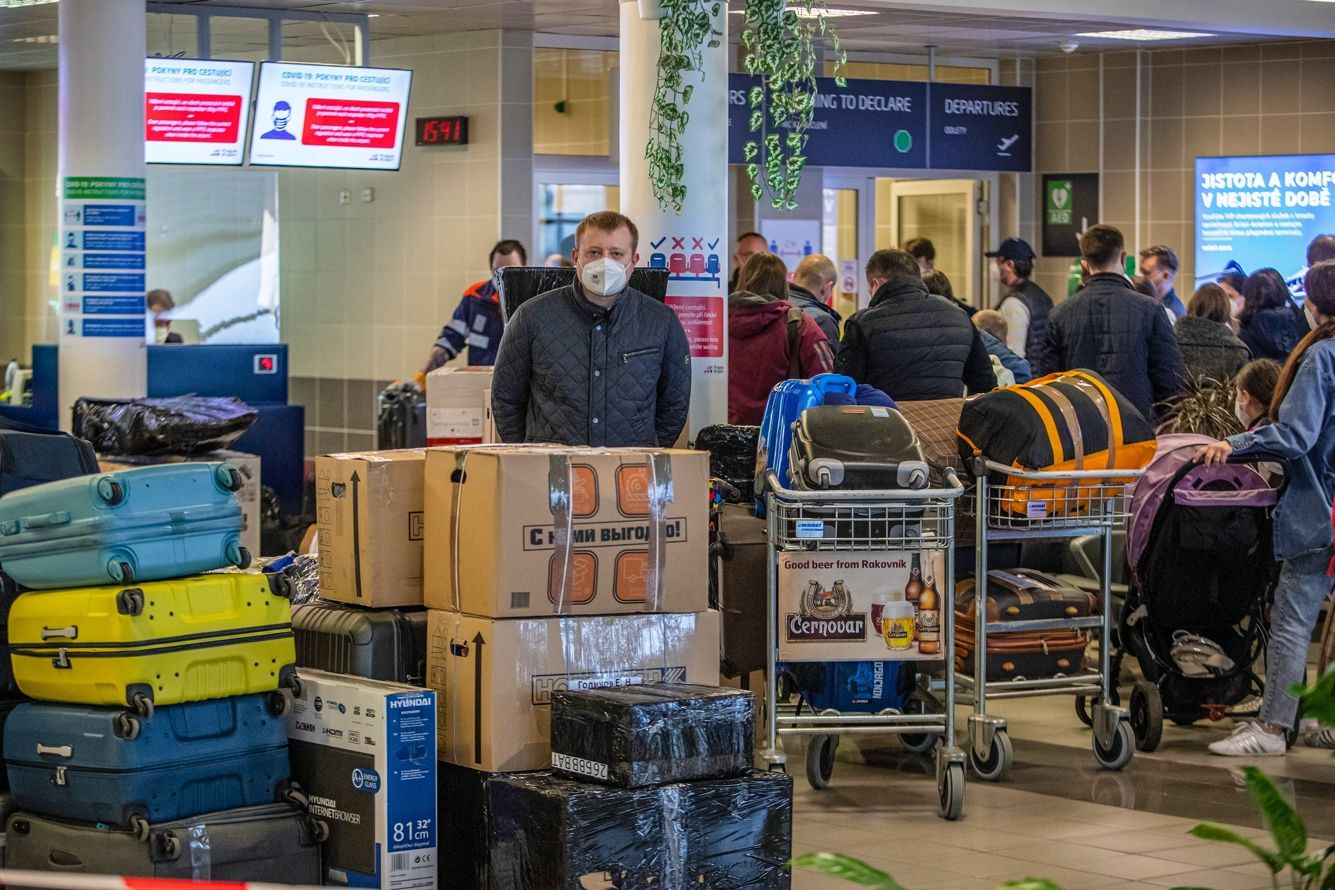
Between Russia and the Czech Republic is an unprecedented conflict. From both countries, diplomats are sent in dozens, and the Czech Foreign Minister calls for European colleagues to the same step in relation to Russia. After a seven -year investigation, the Czech special services came to the conclusion that the Russians were involved in explosions in the weapons warehouses of the Vrbetitsa. Moreover, the saboteurs, according to the Czech police, were the same Petrov and Boshirov, whom the UK accused of poisoning the Skripals with the novelty in 2018. The target of Russians, presumably, was the Bulgarian weapon of weapons of Emelian Goebrev, who kept ammunition in the Czech warehouse. Six months after the explosions of Goebrev, they poisoned a phosphoruscorganic connection from the same group as the “novice” - but he managed to survive.
Return "Petrov" and "Boshirova"
On the evening of April 17, 2021, a message appeared in the official Czech Police Account on Twitter that the National Center for Combating Organized Crime was looking for two people in connection with a serious crime.
In the photographs attached to the tweet, you can easily find out “Alexander Petrov” and “Ruslan Boshirov”-Russians accused by the UK authorities of poisoning the Skripals by the nerve-paralytic poison “Novice” in 2018. It is these names that are called the service of criminal investigations in a message on the Czech police website. It also clarifies that they used at least one more pseudonym and citizenship in addition to Russian: Petrov traveled to the Czech Republic under the guise of a citizen of Moldova Nikolai Priests, and “Boshirov” with a passport of Tajikistan in the name of Ruslan Tabarov.
The real names of Petrov and Boshirova are Anatoly Chepig and Alexander Mishkin, this was found out by investigators from the Bellingcat project back in October 2018. They are the officers of the GRU secret part No. 29155, specializing in operations abroad. After the accusations of Great Britain against them, Petrov and Boshirov gave the famous interview to RT chief editor Margarita Simonyan, where they were not said that they were not employees of the GRU, but fitness industry workers who came to England as tourists to look at the “famous spire of the Salisberet Cathedral”.
Now it turned out that Russian “fitness consultants” are suspected of committing a serious crime not only in the UK, but also in the Czech Republic. But this time we are not talking about poisoning by neuro-paralytic poison, but about explosions in Czech military warehouses, as a result of which two people were killed. Although there is a “beginner” in this story too.
What happened in the Vrbetitsa?
Vrbetitsa is a complex of several warehouse premises standing at some distance from each other near the village of Vlakhovitsa, Zlinsky district of the East Czech region of Moravia. There, several companies engaged in weapons export were rented there for their products. Among them was, for example, the company CZ Hermex, which, according to the Czech media reported , was engaged in the supply of weapons to Ukraine bypassing the then embargo of the European Union. The company Emellyan Goebrev, a citizen of Bulgaria, kept her weapon and EMCO company.
The first explosion in Pakgauz No. 16 in the warehouse occurred on October 16, 2014. About 50 tons of ammunition were stored there, the fragments of which, as a result of the explosion, scattered in a radius up to 800 meters from the warehouse. Local authorities urgently evacuated residents of nearby villages. Two people who were in the warehouse died.
The Czech media at that time reported that since 2006 the warehouse was not used by the Czech army and was not included in the authorities in the register of dangerous civilian objects. As one of the firefighters now recalls, because of the general confusion, rescuers believed that they were going to extinguish burning grass. And only thanks to the operational actions of the fire calculation commander, who ordered his subordinates to move to a safe distance shortly before the next explosion thundered in the warehouse, a much larger number of victims were avoided.
One of the tenants who rented warehouses from the State Military Technical Institute of the Ministry of Defense of the Czech Republic was the IMEX Group company, which was also engaged in the export of weapons. Two dead during the explosion turned out to be her employees.
After more than two more months, a second explosion occurred, greater power, in Pakgauz No. 12 - a kilometer with a small from the place of the first explosion. There were about 100 tons of artillery ammunition and submachine guns. In this case, there were without human casualties.
The investigation of the explosions lasted more than six years, and on Monday, April 19, 2021, the Security and Information (BIS) Czech Republic presented the government on the involvement of Russians in these events.
As the Echo of Moscow explained on the air of Christ Grozev from the Bellingcat project, at first the investigation in the Czech Republic has come to a dead end; It resumed after those who became widely known due to poisoning in Salisbury “Petrov” and “Boshirov” were able to identify on scans of passports when registering to visit the arms warehouse.
Arriving in Prague on October 11, 2014 under the guise of tourists, Chepig and Mishkin contacted IMEX, introduced themselves to potential buyers of weapons - and requested access to the warehouses of the Vrbetitsa to inspect the goods by e -mail. This is written in a joint investigation by The Insider, the BellingCat project and the Czech media Respekt. There are no direct evidence that the “priest” and “Tabarov” (they are Chepiga and Mishkin) at the facility owned by IMEX, but, as the publication of českorn rooklas writes , they should not get into the warehouses, because it was almost not guarded.
The first explosion in warehouses occurred half an hour before the plane with Chepiga and Mishkin flew from Vienna to Moscow on the morning of October 16, 2014. According to the investigation of The Insider, Bellingcat and Respekt, in this special operation, in addition to Chepigi and Mishkin, at least four employees of military unit No. 29155 participated, including its head, General Andrei Averyanov, who also flew to the Czech Republic (in the same secret part of the GRU, Chepig and Mishkin serve; its specialization; its specialization - foreign operations).
The investigators still do not have a clear answer to the question of who or what was the goal of such a dangerous special operation. But ammunition in the warehouses of the Vrbetitsa were intended for sending to Ukraine, says Respekt in his article . And the Bulgarian Radio Liberty Service in its material writes that the load in the IMEX Group warehouses belonged to the Bulgarian businessman Emelyan Goebrev, who could sell the written -off weapons from the Bulgarian military warehouses to Ukraine through the Czech Republic. Thus, journalists believe, the purpose of the special operation of the GRU could be the breakdown of this transaction. “It was an attack by GRU agents on goods belonging to a Bulgarian weapon dealer,” said Czech Prime Minister Andrei Babish.
Moreover, recording for the inspection of the goods in the IMEX, Popa and Tabarov warehouses, they tried to make an appointment with Goebrev himself - but the businessman, having received a message from IMEX representatives, did not become interested in this proposal, the investigation of The Insider, Bellingcat and Respekt said.
The Russians reached the Bulgarian weapon of weapons six months later, in April 2015. Then Goebrev and his son were poisoned by the "novice", but were able to survive.
Who is Emelyan Goebrev
The 67-year-old entrepreneur from Sofia Emelyan Goebrev is engaged in the supply of weapons. In a commentary on the newspaper Washington Post, on April 19, 2021, Goebrev EMCO confirmed that ammunition “ammunition in the warehouse of the Vrbetitsa,” but claims that they were not intended for sending to Ukraine, because the company never engaged in the supply of weapons from the Czech Republic to this country.
At the same time, in February 2019, Goebrev, arguing in an interview with Bellingcat about the possible motives of its poisoning, stated that his company supplied weapons to Ukraine - and Russia could also claim the arms factory, controlled by his company. He also mentioned that he was engaged in the supply of weapons to Georgia during a short Russian-Georgian war in 2008.
However, Goebrev soon began to say that neither directly nor indirectly delivered weapons to Ukraine after the outbreak of war in the southeast of the country in 2014.
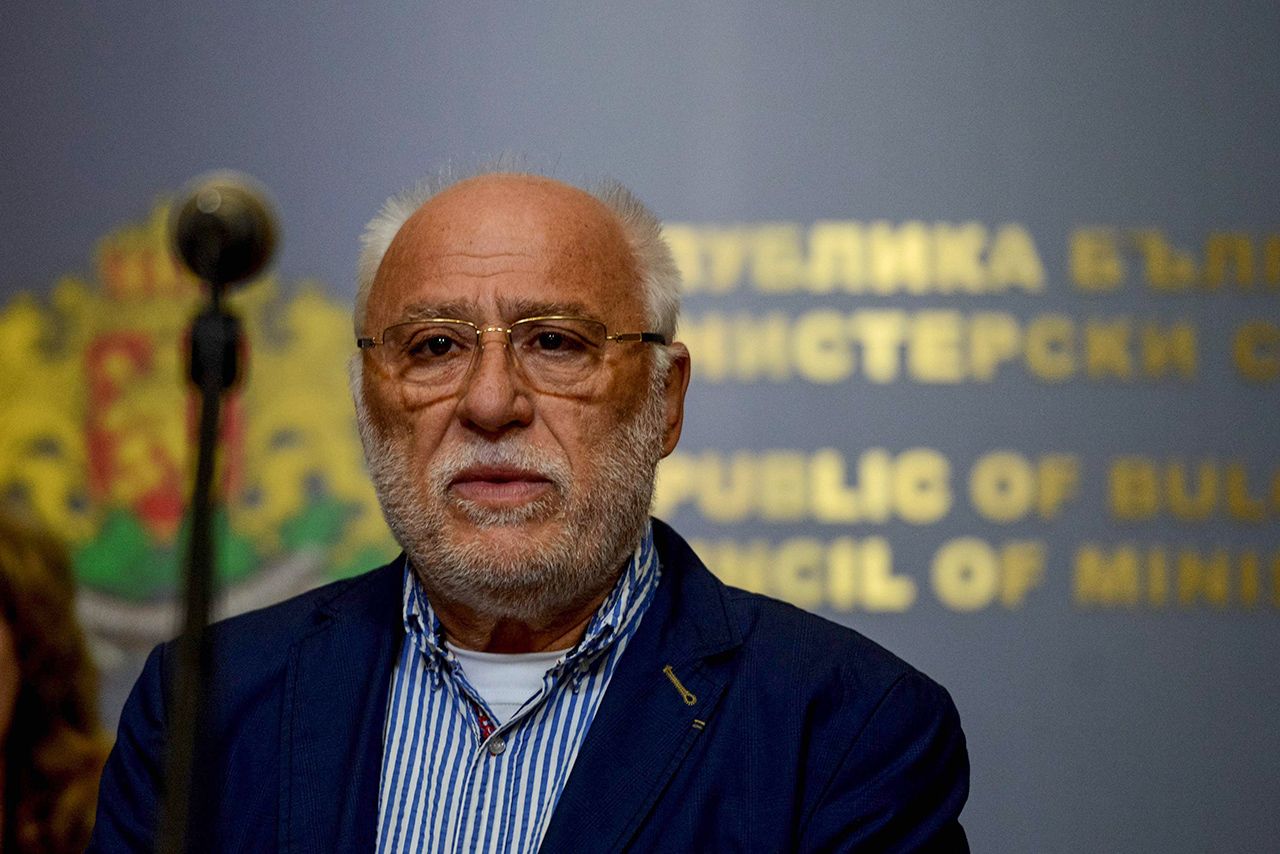
Emelian Goebrev himself became the hero of journalistic investigations precisely in connection with an attempt to poison him, and not because he had an indirect attitude to military conflicts in the territory of the former USSR. As Goebrev said in an interview with The Guardian, on April 27, 2015 he felt ailment after dinner in a road restaurant in Sofia with business partners. The next day, during another business dinner, Goebrev’s condition deteriorated sharply, he lost consciousness - and already in the hospital, recovering, he found out that his son and the director of one of the companies belonging to him were with the same symptoms. The chemical analysis showed that the symptoms are caused by poisoning of the phosphoruscorganic substance-the “novice” belongs to the same class, which was poisoned in March 2018 by Skripal, and in August 2020-the Russian opposition policy Alexei Navalny.
The Bulgarian prosecutor’s office started the case, but soon stopped him for a lack of evidence. However, in February 2019, The Insider and Bellingcat found out that the third employee (already mentioned) military unit No. 29155, a colleague of Chepigi and Mishkin, who acted under the pseudonym Sergei Fedotov, was involved in the poisoning of Goebrev’s poisoning, he is also the GRU officer Denis Sergeyev.
The second time Goebrev became bad and he went to the hospital in May 2015. According to coincidence, they write The Insider and Bellingcat, it was at this time that Fedotov-Sergeev and his two other GRU colleagues were in Bulgaria. In January 2020, the General Prosecutor's Office of Bulgaria again instituted a criminal case regarding the attempt to poison three citizens with phosphoruscorganic substance and in absentia charged three Russians. The names were not mentioned in the initial message, but in the press release of the Sofia City Prosecutor's Office (September 2020), Georgy Gorshkov, Sergey Pavlov and Sergey Fedotov were named the results of a pre-trial inspection as accused. As by that time it was already known from the investigation of The Insider and Bellingcat, these are the pseudonyms of three GRU employees who participated in an attempt to poison Emelyan Gebrev: Yegor Gordienko, Sergey Lutnko and Denis Sergeyev.
Diplomatic war
Explosions in the warehouses of Vrbetitsa in 2014 caused a huge resonance in Czech society. The first reactions to the news of the Czech police about the emergence of Petrov and Boshirov in this case were rather domestic political. Some Czech media and oppositions were wondering how such an amount of ammunition could be stored without the knowledge of the army in a practically unguarded warehouse, to which strangers with fake passports could easily access - and which of the Czech politicians and officials should be responsible for this.
But the foreign policy reaction was much more significant. First of all, the Czech Republic sent 18 employees of the Russian embassy from Prague-and among them, as Czech journalists found out , there was the same “Sergey Fedotov”, whom earlier-investigators and the Bulgarian prosecutor’s office were called one of the participants in the failed Emelyan Gebrev elimination. According to the Seznam Zpravy publication, according to the investigation, it was he who had to construct an explosive device to undermine the ammunition warehouse of the Vrbetitsa. Until Sunday, April 18, 2021, "Fedotov" was in the Czech Republic under diplomatic cover.
In addition, having studied the initials on the baggage of the employees of the Russian embassy, who flew to Moscow from the Prague Airport Ruzin, the journalists of the českorn Rozhlas concluded that the military attachment of the embassy Viktor Budyak - he was a colleague of Petrov, Boshirova and Fedotova, who was already familiar to us by the military part of the GRU No. 29155. Budyak arrived in the Czech Republic to replace his predecessor - Evgeny Borisenko, whom Czech special services detained in the summer of 2020, while trying to illegally buy cartridges for a sniper rifle.
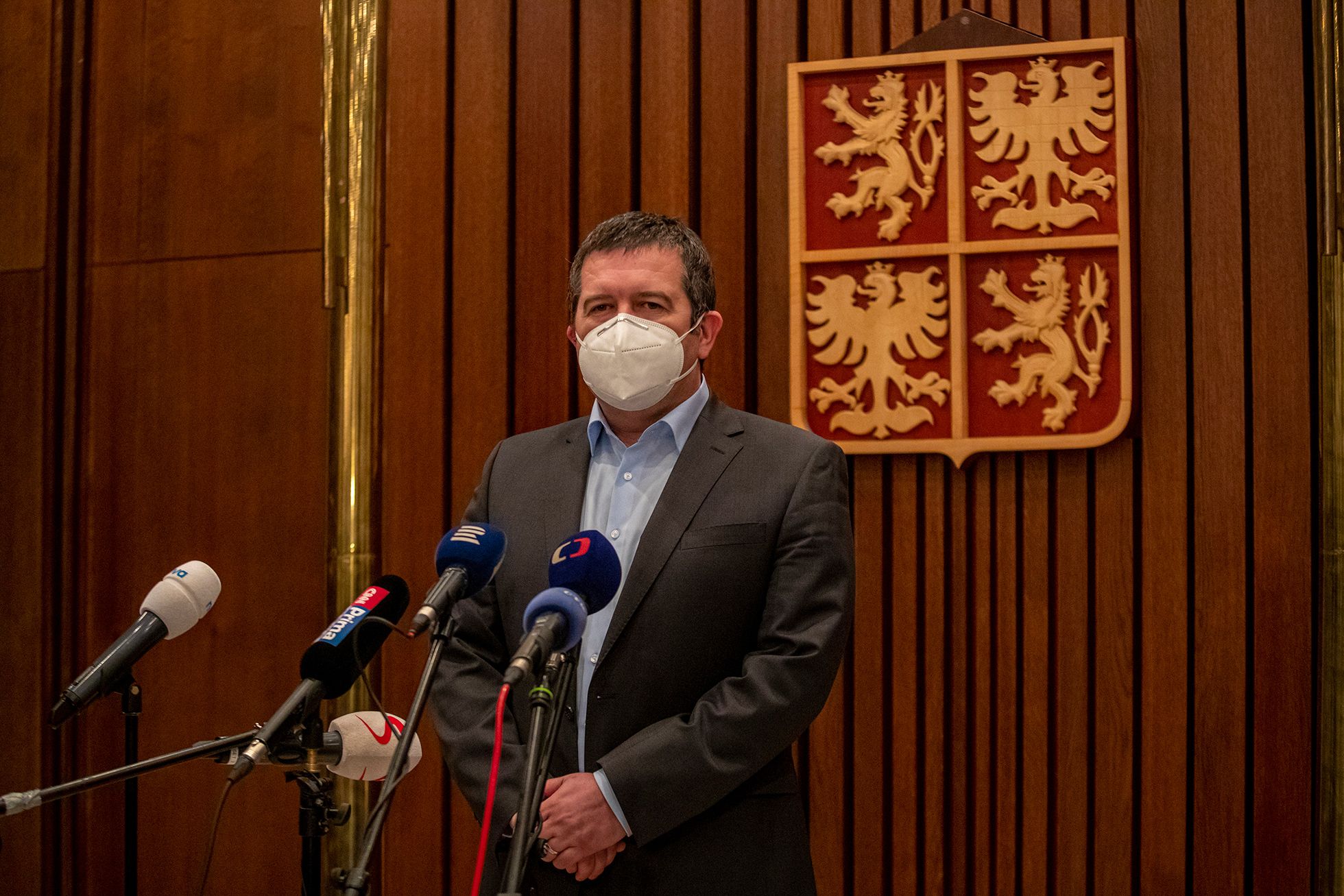
In Moscow, these events reacted extremely sharply. In a statement on the website of the Russian Foreign Ministry on April 18, the charges against Russia were called “absurd”, “far -fetched” and “unfounded” - and in response, 20 employees of the Czech Embassy in Moscow were declared persons at once by persons.
It is not the fact that mutual diplomatic sanctions will stop there. The Czech Defense Committee on Tuesday, April 20, voted to equalize the number of employees of the Czech Republic in Russia and Russia in the Czech Republic, that is, bringing the number of employees of the Russian embassy in Prague to five or six. This embassy has long been irritated by the Czech authorities: back in 2015, local media wrote that the Russian mission in the Czech Republic has an inappropriately bloated state compared even with the largest countries in the world, who have diplomatic relations with the Czech Republic - 125 Russians work here; Whereas in the American embassy in Prague there are 70 employees, and in Chinese - only 28. Czech counterintelligence claimed that at least a third of Russian diplomats are spies.
Czech Prime Minister Andrei Babish, who on Monday, April 19, stated that the explosions in Vrbetitsa were not an “act of state terrorism”, the next day he apologized for his words-and noted that the explosion in the warehouses of the Vrbetitsa was a “disgusting and completely unacceptable terrorist act”. In addition, on Tuesday, April 20, the lower house of the Czech Parliament voted for a resolution demanding that Russia pay compensation for damage caused by explosions in the tabble.
Jan Gamachek, temporarily acting minister and internal and foreign affairs, called on the countries of the European Union and NATO to show solidarity with the Czech Republic and also send Russian diplomats. So far, only three other countries of the “Vsegrad four” have already expressed their solidarity with the Czech Republic - so far: Poland, Hungary and Slovakia. Gamachek also wrote on Facebook that he was ready to consider any options for the development of events - even if I had to "build relations with Russia from the very beginning." For this, Gamachek said, he is ready to send all Russian diplomats home.
In addition, the Czech Minister of Industry and Trade Karel Gavlichka said that the unanimous decision of the members of the Czech government is canceled by the participation of Rosatom in the tender for the construction of a new power unit of Duproza NPP. We are talking about a station built by the Soviet Union in the southeast of the Czech Republic; The new project was estimated at about six billion euros. Now Rosatom will not be able to participate in it even as a subcontractor, Gavlik said. In the Russian state corporation, this decision was called political.
Author: Alexey Kovalev
Editor: Tatyana Lysova