
Translated material
In the Komi Republic, an environmental disaster due to breakthrough of the oil pipeline on the Kolve River. Oil has been moving to the Barentsev Sea for several days
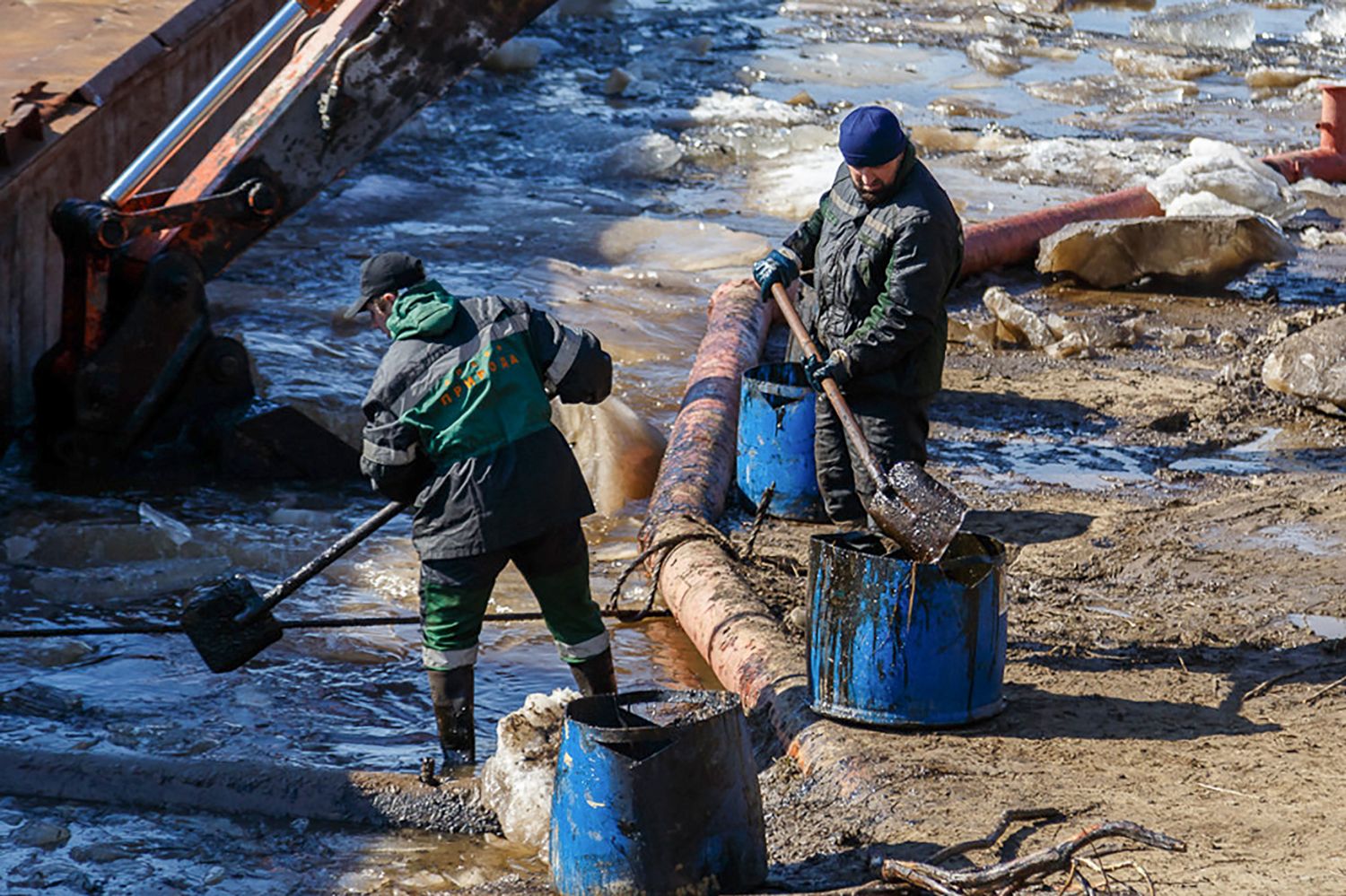
On May 11, it became known about the leakage of oil from the pipeline of Lukoil on the Kolva River. As the Government of the Komi Republic stated , the leak of the leak is located in the Nenets Autonomous Okrug, near the border of the city of Usinsk.
Initially, the volume of the spilled fuel was estimated at six to seven tons, but later, on May 16, Lukoil-Komi subsidiary admitted that 90 tons of oil fell on Earth and a total of a total of 90 tons of oil. “The leak occurred at a distance of about 300 meters from the coastline of the Kolva River. Therefore, the main part of the oil-containing fluid ... spread on the basis, mainly occupying a natural lowland near the leakage, ” said the administration of Usinsk, which on May 12 announced the emergency mode due to the incident.
According to the city authorities, nine tons of oil got into the Kolva water area, after which its collection was organized, in which 230 Lukoil workers and its contractors, as well as more than 70 units of equipment, took part. The liquidators of the accident used boon barriers and sorbents that neutralize oil products for their disposal.
The next day, the regional SK announced the initiation of a criminal case under Article 246 of the Criminal Code of the Russian Federation (“Violation of the rules of environmental protection during work”). On the same day, the residents of the village of the same name located on it were noticed on the column, while in the air there was a strong smell of oil products around the river, the Greenpeace environmental organization said .
The head of the Komi Republic, Vladimir Uyba, who had arrived on May 13, who arrived at the scene of the Komi Republic, said that about seven tons of oil were already collected from Kolva, while “two, or even three weeks,” could take the elimination of pollution.
On May 14, the pollution reached the Usa River, into which Kolva flows, the New Gazeta reported with reference to local residents. “The ice drift is strong, so the bones are practically not to put. More precisely, they were put up, but they are restrained little, ”a local resident Ekaterina Dyakova told the publication.
By May 15, the oil went down downstream by 180-200 kilometers, having begun to pollute larger rivers-Usu and Pechora, confirmed on the air of the “rain” the deputy chairman of the environmental organization “Committee of Pechora Salvation” Alexander Scholkhoshtiev.
According to him, due to the wear of the oil pipeline and the lack of automation, which could turn off the supply of oil immediately after the accident, oil under high pressure was thrown out of the pipe into water within six hours. As a result, the pollution area exceeded 12 thousand square kilometers, while most of the oil settled on the banks of Kolva, Sweethevs said.
By May 16, oil reached the village of Charkabozh on the Pechora River, quoted the “Committee for the Salvation of Pechora” a message from local residents of VKontakte. “ Everything that is done in the Komi Republic is extremely not enough to influence the spread of this oil pollution. Despite the assurances of the leadership of the republic, led by Uyboy, this oil continues to spill - it shimmers from the flask, and now it spreads along the Pechora River. And the villages of the Pechorsky district are under threat of oil pollution, ”Oleg Mikhailov, deputy of the Komi State Council, confirmed Echo of Moscow from the Communist Party of the Communist Party.
Sweet -Chestiev believes that the amount of damage to the environment "will be calculated by hundreds of millions of rubles." What is happening can already be called an environmental disaster, he said.
Both Sweet-School and Mikhailov emphasized that the spills of Neftiaz are worn out of pipelines in Komi regularly . The New Gazeta notes that the last time they saw oil in Kolva only seven months ago, in October 2020. Then the power of Usinsk also introduced the emergency mode.
In May 2020, one of the largest environmental disasters in Russia occurred in the Krasnoyarsk Territory. An accident occurred at the TPP of the Norilsk Nickel enterprise, which is why about 20 thousand tons of diesel fuel resulted from the tank. Oil products fell into river tributaries. As a fine for the damage of the environment, the court collected a record 146.2 billion rubles from Norilsk Nickel.
Peter Lokhov