
Translated material
The center of St. Petersburg is destroyed
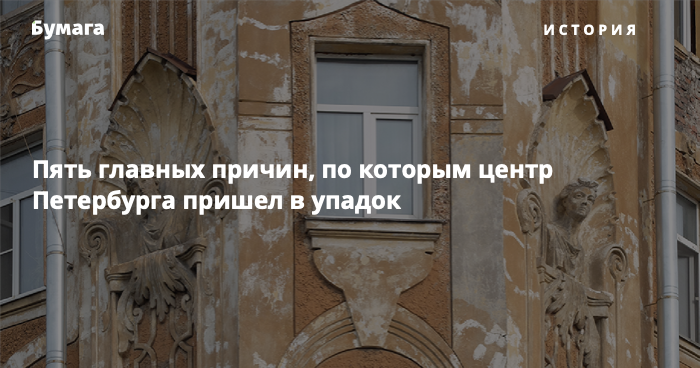
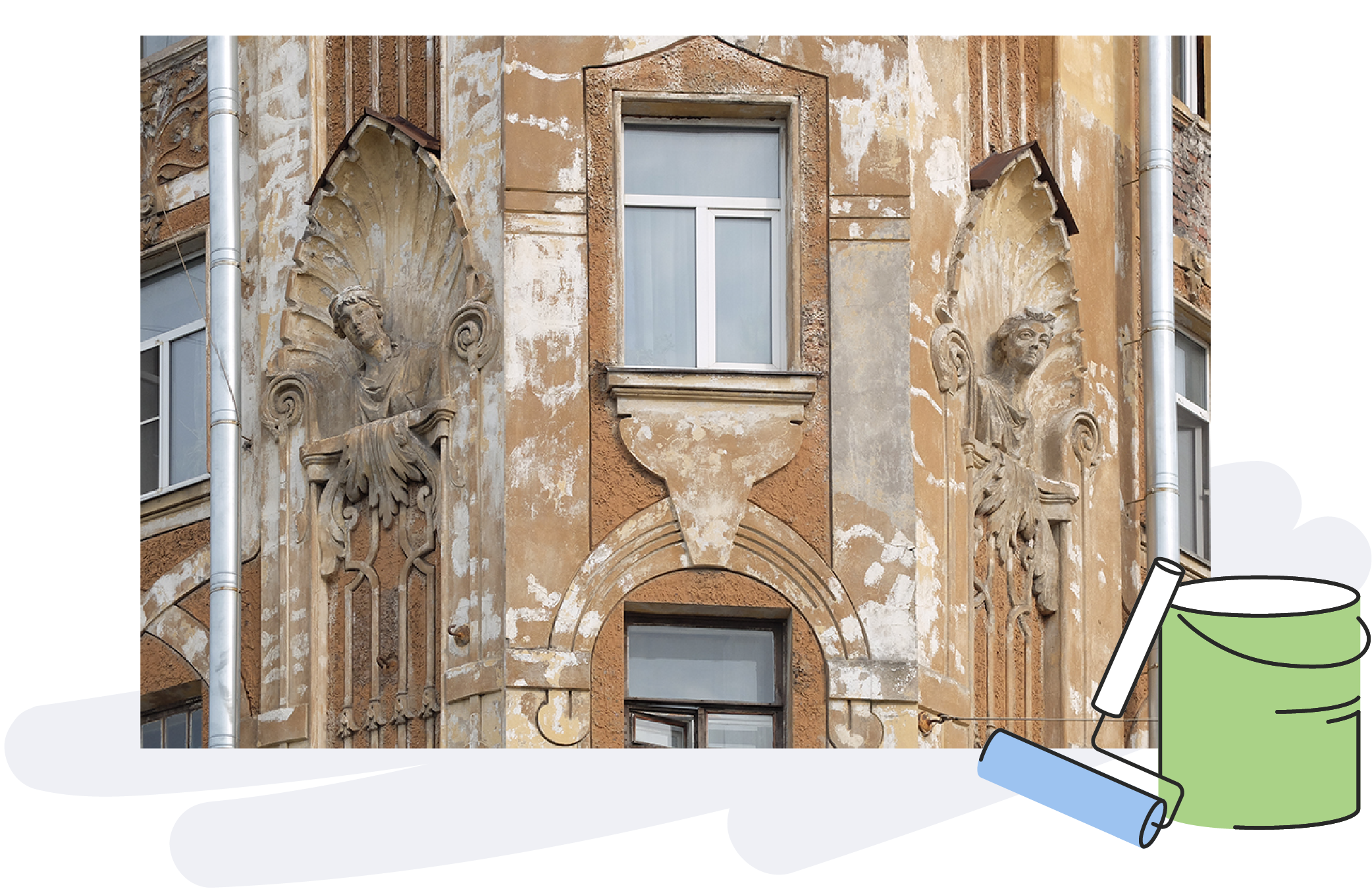
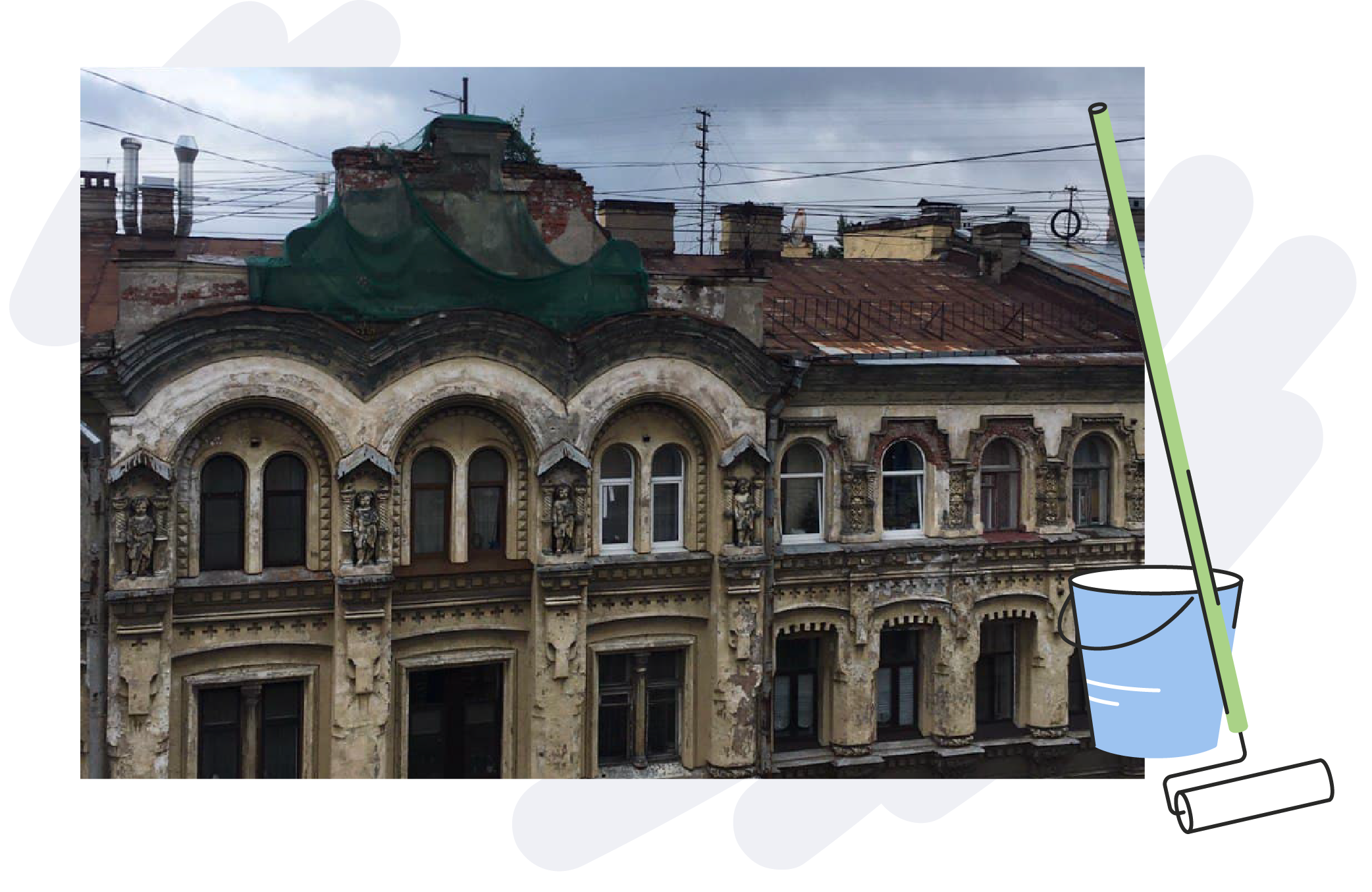
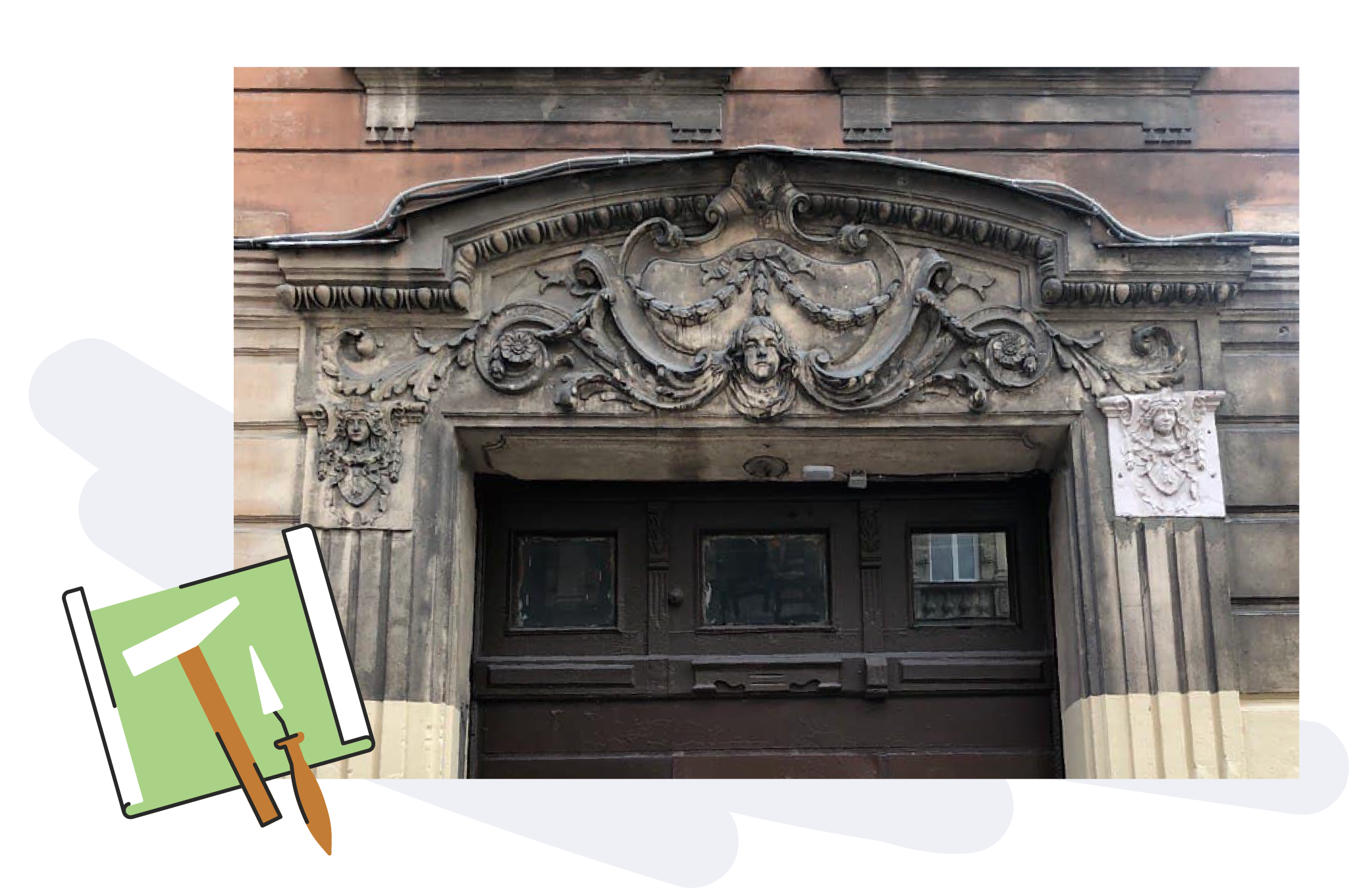
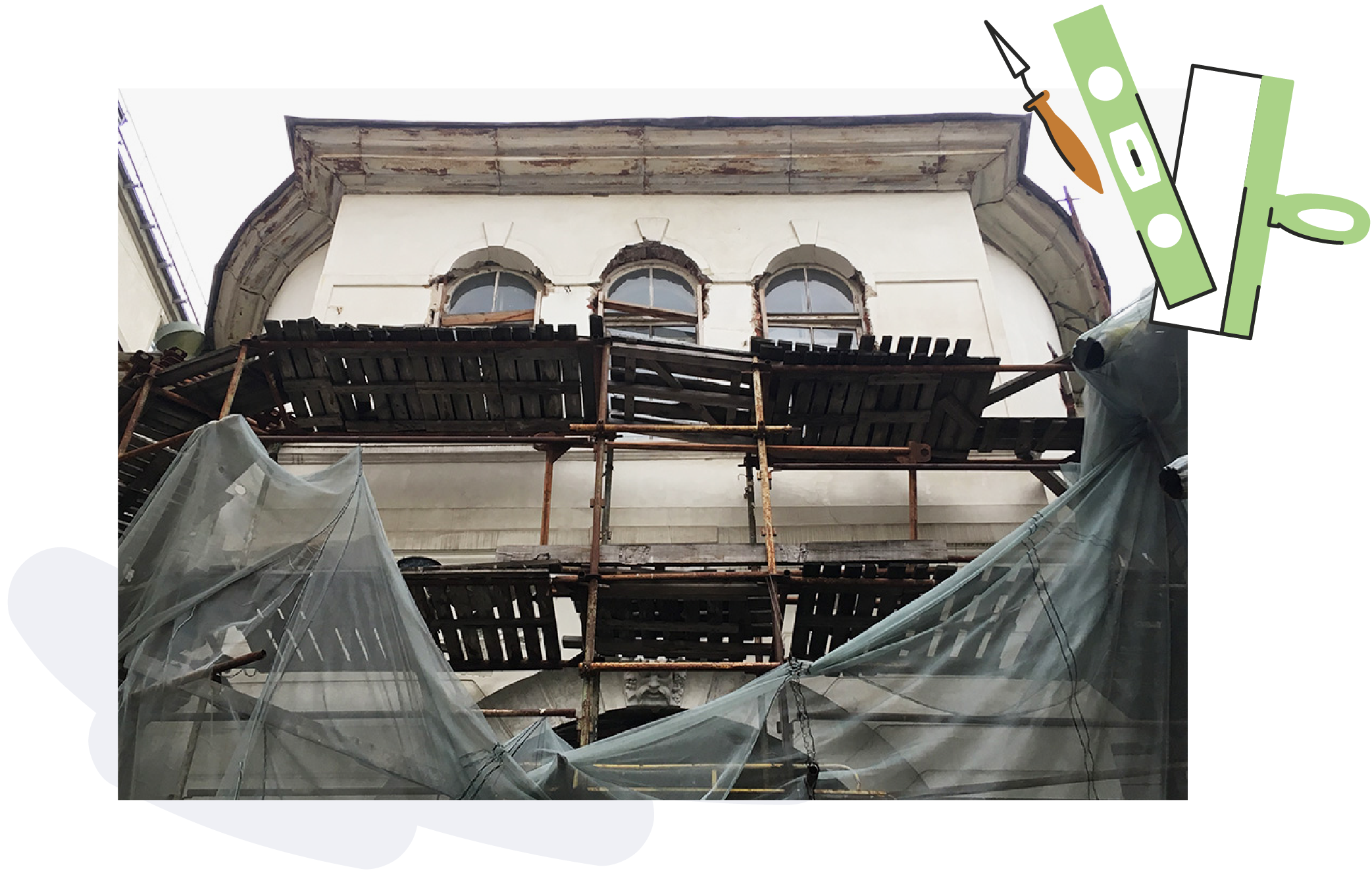
These are all houses built before 1917.
In 2020, such owners in St. Petersburg were 93 %.
This can be done without the consent of the owner of the apartment, because the balcony is common property.
“Zhilkomervice No. 3 of the Central District” - 791 house, “Zhilkomservice No. 1 of the Admiralty district” - 716 houses, “Zhilkomervice 2 3 of the Central District” - 677 houses. Data for the first quarter of 2021.
The pandemic also influenced the project “Heritage” in St. Petersburg. Historical buildings with complex facades, which were previously engaged in the capital repairs fund, were transferred to KGIOP. However, in 2021, work in apartment buildings did not begin according to plan. It was assumed that funds from tourist fees would go for the repair of such houses, but it was never introduced. The KGIOP emphasizes that the work was simply shifted, they should begin in 2022.
Data for 2020.
In total, 56 balconies are dismantled in the area until the end of the year. More than 8 million rubles were allocated for this.
In recent months, the news feeds of St. Petersburg have been overwhelmed with reports of plaster falling from the walls, cut balconies and fires at historical facilities.
Why in the center of such a beautiful city as Petersburg, dilapidated buildings have been empty for decades? Because of what the decor of the houses was so dilapidated, what is falling-including injuring citizens? Can we local residents influence this? And is it worth blaming the weather in all?
“Paper” interviewed experts - activists, local historians, critics and architectural historians - and analyzes the five main reasons why the center of St. Petersburg comes into decline.
Reason No. 1. The current state of buildings is poorly monitored
A year ago, four balconies hit the house on a lively Kirochny street at once. Structures, miraculously not falling on passers -by, hung on the facade - they had to be removed using a crane. The main reason for this in the administration of the Central District is a violation of waterproofing and corrosion.
Later, the balconies that remained on the facade of the house near Chernyshevskaya were also dismantled . Since then, balconies in the city are massively recognized as emergency - and cut off. For example, the owner of an apartment in a historic house on the 4th Sovetskaya Street requested a repair of her balcony, but instead he was recognized as emergency and dismantled . And this is not the only such case.
Soon, in the Central District, they plan to cut 33 balconies - and restore during major repairs. One of the reasons for such radical actions, according to Petersburgers, is the overload of management companies. Some Criminal Code are in charge of hundreds of houses at the same time . “The housing complex is either an emergency resolves emergency situations, or acts after numerous complaints of residents. Which of you was the last time you saw a planned examination of facades, attic and basements? ” - complains the Petersburger Andrey Boytsev.
Nick Artemyeva from the Foundation “Attention” in a conversation with “Paper” also noted that the problems of apartment buildings have been ignored for years. This applies not only to balconies, but also, for example, water disposal systems and stucco molding . “The facades are brought to an emergency state, and it is easier for the public to be knocked down or cut off the balcony than to fulfill his obligations without prejudice to the building,” the activist says.
According to the established rules, managing organizations are developing short -term and long -term programs of current repair. They are based on the results of planned and extraordinary examinations of buildings.
Planned examinations should be carried out in spring and autumn, unscheduled - after rainfalls, hurricane winds, heavy snowfalls and floods. If the discovered problems in volume or financing do not fit into the current repair, they are included in the capital program.
-On Tchaikovsky, the collapse of the bayer began due to the lack of waterproofing. What does the housing estate do? He says that he will not do this, but will put work in the overhaul plan. Overhaul will be in 2030, when there will be practically nothing left of this bayer.
In order to optimize work, Kostrov, in particular, offers to take money to save balconies from contributions for current repairs and ask the housing agency of the Central District, which ordered the dismantling of the mentioned 33 balconies. But such a redistribution will probably not work: elimination of accident rate is a separate cost item, and money for current repairs is not always enough.
Reason No. 2. There is not enough money for repairs
In St. Petersburg, as in many cities of Russia, there is a regional major repairs program - this is the main tool for maintaining the state of houses. It includes more than 22 thousand objects. The program operates until 2038 , but the authorities annually claim short -term plans.
Krasimir Vranks, the leader of the “Beautiful Petersburg” movement, notes that the line of line for overhaul is opaque. According to him, the buildings that are clearly in need of restoration can queue later than at home, where work was carried out several years ago. It was two more experts in a conversation with Paper . “Paper” sent requests to the housing committee and the overhaul fund with a request to explain how the queues are formed for overhaul, but at the time of publication of the material did not receive answers.
If the building still waited for repair, difficulties with its quality may arise. So, after work in the house of Lidval on Malaya Posadskaya Street, Lepnina lost its original appearance - the volumetric pattern became flat. The overhaul fund then said that they did not spoil, but, on the contrary, restored the historical appearance of the building, but after complaints of residents to the prosecutor’s office, Lepnin was still replaced . Another example: in the house on Tauride Street, only part of the facade was covered with tiles, and on the upper floors it was simulated with the help of plaster.
There can be several reasons for the unsuccessful overhaul, including the desire of contractors to save. On the one hand, this can increase profit, on the other hand, it is possible to help compensate for the initial lack of funding, which the authorities also recognize .
In order to compensate for the lack of funds, in recent years, the authorities have raised a overhaul fee several times. Now the owners of apartments in pre -revolutionary houses with an elevator are most paid - 12 rubles per square meter. But in comparison with other regions, the contribution remains low. For example, in Moscow, the minimum payment is 19.5 rubles per square meter.
- In 2014, the size of the minimum contribution was 2 rubles per 1 square meter per month, but even its further increase did not cover the costs of work <...>. As a result, we are behind the implementation of the regional major repairs program. To catch up with it, you need more than 98 billion rubles .
At the same time, the share of financing from the city budget in overhaul is reduced : in 2017, 5.8 billion was allocated, in 2018-5.2 billion, in 2019-4.5 billion, and in 2020-343 million (initially the size of the subsidy was 3 billion, but it was reduced due to the situation with Covid-19 ). In the budget for 2021, Smolny first did not lay down subsidies on the overhaul of the houses at all, but later Beglov signed a resolution on payment, the amount of which is not specified.
Recently, the overhaul fund, which collects money from the townspeople, checked the control and accounting chamber of St. Petersburg and revealed several violations. So, according to the auditors, the FCR put the money of Petersburgers at interest in the bank - and in 2014-2019 he received half a billion rubles of income. This is legal , but the earned must be spent on overhaul, and as they told in the Control and Accounting Chamber, more than 28 million were sent to prizes to employees. The housing committee did not agree with the conclusions of the audit, and the overhaul fund reported that they gave motivated answers to all the comments, but the auditors did not take them into account.
Reason No. 3. Residents do not delve into the repair process and do not control the contractors
Residents of apartment buildings often do not perceive common house property as their own, and therefore, do not control management companies - both in current work and during major repairs. Such an opinion in a conversation with “paper” expressed several experts at once.
The local historian and author of the architectural newsletter of the “Paper” Alexei Shishkin explains: initially, thousands of houses in St. Petersburg were profitable - the apartments were rented out in them, and the owner monitored the facades and ceremonials. The owner set a high rent, and this allowed him to invest in a state of the house.
When in 1918, real estate was municipalized , the buildings transferred to the property and under the responsibility of the state. “The Soviet management system did not take into account how expensive it is to maintain such houses,” says Shishkin. “Therefore, the wear and loss of architectural elements went.”
Now the responsibility for the maintenance of houses is carried out by management companies. Moreover, their work should be monitored, among other things, the inhabitants themselves. But, according to Shishkin, 30 years after the collapse of the USSR, the townspeople did not form this habit: with bright, but rare exceptions - like a tank or a building on Dobrolyubov - residents do not feel like the owners of buildings.
As in the Soviet years, the townspeople believe that someone is different, and they will not control the work of management companies, says Anna Kapitonova from Veropian. Hence the unwillingness to delve into the processes. For example, before major repairs, residents of any apartment building can gather to vote for or against work, approve their list within the budget and choose the responsible for acceptance - it is this person who will put his signature in the documents after the end of the work. While residents have comments, repairs are considered unfinished.
But most often it happens differently. If the house does not have a valid council or residents do not come to the meeting, the capital repair fund believes that approval is automatically. Therefore, in the future, it is more difficult for owners to influence the course of work - after all, they will accept repairs in the administration and the FKR, Kapitonova notes.
The process also says that most citizens store money for overhaul on the account of the regional operator - the capital repairs fund. In a sense, this is easier: no need to manage the costs, look for contractors. If you create a special account for a separate house, it is necessary to issue a legal entity - it will be possible to manage money directly, but with the participation of the general meeting of residents.
At the same time, there are, of course, initiative Petersburgers. “Paper” wrote about the closed group “Petrograd Diaspora”, in which they agree on pickets due to poor-quality snow cleaning and looking for missing historical doors. The inhabitants of Rubinstein united to fight with bars working without a license, the festival participants Tom Soyer's Day annually paint playgrounds and sculptures in the yards.
Reason No. 4. Investors are unprofitable to take up buildings in the center
In St. Petersburg - a couple of hundreds of abandoned buildings, many of which are in private property. Old industrial facilities are empty - the Samson meat processing plant and the Red Triangle plant, boiler rooms , hospitals and cottages. They penetrate there to take a picture or leave street art on the walls-as in the case of the Neva market .
There are abandoned buildings in the center. The fate of the stable department at the Savior on the Blood cannot solve for 10 years. They wanted to turn the architectural monument of federal significance into apart-hotel, but the investor abandoned the project. According to the latest data , the building can be given to Moscow entrepreneurs under the “ ruble per meter ” program - the company will restore the building at its own expense, and then will pay minimum rent. But what exactly will happen to the stable department is not clear. This summer, at the walls of the destructive building , a fan zone will be located to the European Football Championship.
Nearby, on Moika, 26, for a long time, the House of Foreign Affairs of the Russian Empire was empty. Although the object is in the very center, it is not an architectural monument. Recently, the building for 461 million rubles was bought by the October Electric Repair Plant, the investor decided to adapt it to the office.
It is investors who could save the buildings for which the city does not have enough funds. According to the chairman of the KGIOP, Sergei Makarov, "it is impossible to cope with everything without private business." But commercial companies have reasons not to take on such projects. Here are some of them.
Hard restrictions. Renovation in the city center, that is, the demolition and construction of a new building, is often impossible due to the security status of objects. This ban refers not only to architectural monuments, but also to any houses built before 1917. According to Mikhail Milchik, a member of the Council for the preservation of cultural heritage under the government of St. Petersburg, urban legislation prohibits the demolition of historical houses , but does not determine the range of actions that are still possible - this provokes conflicts in the implementation of projects.
Unrealized improvement requirements. According to the law, the same requirements for lighting, landscaping and landscaping as the new ones. “It seems that we are talking about building a free area in the Primorsky district, but in the historical center these requirements are almost impossible to fulfill - all the required simply does not fit,” said Elena Bodrova, executive director of the Russian guild of managers and developers. For this reason, for example, the parking is made underground, and the trees are planted in the nearest square.
Dubious profitability. During the reconstruction of the building, it is difficult to predict the volume of work, a lot is clarified after the start, says Eduard Tiktinsky, president of the RBI group. “So - a new design, new costs. We went through this, including during the reconstruction of the Levashov bakery, which we are leading now, ” says the developer.
It also happens that the owner asks for too much for the building, and it also becomes unprofitable to engage in them. According to Mikhail Rivlin from Okhta Group, they were faced with a situation when they wanted to work with a house on Fontanka, 2/7 of the summer garden: “The owner asks for this outbuilding a completely inadequate price, and the house is destroyed.”
The implementation of the project is not guaranteed. Business also notes that even a full package of design and permits, including building permit, does not guarantee the implementation of the project. “At any time, after the claim of the city defenders, the court may suspend the decision. In most cases, the developer wins, but the project is frozen, ” says Vitaly Nikiforovsky, vice president of Springald. Tatyana Novitskaya, General Director of the City project company, cites the Fligel Museum Faberge as an example: the design documentation passed all the necessary approvals, but the investor spent a year and a half on litigation.
After the collapse of the SCC, fires at the Neva Manufactory and in Basevich’s house, the conflict between developers and city defenders intensified. Developers declare the “destructive urban protection” - when the townspeople seek projects to stop, but do not offer anything in return. But activists still express their wishes-usually they want to see not elite residential complexes and business centers, but squares, public spaces and museums.
The center of St. Petersburg would help the productive cooperation of Smolny, business and activists. Eduard Tiktinsky from RBI believes that the authorities should show “political will” and create a clear regulation for all participants in the process - architects, developers, experts in examinations and city defenders. Elena Bodrova, Executive Director of the Russian Guild and Developers, offers to engage in a small quarter of three to five abandoned houses in order to understand the mechanics of work on this example and then spread it to the entire historical center. Other experts want to divide the center into zones - with a separate scenario for each. What path the authorities will choose, who are waiting for investors' money, is now not clear.
Reason No. 5. The climate affects the state of buildings, but not everyone agrees with this thesis
In the St. Petersburg strategy for preserving the cultural heritage, it is said that the destruction of buildings in St. Petersburg accelerates the features of the climate: high humidity, temperature changes, strong wind and flood. For example, when in mid -May a piece of plaster on Nevsky Prospekt fell on a car, in the housing cooperative No. 3, the incident was explained as follows: “Unfortunately, such cases cannot be prevented, we depend on weather conditions.”
Среди негативных природных факторов власти также называют неустойчивый грунт. Об особенностях почвы рассказывают и специалисты Научно-технического совета Жилищного комитета Петербурга. Председатель подразделения Сергей Старцев в 2019 году обратился с письмом к Александру Беглову, чтобы предупредить об ускоряющейся деградации исторических зданий. Эксперт призвал начать системную работу по ремонту подвалов и цокольных этажей зданий. Проблему с подвалами подтверждают в ВООПИиК, отмечая , что «реальные масштабы бедствия до сих пор неизвестны».
Системы водоотведения в городе регулярно не справляются , и в дни сильных дождей затапливает подвальные помещения и первые этажи домов. Это тоже влияет на состояние зданий.
Администрация города видит решение проблем, возникающих из-за климатических факторов, в правильной эксплуатации здания: устранении дефектов, ослабляющих структуру построек, противопожарных мероприятиях и так далее. В КГИОП «Бумаге» ответили, что за дефекты в ходе эксплуатации до срока капремонта отвечает управляющая организация (что приводит нас к сложностям из первой главы).
При этом не все эксперты в принципе согласны с тезисом о значительном влиянии погоды на сохранность зданий Петербурга. Как рассказала «Бумаге» архитектурный критик Мария Элькина, в городе действительно неблагоприятный для архитектуры климат, «но раз уж город стоял 300 лет до этого, странно сейчас называть погоду причиной обрушения зданий». Такое же мнение в разговоре с «Бумагой» выражал и урбанист Стив Каддинс.
Несмотря на то, что отдельные программы в городе есть, Петербургу нужна комплексная оценка состояния районов и целостная стратегия сохранения зданий. И перечисленные в нашем материале причины — деньги, ресурсы, погода, равнодушие и экономическая непривлекательность — важные, но не исчерпывающие.
They worked on the material
Автор текста — Анастасия Рожкова, редактор — Татьяна Иванова, литературный редактор — Владислава Петрова, дизайнер — Анна Кулакова, фото — Алексей Шишкин, Елизавета Семакина.
Комментарии для материала предоставили: Анна Капитонова , Алексей Шишкин , Красимир Врански , Ксения Малич , компания «Урбаника» , КГИОП , Максим Косьмин , Мария Элькина , Наталия Николаева , Ника Артемьева , Стив Каддинс , Юлия Рыбина , Ярослав Костров .