
Translated material
Torture is beautiful
Why did Dostoevsky make a children's writer? We begin the discussion about the school curriculum in literature
From the editorial office
With this material, we open the discussion: "Why do not children read and how to help them love books?"
Summer. Parents are trying to put children for lists of literature issued at school, children resist as they can. Parents are measured in social networks by the number of list books and ask: until the children they will beat off school literature on the desire to read? Arguments on the one hand are “it's time to throw all this dusty classics out of the program, poor children cannot overpower it”, on the other hand, “you want to raise an erect of idiots indifferent to their own culture.”
What is in the program
Spears usually break around the questions "What should be thrown out of the school curriculum?" And “What should be included in the school curriculum?”, Although it is more logical to start with the question, but what is this program in general.
What to teach children at school is determined by the Federal State Educational Standard, federal state educational standards. Their new version has just appeared - in this July. (About this - the text of Anton Skulachev, the chairman of the guild of the Warden).
I’ll only say that the previous version of the Federal State Educational Standard did not contain a specific list of works in literature, but only presented the general requirements for the education of a qualified reader. In the summer of 2017, a single list of literature was included in the standard with the consolidation of works by year.
"Golden List"
In fact, the state constantly reduces the discussion of literature at the school to the issue of “Golden List” - a list of books that the student is obliged to read for 11 years of study. It should include some special works that will make the student by the end of training altruistic, compassionate, highly spiritual, cultural and patriotic.
At the same time, no controversial texts that contain a hint of complex issues of our time can not be allowed on the list.
After all, “it is clear to everyone” that the child is a clean sheet: he will read a good book and correct, read the harmful - and will deteriorate.
And when there is not enough clock on literature, the inclusion of modern authors is generally a sabotage against the national cultural code: do you really want to throw Fet and insert Givargizov?!
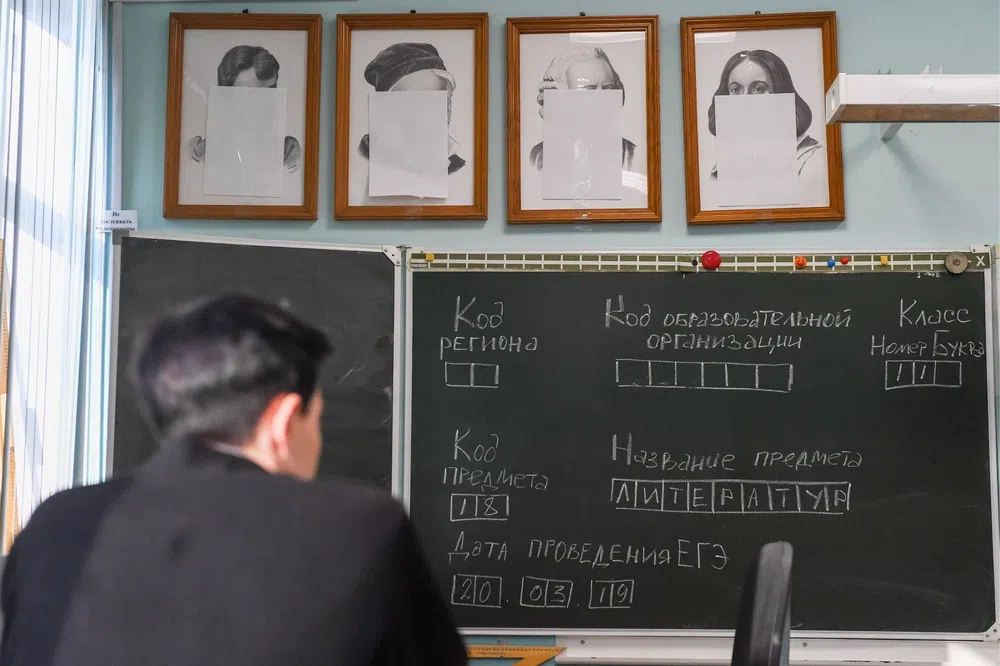
If the student’s task is to read the right book and extract morality, then the meaning of the lesson of literature is to test the knowledge of the text and explain to the student how to interpret it correctly. (In this case, the text, by the way, turns out, it turns out, is not necessary at all.) It is also advisable to approve the correct interpretations at the state level so that the teacher does not carry a dangerous diverse. And the student should be taught to write texts according to the model, from which it will be seen that he has learned the “traditional values” he proposed.
Literature lessons should be lessons of ethics and patriotism: we read a book, discuss behavior samples, write an essay on why to give carts to the wounded, like Natasha Rostova, is good, and to abandon the oath, like Shvabrin, is bad. As a matter of fact, this is how in many schools of the country literature is built. And the final essay and essay in the exam in Russian just become the very exam on ethics and patriotism .
The closer to the high offices where the most controversial decisions of recent years are made - changes in federal state educational standards, the introduction of all -Russian verification work (VPR), the introduction of a compulsory final essay, the stronger the illusion is that this is an absolutely working scheme.
No, they probably understand that children are not very easy for children from the Golden List. But what are we - will we indulge in their laziness and unwillingness to study? No, we will force them to read: for this, both an essay and VPR in literature. If you do not want to love great Russian literature - we will force it.
Knowledge of knowledge is solid
The closer to real children, real practice of children's reading, real literature lessons - the more clearly it is clear that this scheme does not work. In conditions when the book has long ceased to be the only source of information about the world, when children live in the conditions of information overload, only managing to fight off the information wrapped in brilliant candy wrappers and their attacking them from all sides, they do not develop the skill to look for hard -to -reach information embraced in a complex form and process it. Remember? "A nutty of knowledge is solid, but still we are not used to retreat!" Oh no, the current children will not even try to stab this nut: why, if all around is a lot of cleaned and fried?

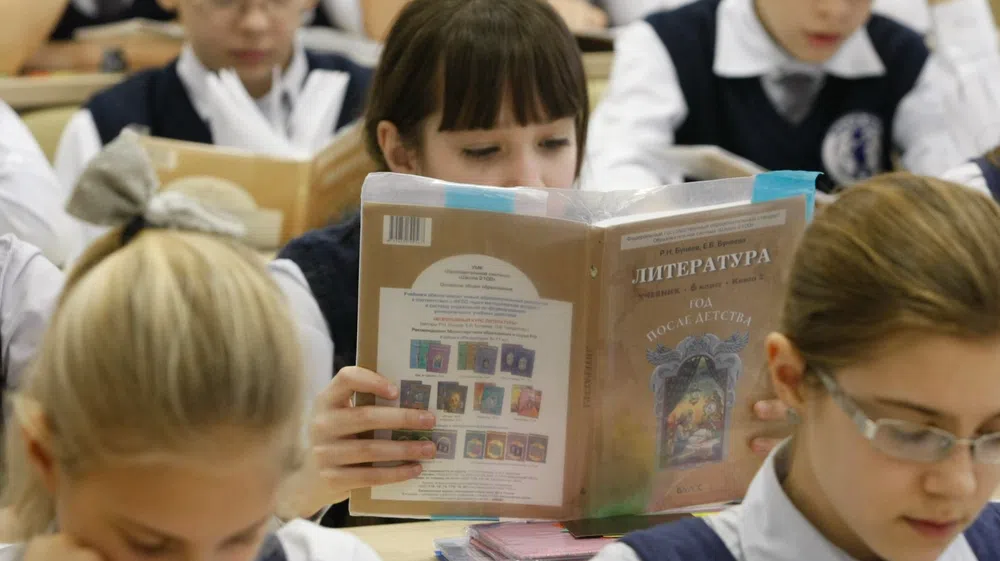
And classical literature for them is a solid nut. The classics of the XXI century classics of the XIX century is also impassable as the generation of their parents and grandfathers who grew up in the twentieth century, the texts of the XVIII century are incomprehensible: hardly any of us, even a philologist,, out of working need, will become the pleasure of reading Trediakovsky, Khraskov or Ozerov. The language has changed, the realities have changed - and, entering the world of the old book, the child feels himself a foreigner, if not an alien: he does not understand what kind of people they live, what they say about what is happening at all. In that world, a completely different rhythm of life with which the child cannot cope with the habit: everything is slow, verbose, here half the page is described by the sunrise of the sun, here, in the end, nothing happens at all. Naturally, on the fifth page, the child slams the book with a cry "What is it for me?!"
Most of the texts included in the school canon were not initially intended for children's reading.
The children hate them, for example, for long and slow descriptions of nature (and it goes not only to Turgenev and Prishvin, but even Bianchi). What is bad about the description of nature? Nothing, but this is not for children: and because age psychological characteristics make the child prefer the effect of the description, and because admiring nature is a special experience that requires some maturity, and because the creation of a picture in the description in the mind is a complex neuropsychological process. And most importantly, because the modern child, especially the city’s child, does not distinguish between the spring chips, does not know how the threshing floor, Riga and Owing, will not understand what a compressed field and a plowed field, did not hear the lark, did not sit at the hearth and did not lie on the stove - all this is also an alien experience for him.
And adult problems of the XIX century are extremely far from the life of a modern schoolboy. And many texts of the child with his life experience are not able to comprehend at all. A typical example is the textbook story “Mumu”, which only in vain injures fifth -graders or sixth graders with hopelessness of the dog fate. The meaning of serfdom is incomprehensible for them, it is not clear why Gerasim could not disobey the lady and leave with the dog; The child does not understand how to gain freedom, having lost everything - most of them, thank God, are generally not very clear what “losing everything” is. And it is quite natural that “Mumu” turns out to be the eternal leader of the polls “what text you would remove from the school curriculum” or “the most hated work”. By the way, high school students have their leaders - they usually get Tolstoy and Dostoevsky: the first - for volume, the second - for gloom.
By the way, about volumes: children have time to read only in the summer, on the holidays and when they get sick. The rest of the time they make homemade, go to circles and sections and engage in tutors. And in the 10th grade, which is the most significant Russian novels, and in the 11th, when schoolchildren study the twentieth century, their hands do not reach any reading at all: they do not always have time to sleep, not without reason the best that they found in the distance is “we finally got enough sleep”.
In general, the answers to the question "What to exclude from the program?" (They are quite a lot of any search engine on request - for example,here and here ) are rather boring, predictable and show a very superficial level of acquaintance with the works, not even saying - understanding. The answers to the question “What would you add?”, Although the “Harry Potter” predictably leads here.
During the informal survey that I myself conducted, adults called comics and manga, the book “The Road goes to Dal” by Alexandra Brushtein, works of Dickens, Wilde, Maugham, Jack London, O'Genry, Francoise Sagan, Orwell, Salinger, Vonnegut, Clive Lewis - from foreign writers, from foreign writers, from foreign writers. Strugatsky, Konetskoy, Krapivina - from domestic, from modern and now alive - books by Dina Sabitova, Anna Starobinets, Evgenia Pasternak and Andrei Grivalevsky, Nina Dashevskaya, Marina and Sergey Dyachenko, Eduard Verkin ...
In a word, the current adults want to see more foreign literature and modern domestic in the circle of reading their children.
Every year I ask my students what books they would like to discuss in lessons or special courses; As a rule, the requests are the same: more foreign literature, more modern literature. At the same time, federal standards are arranged in such a way that chronologically the last foreign authors that can be discussed in the lessons are Goethe and Byron; There are so many domestic texts of the XIX and twentieth centuries, and there is so little time to work with them that only Orwell or Huxley manage to wedge in parallels with Zamyatinsky “we”.
What the author wanted to say
The issue of lists is endlessly imposed on top and below: the main request of the parents - give the list: a list of readings for the summer, a list of the best old children's books, the best modern, a list that read the girl eight years about animals ... But the issue of lists is not the main question in teaching literature at school.
Just the other day, I talked with colleagues from Germany who work with bilinguals-children who study in German schools, but speak and read in Russian. Their parents are interested in the children to maintain the Russian language and a sense of involvement in Russian culture. They have exactly the same problems as Russian parents: children are bored, children do not want to read, do not understand Russian classics without a dictionary. But, unlike Russian parents, they do not have a coercion tool: they cannot scare a deuce in literature, unexpected of the exam, failed by VPR. And the task of them is the same: how to grow a love of Russian culture, for Russian literature, for Russia, which for these children is also a semi -recognized, unusual, distant. This love is not grown by violence, intimidation and direct sermon. And how is it grown?
This is where the most interesting begins: how to make a distant and alien classic close and dear? How to show a stunned schoolboy who looked into someone else's incomprehensible world that people like himself live in him, and they are concerned with the same difficult problems? How to spend it in this world, so that he begins to understand his language and customs, to adapt to him? How to help him? What texts to give him so as not to scare him off from the very beginning? How to teach him to love and understand poems? How to grow a smart, independent reader in it? After all, an artistic text is not a set of “cases” for an ethics lesson. This is a reflection of life in all its complexity - and not always a reflection of realistic: it brings an imprint of time, language, culture, the author’s life circumstances chosen by the author. This reflection is masterful or hack. How to teach a child to understand this system of mirrors? How to help him understand where it is talented and where is mediocre? How to educate him in it, how to teach him to feel joy and pleasure from a good book? How to figure out what he loves, why and why he loves it? How to find points of intersection of his cultural world and his own?
This is all, and not the final cementing of the Golden List, is the most important subject for professional discussion. Without this, the teaching of literature will reduce the primitive moral preaching, to a dull conversation about whether the heroes behave correctly or incorrectly, what the author wanted to say and what this book teaches us.