
Translated material
The return of Frankenstein's monster: why the new government in Afghanistan will become a source of problems for neighbors

The return of Frankenstein's monster: why the new government in Afghanistan will become a source of problems for neighbors
Temur Varki
August 19, 2021 The Taliban movement is still officially banned in the Russian Federation and in most countries of the world, but it seems that after the withdrawal of the US military from Afghanistan, it takes control of the entire territory of the country. Now former President Ashraf Ghani has compromised himself by hastily fleeing and is accused of large-scale embezzlement from the treasury. For the post-Soviet countries of Central Asia, these rapid changes have the most serious consequences: their authorities are anxiously awaiting the influx of refugees and the growing influence of radical Islam. At first, this will lead to a new tightening of the screws, but in the future, Afghanistan’s northern neighbors, if they do not want to end up in the Taliban’s orbit, will have, on the contrary, to begin a gradual drift towards democratization.
Content
Ascension of Saint Ashraf
Negotiations with terrorists
Do you want it like in Afghanistan?
The Taliban movement has existed for more than a quarter of a century, and during this time it - of course, not without its own help - has been created the image of a medieval monster and scarecrow. At the same time, however, many countries could well lay claim to the right to be one of the parents of the Afghan Frankenstein monster: a wild, dark, bloodthirsty and ferocious enemy of civilization and human values - which they blinded in an attempt to solve their own problems. They could - but, for obvious reasons, they are in no hurry.
Today, few people remember that the Taliban was born primarily thanks to the carpet bombing of Afghanistan by Soviet troops. During 10 years of “international debt”, about a million Afghans were killed. Up to 5 million more fled to different countries, including Pakistan. It was in Pakistani madrassas that the Taliban (literally translated from Pashto as “disciples”) were formed and gained strength, with the dream of retribution and returning to their homeland. In April 1996, seven years after the withdrawal of the Soviet 40th Army from Afghanistan, the Taliban forced Ahmadshah Massoud's Mujahideen to leave Kabul. Immediately after this, the Taliban demonstratively hanged the previously shot and mutilated former pro-Soviet President Najibullah, whom the Mujahideen had kept alive for four years in the UN mission.
In fairness, it is worth noting that Najibullah’s regime lasted three years after the withdrawal of Soviet troops - and could have survived longer if it had not been left to its fate by the new Russian government, which in 1992 decided to no longer support the Afghan army with ammunition and fuel.
Ascension of Saint Ashraf
Another return of the Taliban to Kabul happened quickly and came as a surprise even to the White House administration, which had been counting on a calm and systematic winding down of its presence in the country. The Taliban did not wait for the completion of the withdrawal of the American contingent and the evacuation of the American and European embassies.
The power of President Ashraf Ghani, who refused to compromise with the Taliban, collapsed like a house of cards. On Sunday, August 15, 2021, his plane disappeared into midair. Almost all border countries and even Kazakhstan hastened to refute the assumption that the fugitive president had received permanent or temporary asylum from them. Only on August 18 did the UAE authorities officially recognize that Ghani was in their country. In Afghanistan they are now calling him a traitor and are demanding his arrest and extradition. It is especially emphasized that Ghani robbed the treasury: according to some evidence, during a hasty departure from the country, his people could not even fit all the cash into the helicopter, and some of it had to be left on the airfield. The Afghan Ambassador to Tajikistan, Muhammad Zohir Agbar, publicly stated that Ghani embezzled $169 million.
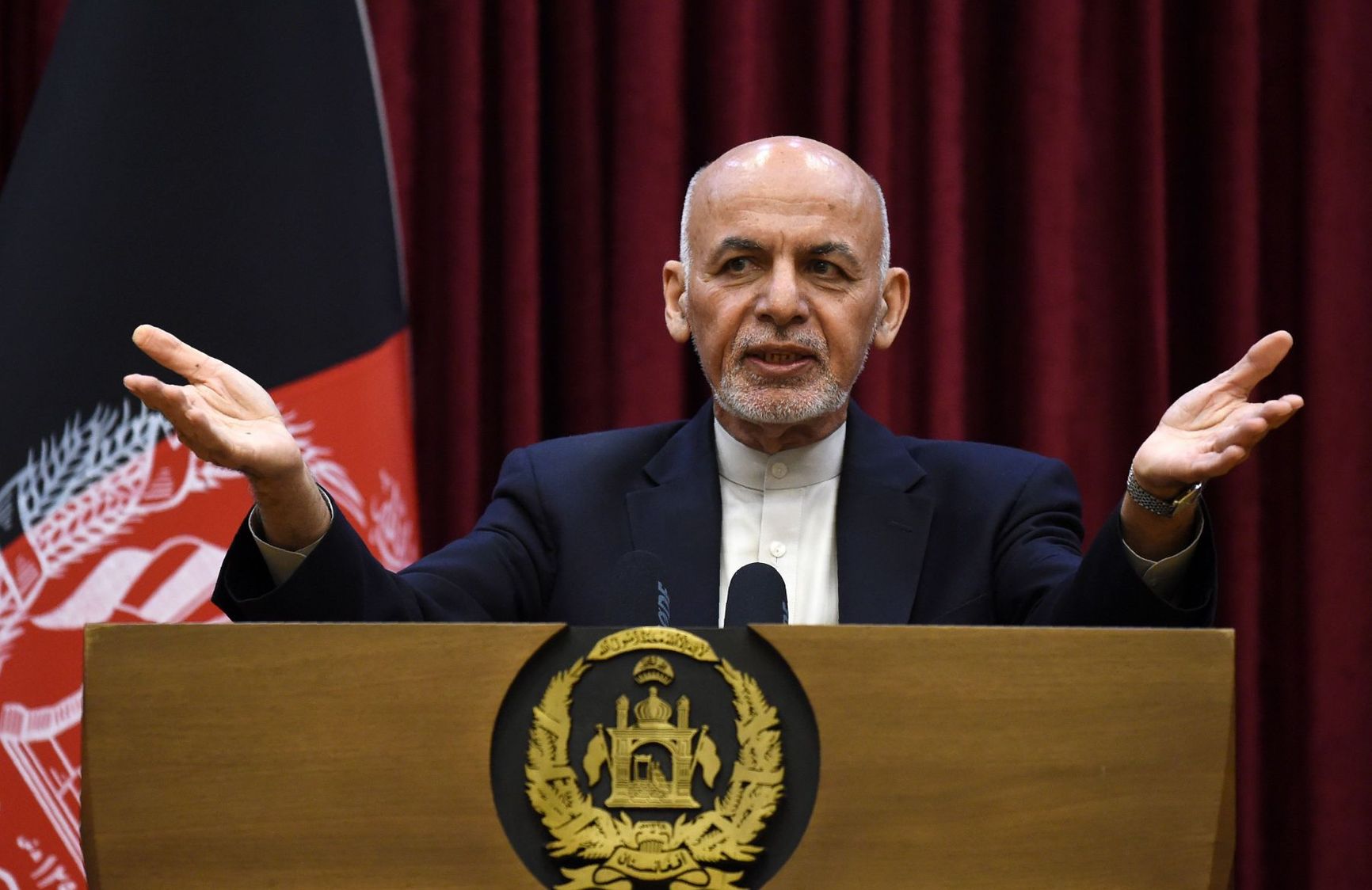
Just about a month ago, President Ghani solemnly declared that he would never leave Afghanistan because of the Taliban.
According to observers, one of the reasons for the unpopularity and fragility of Ashraf Ghani’s power was the insatiable thirst for enrichment of the elite - both through American aid and through uncontrolled trade in the country’s resources. At the same time, the president’s entourage was aware that they were holding on only thanks to the American military presence - and therefore were preparing to flee long before this August.
Thus, on November 14, 2020, a large shipment of contraband from Afghanistan was detained at the airport of the capital of Tajikistan: about 90 kg of gold and $15 million in cash. In April, a Dushanbe court found that an organized group with the participation of Tajik border guards and customs officers ensured the transportation of gold and currency from Afghanistan to third countries. According to the court , more than a ton of gold alone was transported in a short period:
“From September to November 14, 2020, they and their new accomplices managed to smuggle over 207.5 million Saudi rials, 2.5 million UAE dirhams, 55.5 million US dollars, 1 million British pounds, 4.5 million euros, more than 500 thousand Kuwaiti dinars, through Tajikistan and the Dushanbe International Airport in 37 cases, to Turkey and the UAE. 200 thousand Canadian dollars and over 1.3 tons of gold.”
Then the Afghan media linked the seized treasures with the Vice-Speaker of the Afghan Parliament Mirzo Katavozai, who went on a business trip to Dushanbe in February 2021. To a direct question from a journalist from Radio Ozodi about his involvement in the seized values, he replied : “This simply cannot happen, since I am a politician, not a businessman.”
Theft, decline in popularity, inability to establish full control over the country and reluctance to engage in dialogue with opponents caused the rapid collapse of Ashraf Ghani's regime. It seems that not only Afghans are tired of this state of affairs, but also their closest neighbors and major international players.
Negotiations with terrorists
Signs of a serious revision of the attitude towards the Taliban in the world appeared after representatives of the Trump administration began negotiations with them in Doha (2018). The subsequent international trips of terrorist leaders (formally they still have this status in most countries of the world) - to Tashkent and then to Moscow - were also important milestones. Some sources even reported that Vladimir Putin met with Taliban leaders during his visit to Dushanbe (2019), through the mediation of the head of Tajikistan Emomali Rahmon. One way or another, Afghan media claim that the Taliban met with Putin’s representatives in Dushanbe. Recently, there were two Afghan embassies in the Tajik capital - the official and the Taliban. Now the Taliban will move into the official building.
Recently, there were two Afghan embassies in Dushanbe - the official and the Taliban
It is also noteworthy that the wording “terrorist” disappeared from public documents of the State Committee for National Security of Tajikistan immediately after the Taliban took control of the provinces bordering Tajikistan. Even before the capture of Kabul, official Tajik state security communications began to refer to them simply as the “Taliban Movement.”
However, just two and a half years ago, the prefix “prohibited terrorist organization” did not prevent either Moscow or Tashkent from officially accepting the Taliban. Since 2018, among experts and analysts in Russia and Central Asian countries, the opinion about the need to rely on the Taliban has become increasingly popular.
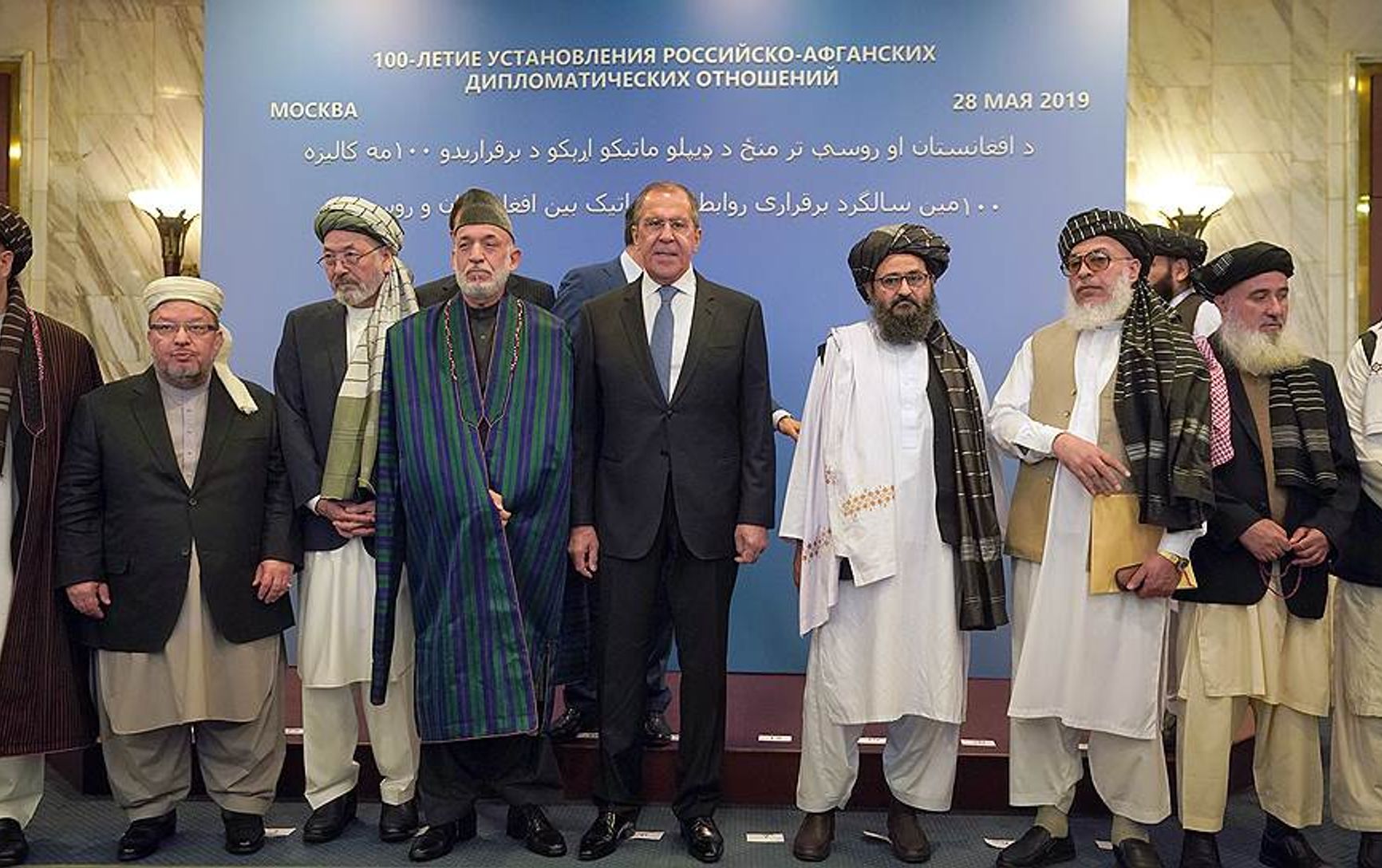
In 2019, this photo of Minister Lavrov with the Taliban made a splash on the RuNet - the negotiations between the head of the Foreign Ministry and an organization officially banned in the Russian Federation broke all patterns
The reason for this position is simple: it is better to establish friendly relations with them in time, because only the Taliban are able today to take control of the entire territory of Afghanistan and ensure the security of the borders, resist ISIS, and also ensure the security of transit projects of gas pipelines, railways, power lines from Central Asia to Pakistan and India that have been frozen for many years, and the security of cargo transportation to Indian ports.
Do you want it like in Afghanistan?
Using the example of changing the propaganda record regarding the Taliban in Tajikistan, one can observe how easily the rhetoric changes and yesterday’s friends and allies are betrayed. The head of Tajikistan, Rahmon, tirelessly sculpted the image of a father, patron and protector of all Tajiks, especially on the other side of the border Pyanj River. Today, not a single Afghan Tajik leader who fled from the Taliban has received asylum in Dushanbe. At the same time, not only the Uzbek Afghan General Dostum was accepted by Tashkent, but Atto Muhammadi Nur, one of the leaders of the Afghan Tajiks, previously glorified by Rahmon’s propaganda as “Emperor of the North (Afghanistan),” also found salvation there. Indeed, the Taliban embassy in Dushanbe and the enormous prospects for business that are opening up are much more important than songs about national unity and solidarity.
The rapidly changing situation in Afghanistan is forcing ideologists and politicians in Central Asia and Russia to change their shoes in the air.
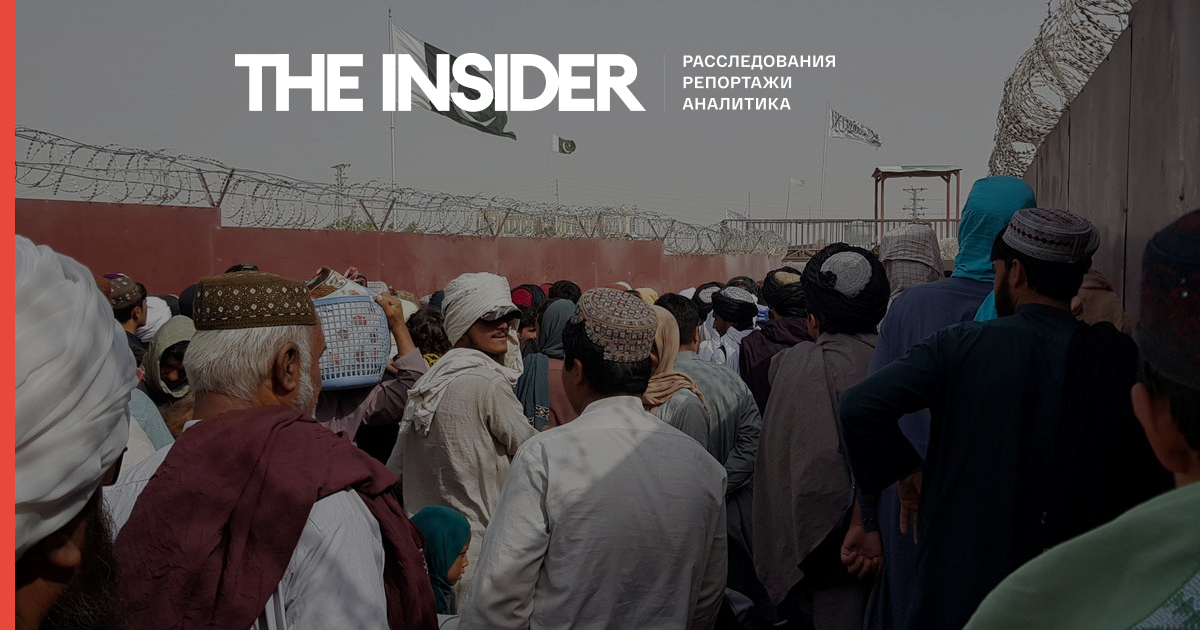
But at the same time, many continue to mistrust the Taliban regarding their promises not to expand their activities beyond Afghanistan. There are still strong fears in Central Asian countries that the Taliban will unleash a massacre that will provoke panic and massive flows of refugees to the north. In Tajikistan and Uzbekistan, just in case, areas have already been allocated for tent cities that can accommodate up to 100 thousand people.
Central Asia continues to distrust the Taliban and fears a massive influx of refugees
In addition, these countries fear not only humanitarian and epidemiological problems, but also “Trojan refugees” - sent terrorists. Finally, in Tajikistan, Uzbekistan, and Turkmenistan, they fear breakthroughs and infiltration across the border of ethnic Tajiks, Uzbeks and Turkmens - immigrants from Central Asian countries who swore allegiance to the Taliban or ISIS in Afghanistan.
Most likely, despite the recognition of the Taliban as a legal political force, the approaches of repressive bodies and propaganda within the post-Soviet countries of the region will not only remain the same, but will also receive a new impetus of intimidation and suppression. Their first reaction to the victory of ultra-radicals and yesterday’s terrorists in Afghanistan is fear, and at first it will become a catalyst for an even tougher tightening of the screws against all dissent, including secular, and not only against leaders of public opinion among believers and clergy. However, this practice, in turn, is fraught with the radicalization of young people and the growth of protest sentiments.
The problem will also be noticeable economic successes of the new Afghanistan - quite likely due to the serious intentions that Chinese state investors have in the country.
Ultimately, the example of Afghanistan will likely force regimes in Central Asia to change as well. Perhaps, out of spite, they will have to go for partial democratization, otherwise it is not clear how to prove that the format of the post-Soviet dictatorship is a model of development that is better than what the Taliban offers their country.