
Translated material
Fake by Sergei Lavrov: EU sanctions against Russia hit mainly Eastern European countries

Fake by Sergei Lavrov: EU sanctions against Russia hit mainly Eastern European countries
Yuri Bershidsky
August 23, 2021RIA Novosti talks about an interview that Russian Foreign Minister Sergei Lavrov gave to the Hungarian newspaper Magyar Nemzet :
“As Lavrov said <...>, Moscow understands that membership in the EU and NATO imposes on Budapest certain obligations regarding participation in multilateral sanctions regimes against third countries, even in cases where this is contrary to the national interests of Hungary. According to him, Russia believes that in the 21st century there should be no place for such manifestations of coercion towards “bloc solidarity.”
“Besides, sanctions are an unsuitable political instrument, and in relation to Russia they have no prospects. <...> It is important that EU sanctions hit the ‘Young Europeans’ hard, while the ‘Eurograndees’ even manage to benefit from the current situation for themselves,” noted the Russian Foreign Minister.”
Lavrov complains that the volume of foreign trade between the EU and Russia after the introduction of sanctions decreased from $417.7 billion in 2013 to $192.2 in 2020. But let's see how this affected Hungary.
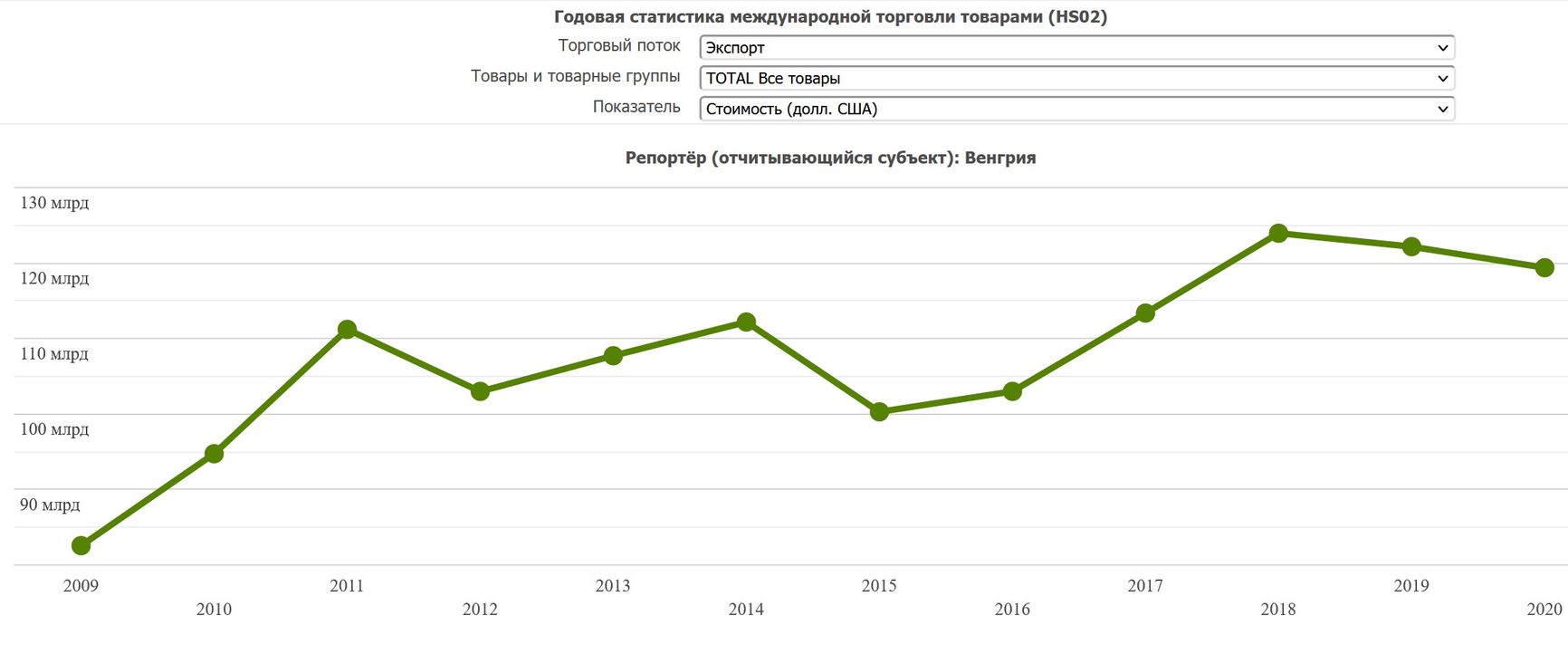
According to the TrendEconomy portal, the total volume of exports from Hungary in 2015 decreased quite noticeably, but after that it began to grow and by 2017 it had completely recovered from the decline. We see approximately the same picture in other EU countries that were former members of the Eastern bloc.
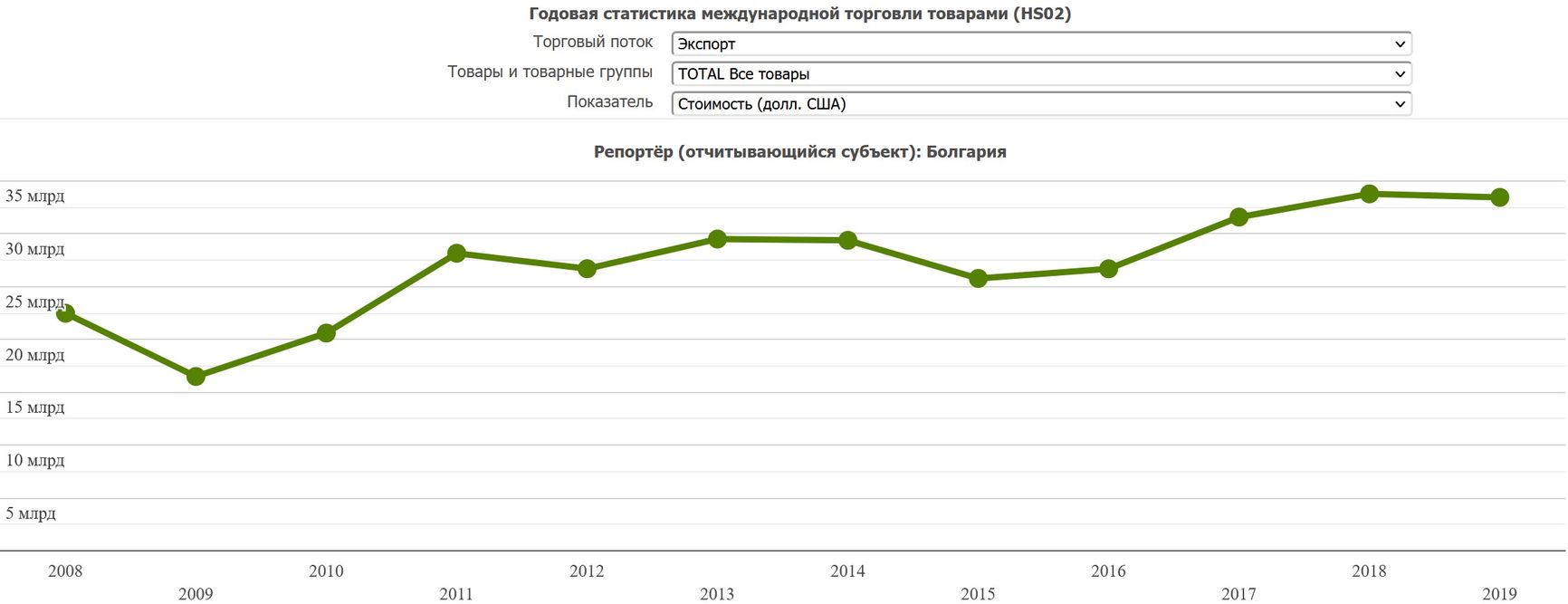
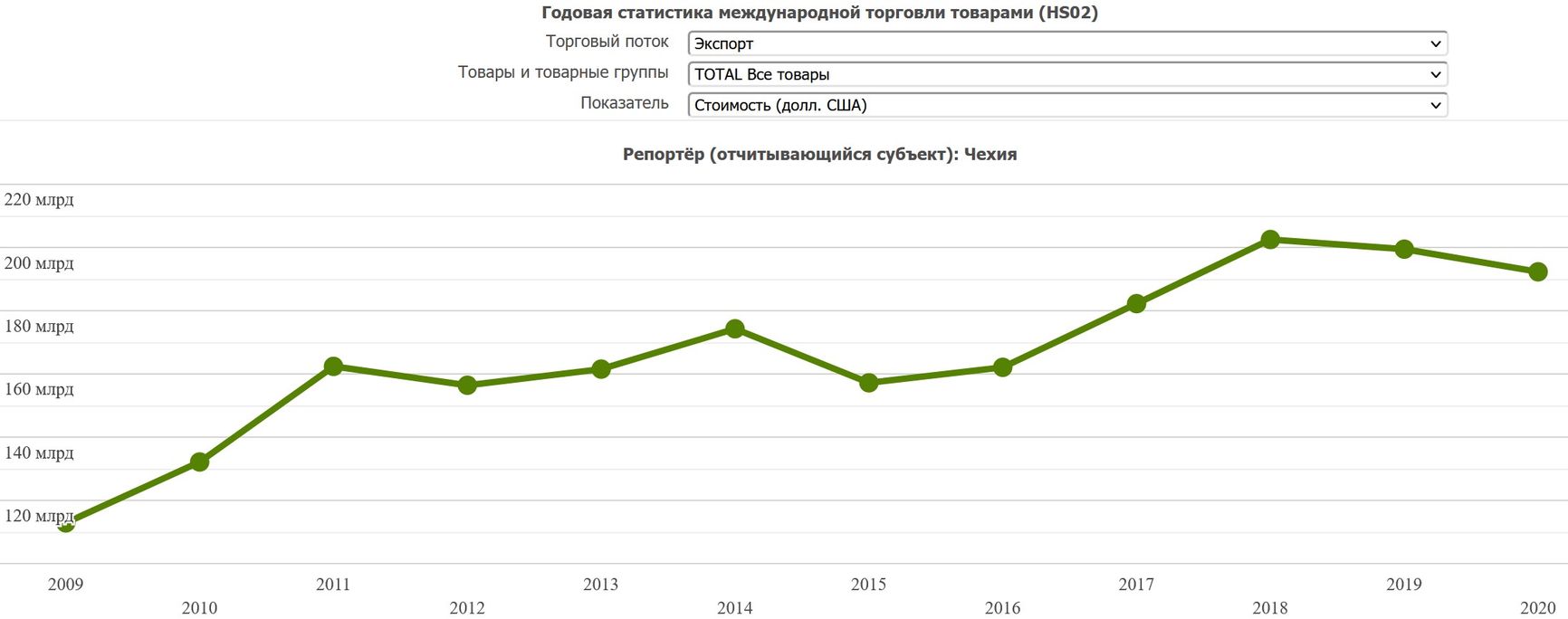
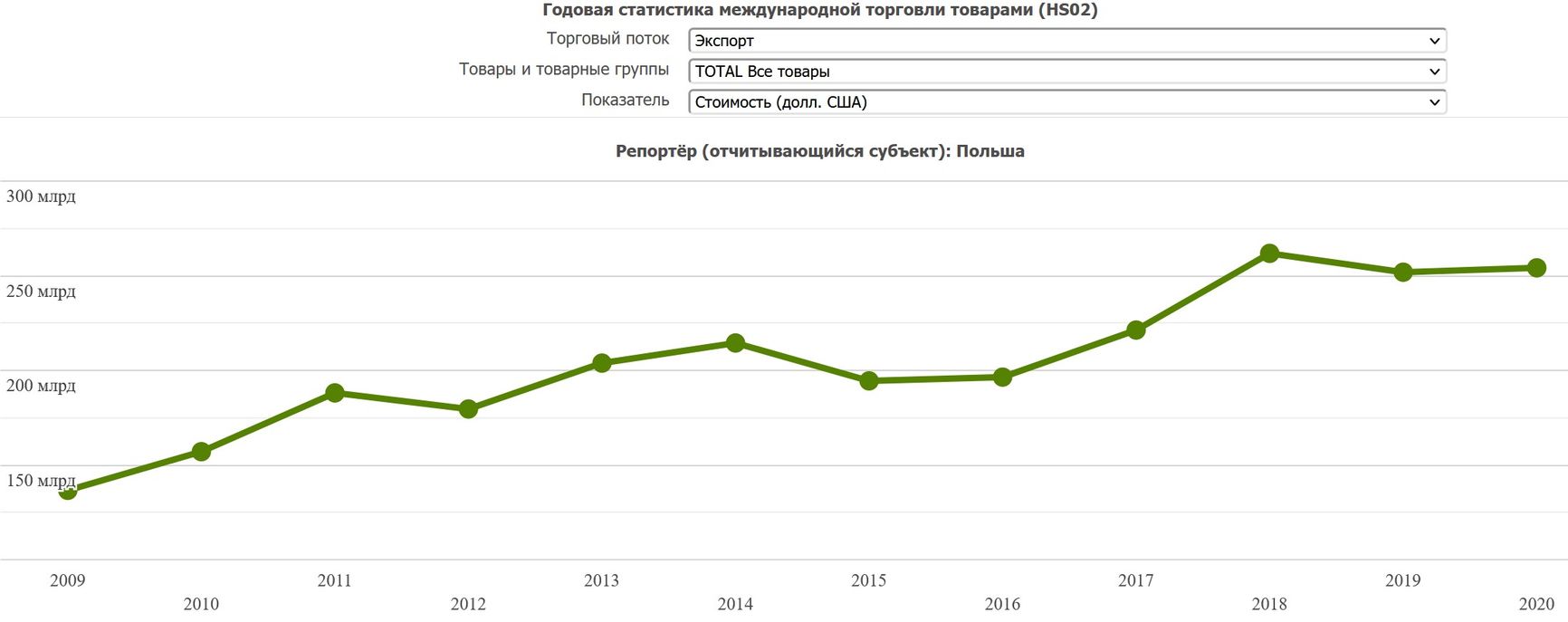
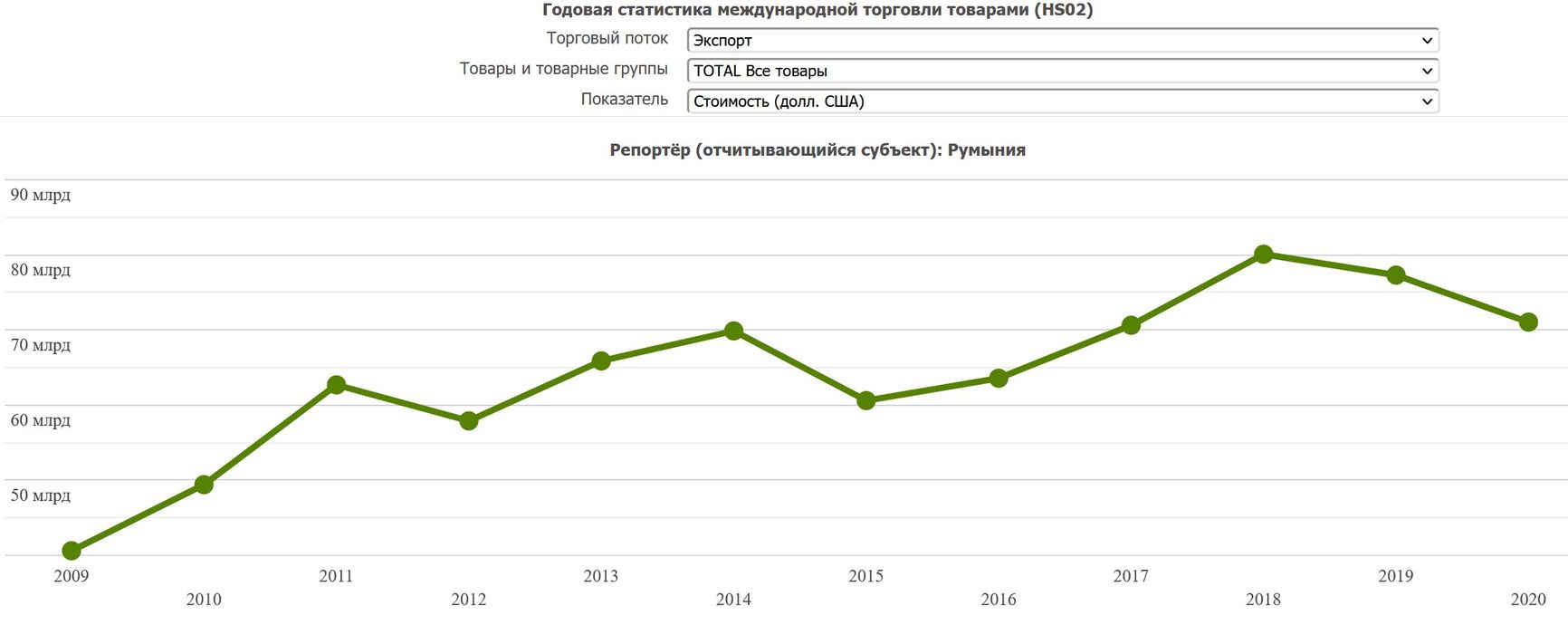
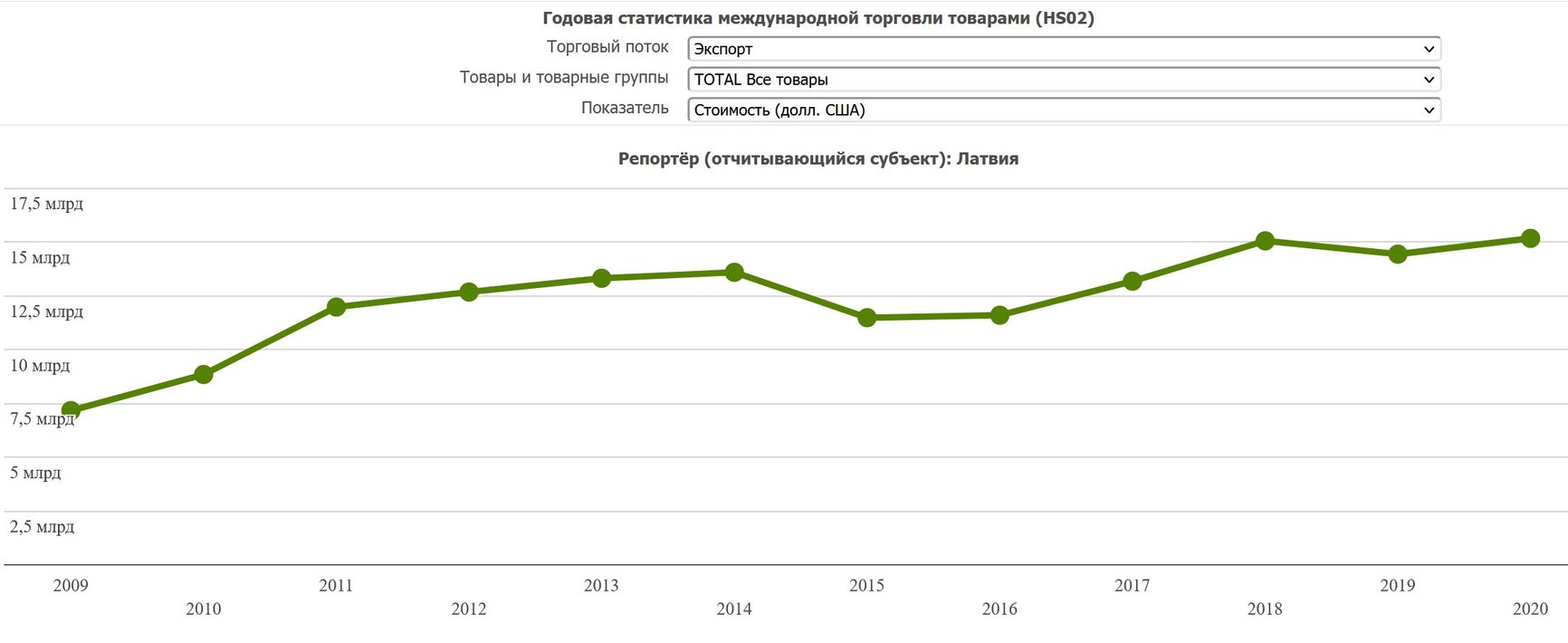
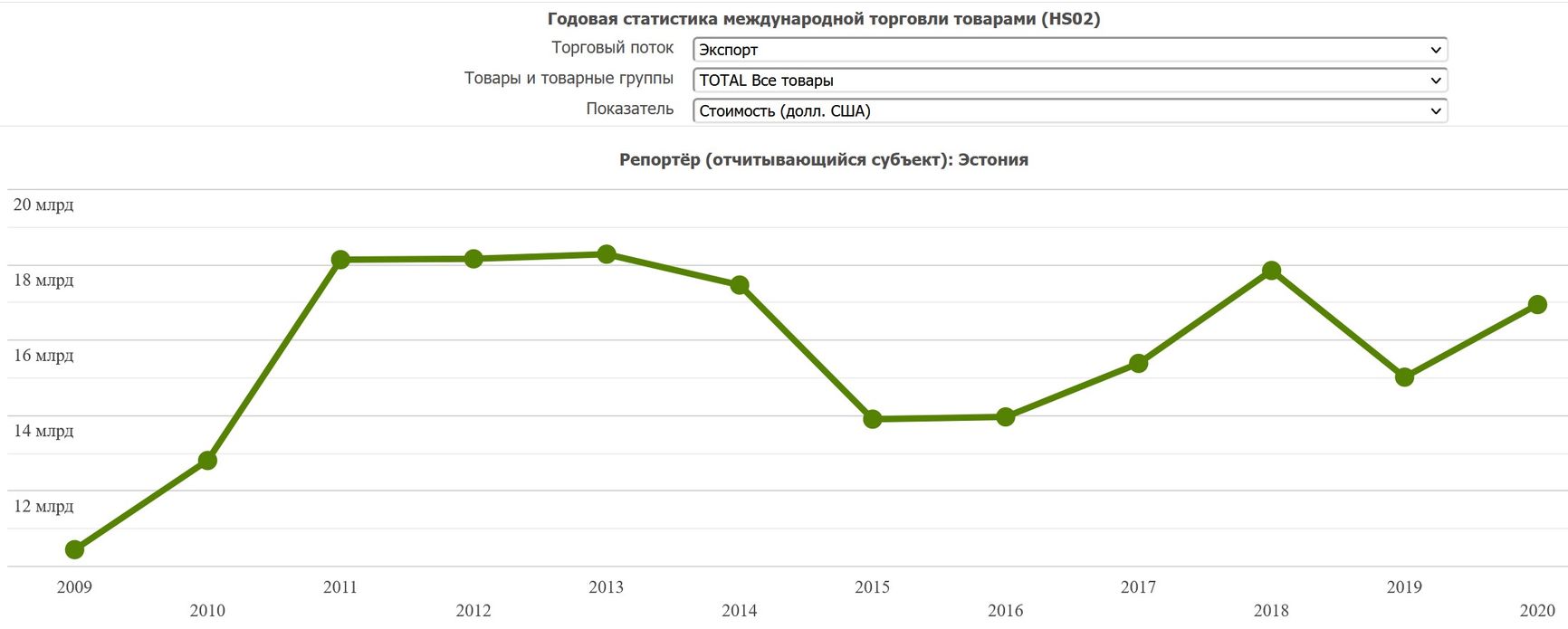
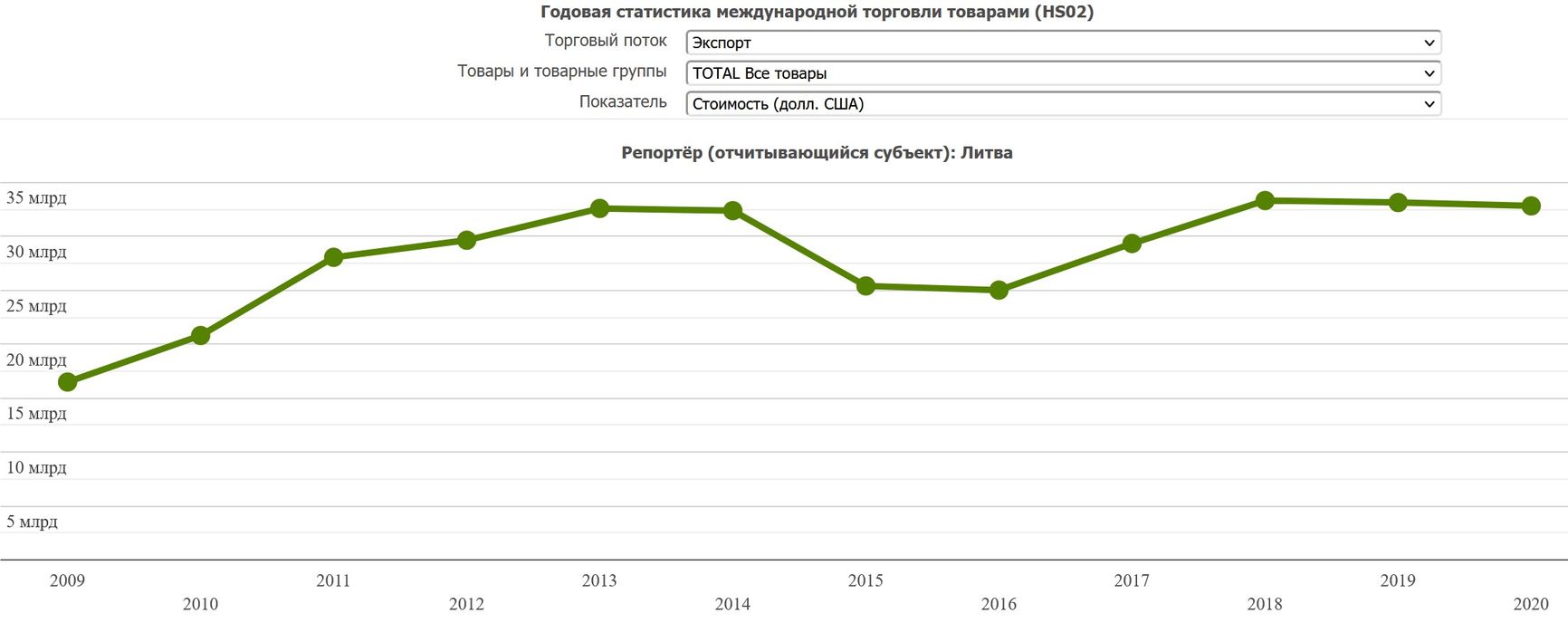
The situation in Lithuania is especially interesting because it is the only EU country for which Russia is the largest buyer of export goods. But here we see the same trends - with the difference that the decline in exports was recouped not by 2017, but by 2018.
Now let’s compare this picture with Western countries (“Eurogrands”), which, according to Lavrov, benefited from the sanctions.
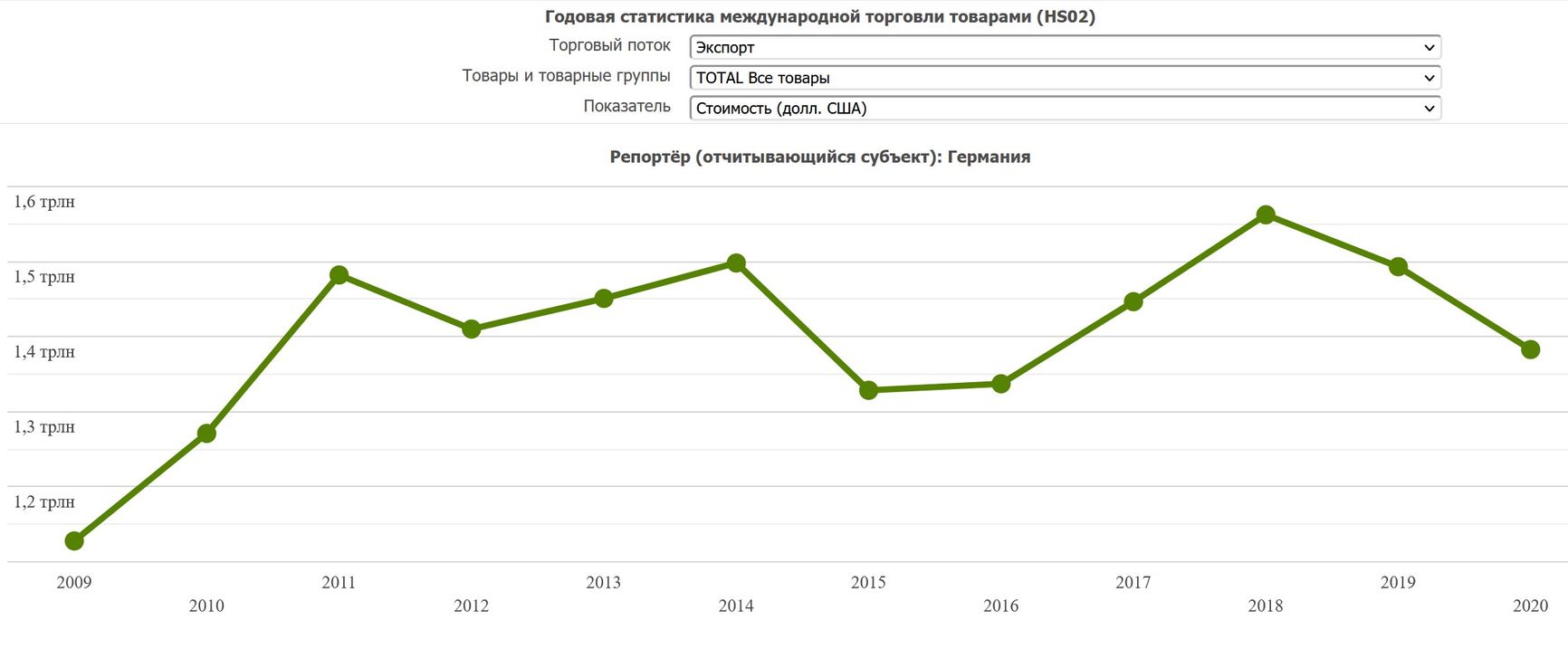
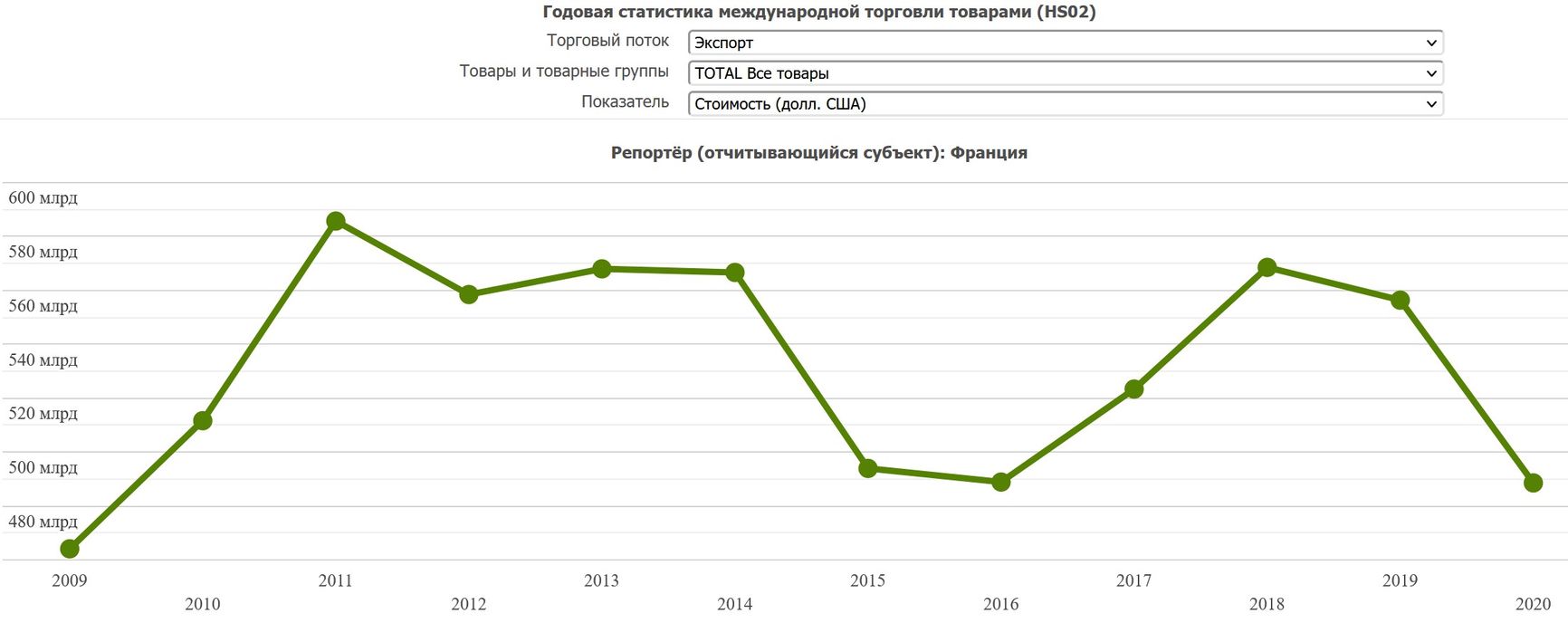
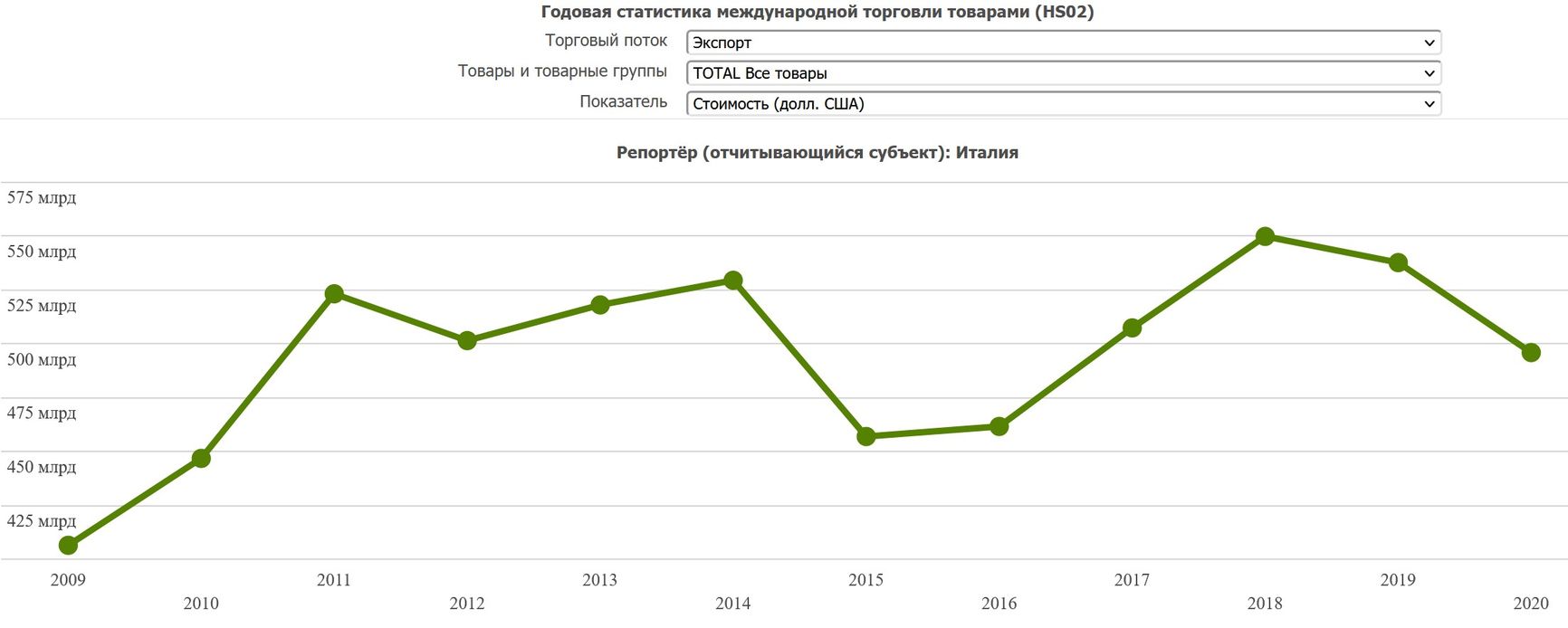
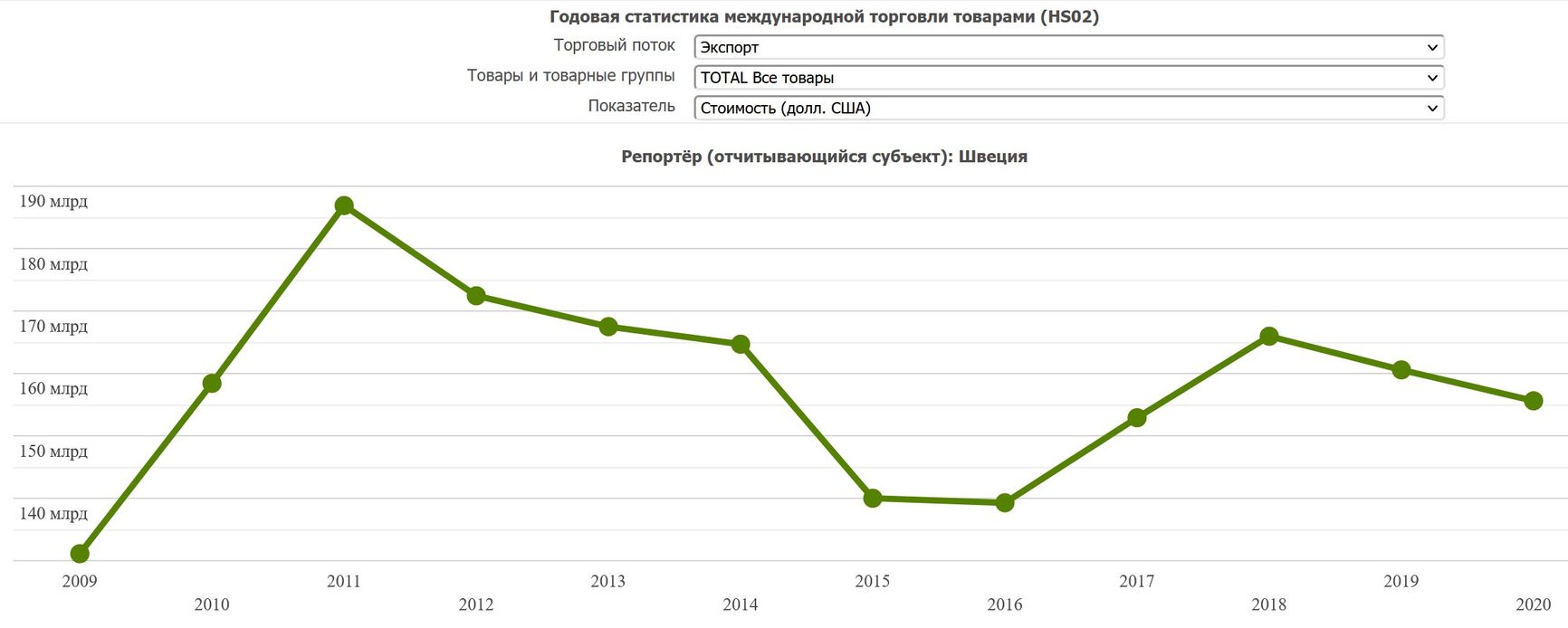
As we can see, everywhere there is the same failure in 2015–2016, followed by growth and the beginning of a new recession in 2019.
But is this related to sanctions against Russia? Here is data for several countries that did not impose sectoral sanctions.
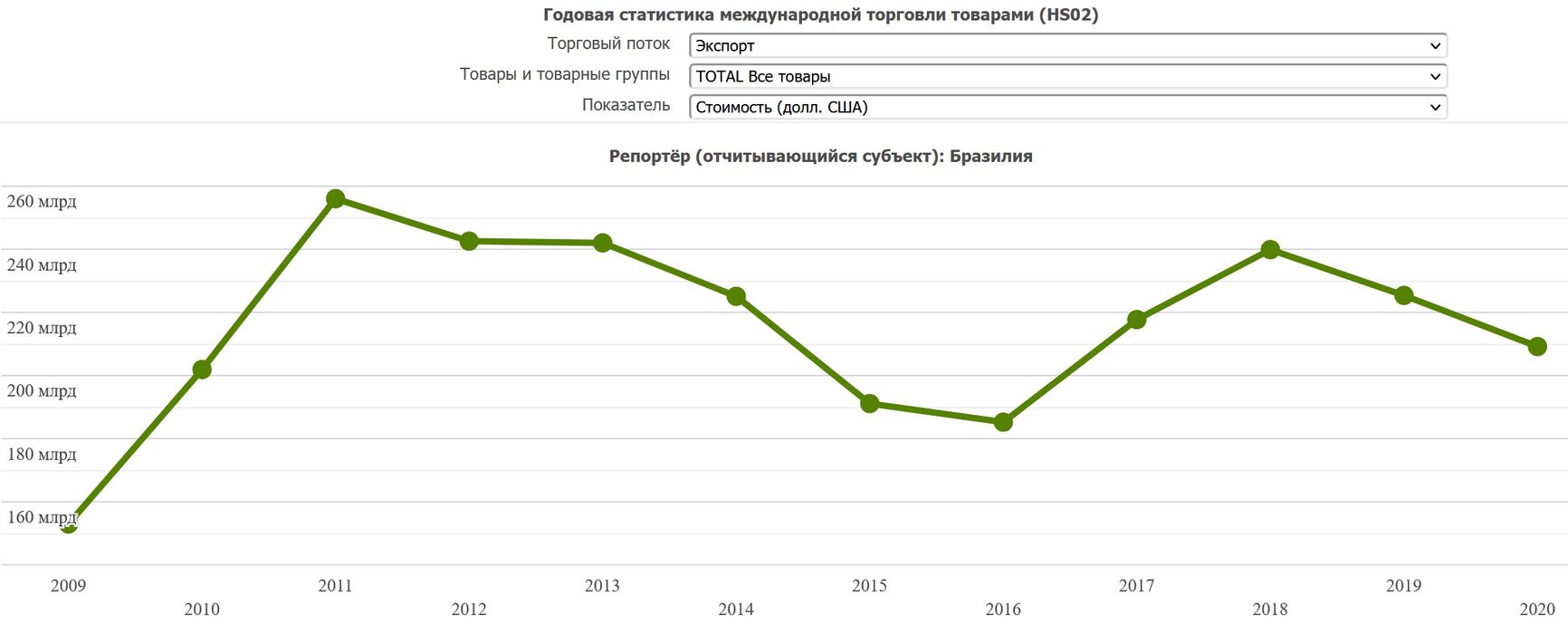
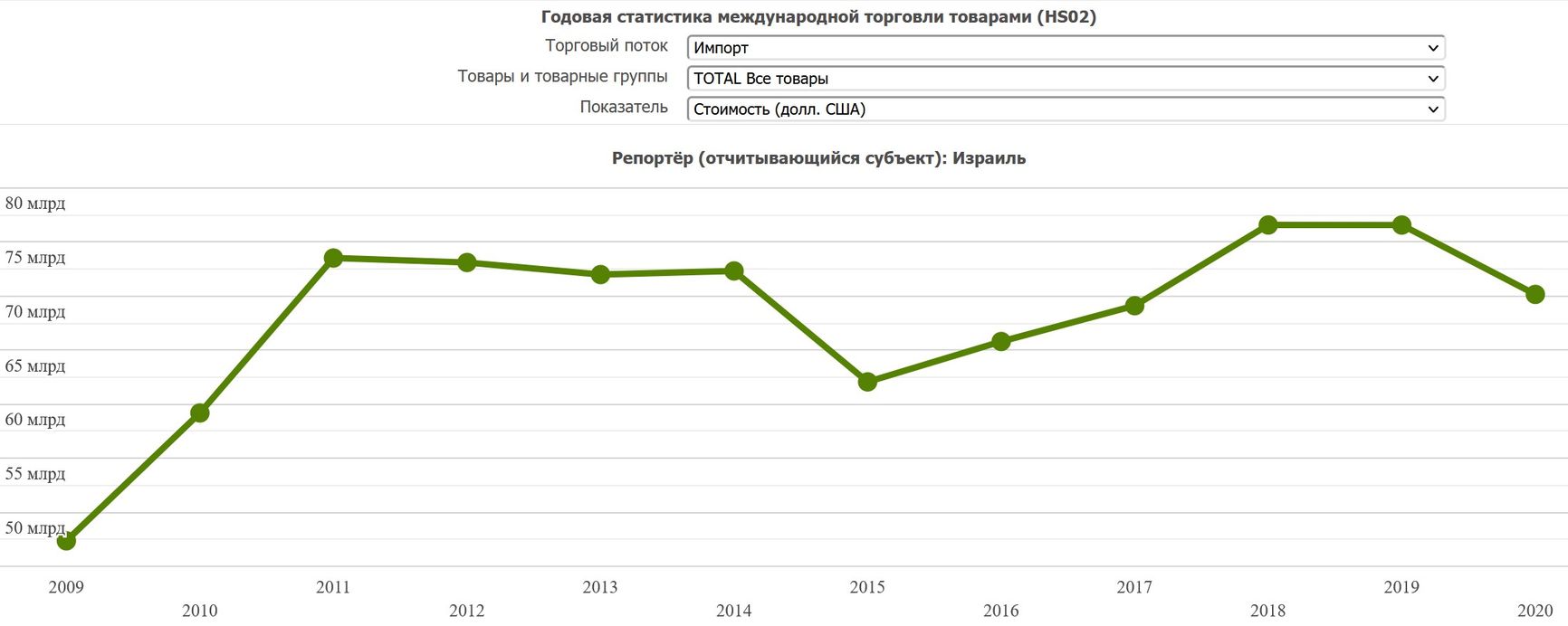
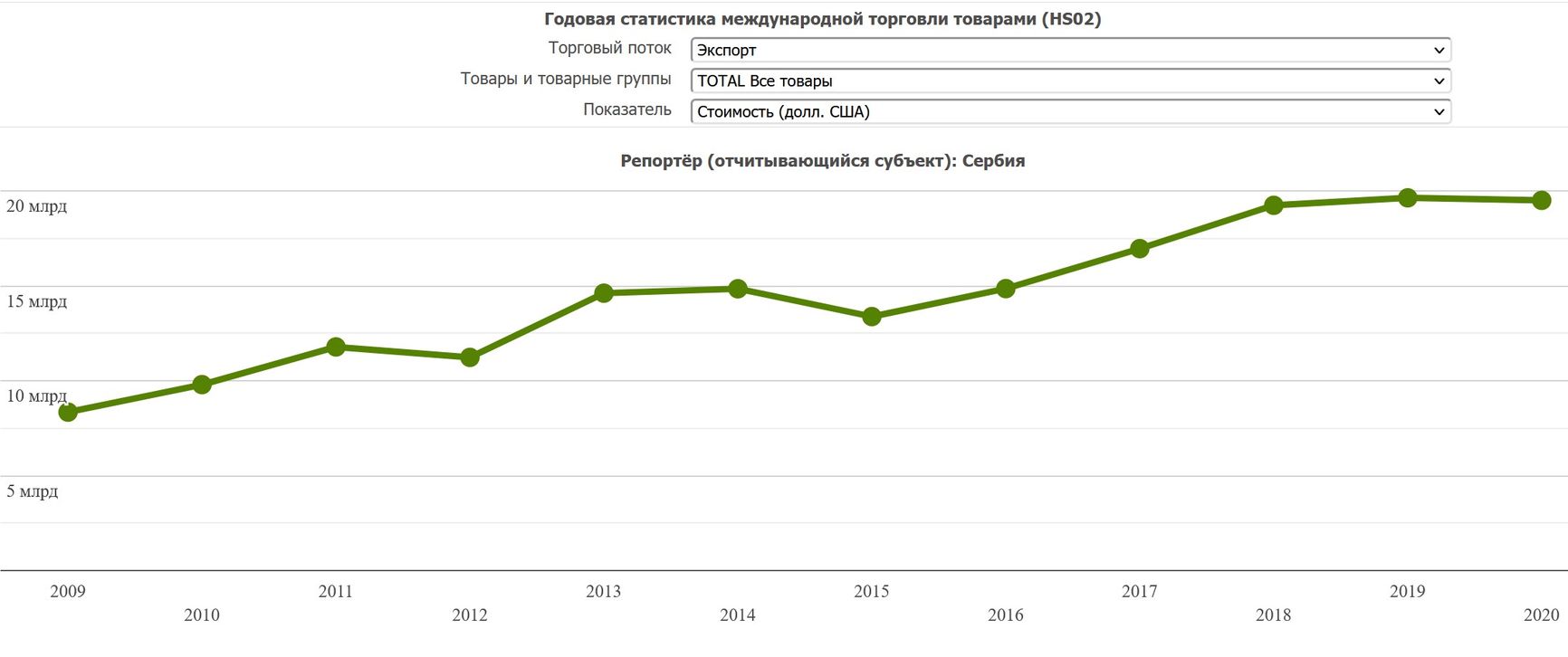
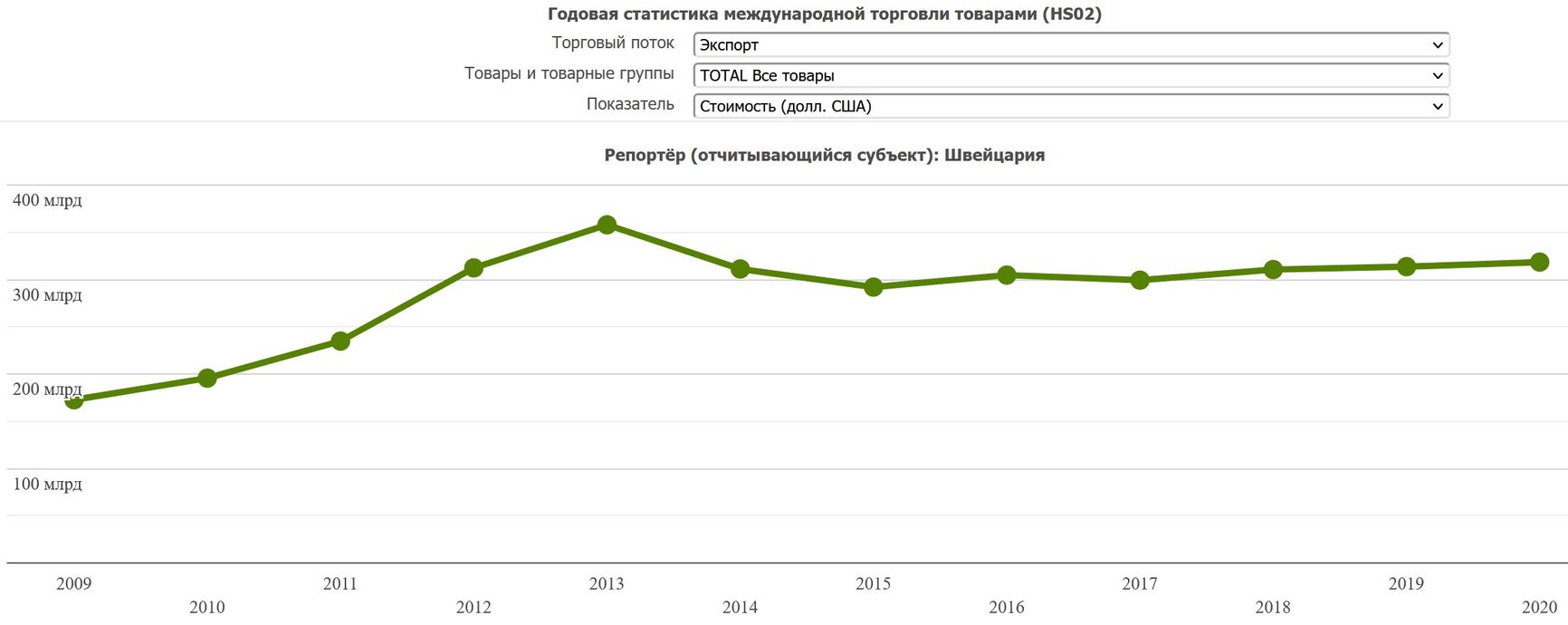
And here there is still the same decline in 2015, although in Switzerland and Serbia it is much less pronounced. So Lavrov’s statement that sanctions hit the countries of Eastern and Central Europe especially hard is clearly at odds with statistical data.