
Translated material
The final solution to the migrant issue
Use, nightmare, expel - the Kremlin and Bastrykin decide what to do with visitors in Russia. We monitor the process with anthropologist Sergei Abashin
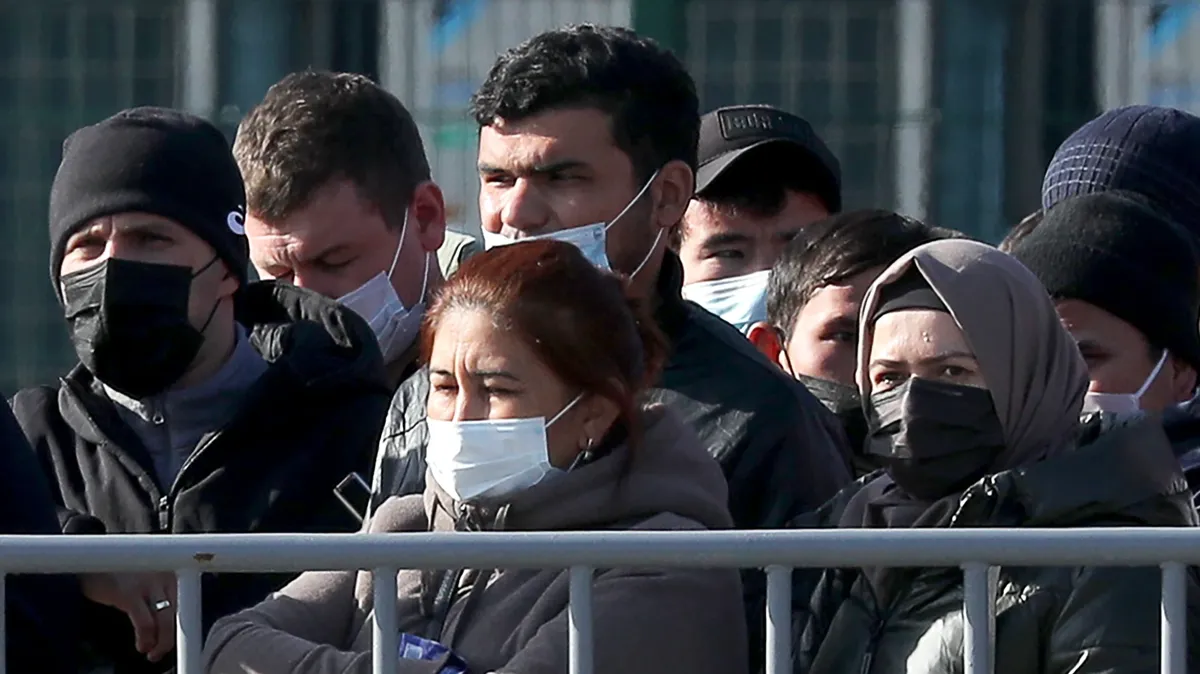
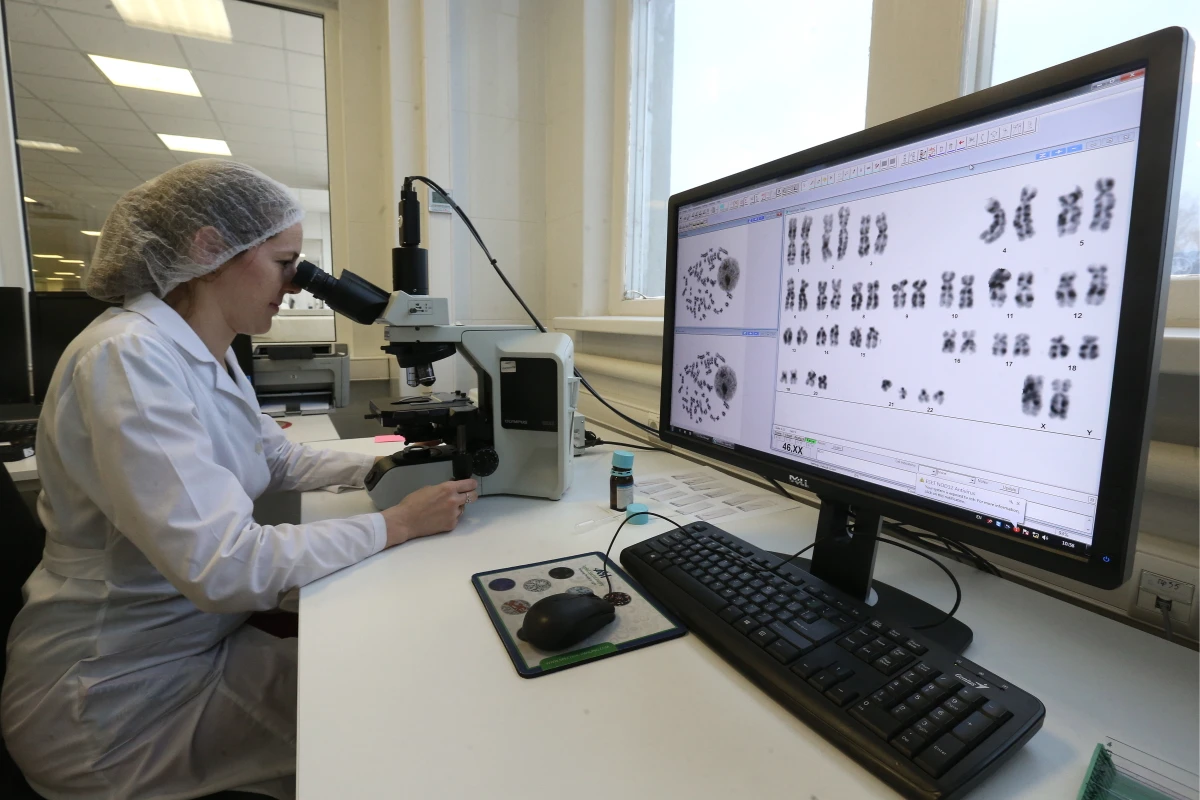
A new initiative from the main creator of repressions in Russia - the head of the Investigative Committee Alexander Bastrykin: to force all visitors, especially from the countries of the neighboring abroad, to make genomic registration at the entrance , that is, to take an analysis of DNA. Now this in Russia is mandatory only from serious criminals, but they and the migrants in Bastrykin’s head, it seems, is somewhere nearby, because from the point of view of the general, crime among visitors allegedly grew up very much over the past year (although the migrants themselves have become much less).
In parallel, Moscow officials started talking about the fact that in the coming years they are going to completely abandon migrants at construction sites: however, the remaining Russians will have to work three times better, but they would allegedly receive three times more.
In addition to everything, the Foreign Minister Sergei Lavrov made publicly: according to him, it is necessary to prevent a threat of terrorism and drug trafficking emanating from Afghanistan, and they are more than real, because "we have no border with the Central Asian allies, with almost all the visa -free regime."
Anti -migrant rhetoric in Russia is a seasonal phenomenon, and it happens, as a rule, before the elections. But a single voting day passed, the Duma was chosen, and scandals with visitors are still actively promoting the media, and police officials react to what is happening as they can. At the same time, in general, the level of household migrantophobia also increased, and on the map of Russia, conflict points between local and visitors are still on the Russian map. The New Gazeta already wrote that the mood of the new State Duma regarding migrants seems to be tough and the legislation will change towards further restrictions and control. But are you ready for this in the Kremlin? Whose point of view will win: neoimpertians who dream of “influence on the former republics of the USSR”, or supporters of complete isolation?
The Special Corps of Novaya spoke about this with the doctor of historical sciences, professor of the Faculty of Anthropology of the European University in St. Petersburg Sergey Abashin .
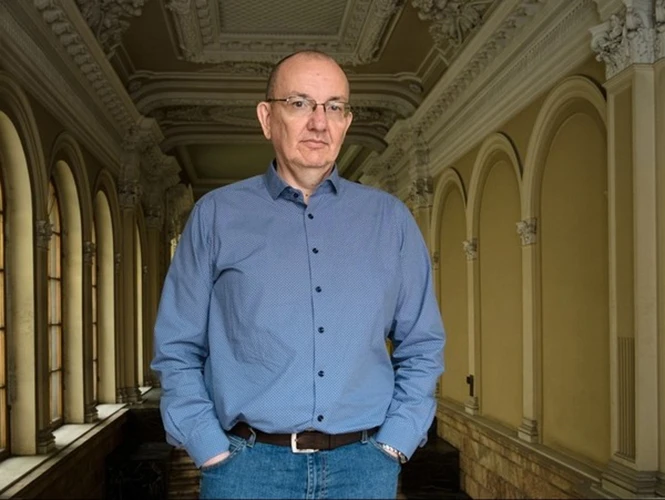
- Where did the belief come from that the migrants are generally more aggressive than Russians?
- There is a general idea of migrants as strangers, as carriers of dangers, as a problem in general. This judgment is characteristic not only for Russia, it can be found in all countries where migrants are accepted. The image of the migrant is always built into his alienity for the country in which he came. And the image works in two directions: if the migrants are dangerous, then we, local and indigenous, on the contrary, are correct. At the same time, the border between “us” and “migrants” always depends on the perception of specific people. The “migrants” can be called residents of the North Caucasus, who, although they are Russian citizens, but in a particular situation, they come from a danger. And for others, “migrants”, that is, strangers, may be just visitors from neighboring regions of Russia. A sort of "limiters".
The inhabitants of large cities have such an idea of residents from villages or small cities-as some wrong people.
- At Bastrykin, the investigator came from the Kuban - and has already become a stranger.
- Yes, or a recent story about the conflict in the Moscow metro. In the media, she served as a problem with migrants: visitors began to pester the girls and attacked a man. But when you begin to collect detailed information, it turns out that “migrants” are Russian citizens from Dagestan, and the defender of girls from the Voronezh region. In this description, some visiting Russians become dangerous “strangers”, and the other visiting Russian is “their own”.
The word "migrant" always follows the plump of danger. And for this it is always possible to adjust the facts that visitors are bad: choose, for example, several cases of some crimes committed by migrants, and emphasize them with emphasis on them. However, if we take official and full of status from the available in the public domain, then from the total number of crimes, foreigners make about three percent. And this is comparable to their number in Russia.
The number of criminals among foreign migrants on a scale is the same as the number of criminals among Russians.
- If everyone has their own situational border in the perception of the one who is a migrant and who is not, where does the authorities hold this border for himself? Who for her is his own, and who is a stranger?
- Power is a too broad concept. Here you can both the Kremlin and parliamentary parties (which they talk a lot about migration), and include security forces - and everyone will have their own logic. But if you study those images that most often appear in the speeches of politicians, pro -government media or experts, then the migrant is a cultural, ethnically and often racially other person. Most often these are visitors from Central Asia and residents of the Caucasus. All the time I spend an experiment among my students: I ask them to pick up the word “migrant” in the search line “Yandex” or “Google” and click on the “Pictures” menu. All emerging pictures will show conditionally builders from Central Asia, and not, for example, we are known for migrants of artists or millionaire migrants. So visitors sees society.
- How much in this case to send Bastrykin to send all visitors - primarily from the near abroad - does genomic registration meet the public request? Do people want migrants so nightmare, or is it a personal desire of the head of the UK?
- In this matter, we are faced with the classical task, which was before: chicken or egg. Is this Bastrykin and generally form a public opinion or do they just follow the desires of the population? There is no exact solution to this problem, but there is a clash of interests of different social groups. The politicians have migration - a convenient populist topic: it is easy to promote the image of a stranger and an enemy that carries danger and illness, this is always sold in the elections. The right, left, and liberals, and conservatives use this construct. The security forces, in turn, are also inclined to speak the language of danger and risk: for them, the fight against migrants is often a convenient way to show their need and effectiveness.
Meanwhile, a simple Russian layman has their own set of everyday fears and the idea of which people seem unpleasant to him.
In a country where there are many social problems and have to constantly survive, these phobias, including in relation to “strangers”, are updated with ordinary people.
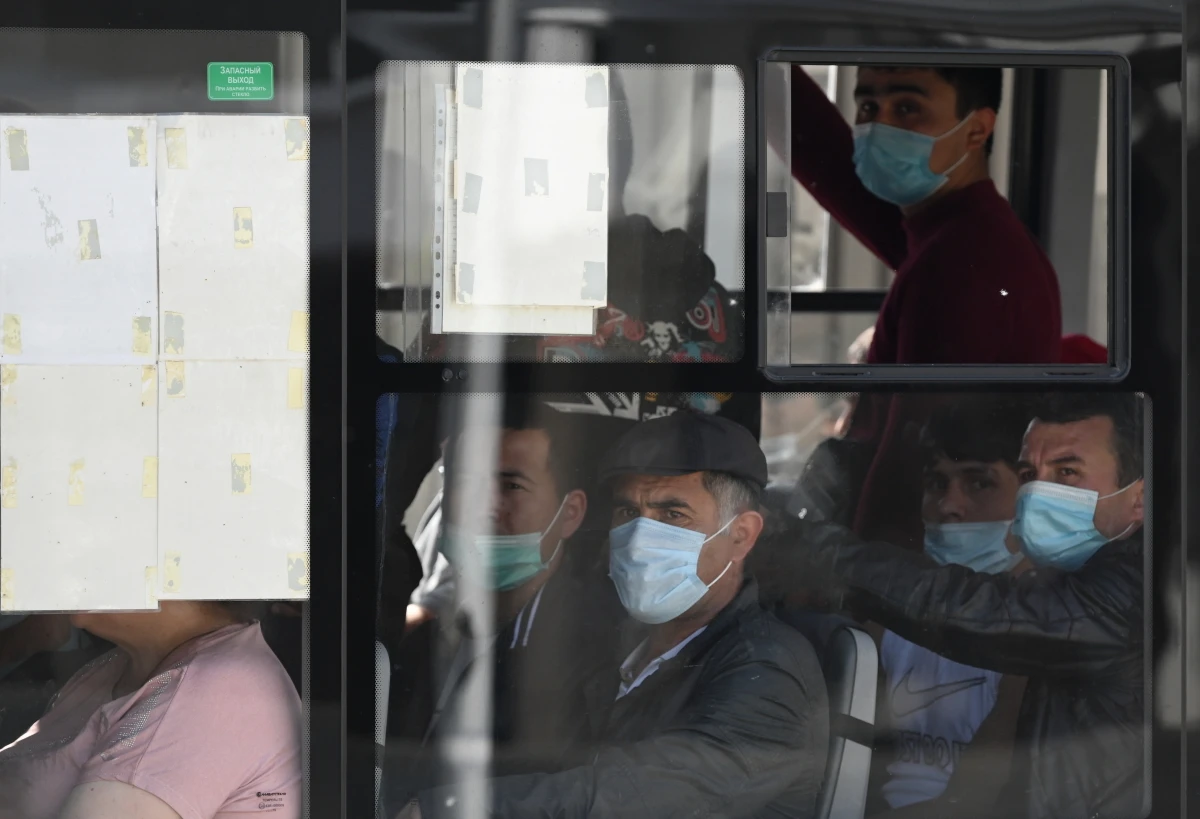
We land the theory to a specific situation: now they talk a lot about anti -migrant protests in Sosensky in New Moscow. Not far from this settlement, a single center is operating for processing documents for migrants - the only one for all of Moscow. After all, we demand from visitors that they are legalized - and now hundreds of thousands of people go to this center. Of course, for the inhabitants of these areas, such a situation looks stressful: they see, as a rule, men who are not aware of them externally, who gather in groups and hold together, stereotypical thoughts about danger arise immediately. And in conditions of general stress, individual examples of offenses or some skirmishes are hyperbolized.
- Do I understand correctly that conditional “indigenous” Russians, when they see a group of men of Asian appearance in front of them, experience stress, and when they see the same group of men of Slavic appearance, they have no stress?
- Each person decides for himself who he sees the “indigenous”, and whom “dangerous” cannot be generalized here. But external, racial features often serve as such a marker of division into their own and strangers. I recently talked with my friends, who cited as the reason for the danger of migrants that they are “getting into pack”. The word "flock" here is characteristic: we are unlikely to call a group of male-Russian men, we will say a "company of young people." Those who do not look like us or speak the wrong language, we instinctively converts into the category of dangerous people.
If we return to the question of who wants to “nightmare migrants”, power or the population itself, then we see that stereotypes and fears of the population are intensified and manipulated by politicians and officials.
A strong anti -migrant wave usually rises at the moment when xenophobic sentiments from below are heated by rhetoric from above, entering the resonance. This hostility, which is recorded by polls of public opinion, is uneven. If you watch the last decade in Russia, we will see that the largest surge was in 2013, which was obviously related to the elections of the Moscow Mayor: then all the candidates used antimigrant rhetoric. Then there was a big decline: by 2015–2016, the theme of migration almost left the agenda. And then, in 2018-2020, growth began again. This year there is no data yet, but I think that the rise of xenophobic sentiments will be noted quite large and partly it will be again connected with the elections. At the same time, it is surprising that migrants have become less, and hatred of them increases.
- But the elections passed, and the statements and scandals around the migrants did not disappear.
- There is a certain paradox. I must say that in 2013 the main surge was also after the election. At first there was information and political pumping, and the explosion happened after the election campaign - then the wave was largely inertial. Now we can also talk about the consequences of the summer campaign. But it is possible that the anti -migrant wave of 2021 is more fundamental, and before us the accumulated stress from fundamental dysfunction in Russia. We see that everything is wrong: the climate is not so, politics is wrong, life is wrong - and I want to find the guilty.
The migrant is the most affordable image of the guilty that our stress can be thrown into.
-I still want to understand what ideology in relation to migrants is now broadcast by the Kremlin. Migrant now for the Russian government who: the enemy, undesirable element, cheap labor, partner?
- The current political regime in Russia is sometimes called hybrid. The migration policy is also hybrid, so the Kremlin often gives very different signs. Over the past decade, two concepts of migration policy have been adopted, and the current one has been operating until 2025, that is, soon the state will again review the policy towards visitors. Each concept put different accents. The first, adopted at the beginning of the tenths, was more liberal: it said that the Russian economy and demography were needed by migrants. In 2018, the new concept was no longer so friendly:
Now it is argued that all demographic and economic problems must be solved if possible without migrants, and we must divide visitors into those we like, and those that we do not like.
Which you like - we will make life easier for them.
- Is it primarily by Russians from other republics?
- Yes, loyal to Russian culture. Either Russians by nationality, or speaking the language, or demonstrating the desire to integrate. And another category that we do not like, it should be in the country only temporarily. He arrived, worked, left. Orgon from other countries, about which a lot is talking about, is just an ideal form of this type of migration. This is an analogue of Soviet “limiters”: you arrived, work, live in large fences, and after the work ended, you immediately leave back. We do not see you as future fellow citizens.
- The current migration concept is designed until 2025. What will happen next?
- What will be the third concept of migration is not yet clear, but, apparently, a police approach will prevail. We heard Bastrykin's opinion: we restrain, control, take all fingerprints, genomes from everyone, and we will punish and deport. Almost simultaneously with him, a Moscow official spoke, who promised that over time there would be no migrants at construction sites at all . That is, the desire to remove visitors is intensifying.
But the discussion is still ongoing. After all, supporters of the liberal approach have not gone anywhere, who believe that migrants are a resource that is still necessary for the Russian economy, and it must be fought for it. And there is a neoimpers position: migrants are our tool of influence. We do not want to abandon influence in the South Caucasus and Central Asia. In the end, the CIS, the Shanghai Treaty, the EAEU, the CSTO - but what not! Migrants are supporters of this position, part of influence on neighboring countries within these unions. We say: you are part of our sphere of interests, then we can try to facilitate the fate in Russia from your countries. This approach is very important, and
The Kremlin understands that if you just introduce, for example, visas, these same neighboring countries will be outraged, and then they will simply begin to move away from Russia, look for other allies.
The struggle of isolationism and great power is now taking place even in the heads of specific politicians: on the one hand, they want migrants in Russia, on the other hand, they want to see neighboring countries under their influence. But these are fundamentally different “Wishlist”: either one or another. But our politicians, as a rule, try to look for a compromise and are accepted to implement both concepts - as a result, both are not very good.
In other words, the issue of migration balances between different ideological projects. Decisions are made depending on which supporters of which project dominate at the moment. I must say that this is a problem: the migration policy in Russia becomes not strategic, but tactical. It is no coincidence that even many decisions on migration are made not in the State Duma, but directly in the presidential administration. The presidential decrees are adopted faster than a particular bill in the Duma.
But there is no image of future migration to Russia: the planning horizon is now 2025, that is, immediately after the next presidential election.
- If tomorrow Russia completely refuses migrants - what will happen?
- My answer - migration will still continue, because it is driven by powerful, deep factors associated with the economy, social, political, even climatic changes in the world. The declaration of refusal of visiting labor will only mean increased repressions against them and their even greater departure into a gray unresolved zone.
- That is, everything will be about the same thing that is happening now.
- Yes, but now it's only dreaming. Bastrykin announced about genomes, but to begin with, to begin with how, in principle, they will collect them.
- They will make everyone spit in a test tube on the border.
- Yeah, and then the borders will open - and a million citizens of China will come here. Everyone will be forced to spit in a test tube? No, while Bastrykin’s words look like fantasies - but as fantasies that show the way of thinking of some officials.

Look around, an unfamiliar visitor
Three reasons for the rejection of migrants by Russian society. How is it (not) working?
- Migrants occupy the jobs of Russians and take away the opportunity to earn from them, especially in the pandemic. And if they were not there, all the Russians would have found a job perfectly.
-I would like to warn again against some generalizations. The situations are different, and somewhere there really is competition for jobs between Russians and visitors. But often a reference to such competition is just an euphemism of xenophobia, few people want to directly say that he does not like culture, appearance, and the language of migrants. And the story of jobs is very conveniently replaced by such a Xenophobic explanation.
Let's look at the current situation, at the time of the pandemic: a large number of migrants have left, the market has been freed in many ways, there was a shortage of workers - we regularly hear complaints about this by entrepreneurs and officials. And even in a number of industries they began to increase salaries - but local residents, nevertheless, did not rush to the vacant vacancies. They will prefer to find a higher paid, more calm or more status work. Relatively speaking, there is a difference between work at a construction site or work in security. So this argumentation of workplaces does not work.
- In recent years, the composition of visitors has changed qualitatively. Their connection with Soviet times or at least with Russian culture has become much worse, therefore it is believed that these people are basically worse assimilated.
- Of course, a lot of time has passed, and most of today's migrants who come to Russia do not remember the Soviet era. But at the same time, in all these countries, the influence of Russian and Soviet culture is still quite noticeable. The elite of these states speaks Russian, the Russian language is in use - and it is still prestigious and popular. The population is in the orbit of Russian information, watching our television channels. The cultural factor in relation to those who came to Russia cannot be noted, but it does not need to be absolutized. По сравнению с мигрантами из других стран, приезжие из бывших советских республик все равно сразу лучше встраиваются в российское общество.
Проблема в том, что наше общество и наше государство само отталкивает и изолирует мигрантов. Не мигранты собираются в воображаемые гетто, а общество их туда выталкивает. У россиян стереотипная неприязнь к мигрантам, а государство придумало очень сложную и дорогую процедуру легализации приезжих. И настрой жесткий: стоит мигранту хоть что-то нарушить в бумагах, он сразу перемещается в серую зону, в зону нелегальности. Механизмы адаптации и интеграции в таком случае больше не работают: мигранта берут в такие тиски, что ему легче не выходить лишний раз на улицу, чтобы не нарваться на полицейских, которые потребуют взятку. Лучше уж он посидит дома или ограничит свой круг общения только близкими мигрантскими контактами.
- Фантомные имперские боли: раньше Москва была центром большой державы, а русские — государствообразующим народом при младших братских республиках. Теперь времена изменились и люди в этих республиках требуют равного отношения, но для россиянина сложно заставить себя чувствовать себя на равных с жителем Узбекистана. Возникает когнитивный диссонанс.
— Да, ностальгия по тому месту, которое россияне занимали в Советском Союзе, осталась. Но это болезнь больших городов: в регионах в принципе мигрантофобии меньше. В Москве и Петербурге фантомные боли остались: раньше мы были на самом верху социальной иерархии — столицей всего, — а теперь такой привилегированный статус подвергается деконструкции. Если смотреть шире, так могут думать все россияне: раньше мы были великой державой, а теперь нашу страну считают обычной даже те, кто был от нас в зависимости. Но эти ресентименты я бы не стал называть основной причиной мигрантофобии в России.