
Translated material
Dancing on a powder barrel. The Kremlin shakes the situation in Bosnia, risking to blow up the Balkans
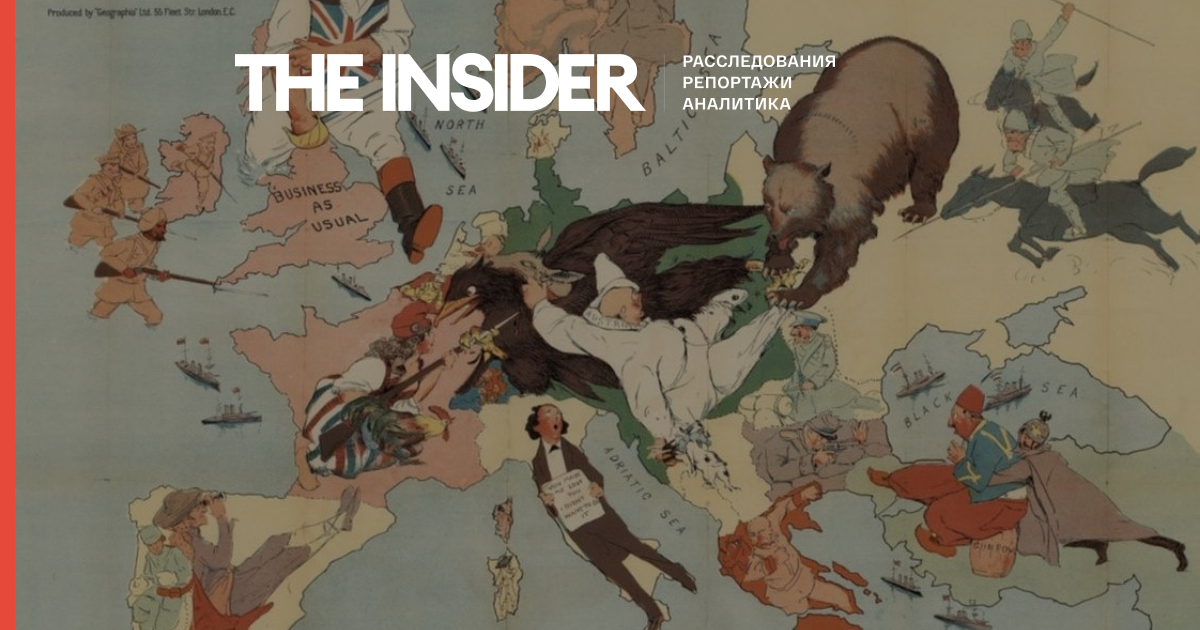

Dancing on a powder barrel. The Kremlin shakes the situation in Bosnia, risking to blow up the Balkans
Julia Petrovskaya
November 9, 2021 Russia, with the support of China, increases pressure to the west in the Balkans, while the region is faced with the acute crisis since the 90s. In Bosnia and Herzegovina, the Serbs undermine the work of state authorities, threaten to create their own army and proclaim independence, and Moscow refuses to recognize the new international administrator, warming up the crisis. All this threatens the collapse of the country and the outbreak of a new “hot” stage of the conflict. At the same time, Russia arranges provocations in Kosovo, and in Montenegro, the Prochrevsky Demcrav (previously lit up upon trying to turn the coup) strengthens the government crisis.
Content
Bosnia and Herzegovina: Fighting Foil Barrel
Dodik and genocide
Provocations in Kosovo
Montenegrin crisis: Prochremlin party wants to take revenge
In recent days, the situation in the Balkans has inflamed to the limit and the Kremlin’s behavior played a key role in this. Instead of playing the role of a peacekeeper in a region, which consists entirely of poorly frozen conflicts, Moscow actively helps to take old wounds. The question was especially acute in the country where, it seemed, the peaceful settlement until recently was quite successful - Bosnia and Herzegovina.
Bosnia and Herzegovina: Fighting Foil Barrel
The world in the Big is based on the agreements reached after the war of the 1990s, including the Unified Army, intelligence services and the judicial system. However, recently the leader of the Bosnian Serbs Milorad Dodik threatened to get out of these agreements, which led to an unprecedented increase in tension. In this regard, a group of American congressmen called on President Joe Biden to impose sanctions against those who destabilize the region, and on November 5, the representative of the US State Department Gabriel Escobar arrived at the Balkans, hoping to resolve the crisis. The last initiatives of Dodik can lead to the complete destruction of state structures: a single army created in 2006 is one of the few links connecting the three ethnic communities of the country - Bosnian Muslims, Serbs and Croats. Some experts and politicians say these days that Bosnia is on the verge of decay and this will have the domino effect in the region. At the same time, part of the experts connects the growth of tension with the policy of Serbia and the influence of Russia.
Bosnia is on the verge of decay and this will have a domino effect in the region
The United States played a key role at the end of the Bosnian Civil War, which claimed about 100 thousand lives. It was Washington who initiated the signing of the Deyton Agreement , which determines the post -war Bosnia device: the country consists of two separate formations - the Big Federation and the Republic of Serbian. For 26 years, the Deiton process remains the subject of disputes between the political elites of the three main communities of the country, which have different ideas about the role of state bodies, reforms and integration processes. Attempts to create a more efficient model did not bring results, and contradictions in the camp of the guarantors of the world, including Russia, the USA and the EU, affect the effectiveness of international efforts.
After long discussions, the UN Security Council approved in early November a resolution on extending the mandate of the European peacekeeping contingent EUFOR in Bosnia, however, Russia and China did not allow Christian Schmidt, an international administrator in New York, an international administrator in New York. Moreover, Moscow, as reported by the DPA agency, threatened to block the resolution on the extension of the EUFOR mandate if the document is mentioned in the document. Schmidt was going to inform the world community about the "real threat" of Bosnia and sliding to war. According to his assessment, in the case of a subdik from an agreement on a single army, a more large international contingent should be returned to Bosnia. Now there are only 600 EUFOR military personnel here, and after the war, more than 60 thousand soldiers under the command of NATO were sent here.
The international administrator, the position of which is provided for by the Deyton Agreement, has still personally informed the UN Security Council about the situation in Bosnia twice a year. However, now problems will arise with this. The debate about international presence worsened at the end of May, when Moscow for the first time in 26 years, which passed after the war, sensationally did not support the appointment of a new high representative. In support of the candidate of the former Minister of Agriculture of Germany Christian Schmidt, all countries included in the leading committee of the Council for the implementation of a peace agreement, with the exception of Russia (recall, in addition to Russia, are represented by Canada, France, Germany, Italy, Japan, Great Britain, the United States, as well as the country presiding in the European Union, the European Commission and the Organization of the Islamic Conference, which is represented by the Islamic Conference, which is represented Türkiye).
Later, having enlisted the support of Beijing, who was not involved in the Bosnian settlement, Russian diplomacy introduced a resolution to the UN Security Council, in which the consent to the candidacy of Schmidt was linked to the early termination of the apparatus of the high representative in 2022. At the same time, Russia and the China who joined it already demanded that the special powers that allow the international administrator to make mandatory decisions and dismiss officials and judges without the right to appeal. And although the formal conditions for folding the AVP have not yet been fulfilled, Russian diplomacy has been demanding its closure for more than 10 years, believing that this device has been used to solve problems that are not related to Deuton. Most likely, Moscow has in mind the support of Euro -Atlantic integration.
Nobody supported the Russian-Chinese resolution in July. After Schmidt took office on August 1, Moscow and Beijing announced his illegitimacy and refused to cooperate with him. This position of two nuclear powers gave confidence the leader of the Bosnian Serbs Milorad Dodik in his separatist rhetoric. Now he is threatened to judge Schmidt as an impostor and, despite the public support that the US and the EU gave the new international administration, Dodik claims that "the great powers agreed to destroy the apparatus of a high representative."
Lunches to the international administration, with which, in accordance with the Deyton Agreement, he is obliged to cooperate, Dodik supplements with insults and provocative trolling to political opponents. So, recently, in the building of the Presidium in Sarajevo, he arranged loud gatherings with accordion and alcohol, singing nationalist songs.
Dodik and genocide
While the United States and the European Union call on the Bosnian Serbs to stop the boycott of national authorities and return to work, Moscow and Belgrade refrain from such statements and, as a whole, from criticism of the subdeck. For both capitals, he is the main ally in the Balkans. At the same time, Belgrade is one of the three participants of the Deyton Agreement, and Moscow is one of its guarantors, and this document prohibits any actions and threats that cast doubt on the sovereignty and territorial integrity of the country. For political opponents of Dodik in the Serbian camp, separatist promises are the path to the unknown that jeopardizes peace and stability. Politicians in Sarajevo call his actions an anti -constitutional riot. On October 18, the BIG prosecutor’s office announced the start of the investigation against Dodik, but it is not known, in connection with which.
The formal reason for the anger of the dodic and boycott of the state bodies was the adoption of the amendments to the Criminal Code, which imply up to five years in prison for the denial of the genocide and other war crimes, from the submission of the high representative of Valentin Inska. First of all, mass reprisals against Muslims in Srebrenitsa in 1995, which the UN International Court in 2007 recognized as genocide. Dodik himself, who came to power in the late 1990s, thanks to the support of Western countries, in the past called “indisputable” the fact that genocide would have been committed in Srebrenic, but gradually moved away from this position, demanding a new investigation.
In the Republic of Serbian, it is not customary to talk about the crimes committed by the Serbs themselves, since this is considered nonpatriotic. In recent years, Dodik made a denial of the Srebrenitsa and the marginalization of the enemy victims with an important part of his political rhetoric. This causes indignation and condemnation from the Bosnian Muslims and Croats, as well as the USA and the EU. Moscow helps Dodik as it can: in 2015, Russia vested with the UN Security Council a resolution with condemning genocide, although the Russian authorities have repeatedly used this tragedy in its statements, speaking of conflicts in Georgia and Ukraine. Thus, in August 2008, the head of the Foreign Ministry said that "our peacekeepers would not allow the repetition in South Ossetia what happened in Srebrenitsa when the peacekeepers from the Netherlands could not prevent genocide." Later, Moscow, like a dodik, abandoned this word.
Articles on the topic
Changered cut: how Kremlin propaganda uses the Bosnian genocide for its own purposes
Experts evaluate the consequences of the current crisis differently. One seems that the dodik will not dare to go to the end and will not proclaim independence, and its loud rhetoric is aimed only at diverting people's attention from a difficult economic situation and large -scale corruption. Others believe that Dodik, together with the leader of Croatian nationalists, Dragan Chvich, is more closely close to destroying the Bosnian state, and conflict is quite possible here, although not so large -scale. At the same time, many observers accuse the EU and the USA of inaction, believing that the international community risks repeating its own mistakes of the 1990s, when events in the Balkans began to develop too rapidly. Say, and now the West is not up to Bosnia: the flight from Afghanistan was drowned out by the echoes of the 1990s in the Balkans, and in recent years, a slowdown in the process of expanding the European Union and NATO had rejected the region to the side of the road.
There is also such an opinion : Dodik will soon encounter serious sanctions and leave the political scene. Some do not exclude that like the family of the former Serbian president Slobodan Milosevich he will have to ask for political asylum in Russia. However, while the refuge is not talking about. Moscow, at least at the level of propaganda, actively helps Dodik, destroying the authority of the international administrator and justifying his attempts to destroy the Unified Army.
Provocations in Kosovo
Moscow is trying to maintain high activity on A different crisis direction - Kosovsky. All the years that have passed since the proclamation of Kosovo independence in 2008, Russia remains at the forefront of Protina’s opponents, discrediting the Kosovo political elite and playing along with the power rhetoric emanating from Belgrade.
At the end of October, two Russian diplomats were sent from Kosovo "because of activities that undermine national security and constitutional order." We are talking about the employees of the Primetinsky office of the Russian Embassy in Serbia, where about 10 diplomats work. On Smolenskaya Square, the decision of the Kosovo authorities was called "rough provocation." According to the Kosovo media, earlier this year, one of those who were denied hospitality in Protina, Alexei Krivosheev was also expelled from Albania. Before that, he worked at the Russian embassy in Skopje (North Macedonia), where he allegedly interacted with opponents of the recently resigned Promised Prime Minister Zoran Zaev.
Russia in Kosovo is often called a hostile country because of the support of the policy of Serbia and the active Antikosov campaign, which Moscow leads at various international sites. Some experts do not even exclude the fact that Belgrade and Moscow will try to invade the northern regions of Kosovo under the pretext of protecting local Serbs. However, such a scenario remains hypothetical. Belgrade is stuck on hand and foot agreements with NATO, which do not allow him to send his units to the rebellious province. Moscow does not have military levers in the region, and its main tools in this direction are the influence of churches, a demonstration of its power and anti -albanian propaganda through diplomatic channels and through controlled media.
One of the latest examples related to the heating of hatred and the spread of misinformation at the diplomatic level refers to the events of the end of September - early October, when a dispute about the use of automobile numbers exacerbated between Belgrade and Primy. Then the Russian ambassador to Serbia, Alexander Botsan-Kharchenko, publicly claimed that this whole story was “aimed at ethnic cleaning”, although there are no data that would confirm this. In addition, Botsan-Kharchenko, together with the Minister of Defense of Serbia, Nebody Stefanovich examined the units of the Serbian army, brought within a combat readiness state on the border with Kosovo. Although many condemned this theatrical game with muscles, the presence of a representative of a nuclear power near Kosovo at the height of the crisis was to strengthen the fear in the region. Thus, Moscow, left after 2008 without the role of an intermediary, receives some points.
In Kosovo, Moscow has no freedom of action, given the hostile environment and the stable presence of the United States and the EU, but its influence is noticeable at the global level. The main message of Russia is the willingness to use the right of a veto in matters regarding the future Kosovo. Doors to international organizations will remain closed for him for a very long time. And if Belgrade more than once hinted at the willingness to abandon the blocking of Kosovo independence in order to accelerate European integration, then Moscow, it seems, is not going to do this. Her strategic goals in Kosovo, as in Bosnia, are associated with the opposition of the expansion of NATO. And the rhetorical assistance of Belgrade in defending territorial integrity, provides Moscow with a bridgehead in the territories inhabited by the Serbs to promote its influence in this part of the Balkans.
Montenegrin crisis: Prochremlin party wants to take revenge
In recent years, Russia has been actively involved in the political and religious confrontation in Montenegro against the backdrop of protracted government crises and disputes about the status of the Serbian Orthodox Church in this country. Moscow has repeatedly openly declared its preferences, strictly criticized the policy of President Milo Dzhukanovich and supporting the nationalist “democratic front”, which, in fact, did not recognize the Montenegrin statehood. The Russian Foreign Ministry, the Russian Orthodox Church, as well as state and conservative media have been conducting a campaign to discredit Dzhukanovich’s regime for many years. It is attended by politicians and “analysts” in the Balkans related to the Russian authorities and their propaganda structures.
In recent days, the political crisis in Montenegro entered the acute phase due to the new offensive by the Demcrint. The Prime Minister Zdravko Krivokapich was on the verge of resignation after the Demphront, who previously supported the expert government, said the need to elect a new one. The leaders of the DF reported on November 1 that from now on all the proposals of the government to the parliament are illegitimate, including the draft budget, which, in the way they believe, should be proposed by the new cabinet. Demphront, who has a significant weight in the coalition that won the 2020 elections, would like to enter the government. However, this option is anxious in Brussels, where it is believed that this will lead to a slowdown in reforms associated with European integration. Some experts fear that the political situation may get out of control and the power levers will go into the hands of pro-Russian and anti-Western forces.
Recall that the 2016 Dabemfont was in the center of the scandal due to accusations of trying to organize a coup, where the GRU of the Russian Ministry of Defense played the most active role. According to the prosecution, two Russians, Eduard Shirokov (Shishmakov) and Vladimir Popov (Moiseev), while in Serbia in 2016, organized a group of Serbian militants who were supposed to provoke bloodshed in Podgorica during the rally immediately after voting. It was supposed to capture parliament and other institutions, to ensure the coming to the power of the Demffrone and to disrupt the integration of Montenegro in NATO. The coup failed, the conspirators arrested, and Montenegro eventually successfully joined NATO.
Russia's relations with Montenegro were finally divided after the attachment of Podgorica to Western sanctions imposed after the annexation of Crimea. In 2015, the political dialogue was actually stopped. On the eve of the country's entry into NATO, the Russian Foreign Ministry accused the Montenegrin political elite of betrayal. Dzhukanovich has repeatedly stated that Russia openly interferes with his country, trying to destabilize it and bring down from the European path. Кроме того, он возложил на Москву ответственность за массовые беспорядки в день интронизации митрополита Черногорско-Приморского Иоанникия в Цетинье 5 сентября. В свою очередь российский МИД и РПЦ обвинили Джукановича в «создании искусственного конфликта». А митрополит Волоколамский Иларион назвал Джукановича «позором Черногории».
Впрочем, нетрудно заметить, что через подконтрольные СМИ и дипломатические заявления Москва помогает разжигать религиозные разногласия, что делает политический климат еще более токсичным. Подобно местным националистам, российская пропаганда ставит во главу угла вопросы этнической принадлежности и веры, увязывая их с вопросами внешнеполитической ориентации.