
Translated material
Put the troops into the contract
The CSTO is trying on a new role: for the first time entering the internal conflict, the organization gave rise to serious hopes among the autocrats
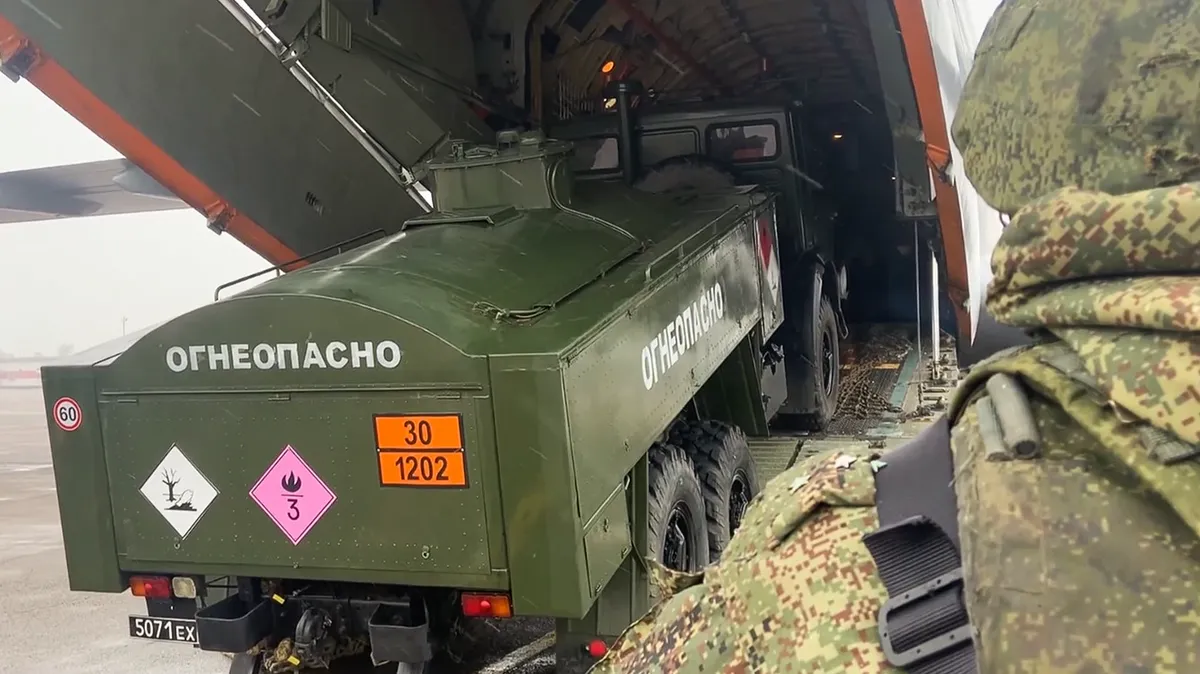
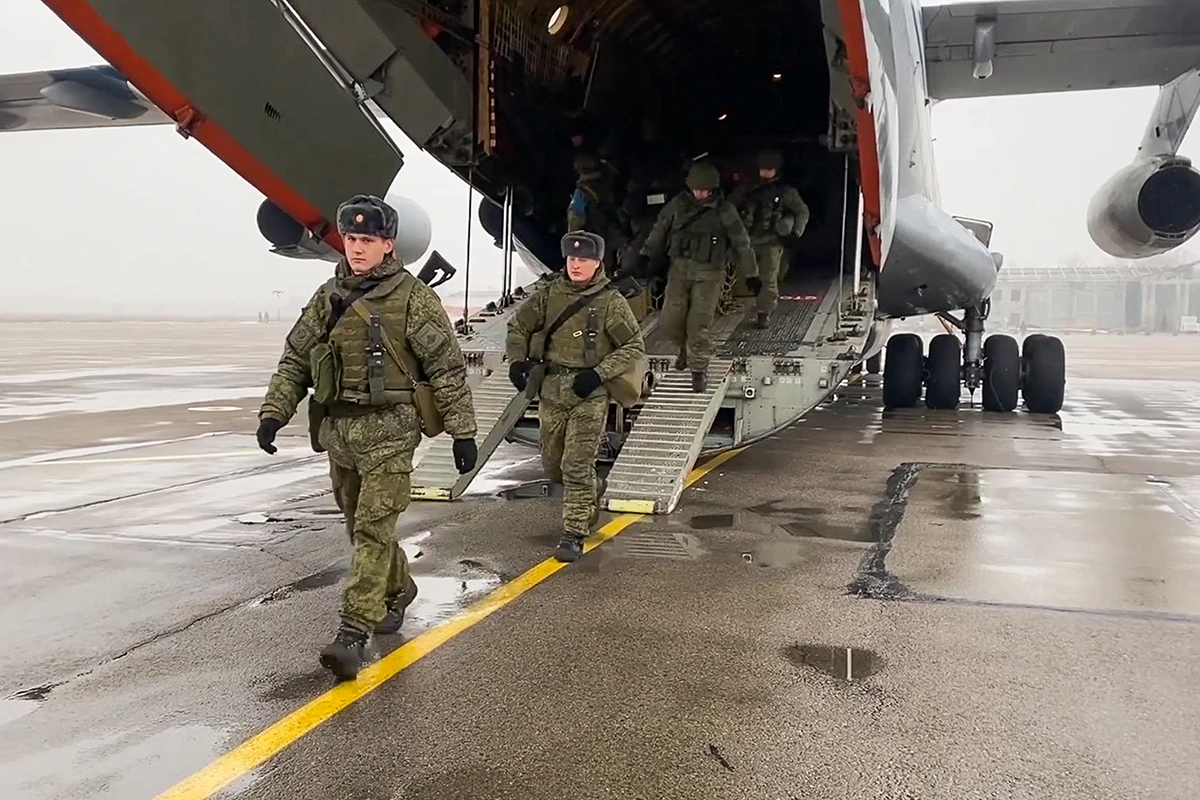
On the night of January 6, Russian landing units attributed to the CSTO (organization of a collective security agreement) began to land at the airfields of Almaty and Nur Sultan. These are the consolidated battalions of the 45th separate guards special forces from the Kubinka near Moscow, the 98th Guards Division from Ivanov and Kostroma and the 31st separate guards landing and gear brigade from Ulyanovsk.
It must be understood that such formations are never planted in full force, and the number of military personnel who are entering the protection of key infrastructure facilities of the largest cities of Kazakhstan are much smaller than their regular number. The number of CSTO soldiers declared in 3600 fighters is sufficient to protect the most important government objects.
The main power of our MO, performing peacekeeping functions - a brigade from Samara - is involved today on a replaceable basis in an operation on the territory of Nagorno -Karabakh. But the currently allocated troops have a similar experience. The military from the 45th brigade not only participated in both Chechen campaigns: in the 90s they were peacekeepers in Transnistria, North Ossetia and Abkhazia. In very similar circumstances, after led to the change of power of the riots, the brigade battalion ensured the safety of Russian citizens in Kyrgyzstan in 2010.
Parts of the 98th division participated in Chechen wars and an armed conflict with Georgia in 2008. In the summer of 2014, a dozen of its servicemen without insignia was detained in Ukraine (soon transferred to the Russian command). The Ulyanovsk brigade provided the wiring of humanitarian columns in Sarajevo, participated in the Second Chechen campaign and in the war with Georgia in 2008.
In addition to the standard BMD (landing vehicles), the tiger armored vehicles, which are ideal for quick maneuver in the city in conditions when the detachments that have opposed them, do not have serious weapons are ideally suitable for quick maneuver, are armed with Russian landing in Kazakhstan. From machine gun and machine gun bullets, they, with skillful use, will protect.
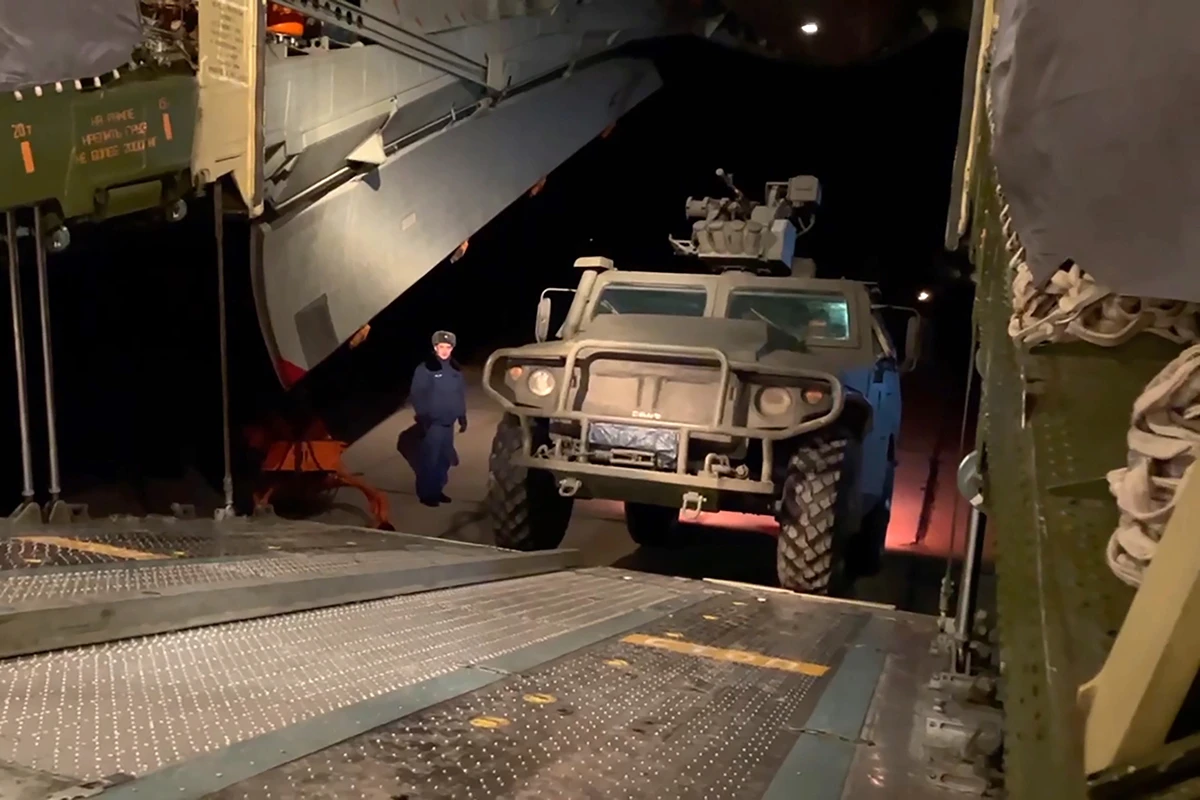
According to recent reports, bandits may have support from some employees of the Kazakhstan National Security Committee with means of intercepting information on mobile networks. However, the connection between the CSTO divisions is supported by the army satellite channels and is absolutely inaccessible to listen to the bandits or the government of Kazakhstan.
Ler-3 radio electronic warfare complexes unloaded from aircraft allow you to block any radio communications on the channels of coordination of actions between armed resistance leaders. The Ministry of Defense of the Russian Federation, with the help of its press service, deliberately demonstrated them to everyone, designating its capabilities in advance. If the support of the rebellion in Kazakhstan really turned out to be from the very top, the organizers should think. After all, they all received military education in Russia.
The speed of organization and nomination, the combat readiness and mobility of the Russian units performing the order for the CSTO, our experts appreciated as impressive.
By the evening of January 7, it became clear that the Kazakh security forces, faithful to the Tokayev government, are quite capable of suppressing the riots independently, without other people's help. So it has always been in such cases earlier - each time Russian officials announced an internal conflict among the ally in the hope that the neighbors would decide the case with the world. And in our case, Peskov officially stated on the afternoon of January 5: “We are convinced that our Kazakhstani friends can independently solve their internal problems. It is important that no one interferes with the outside. ”
However, in the evening Tokaev turned to Moscow for help (formally - in the CSTO). And Russia decided to stand in the intra -citizen conflict to the side of the formally acting president. At the same time, the unspoken agreements were violated within the Kazakh elites at the time of Nazarbayev’s departure.
And Tokaev violated the constitutional law, providing the latter with the most important lifelong posts.
In 1993, the Russian delegation at the Airport of Almaty was met by a company of honorary guard of the Nazarbayev presidential guard regiment, which was entirely consisting of local Slavs. Probably, at the time of the design of the power system, when the clan and tribal division, Nazarbayev did not dare to compose his military protection from the Kazakhs. In the future, everything stood in its place, and this incident has gone the past.
But by the evening of January 5, President Tokaev was exactly the same in doubt in the reliability of his own citizens in the form. From history, we know that in October 1917, in St. Petersburg, one regiment faithful to the government was not enough to prevent the coup launched by the Communists. And the Soviet Army, in fact, ignored the TCCP attempt to use it in a domestic political crisis.
In my opinion, Tokayev’s appeal to the CSTO for external help was the result of extreme haste in making a decision in the conditions of manifold and doubts about the reliability of the security forces. After all, multiple signals about their transition to the side of the street were already arrived. It is possible that he will regret this act soon.
After all, the only way to give legitimacy to the introduction of CSTO troops to Kazakhstan was the announcement of citizens of their country by foreign terrorists. Almost all sources in the army and among retirees with impressive experience with which I had to discuss the military aspects of the internal crisis in Kazakhstan, repeated the set of theses, which was laid out in one proposal by a purely civilian, a well -known expert on foreign policy Fedor Lukyanov: "The enemy is now always external, even if inside." Indeed, the first three days of the development of the crisis, no one noted any signs of a truly organized armed struggle.
Regular riots in Central Asia have been continuing since 1989, when riots flashed in the Ferghana markets. The warring clans immediately headed these pseudo -revolutions. In neighboring Kyrgyzstan, similar riots led to a change in governments and presidents. And it never occurred to anyone to call foreign troops. This common way to change the government, similar to the medieval political practice of the Novgorod Veche, served as a local replacement for a balanced constitutional mechanism. Today, some military experts declare the possibility of creating an almost terrorist state in Kazakhstan like ISIS prohibited in Russia.
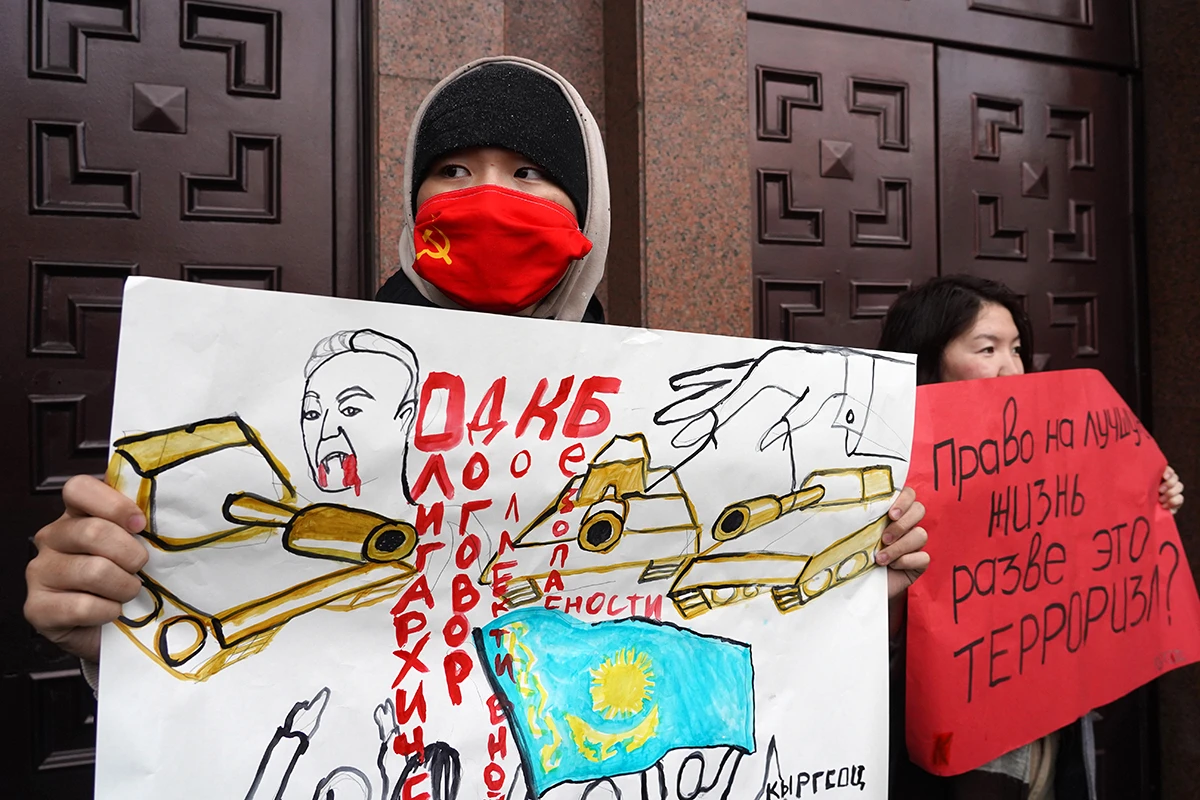
At the same time, none of the observers and journalists was able to find signs of intervention by Islamists during the riots, on which state propaganda decided to lay down the role of the main enemy. Today, you can only state the undoubted administration of the armed struggle against law enforcement agencies, starting on January 5 a certain still not established force. But in a well -studied practice, Islamists never act in an attack secretly: slogans, flags, symbols, relevant clips in social networks, specific persons associated with terrorist organizations in the thick of the people must be.
In the near future, all participants in the riots who fell into the hands of law enforcement agencies should be qualified as militants associated with foreign terrorist centers. The investigation is obliged, as it is now clear, to justify Tokayev’s appeal to the CSTO and the entry of troops. It can be assumed that foreign citizens (preferably Arabs) caught in Kazakhstan are also quite suitable for this role.
Well, from now on the CSTO has a new status of the instrument for the internal struggle, which you need to go to the Kremlin.
Indeed, in addition to Armenia, all its other participants are the native brothers of our political system, standing, contrary to constitutions, on unspoken agreements. CSTO was created for the sake of joint defense against a terrorist threat from Afghanistan. But in the event of a civil conflict and political crisis, both Lukashenko, and the leaders of the Central Asian states now have a chance to call the opposition to the terrorists and ask Russia for help.