Date
Author
Вячеслав Половинко, Риза Хасанов
Source

Preserved copy
Translated material
Citizen Silence
The authorities of Kazakhstan turned off the Internet throughout the country, left people without information, but did not interfere with the "terrorists". Disagreed with the official version of events are blocked
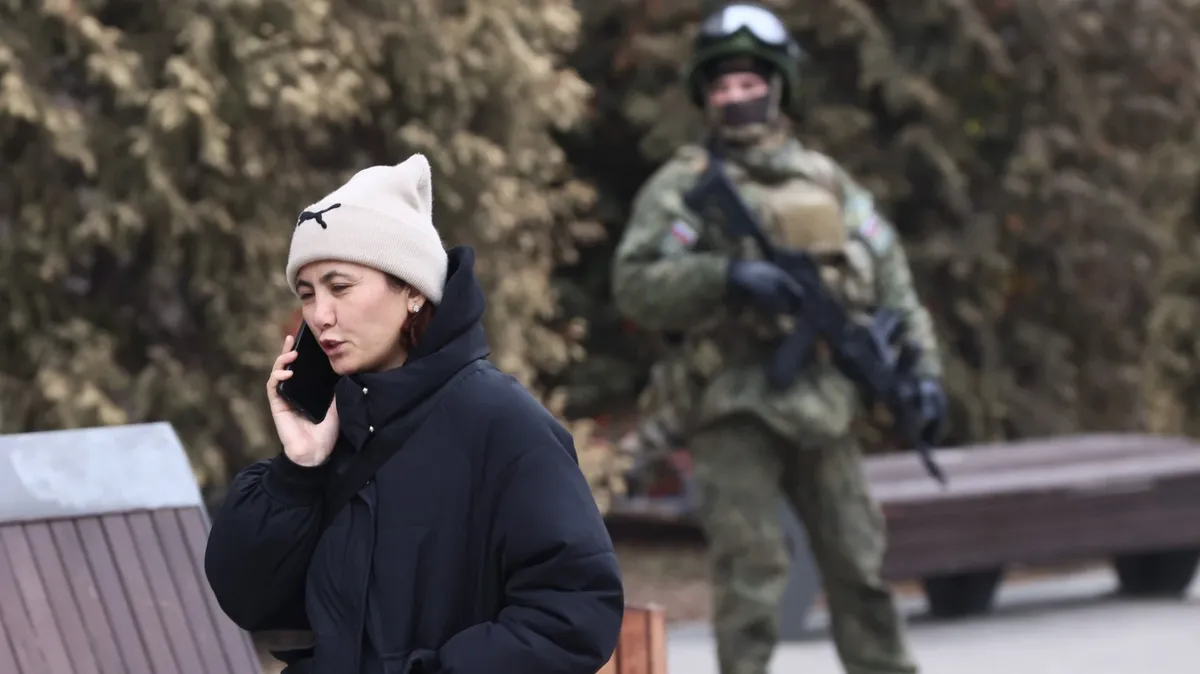
To be silent in the head
The most massive protests in the history of Kazakhstan, after which pogroms began in a number of cities of the republic (the authorities call them “terrorist attack from the outside”), were remembered by the townspeople, except for the total shutdown of the Internet, and in several regions - and communications. This was partially substantiated by the introduction of a state of emergency, in which communication can be blocked at the discretion of the city’s military commandant's offices. However, the technology of disconnecting the Internet even in these conditions raised questions. In addition to blocking the mobile Internet, which was faced with other states - Russia in Moscow and Ingushetia during protests, Belarus during the 2020 revolution - the entire wired Internet was turned off in Kazakhstan: the single provider of Kazakhtelecom simply pressed the switch and included it in strictly defined hours. The official explanation was that the blocking of networks is needed so that the bandits who attacked Kazakhstan could not coordinate their actions. But this does not explain the more or less stable operation of the Internet in the country in the morning (apparently, at this time, “militants” should sleep) and sometimes in the evenings. Although there is still some explanation: such inconsistencies are part of the functioning of the Sovereign Extension system (by analogy with the same system in Russia). Systems that were not very viable.
At this place, it is necessary to recall several technological innovations that in Kazakhstan introduced to facilitate their work of the special services ("New" wrote about this):
the introduction of the SORM system for control over connection and Internet traffic in the country;
the obligation to register not only telephone numbers, but also telephone devices (as a result of which, in particular, it was impossible to rearrange the SIM card from one mobile phone to another);
an attempt to install a mandatory security certificate on the Internet throughout the country, which, in fact, turned out to be a spy program that allows you to perlustrate almost all of the user traffic (the attempt failed, although it is still impossible to come from Russia to some Kazakhstan sites);
In addition, all Kazakhstani sites were declared in law, and their hosting were announced in the republic. This means that if the Internet is disconnected, their functioning is stopped for everyone.
In other words, the Internet in Kazakhstan is completely regulated and is under the control of the authorities. In addition, according to the director of the non -profit organization “Internet Protection Society” Mikhail Klimarev, the traffic system is partially operating in the republic - the same DPI, which is the basis of the “sovereign Runet”. In this case, “sovereign treasury”.
All these restrictions were supported not only by the complete actual freedom of special services in terms of invasion of the Internet life of citizens, but also by law. According to the 9th article of the Law “On Communications”, in Kazakhstan “Organization and Technical support of points of exchange of Internet traffic of intercity and international communications operators in the Republic of Kazakhstan, as well as the accession of networks of intercity and international communications to the Internet traffic exchange” a monopoly was established. And in fact, only the state provider of Kazakhtelecom, which until recently, had the eldest daughter of Nursultan Nazarbayev Darig, one of the Bulat Umuratov, who was close to the first president of businessmen, as well as the grandson of Nurali, can do this.
Thus, the whole system was originally configured to ensure the filtering of information in emergency conditions, as well as find and neutralize any user, whether it is a politically objectionable figure or terrorist (albeit international, but he will still have to register the phone in Kazakhstan, otherwise he will not be able to talk). In practice, Klimarev says, none of this worked. None of the warning, search and control systems could prevent the attack - largely because in fact it was designed to suppress the disagreements, and not to counteract the bandits. And the security forces had no choice but to go to extreme measures. “We recorded similar shutdowns, for example, in Iraq in 2019 and last year in Uganda,” Klimarev says. “In the most acute moments, the authorities simply spit on things critical for the life of the country and turn off the entire Internet.”
Why in the end it was necessary to turn off the wired Internet, and not just mobile, no one understands: the explanation that the coordination of the “terrorists” is violated in this way, does not withstand any criticism, the expert said. “What are they, on a wired Internet or through messengers, are discussing everything among themselves? - Klimarev grins. - At the same time, voice communications are not disconnected everywhere. Don't you think this is some kind of contradiction? " The IT specialist believes that in this case, a long-standing reflex of any authoritarian government worked: in any incomprehensible situation, disconnect the Internet completely. But this leads to the exact opposite results.

“You deprive people of access to information, and the first thing they do is to go outside or to friends is to find out what is happening.
Any shutdown of the system only exacerbates the situation, ”Klimarev is categorical.
As if recalling, the authorities of Kazakhstan on January 11 included the Internet throughout the country throughout the whole day - but at night it was announced by its possible disconnection - within the framework of the commandant's wiring of the emergency regime, which will last until January 19.
Internet for service
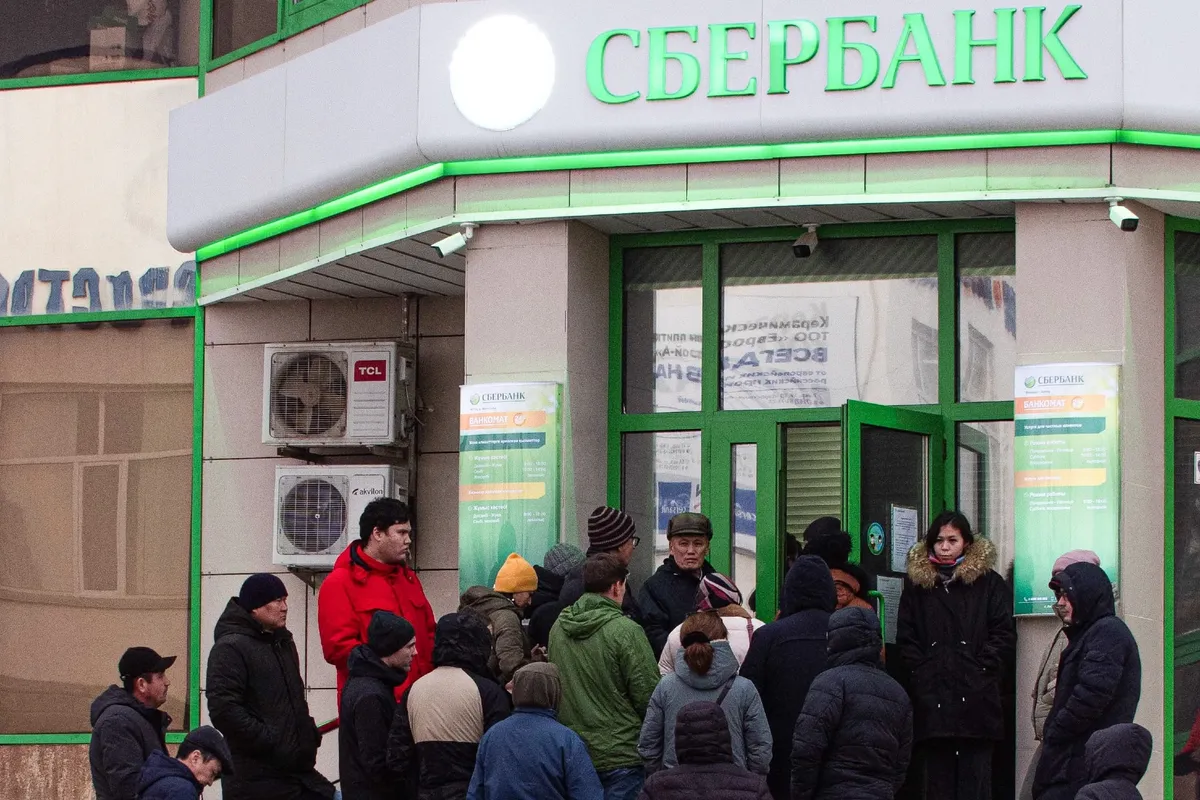
Nevertheless, even the authorized power or “terrorists from the outside” could not do without the Internet without the Internet, therefore, wired networks worked even during the acute phase of the conflict in some cities - but only within four hours in the morning. According to Mikhail Klimarev, this is due to the need not to stop the technological processes of maintaining ordinary life in the country. “All public administration one way or another depends on this - on politics to housing and communal services. So it was necessary to include the Internet so that it was possible to distribute tasks, ”the expert explains.
In addition, for people within the country, the opportunity was created to enter several information sites, the work of which was authorized by the authorities themselves. These are the so -called "white lists." “There is a system of“ black lists ”when everything is allowed, and part of the resources is prohibited. And vice versa: “white lists” is when everything is prohibited, but some are allowed, ”Klimarev said. Their functionality is obvious: to tell the “only true” point of view on the events. But it also worked little: according to the "Internet Society", traffic on these sites was minimal - no one simply came to them.
Propaganda functions for two had to drag state television on himself. “They broadcast in constant mode. There were launched pro -government experts, political scientists, a large number of people whom I personally do not know from the point of view of the expert field, ”says political scientist Dosym Satpaev. - They immediately began to form their agenda, actively began to “bomb” public consciousness with information messages that everything that took place on the streets was a planned action, external aggression. The emphasis was constantly on the fact that the struggle against well -prepared sabotage groups was being carried out, but at the same time we saw a purposeful distortion of information. ” At the same time, the obvious failure was an attempt to show the “foreign terrorist” on the air for the first time: they forced the cameras to admit to participation in rallies of the famous jazz pianist from Kyrgyzstan, Vikram Ruzakhunov. The scandal was such that Kyrgyzstan immediately sent two notes of protest at once (about the pianist and about the torture from the Kazakh security forces). As a result, Ruzakhunov was released, later several more citizens of Kyrgyzstan were released, and the video of the Kazakhstan television channel was bashfully deleted without explanation.
This is the problem for the authorities in this whole situation:
It has not yet been invented by any convincing explanation that the international “terrorists” attacked Almaty and other cities.
At first, President Tokaev deleted his tweet in English about 20 thousand “terrorists” who took part in the attack, but in the end they did not abandon this version: the figure of “20 thousand attackers” was later said by the head of the Ministry of Internal Affairs, Erlan Turgumbaev. According to him, they arrived in the city at the same time. But who led them, how they were all gathered and where they went later (significantly fewer people were detained throughout the country, although their number approaches 10 thousand: however, most of them are associated with administrative cases), nothing is said about it. Neither the names of the suspects or the ethnic composition are named. The press service of the President of Kazakhstan on January 10 stated that these were those who had attacked the countries of Central Asia and Afghanistan-however, no one can still be sure of this without the presentation of real people. It is interesting that at the CSTO summit on January 10, Tokaev announced that the attackers stole the bodies of his accomplices from the morgues. The phrase was turned into a meme, although it was in vain: “new” is known that at least one city was an attack on the morgue (we are talking about Taldykorgan). However, it is obvious that this version cannot explain the discrepancy in the declared figures of the attackers and the detainees.
“Now there are many versions of what happened, but there are no specific facts-neither by the number of dead, nor by the number of participants, nor on the specific surnames of those representatives of the elite who are suspected of trying to attempt the coup. While we hear only some unfair phrases on this topic, respectively, chaos also arises, ”Satpaev explains to the Dead. This is true, but there is one nuance: such discrepancies as a whole do not confuse the authorities at all. Even now, in the conditions of users who have connected to the Internet, Akorda has an actually total monopoly in the lighting and interpretation of the events. On all reproaches regarding the concealment of data (the number of dead civilians, the number of attackers, the number of conspiracy participants in law enforcement agencies - if any), the power meets one phrase: later. The number of victims is still “specified” (although the figures of damage, for example, have already calculated), the number of attackers and their actions will be told “after” the investigation; About what is happening in the KNB and among the security forces, we will better be silent at all - this is now the message of the authorities.
Those who do not agree with such a configuration do as they could still have Nazarbayev. The Ministry of Information of Kazakhstan sent on January 10 the chief expense of the Ferghana website Daniil Kislov warning that the editorial article “Terrorist transit” about the possible connection of Nazarbayev and his nephews from the KNB and business with the events that occurred under the 274th article of the Criminal Code of the Republic of Kazakhstan “The spread of knowingly false information”. The specific information that caused the dissatisfaction of the authorities is not specified, but the site was immediately blocked in the country. Which, by the way, worked only for the popularity of this material: it was reprinted by the Echo of Moscow, and the effect was much greater than it was originally.
“Without blocking and letters of Kazakhstan mininformation, the column may not have been such a resonance,” says Kislov. - My suspicions even crept in whether the Kazakh government did this intentionally, because, in my opinion, they either wanted to shut up, or, conversely, to focus the audience to mention Nazarbayev’s nephews who appear in my text. And maybe because now there is a clear struggle between the clans and two visions of the country's development inside Kazakhstani elites, and Tokayev’s today's program is evidence. But this is just my version.
The problem is precisely in the internal war, which takes place in Kazakhstani elites and which some government agencies want to shut up without enduring in a public field. ”
Against the backdrop of a lack of data about what was happening on January 11, President Tokaev made a speech to the parliament about what conclusions the authorities have already drawn from the results of protests and the following attacks. From the side it seems that Tokaev hits the influence of the Nazarbayev clan even more. Utilsbor and a project of light -rail transport in the capital were criticized or canceled, the reform of the KNB and customs between Kazakhstan and China was promised - in all these areas there are relatives of Nazarbayev, from daughters to nephews.
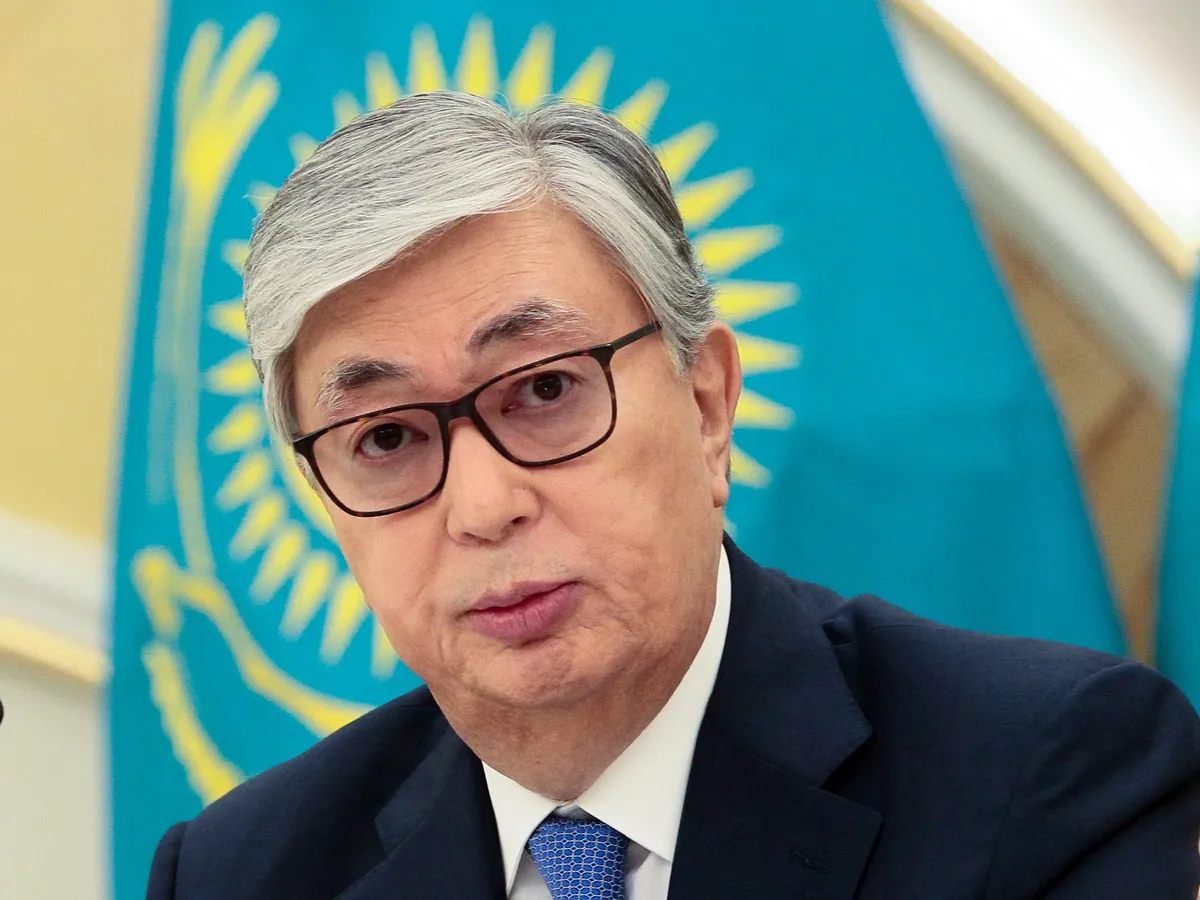
However, the speech itself looks very streamlined, without specific names and accusations (“We all know their surnames,” Tokaev said), and the economic reforms and Reform of civil service are not very knitted with political modernization, which has risen even more than changes in specific areas of the economy. Tokayev transferred the political results to September - that is, the tactics “let's later” work here. True, you do not have to hope for some revolutionary changes if you look at the new composition of the government. Many ministers retained their posts, the prime minister became the first deputy prime minister (they say they cursed among themselves, but in the public field their skirmish was almost unknown to this day), and new figures in the cabinet of ministers are also not very fresh, their significant number successfully worked under Nazarbayev.
“Tokaev in parallel needs to restore order and subjugate the law enforcement agencies and all other departments in which people of the Nazarbayev era are sitting, who are used to working on the top from above. But Tokaev in the current situation cannot give the team personally to all bodies so that they give true reporting, at least work in unison. He is looking for for himself some profitable version of the explanation of these events. This is such a temporary mess that exists not only on the streets of Almaty, but also in the heads of officials, including in the head of the president. This is such a kind of fever, heat and semi -child, which is inevitable, ”says the editor -in -chief of Ferghana Kislov.
And this is an obvious bargain between the warring parties - for resources, for power, and even for the freedom of relatives. This situation does not tolerate excess noise, so in the future the tactics of priority silence will be the main one. In Kazakhstan, everyone is already used to what to chew, what to say, it is better not sometimes, but on a regular basis.