
Translated material
How to properly diversify the portfolio as an investor
Most analysts expect the markets in 2022 will not bring investors the same high profitability as the last three years, and some predict the correction. One of the main recipes against market fluctuations and crises is diversification, but the question of how exactly and how deep the portfolio should be diversified remains extremely debatable. In this material, we say that he knows about the correct diversification of science and what the investor should definitely think about the approach of the storm.
This material was written specifically for our new newsletter for private investors. Want to become her subscriber? Leave your email here .
Why diversification is needed
Diversification helps to reduce the risks: if you have two shares in your portfolio, then the non -market risk associated with a particular company decreases by 40%, if eight, then by 80%, 128 - by 99%. But not any portfolio of a large number of papers will be diversified: due to false diversification in 1998, the American LTCM Foundation went bankrupt .
In this case, a reduction in risk leads to a decrease in profitability. Therefore, each investor must choose the optimal ratio of expected profitability and risk.
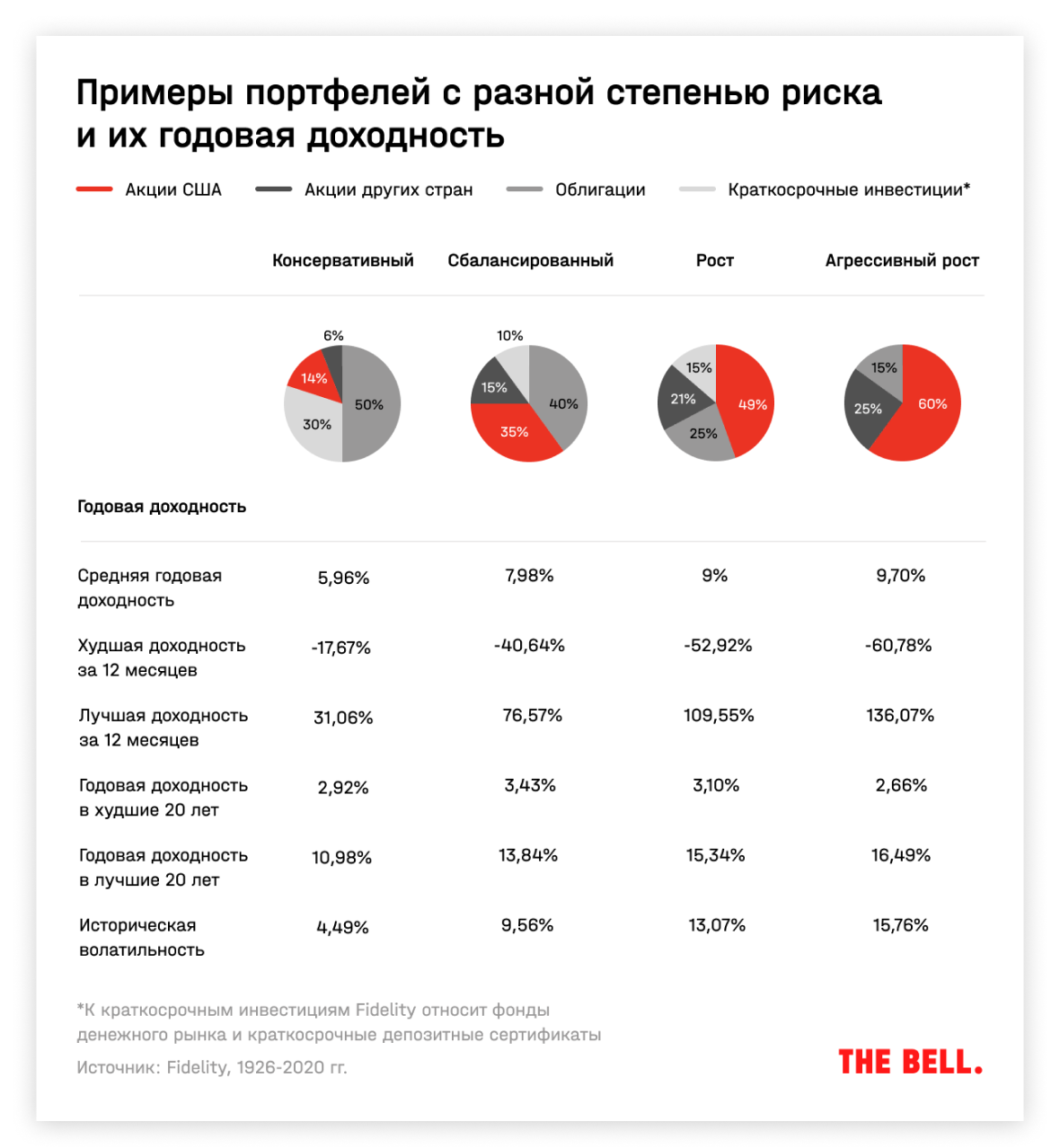
The diversified portfolio should have securities with low return correlation. In other words, the shares of companies should react differently to different risks. For example, a shortage of semiconductors can positively affect the financial indicators and papers of chipmakers, because the cost of the product is growing, and negatively - on car and smartphone manufacturers. For the first time, this conclusion made in 1952 in the article “Choosing a portfolio” an American economist, Nobel Prize winner Harry Markovitz, who laid the foundations of a modern portfolio theory.
It should be borne in mind that diversification does not protect against market risks that affects all types of assets. In a crisis, the correlation of assets may increase, shows an analysis carried out by BlackRock. After the announcement of the curtailing of the assets purchase program in 2013, as well as the market collapse in China in 2015, the correlation of assets increased, while for the most part 2021, when the investors were in RISK-OFF, the correlation was low.
Diversification strategies
By assets
In the classic work of Benjamin Graham “Reasonable Investor”, a ratio between shares and bonds of 50:50 or 25:75 is proposed, depending on the situation in the market. The share of shares can be 25%if the investor considers their value an overpriced, or 75%, if a drop in prices increases their attractiveness.
The even earlier book by Edgar Smith Common Stocks as Long Term Investments of 1925 states that the ratio of assets should depend on the macroeconomic situation. If the risk of the economic crisis, according to the investor, increases, the share of bonds must be increased.
"Death" of the portfolio 60/40
Over the past two years, investors have more and more about the “death” of the traditional portfolio of 60/40, which in theory should bring positive profitability in any market conditions. Analysts warn that high inflation pressure will lead to an increase in interest rates by central banks. This will negatively affect both promotions and bonds. The beginning of 2022 so far confirms the fears: the S&P 500 index has fallen by 2.25%, Bloomberg Global Aggregate Index - by 0.36%.
Another question that is often faced with the investor, how many shares should be in the portfolio for optimal diversification. There are dozens of different studies on this subject. Their review, conducted by researchers from the University of Sarajev, showed that the scatter of the optimal number of papers is very wide - from 7 to 300.
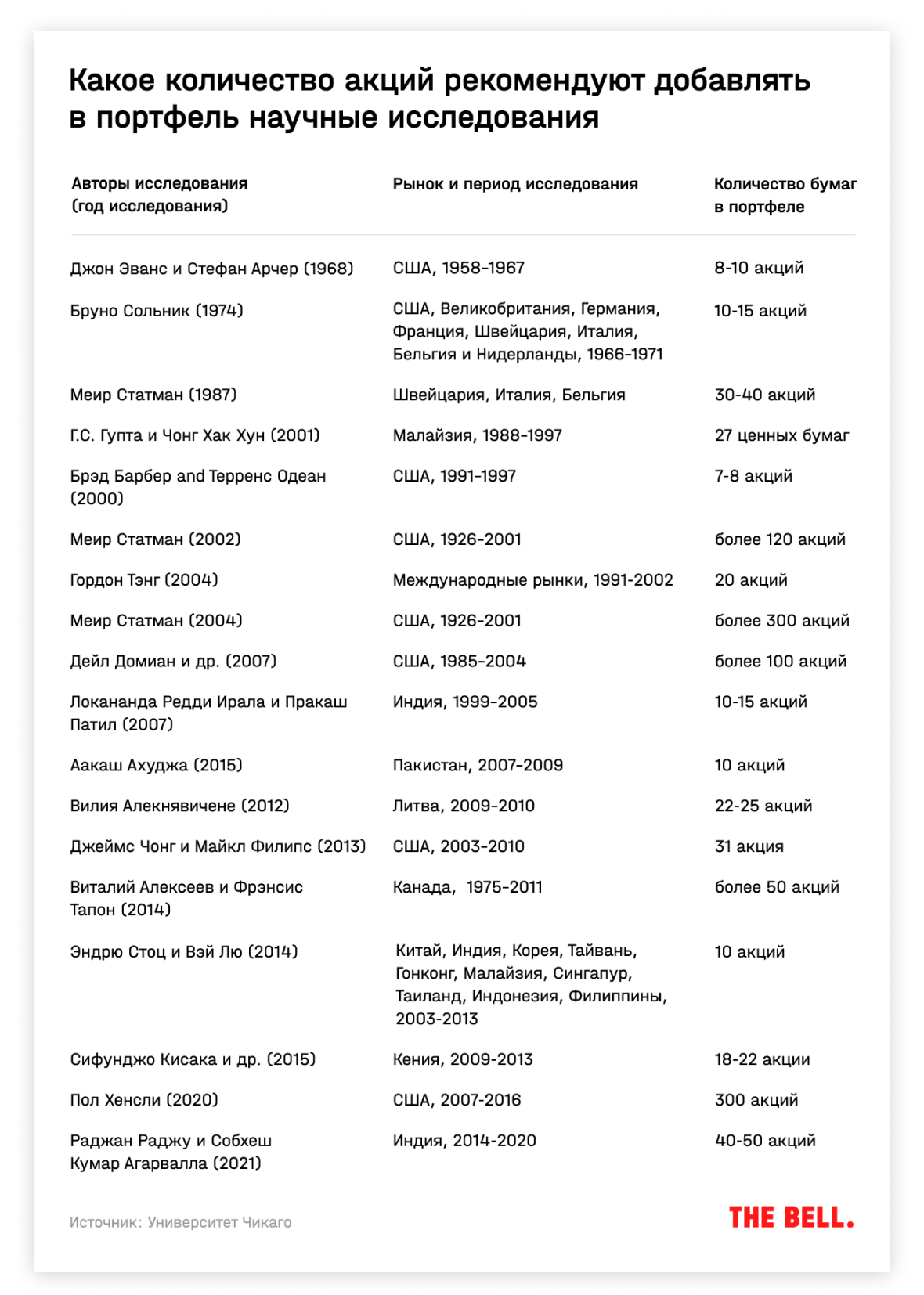
In the works of recent years, the size of a well -diversified portfolio is greater than in earlier research. According to the authors, this may be mainly due to a decrease in the costs of the commission.
In addition, studies of the American market note an increase in unsystematic risks due to the growth of volatility (the authors of the study do not analyze the cause, but there are several possible explanations: a decrease in liquidity and an increase in passive investments ). For developing markets, the number of shares in the portfolio is lower than for developed ones-due to less choice.
Investing in a large number of shares has its disadvantages: the study of each company will take a lot of time, and the number of advantageous investment capabilities is limited.
By countries
The distribution of assets for different countries allows you to reduce the political and economic risks of a separate country in the portfolio. For example, the MSCI China Chinese action index in 2021 fell by 21.64%, the MSCI EM developing index showed a fall by 2.22%, and the ACWI index, uniting 23 developed and developing markets, grew by 19%.
The studies conducted in the second half of the 20th century showed a low correlation between the stock markets of different countries and recommended the diversification of the portfolio in countries. In the 1990s, consensus began to break up due to the growth of correlation due to globalization and integration of international markets.
Boston College Professor Leonard Kostovetsky believes that today diversification in countries does not play a significant role for two reasons. Firstly, many companies have become multinational and develop their business not only in their homeland, but also abroad, therefore, investing in them, investors are already getting country diversification. Secondly, close economic and financial relations led to "lack of safe shelters during a storm." The Asian currency crisis of 1997 led to the fall of stock markets around the world, the same thing happened during the financial crisis of 2008, which began in the United States.
In other words, country diversification will not save from the global crisis, but will reduce the risks associated with problems in a single market (such as, for example, the growth of regulatory risks in China in 2021 or the growth of sanctions awards in Russia in the late 2021-early 2022).
In the distribution of assets between countries, the global investor should focus on the country's share in the MSCI ACWI index, said the Columnist Wall Street Journal Jason Zweig. So, according to the end of December 2021, the United States accounted for 61.3% of the weight in the index, China-3.6%. Russia and other developing countries are tenths of a percentage.
By sectors
The effectiveness of diversification by sectors is often compared with diversification by countries. And while the economists have not come to the consensus in which strategy is better. Different points of view are also given in recent studies on this topic, published in 2021. Researchers from Canada concluded that diversification in countries for the past 25 years has been a mostly more effective tool for reducing risks than sector diversification. However, the last strategy was the best protection during periods of crises in developed countries.
At the same time, the study of German economists showed that until 1997, diversification of countries was the best option, but then with the growth of Internet, telecommunication and biotechnological industries, diversification in industries became more effective. During the global financial crisis, the distribution of assets for countries won again. Researchers suggest that this is due to the fact that the United States and European countries have suffered more than the countries of Asia, and the negative effect has spread to all areas of the economy. If we compare the average performance indicators for the entire observation period, then the experience of the last 25 years shows that investors have won more from diversification in industries.
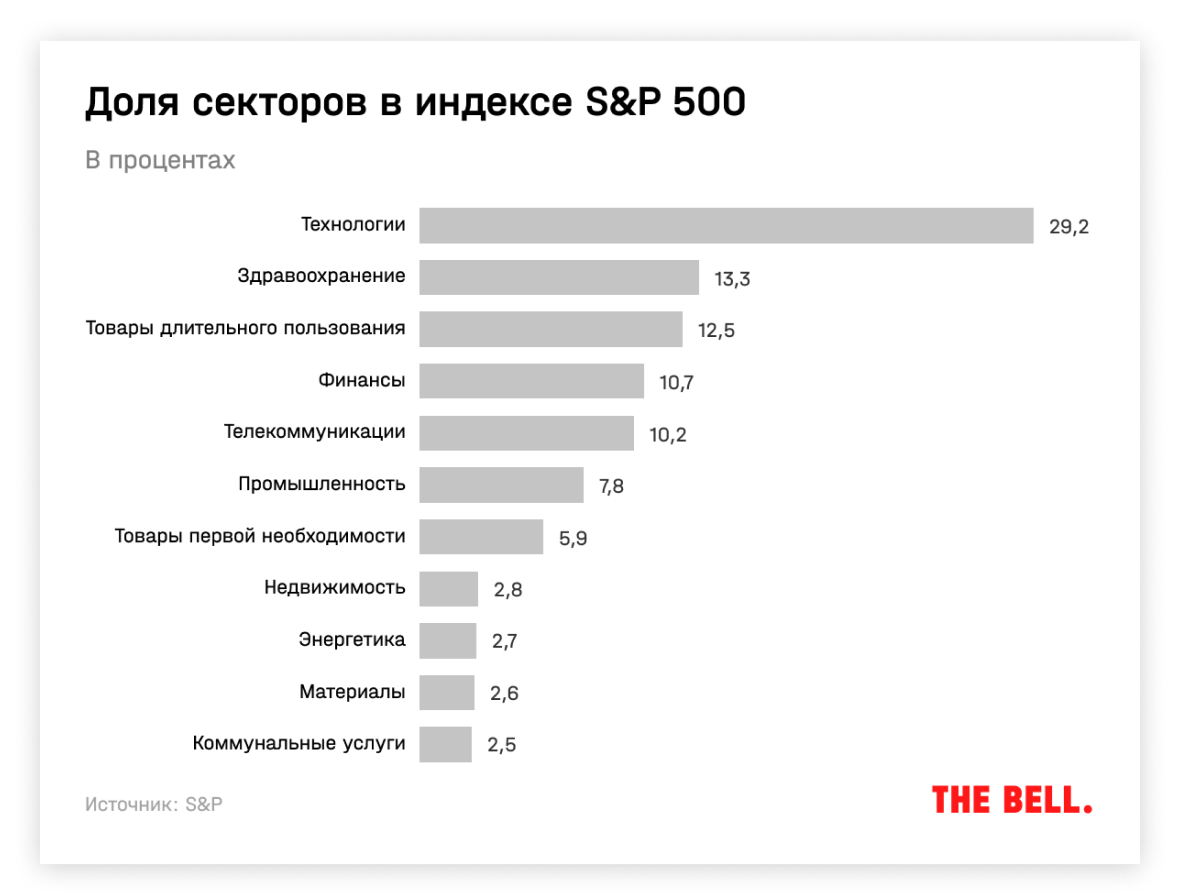
The global investor is probably also worth paying attention to the share of each sector in the global MSCI ACWI . If you invest only in US shares, then in the industry structure you can focus on the corresponding MSCI or S&P 500 index.
How to diversify the portfolio correctly
There are no universal recipes. The distribution of assets in the portfolio largely depends on the appetite of the investor to risk and temporary horizon. If for you a temporary reduction in the portfolio, say, 20% or more, unacceptable, you should not invest all the money in the shares. And the older the person, the more conservative should be his portfolio.
It is important to consider that over time, the correlation between different assets may change. In addition, diversification protects only from non -market risks: during global crises, the correlation of assets increases, and the only way to survive the fall is to wait. But in anticipation of reducing markets, the investor must definitely reduce the share of borrowed capital.