
Translated material
"OMON needs any power"
Sociologist Ekaterina Khojaeva explains why the police today are interested in the protests to go as many people as possible
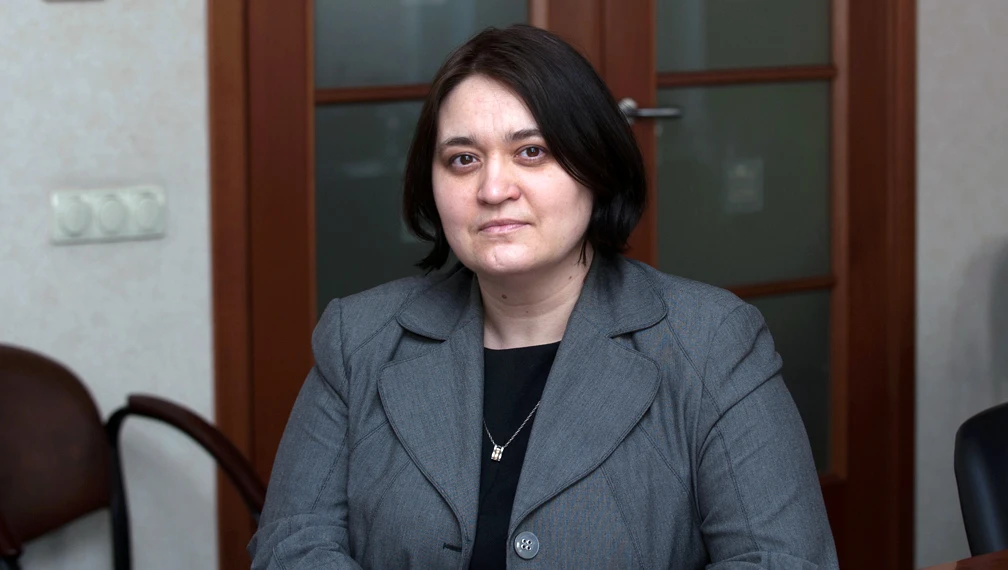
- Katya, tell me, a recent case of cruel treatment of girls in the Bratevo Department of Internal Affairs is this excess or already the norm?
- In any case, this does not surprise me. It is difficult to say what is more here: installation on top of the “rigidity” or fatigue of the ordinary police officer. They are the first to be victims of aggression on the part of their commanders, but cannot answer them, and canalize the anal to those who are detained. Of course, here and another, but this case is not the only and not only Moscow. Higher cruelty during the detention and drawing up protocols is noticeable both in our St. Petersburg and in other cities, including in Yekaterinburg, where units without identification signs were “winger”-this is possible only by order of direct command. This suggests that a certain introductory one from the very top was received. But I have to make a reservation that I have been using old baggage - recently we have not managed to conduct research.
- Then say briefly, when and what research did you conduct?
-Since 2007, first in Kazan, where I lived then, and then in other cities, as part of the Institute for the Institute for Law Problems of the European University in St. Petersburg, I traveled quite a lot of non-Niza police units-including in middle and small cities. These were the so -called field trips and the on observation: interviews with police officers, the presence of citizens at the receptions of citizens, including the district police officers, exits with patrol cars - in the process of work it was possible to ask and understand a lot.
At first, the Ministry of Internal Affairs himself was interested in the results of our work, but gradually they closed. In 2012, an order was issued by which employees do not have the right to give an interview, including sociologists, without the sanction of management. The order is, as it were, secret, but they themselves constantly refer to it. Previously, it was possible to agree with a reasonable boss at the level of the region or city, and since then they began to refuse us more and more often. Basically, the research program was folded five years ago.
- How relevant are these data today?
- Much of what we managed to understand by 2016 is relevant. In addition, those who quit the police turn to me, in old memory, say that little has changed there. Unlike technologies that are actively mastered by the police,
Management practices there have not changed since the 70s of the last century, but become only archaic:
First of all, these are centralized paper reporting and extreme hierarchy, when the police obey not only their immediate superiors, but also obliged to comply with orders and installations, descent from the center itself.
- In written or orally?
- As for reporting, of course, in a written and even normative form, and as for the stiffness during the detention that we discuss, in oral. After all, these are direct attitudes for violation of the law, who will subscribe to this.
Strictly speaking, we did not conduct an interview in riot police, but I, of course, can also say something about these employees. It should only be borne in mind that in everyday life all power units are called that, but they are different and different jurisdictions. There is actually a police riot police, which is imprisoned on the mass shares of the civilian population, it was transferred in 2016 of the Russian Guard; There are special operational regiments that the Ministry of Internal Affairs was forced to create when Rosgvardi retracted his riot police - they work, for example, with football fans; There is a riot police of the FSIN system, it is the most imprisoned for gross power when working with prisoners, but, in theory, it cannot be attracted to work on civil actions.
- What kind of people serve in such units?
- This is an important question. Anyone can get into the patrol service, the traffic police and in the district police officers - as a rule, after military service in the army, including with higher education, and those who served in the army and the like, including the experience of military operations or serious combat training are usually selected to the power units. Most often these are guys from small cities or rural areas for whom the army was a social elevator. Unlike ordinary divisions, they live in barracks, all days they conduct training, most often power, and although they receive vacations on weekends, close to where they serve, they do not spend leisure time with each other.
They completely do not imagine those people who they have to detain.
In addition, their units can be transferred from one city to another.
-In fact, “astronauts”-they are from some other world.
- Yes, they are divorced from civil society, and systematically and for a long time. They receive an idea of society from their commanders and from the TV and, of course, believe that those whom they “wins” are some enemies and “foreign agents”. They hate journalists. But society does not understand them and does not want to understand, but they are hard. Before us they experience a sense of superiority, and in front of their commanders - fear.
- Constant clashes with the civilian population, girls and grandmothers do not change their picture of the world at all?
- As a scientist, I cannot answer this question, special research should be carried out. I think that their picture of the world begins to change to some extent, because other employees are also involved in working on mass shares, including district police officers and even investigators who are more educated and much closer to those citizens on which they draw up protocols.
I know that now quite a few statements about dismissal from the Ministry of Internal Affairs have been submitted, since few people want to take risks and go to Ukraine, but during such periods of mobilization their statements may remain without movement. On the other hand, from the Ministry of Internal Affairs, they ruthlessly expel those who are fond of, for example, by finding alternative information on the Internet, and so -called personnel control is constantly carried out behind all employees. There are many acting and former police officers in my notebook, and Telegram has recently constantly reports that they have been installing this messenger on their smartphones. For this, not only the employee himself will fly up, but also his commanders, there is circular bail, collective responsibility on the principle of “did not look”.
They, in fact, do not know how to “winger”, and although their salary is not some kind of fabulous, they hold on to work.
They are not ready to rebel - the maximum will require compensation for overtime and weekends. They often repeat in interviews and private conversations the following thought is: “We will always have work. Any power is needed. ”
The police are most interested in the fact that people massively go to anti -war protests, and probably exaggerate their number and danger - this is a guarantee for them that tomorrow they will not be sent to where it is really scary. But if you want to understand whether they are ready to rebel, then I think that not: they themselves are too intimidated and led. And even if they are in their souls and share peaceful slogans, these people will fulfill the orders of the authorities with more readiness than to sabotage them.