
Translated material
"We had to collect rain water"
The oldest animal shelter in the Kyiv region worked for more than a month in the conditions of occupation. "Medusa" talked with his manager
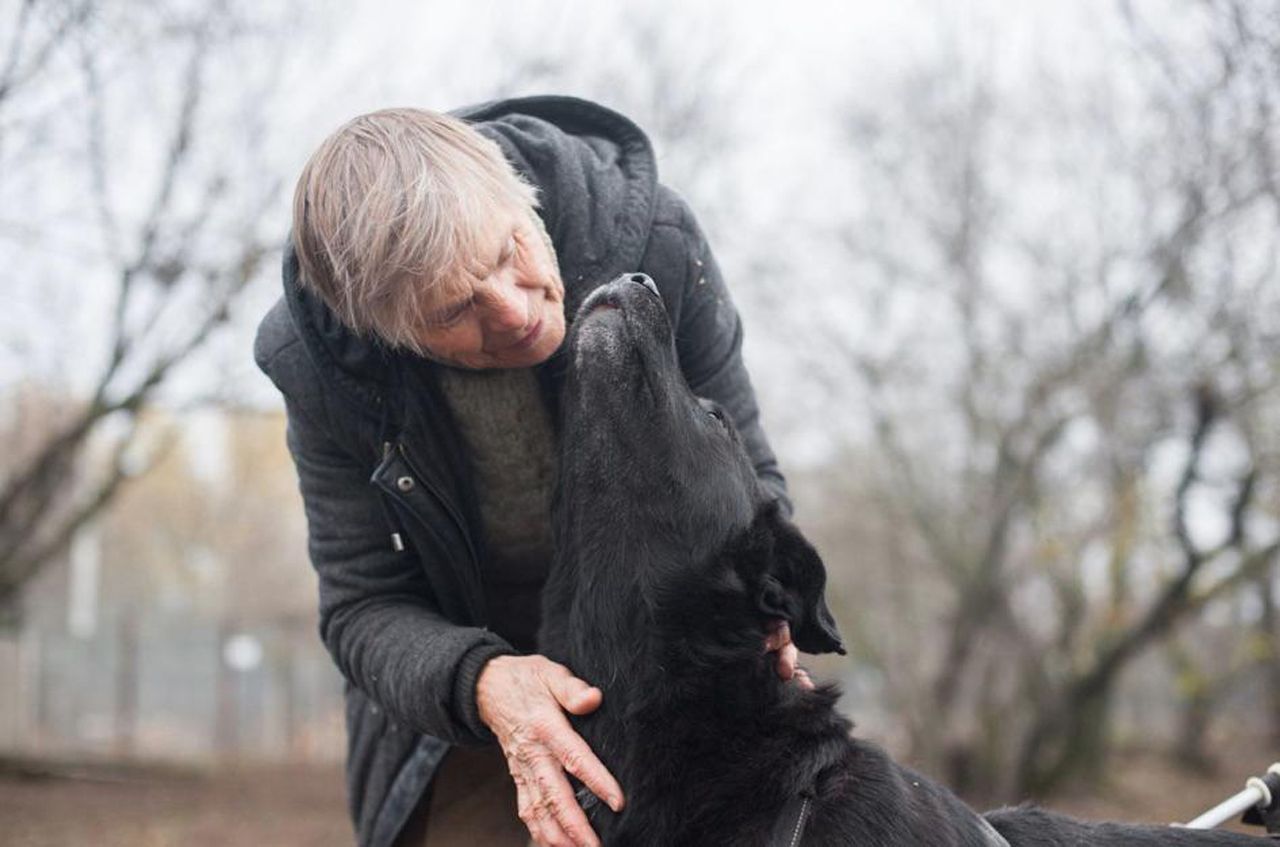
For more than a month, in GOSTEL, under the occupation of the Russian military were not only people, but also animals. The GOSTOLSKY -the oldest in the Kiev region-took many cats and dogs that remained homeless because of the war. It was created in 1999 by the mathematician Asya Serpinskaya, her whole family worked in the shelter and several hundred animals were contained. The granddaughter of its founder Maria Vronskaya told about how the shelter experienced the occupation about how the shelter experienced.
Twenty -two years ago, my grandmother, mathematician Asya Vilhelmovna, returned from the next lectures and saw an old woman who was distributing on the street of Puppy. Grandmother wondered if there were shelters in Kyiv, and began to find out how homeless animals live in the city.
It turned out that there are no shelters, there are only a stomach. Pensioners gathered the homeless puppies in Kyiv, who lived in abandoned buildings. There was complete unsanitary conditions, puppies lived in packs. Grandmother decided that it should not be.
She turned to foreign funds for help, and then laid the apartment and bought the abandoned barn in GOST for the proceeds. In it, he and her husband and volunteers began to build a shelter: there were full -fledged enclosures for 20 square meters, a building for cats. Having no experience, the grandmother tried to make the most convenient conditions for animals.
My mother, Oksana, sometimes helped in the shelter, but now she lives in Borispol, where she has her own small shelter. I have been with animals since childhood, but I began to work fully in the shelter recently - I am mainly engaged in communications and social networks.
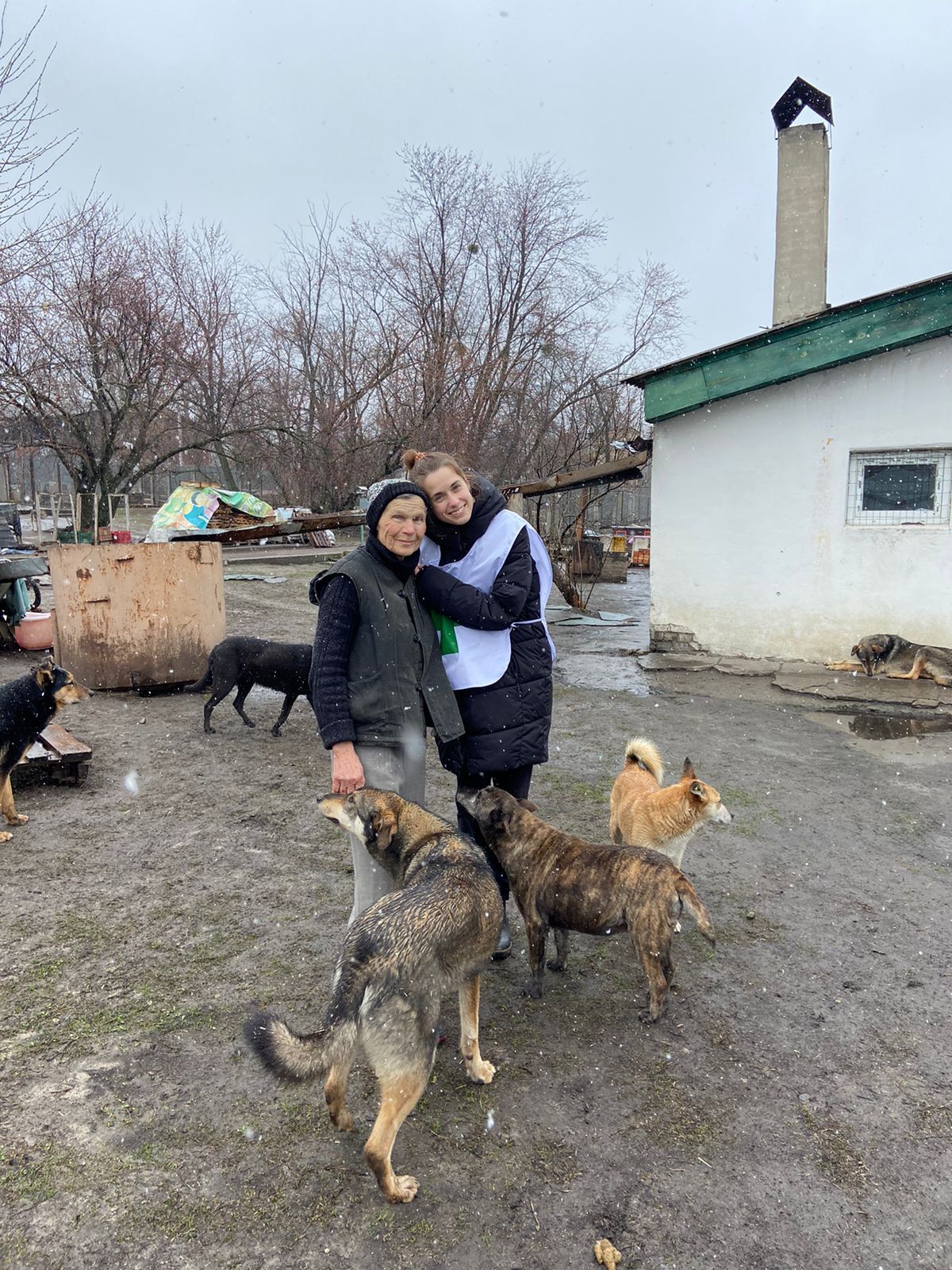
All these 22 years, our family tried to support the shelter in good condition: painted, “combed”, built new aviaries and beautiful booths. The shelter was a professional operating room, a hospital, where we monthly vaccinated and sterilized our animals and those who were brought to us by volunteers or local residents.
A team of five or six people worked for us: four were engaged in animals and one or two women-economic work. Before the war, we lived 534 dogs and 110 cats. All of them came to us after people abandoned them-some simply left animals under the gate [shelter] without any explanation. Some of the animals came to us after human violence - each has its own sad story. We found some animals on the street and brought ourselves.
"Employees had to collect rain water"
GOSTOL was occupied from the first days of the war. It was impossible to get into the village - just dangerous for life.
People were evacuated, about 90% of the residents of GOSTEL threw their pets during the evacuation: shepherds, Alabai, sphinxes, dachshunds, mongrels, cats, puppies, and adult dogs ran around the city. Many simply closed the animals in the apartments, condemning them to certain death. Our shelter tried to save abandoned animals. Of course, it was unrealistic to help everyone, but the number of wards almost doubled - and approached the thousand.
Three people worked all the occupation in the shelter: Sergey, Larisa and Victoria. Every day, despite the shelling, they fed and watered dogs and cats and tried to maintain cleanliness. These are big heroes, and we are very grateful to them. We managed to deliver help only twice.
On the third day of the war, under the gates of the shelter, there was already a huge division with Russian tanks. The soldiers went into the shelter and examined it. Suddenly they thanked us for our work and promised that they would not touch anyone. In principle, they kept their word. But on their part it was extremely mean to stand near us, which is why we, in fact, became a target. The next day they were fired by the Armed Forces of Ukraine (Armed Forces), and we also fell under fire. On this day, one dog died in the aviary and almost all the dogs that were outside. Then the first windows knocked out in the shelter.
Those military shared water and food with our employees, which extremely surprised us. This allowed you to stretch one or two days. As far as we know, later these soldiers bombed the Armed Forces. Then another Russian division arrived at the door of the shelter. They shot at the dogs, beat our employees. During the war, we saw different military.
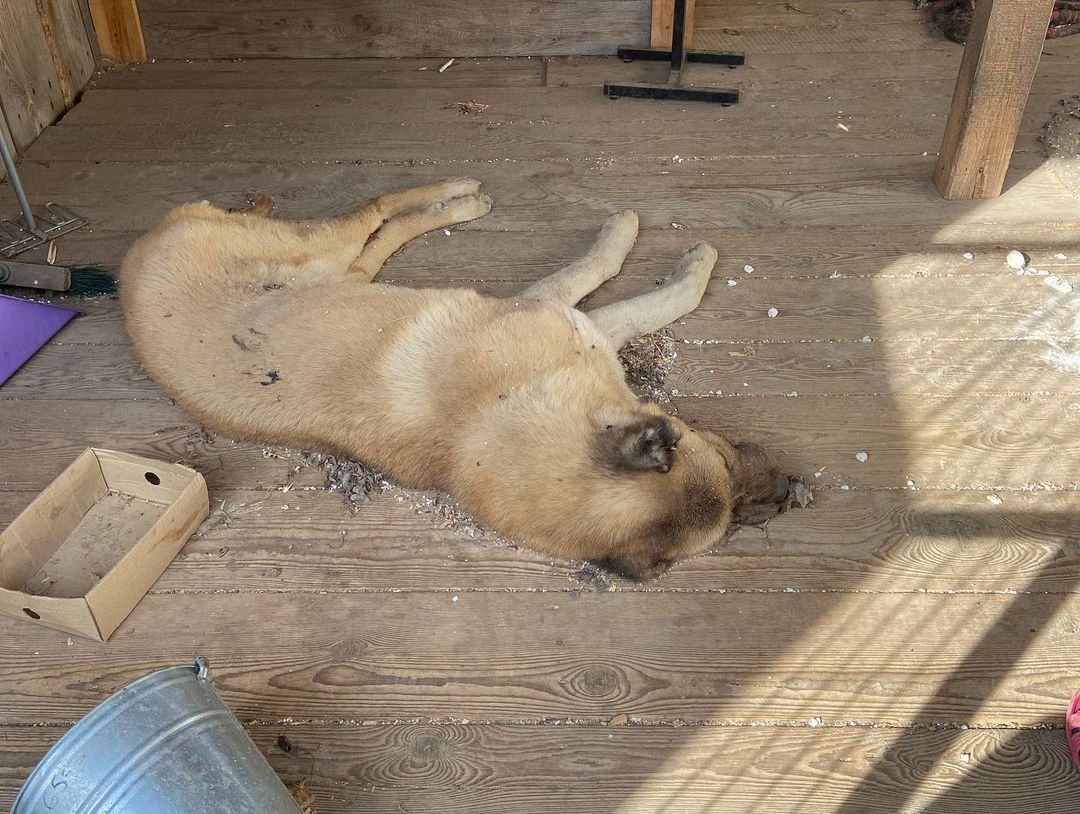
Behind our shelter there were two stables: small, wooden, and large, stone. A shell flew into a small one - and all the horses burned alive. And in the large door they opened the doors so that the animals could run away. The terrible shots of burned horses are still facing my eyes.
Almost immediately after the start of the war, light disappeared in the village - and the shelter was left without drinking water. The electric pump shakes it from the ground. Employees had to collect rain water in various containers. The water was not the cleanest, but better than nothing - we fed animals with dry food, and it must be washed down with water. And the team itself had nothing to drink.
The refrigerators did not work without light. In addition to food, vaccines for the treatment of animals are stored there. It is hard to get them, they are expensive, as a result, the ampoules deteriorated.
In the second week of the war, we found the old generator with our neighbors. Unfortunately, he did not work for a long time and broke on March 8. Then the shelter risked to remain completely without water, so we began to intensively look for different ways to get through Russian checkpoints to bring the generator.
We asked for a red cross and the Ukrainian military to help us deliver a generator. They explained that there is no water in the village, that people and animals need help, otherwise they will die of thirst. The Red Cross first accepted our application, but then roughly refused us and threw the phone. The military also could not help.
Then we began to wait for the " green corridors ." All this time, the shelter was without light, the dogs were given along the capeluschka of water from stocks. People did not wash their dishes to save water. We did not have the opportunity to evacuate animals: civil cars fell under the shelling of the invaders, and if a large truck had drove, they could get into it. We decided not to take risks and stay in place.
All the "green corridors" worked to evacuate people from the center, and our shelter is at the end of the village. Therefore, they did not help us. We realized that we need a specific corridor right in the shelter, at least one day to bring the generator, food and medicines and take out seriously wounded animals by cars and buses.
Our team created a petition on the international platform Change.org, and it collected more than 168 thousand signatures from around the world. We were in shock. Unfortunately, in the end, the Green Corridor was not able to organize, but such giant support is something.
We also wrote letters: first of all, responsible for the “Green Corridors”, the Minister for Reintegration of the temporarily occupied territories of Ukraine Irina Vereshchuk, [President of Ukraine Vladimir] Zelensky, presidential adviser to Alexei Armalovich. From the ministry, we received the same answer twice that, under the Constitution of Ukraine, the greatest value is human life, so they are primarily engaged in the evacuation of people. But officials wrote that they share our desire to save animals and help them and, when the following evacuation routes will be organized, they will try to take into account our wish.
Unfortunately, this did not happen in the end. I think the ministry had such an opportunity. But after six evacuations of most of the population, the Ukrainian army began to attack the Russian troops, and there was no more talk of any "green corridors". Russia began to withdraw troops from the suburbs of Kiev. On April 3, the Ukrainian military entered GOSTOL.
GOSTEL remained occupied for 35 days. We coped with critical moments thanks to the masculinity and responsibility of our team. For example, on March 14, during one of the “corridors”, Valery Nikolaevich ( the husband of the mistress of the shelter, approx. “ Medusa ”) made his way to Gostol. We needed to deliver a new generator, gasoline and a little food, so we went to such dangerous tricks. Our employee met Valery in his sheated car, took things and took them to the shelter.
Since the beginning of the war, I have been observing the great cohesion of Ukrainians. Now there are no strangers, everyone treats each other well and help in every way. In the first week of the occupation, the owners of local stores called us and said that they would bring food that remained in their stores. True, in the end they could not bring her, because the looters plundered the store.
"It is difficult for employees to find a replacement: no one wants to go to Gostel"
After the start of the war, many international organizations responded and wanted to support us with financial, information and humanitarian aid. This is a huge force. To make it easier for international organizations to find out information about the shelter, we began to duplicate the posts in social networks in English. All occupation was written by people from different countries, and at the end of the war we want to publish a list of those who supported us.
The shelter survived a miracle. Probably, the Almighty forces protected him. Of course, there were no destruction: the windows are broken, and the old building is now even more required to repair, cracks went on it, the aviary scattered into chips, and workers' rooms are broken. A lot of other work awaits us: we must sterilize, instill new animals.
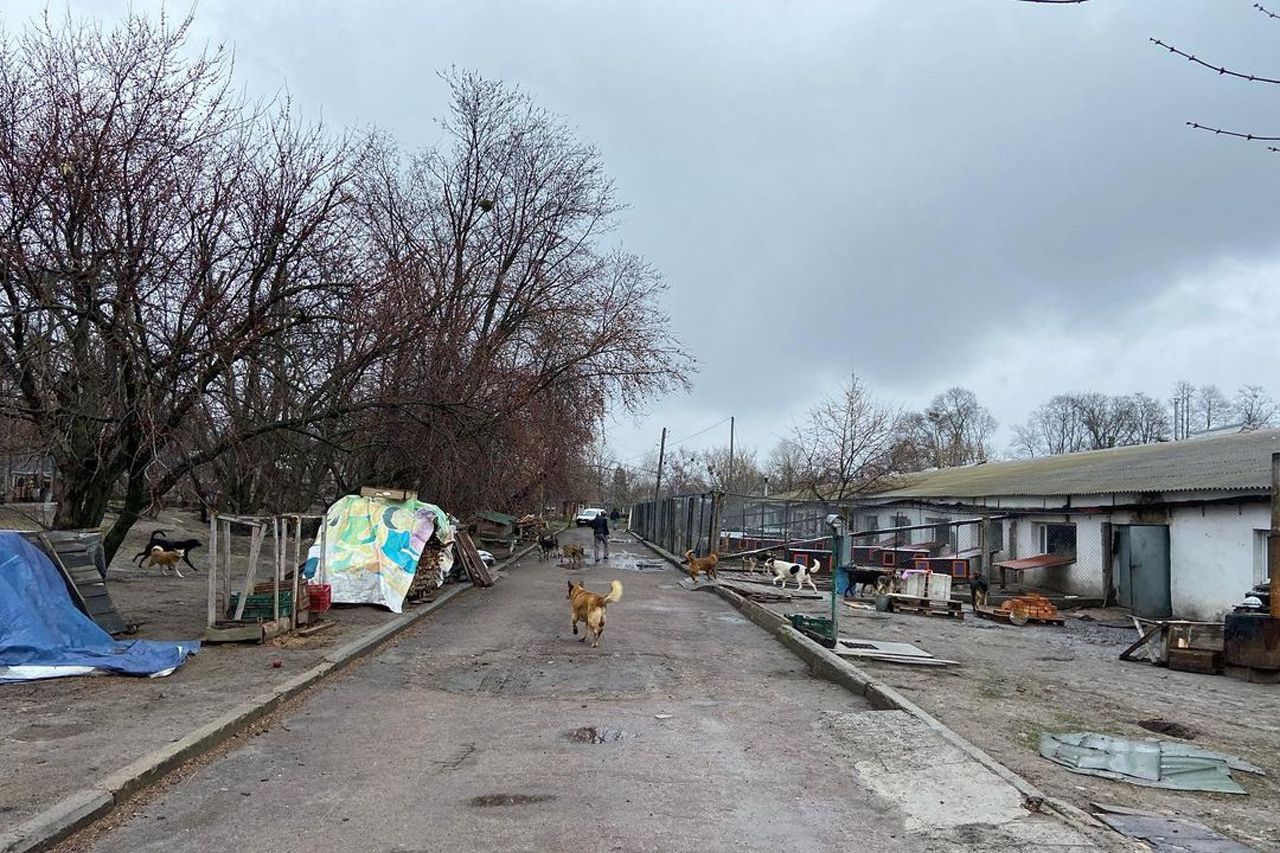
According to our approximate estimates, to put the shelter in order and make a real European shelter out of it, 30 thousand dollars are needed. We received a grant from Society for the Prevention of Cruelty to Animals in 10 thousand dollars for the reconstruction of the shelter, we were also supported by the Equestrio Foundation NPO, highlighting a grant of 6.8 thousand euros.
On the donated money, we want to make new enclosures, paint it, put a new fence, repair the rooms of the workers. While we want to repair the most urgent things, and we will do the global things later, since there is no confidence that the Russian troops will not return again.
We want to make high -quality repairs, the shelter has deserved this in 22 years of work. We want the animals to be comfortable and that people come to us - and their eyes rejoiced. Thanks to support, we will be able to start reconstruction, purchase food, pay salaries. We are grateful that they support us, help and believe in our development.
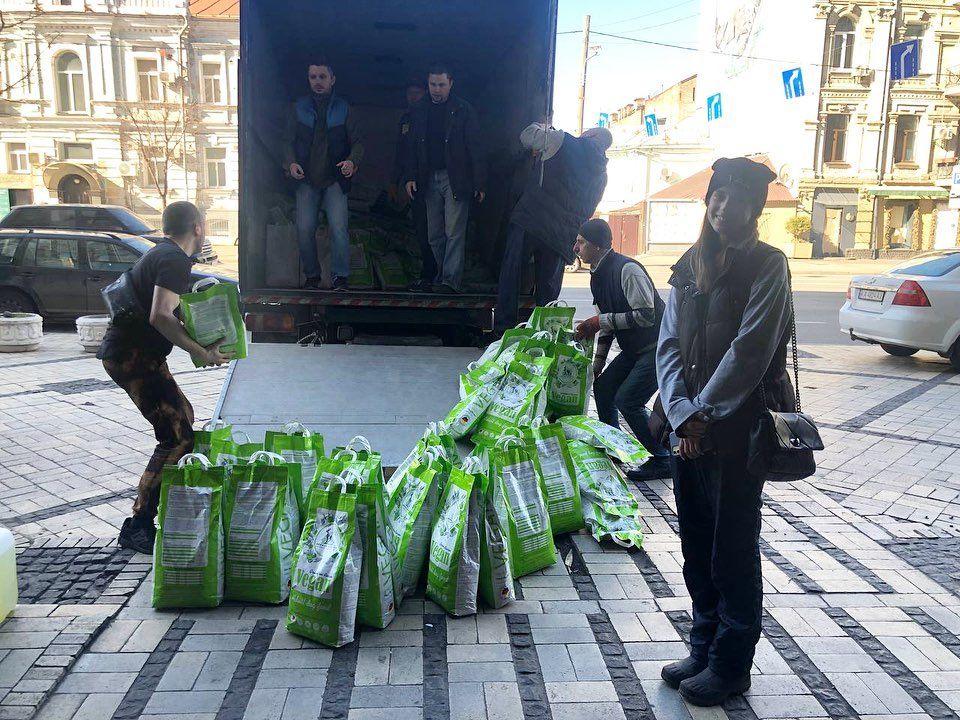
Now it is difficult to get to GOSTOL, since the village is cleaned of abandoned and destroyed equipment and clearance. So that local residents can calmly return there, it takes time. We are launched a couple of times a week in a GOSTOL with humanitarian aid for a shelter and people who remained in the village with their animals. We will look for new people to the team. Our employees survived more than a month of occupation and, after liberation, went to families, they need a replacement. It is difficult to find it: no one wants to go to Gostel. But people really need work, so some come, try, someone remains. Now we have a big turnover, but I am sure that we will find "our" people.
"Jellyfish"