
Translated material
Their address is the Soviet Union. As the nomenclature past of the Putin elite led to war
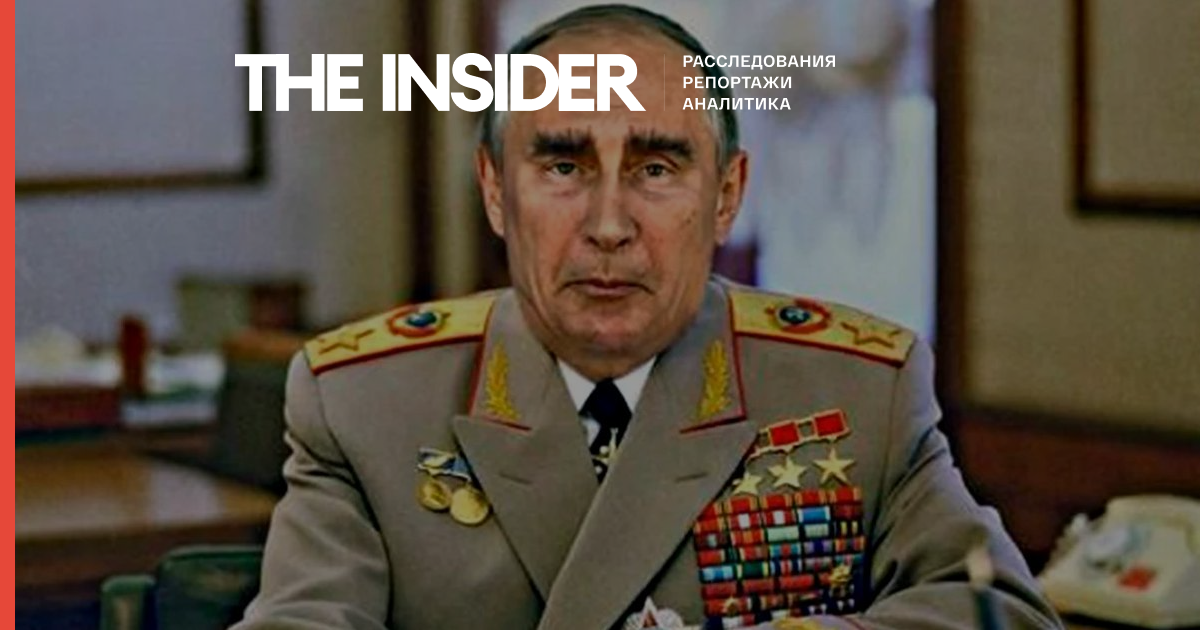

Their address is the Soviet Union. As the nomenclature past of the Putin elite led to war
5 May 2022Maria Snow
Virginia Polytechnic University of Polytechnic University, Researcher at the Institute of European, Russian and Eurasian Research (Ieres) University of George Washington
Putin’s elites are nostalgic for Stalin-Brezhnev ideals, since most of them made a career back in the USSR: people from the Soviet nomenclature make up 60% of the highest leadership of Russia, while the share of the Chekists in power increased several times. This made inevitable not only the dictatorship, but also the war, since the elite of Soviet hardening is sure that Moscow can claim the territory of the entire post -Soviet space. This means that to contain the external aggression of Russia, not only a change in power is necessary, but also a full lustration.
The terrible war that the Kremlin untied in Ukraine shocked many. Why does the Russian regime make what looks mad from the outside? What does the Kremlin want? Does the regime have values, ideology?
For decades, many analysts have been trying to understand what has been driving the Kremlin, to predict his actions. However, the analysis of the processes occurring in the head of Putin is an ungrateful task. To understand the nature of the Russian regime, it makes sense to look at its components, objectively measured indicators, including the composition of the Putin elites.
Who is managing Russia today?
The parallels between the Putin regime and the Soviet system are obvious. It is not only about symbolic moments , such as the return of the Soviet anthem, Putin’s portraits and replicas about the “largest geopolitical catastrophe of the twentieth century”. The parallels can be traced in personnel methods, the organization of local management. Rhetoric techniques, Soviet propaganda cliches that the authorities use in the fight against dissenters are also recognizable.
Is this similarity purely aesthetic or is there deeper foundations for such parallels? We studied the career trajectories and biographies of the TOP-100 Putin elite families. We were primarily interested in whether they were related to the Soviet nomenclature - the class of political managers in the USSR, which included all the significant positions in government agencies and state -owned enterprises, as well as in cultural, media, educational and other fields. We used two approaches to the formation of the elite sample - positional (based on the formal position in the system) and reputation (based on expert assessments of its place in the system). We attributed a specific person to the group with the nomenclature past if he himself at the time of the collapse of the USSR moved along the career nomenclature staircase or his parents worked in the Soviet nomenclature.
The results are impressive. 30 years after the collapse of the Soviet Union, among the TOP-100 Putin elites, more than half-60%-have connections with the Soviet nomenclature (either through the family or through their own career track). We also analyzed the dynamics in time - in 2010 and 2020. The numbers in both cases turned out to be approximately the same, with a slight decrease in the share of the “nomenclature” in 2020, mainly due to natural loss.
30 years after the collapse of the USSR, the former Soviet government agencies or their relatives make up the majority among Putin's elites
The current Putin elites are mainly men (women no more than 5-8% of the sample) born in the 1950s and 60s (that is, Putin's peers). Most of them at the time of the collapse of the USSR had already made a career in the nomenclature - through the Komsomol and other career elevators. For the most part, they were associated with the lower and middle links of the Soviet nomenclature, and not with the top (conditional Politburo).
Our data allow you to take a different look at the trajectory of the Russian political system over the past 30 years. Where did such a huge number of people with nomenclature roots at the top of the Russian system come from? In the early 1990s, many researchers studied how much the former communist leadership managed to stay at the helm in their countries. Even then, against the background of other countries of the region, the political elites of the new Russia were especially closely related to the previous regime. So, for example, in 1993, former members of the party, according to some estimates, amounted to 80%of the political elite of Russia, and in Poland and Hungary - less than a third, in Estonia - 44%, in Latvia - 67%, in Lithuania - 47%. The continuity of the elite under Yeltsin was especially noticeable in the presidential administration, the government and the regional leadership, where 75–80% came from the Soviet nomenclature. Yes, and Yeltsin himself belonged to the top of the nomenclature, having managed to visit the Secretary of the CPSU Central Committee and the first secretary of the Moscow City Committee of the CPSU.
Against the backdrop of other post -tier countries, the political elites of Russia were especially closely related to the previous regime
These figures lead us to the conclusion that the collapse of the USSR did not lead to a change of elites at all. And that's why. In the late 1980s, in Russia, unlike many countries of Eastern Europe, the driving force of changes was not a liberal-democratic mass movement from below, but the very nomenclature of the middle and lower links. This social group was extremely unhappy with its career prospects in the late USSR - a gerontocratic system with clogged career elevators and leaders dying from old age, which was reflected in the wording of “introducing the presidium”.
According to Lev Gudkov, it is the average Soviet bureaucracy (serving the state “intelligentsia”), which has lost any prospects for the growth of well-being, career advancement, vertical mobility in the conditions of a “closed” society, became an active driving force of perestroika. But as soon as "the old union nomenclature was removed from the authorities and its positions were occupied by representatives of the second or third echelon of the bureaucracy," inhibition "and resistance to radical transformations immediately began. Escorting the Soviet party and economic nomenclature, part of this middle bureaucracy calmed down and switched to protective positions.
According to Olga Krystanovskaya, the subsequent changes that took place in the political system in 2000-2008 can be considered as the process of resiovetization with the elimination of alternative centers of power, streamlining and subordination of all the elements of the state apparatus, a return to the principles of government, characteristic of the late Soviet period, but in modernized and technocratic form. Hence the parallels mentioned above between the Putin regime and the late USSR, because the same people rule modern Russia as then.
Alas, for 20 years, alternative liberalization engines have not been formed in Russia. Since the beginning of the 2010s, we have observed the gradual formation of the city middle class (entrepreneurs, journalists, etc.), requiring freedoms and democratic changes, but, alas, it remains too small and not powerful power to resist realization.
Tandem of nomenclature and security forces
Until recently, the studies of the Putin elites were mostly focused on the “security forces”, namely, on a sharp growth of the share of immigrants from law enforcement agencies, especially the FSB, in the powerful elite of Putin. According to some estimates, by 2005, their presence in the authorities increased by almost 7 times, and in the top leadership of the country - almost 12 times. The total share of security forces could grow from 4% in 1988 to 32% in 2008. We were also interested in how much the nomenclature we discovered in the system intersect with the security forces. To do this, we appreciated the share of security forces in elite samples.
The results are curious: according to our estimates, among the top 100 Putin elites, the share of security forces was about 30–37%. This figure is high (and, by the way, comparable to other research). However, it is almost two times lower than the assessment of the share of nomenclatures in the system. At the same time, security forces and nomenclatures intersect only by 20-30%, that is, for the most part different people.
In other words, the Putin elite is an explosive mixture of immigrants from the Soviet nomenclature and security forces. In the same place where the political elites in the Russian system were still updated, this happened due to the influx of security forces. So there was a nomenclature-powerful vertical.
What does this have to do with war in Ukraine?
Someone will object: "But in Russia today, the personalist regime, and the only opinion that means something is the opinion of Putin." In part, it is, however, the elites are also important, their position, values and views either hold back or pushing the supreme ruler to certain steps.
First of all, people socialized in the Soviet nomenclature system are statesmen, not liberals. They do not value democracy, in their system of values, the service of the state is priority, the vertical of power. In Soviet times, discipline and loyalty were key elements of the functioning of the nomenclature. In the post -Soviet period in those countries where the nomenclature was able to stay in power, these qualities have become an important factor in the reconsolation of new autocracies.
The nomenclature background of Soviet elites gives us an idea of their foreign policy views. From the period of the tough confrontation between the USSR and the United States during the Cold War, when the socialization of most of the elites of the Putin regime occurred, ideas about the inevitability of the aggressive confrontation of Russia with the West, which, within the framework of this worldview, certainly wants to destroy , split: if we are not us, then they are not given the third. Here is a look at the entire post -Soviet space as a zone of special interests of Russia, and on Ukraine - as “underlordity”, an artificial construct, allegedly invented by the Bolsheviks. Finally, the constant refrain of Putin’s elites on how, after Ukraine with Belarus, they try to capture Moldova, and if they are lucky, then the Baltic, also speaks of dreams to restore the sphere of influence precisely in the territories of the former USSR.
What to do?
The conclusions from our analysis, on the one hand, are disappointing. In fact, in Russia, with the collapse of the USSR, there was no change in elites. All the same people remained at the helm, which means that the autocratic rollback and the new revanchism of Russia on the international stage were historically inevitable. Perhaps that is why Russian liberals should not be tormented by the question “how we lost Russia”, because they never really had their own Russia.
Another important conclusion about the Russian future. If Russia someday has a new window of capabilities, the elite lustration will be an extremely important task of reformers. It is impossible to allow people who are socialized in the leadership of the previous system at the head of the country.
If Russia has a new window of capabilities, the task of reformers will be lustration
And finally, good news. Our analysis of the composition of Russian elites shows that in many ways we again ended up in a situation of the late USSR, where party gerontocrats lead the system with clogged career elevators and die from old age in their posts. This leaves the hope that the natural departure of people of the 1950s and 60s will be gradually replaced by an elite group with other views. And also that the Putin's elite of the lower level, annoyed by the lack of career prospects against the background of the economy that stagnates as a result of the sanctions, may again start liberalization processes like those that occurred in the late USSR.