
Translated material
Cryptocurrency is weak against sanctions, used cars are cheaper, the dollar is growing to world currencies
The cryptocurrency market is too narrow to bypass sanctions by Russian business, writes Moody's
Although the Russian business hopes to bypass sanctions with the help of cryptocurrencies, in reality this is impossible on any significant scale, Moody's analysts say (the reports of the report set out RBC). The main reasons are three:
- Limited size and liquidity of the market. The agency rated the exchange liquidity of the pair of the ruble/bitcoin at the moment at $ 200 thousand, the off -off market, taking into account the services of anonymousization (“mixers”) - in $ 30 million per day. This is an insignificant amount against the background of international operations of Russian financial institutions - about $ 46 billion per day.
- Compliance Cryptobirge. On the "white" exchanges with the largest revolutions, there is a tracking of potentially illegal transactions with the transfer of data about them to law enforcement agencies. The fact that the anonymity of centralized crypto -rhizas is an illusion confirms, for example, last year's final case about the theft of bitcoins for billions of dollars by a Russian married couple. Just on the eve of the Coinbase crypto -rope, I warned users from Russia with more than 10 thousand euros that their accounts will be blocked in accordance with the EU sanctions regime.
- Measures against crypto sites without strict control. In April, the USA and Germany managed to close the largest Hydra darknet platform, which worked for the Russian-speaking audience. And the popular decentralized P2P tenge GaratEx, which allowed Russians to bypass currency restrictions , fell under sanctions.
Control can be avoided if you use mechanisms for concealing the parts of cryptotrazacia and work only through decentralized exchangers, recognizes Moody's. But again, this sector is too weak to massage the business.
The Ministry of Finance before the “special operation” was ready to allow cryptocurrencies as an investment with significant restrictions for investors. After it began, the Federal Tax Service (but only through cryptocurrencies), and part of the business on the RSPP site, spoke for the legalization of export-import operations in cryptocurrency-even for the purchase, sale and exchange of cryptocurrencies by legal entities.
Discussions about the regulation of the cryptocurrency market in Russia are ongoing, and the agency’s report is another argument in favor of the Central Bank, which continues to advocate their complete ban (the argumentation of The Bell regulator was disassembled here ). Meanwhile, the space of maneuver for large Russian investments abroad continues to contract - for example, since May Russians are retroactively prohibited family trusts in the EU.
Bell.club Live
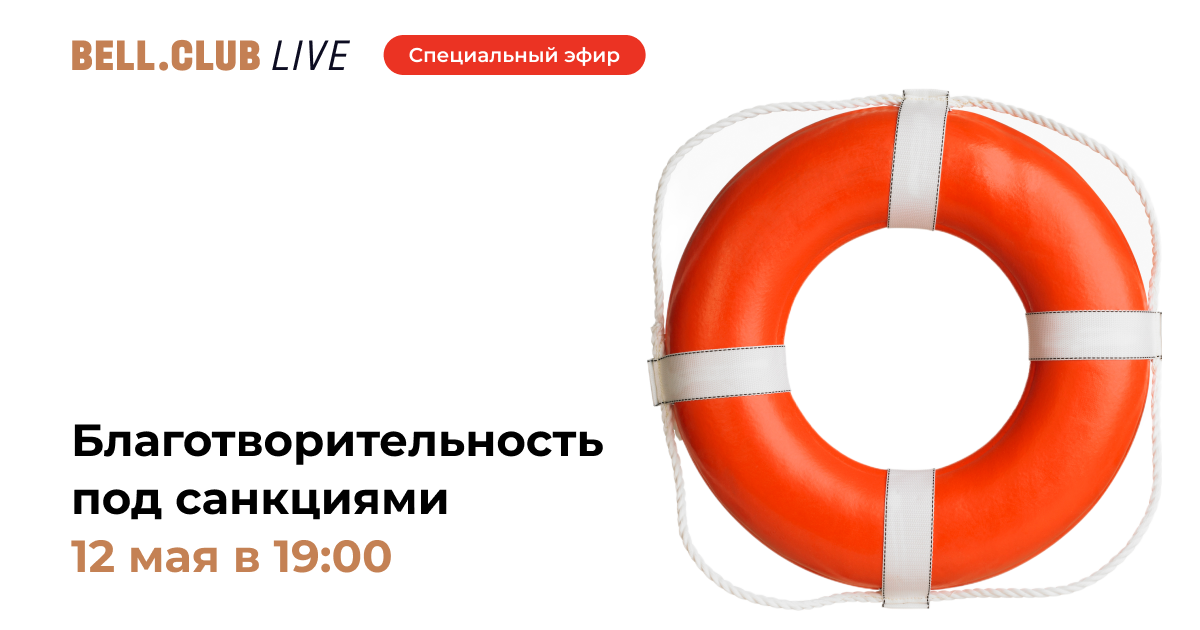
Charity under sanctions: Special broadcast
The sanctions imposed after the start of events in Ukraine dealt a heavy blow to Russian charitable funds and their wards. Foreign donors can no longer transfer money to Russia, the business suspended or closed charitable programs, many private donors are forced to save or left the country. At the same time, there are more and more people who need help.
On a special broadcast on the Bell.club Live channel, we will try to figure out what future is now waiting for the sphere of charity in Russia and how to help.
We discuss:
- What problems charity funds faced after February 24 and how this crisis differs from the previous ones;
- How the field of charity in Russia is arranged and what threatens the stop of the activities of NPOs;
- How to support funds in a situation where many companies are forced to reduce budgets for charity, and citizens' incomes are falling.
Speakers:
- Sofya Zhukova, Director of the Foundation "Need help"
- Ekaterina Shergova, Director of the Foundation "Give Life"
- Lida Moniava, founder of the House with a Lighthouse Foundation
Moderator: Natalya Kaminarskaya, director of the Blagosphere Center.
Viting to Moscow
Ukraine requested and received from the United States intelligence on the whereabouts of the Russian missile cruiser Moscow and the confirmation that it was Moscow, before the death of the ship, recognized CNN. The Russian Ministry of Defense reported only a fire on a cruiser with a detonation of ammunition. The Pentagon representative John Kirby said that the information provided was not a target designation, the US military did not know about the "intention of Ukraine to attack the ship" and was not involved in the decision -making process.
Kirby also said that the United States did not provide Ukraine with information about the location of the command of the Russian Armed Forces. On the eve of The New York Times wrote that it was the US data that allowed the Ukrainian side to purposefully attack the Russian headquarters.
Both episodes “raise the issue of the Red lines of Russia in the field of military support of Ukraine by the United States”, CNN indicates. At the end of April, Financial Times wrote that the death of “Moscow” was furious President Putin, and he lost interest in the diplomatic settlement of the conflict with Ukraine.
What else is happening
- By the end of April, the average price of a used car in Russia fell by 15% from the March peak. Demand in the sector is reduced more than 3 million rubles, and especially for European -made cars, for which problems with spare parts are likely. Since the beginning of the year, a used car has risen in price by an average of 17%, which almost corresponds to official inflation.
- The dollar is growing to almost all world currencies after increasing the Fed’s rate and the collapse of the shares on the eve. Now the dollar is almost the only simple protective asset, Bloomberg experts say.
- The prosecutor’s office wants to withdraw $ 750 million from the Magomedov brothers received from the sale of the Novorossiysk port, citing the illegal income of Magomedov Sr. when the Senator was when he was. The amount is unprecedented for Russia, writes Kommersant.
- The Chelsea football club Roman Abramovich is close to sale, the buyer is a consortium led by the ex-president of Guggenheim Partners, the American billionaire Todd Beli, Bloomberg found out . The amount is unknown, but it will obviously surpass the previous Manchester United record, for which more than 700 million pounds paid in 2005.
Support The Bell
Important update! Now you can support The Bell, even if you are not in Russia, from a foreign bank card or from your PayPal account.
The war completely changed our life. About its consequences for each of us, we write online from February 24. We never took money for content from readers, believing that we can earn our own. Our income was formed due to advertising, events Bell.club and educational programs in School. But now this business model, like much more in the economy, has collapsed.
In today's situation, we fundamentally do not want to make our daily newsletters and the site paid, since we believe that the value of unbiased information is now great than ever. But to continue the work, The Bell needs your participation.