Date
Author
Юлия Вымятнина декан факультета экономики Европейского университета в Петербурге
Source

Preserved copy
Translated material
Why do stores have gaskets, sugar and buckwheat again?
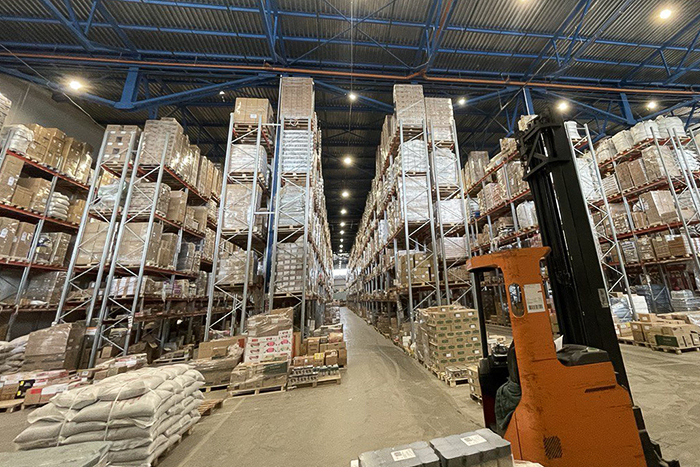
Why are there any imported gaskets, sugar and buckwheat in stores again, although everyone talked about deficiency?
In March 2022, sugar, buckwheat and personal hygiene products disappeared from Russian stores. Now the goods, including imported ones, have returned to regiments. “Paper” talked with economists and retailers and tells whether the Russians should wait for a new shortage and what will happen to prices.
I see that some products in stores are cheaper. Is it for a long time? ↓
After a sharp rise in prices, prices in Russia slowed down a little, follows from the data of Rosstat and the Central Bank . So, prices from 7 to 13 May increase by 0.05 % - this is half as much as a week earlier. Some of the products, including beets, cabbage, cucumbers and tomatoes, are cheaper.
Experts say : price increases could slow down due to strengthening the ruble. It occurred thanks to the actions of the authorities (for example, because the Central Bank limited the ability to remove the currency and transfer it abroad). But this applies only to imported goods, the deliveries of which were not violated.
Another reason is the reduction in demand after the March excitement, Julia Okryatnina, the dean of the faculty of economics of the European University in St. Petersburg, told Paper .
- When consumer excitement decreased, and the stocks of goods remained, it may be a good idea to reduce prices to stimulate sales among those who were not ready to overpay. In addition, sellers raised prices from fears of future failures in supplies. Over the past months, they could make sure that at least part of the supplies are saved.
At the same time, the prices in stores are still high. “The current rate of food price is maximum since the beginning of 2015 and significantly higher than the previous year,” the Bank of Russia says . Smolny predicts an increase in food prices in St. Petersburg to 24 % this year.
Why are gaskets, buckwheat and sugar disappear from the shelves, but now everything is in order? ↓
In March 2022, a number of goods disappeared from the shelves of supermarkets throughout Russia, including in St. Petersburg, from sugar and buckwheat to hygienic gaskets and tampons. This happened due to exciting demand, experts surveyed by “paper” say.
Sugar and buckwheat. The volumes of sugar and buckwheat produced in Russia are sufficient to provide domestic consumption, but people buy them in every crisis. In March of 2022, the retailers even had to introduce restrictions on the sale of sugar and cereals in one hand.
Alexander Myshinsky, General Director of Real Madrid, told Paper that sugar in St. Petersburg was bought so quickly that the plants did not have time to pack new parties. For this reason, some retailers themselves launched packing production.
People have formed stocks and now buy sugar much less often. “In the second half of April we have sales of sugar are one and a half times less than last year,” said Myshinsky. Other retailers are talking about a similar decline in demand.
Gaskets and tampons. The Russians, against the backdrop of a crisis, traditionally buy hygiene products, as these are the first necessities with a long shelf life. However, in the spring of 2022, the situation was also affected by the fact that large manufacturers of Procter & Gamble and Johnson & Johnson announced the restriction of work in Russia.
Now gaskets and tampons are again on the shelves, but, most likely, these are old reserves. How quickly they end, it depends on a particular store. In March, the Ministry of Industry and Trade stated that the stock of hygiene items in Russia would be enough for three months. Retheilers also said that usually the stocks of non -food goods in networks are designed for up to 90 days.
Probably, the old reserves will be enough until the end of June, because at the end of March, gaskets and tampons from abroad were still imported to Russia. Forbes wrote about this with reference to sources in two large retail chains. Real Madrid also reports that the last parish of gaskets from Hungary dates from March 25.
It turns out that there will be no more deficiency? ↓
Not really. The acute phase passed, but as soon as the reserves of foreign goods end, Russia is waiting for a new wave of the grocery crisis, said Igor Pletnev, the managing partner of the consulting company Transformation Partners and the ex-gender of Dixie. Reason: The logistics chains that existed before February 24 have been destroyed, it may take several months to create new months.
Due to hostilities in Ukraine and sanctions, the air traffic was interrupted by Russia with "unfriendly" countries. Large companies engaged in sea container transportation (for example, the Swiss Mediterranean Shipping Company and the French CMA CGM) stopped receiving orders for the delivery of goods to Russia, with trains and cars there are also problems. Now companies are looking for how to deliver goods to Russia in other ways - for example, through third countries: Turkey, Georgia, Kazakhstan, Uzbekistan and others.
In the company X5 IMPORT, which is delivered to the X5 Group (Pyaterochka, Perekrestok), they say that it is easy to buy goods abroad, but it is still difficult to ensure the stability of supplies to Russia due to constantly changing conditions.
- It doesn’t matter if grapes have been coming from India or four days from Uzbekistan - it is important that on Thursday it is in the distribution center and be fresh. And the main difficulty now is that the stability of supplies can be violated.
According to Alexander Myshinsky, CEO of Real Madrid, many foreign suppliers are working on the creation of new supply routes, but so far they are not openly share information about this, fearing sanctions. In turn, Russian companies open offices in Armenia, Kazakhstan, Uzbekistan and other countries to work with foreign partners.
In addition, the Russian authorities allowed parallel imports - that is, they approved the import of some goods without the permission of the copyright holder. The list did not get food, alcohol and tobacco, but hygiene and perfumes included. This was done , including in order to solve the problem of deficit in the conditions of sanctions.
Economist Alexander Skorobogatov from HSE in St. Petersburg told Paper that, despite such support measures, the Russians in the coming months will still feel a break in trade ties, and the quality of their life will worsen. However, the catastrophic consequences, according to the economist, are not talking.
What will Russian stores look like? ↓
In short: it is expected that the crisis will affect large retail chains, as suppliers primarily ship the goods to them. All other market players may encounter a shortage, especially small stores at the house.
However, the assortment will change in all stores, experts surveyed by “paper” say. It will be reduced by about a third. New import -substituting products will appear: CoolCola from the Moscow Combine "Ochakovo", milk in soft packaging and grape juice instead of orange .
And the prices will still increase: what is not produced in Russia will rise in price due to a complex delivery route.
What else to read:
- How to save money now and what will happen to the ruble exchange rate? The economist answers .
- In St. Petersburg there are more empty apartments. Is it true that now the rent is cheaper, but the choice is richer?
Photo on the cover: Alexander Myshinsky