
Translated material
"This is a perverted form of democracy that Tokaev invented"
In Kazakhstan, a referendum was held on amendments to the Constitution. But many do not believe that they will change the country for the better. Report "Medusa"
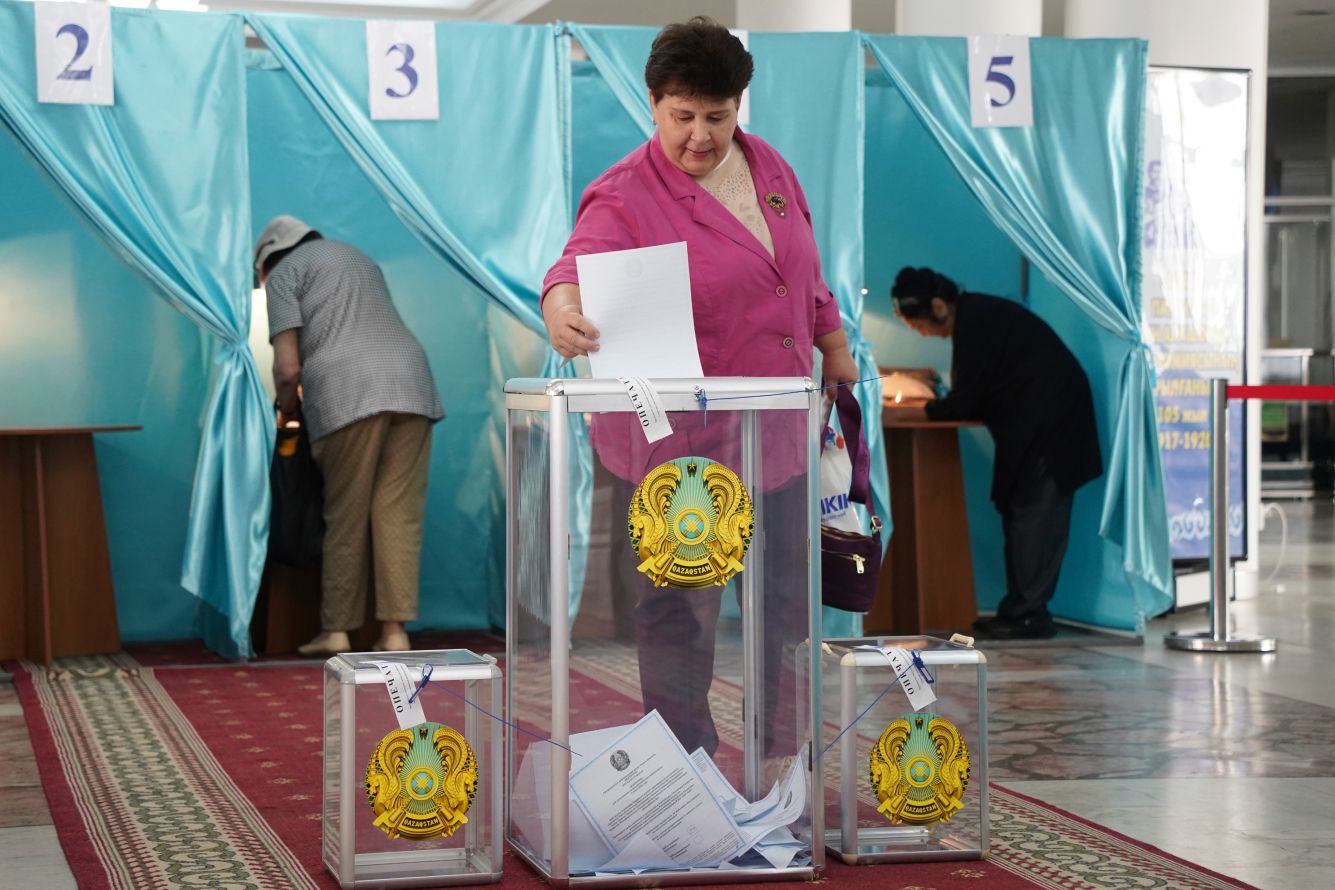
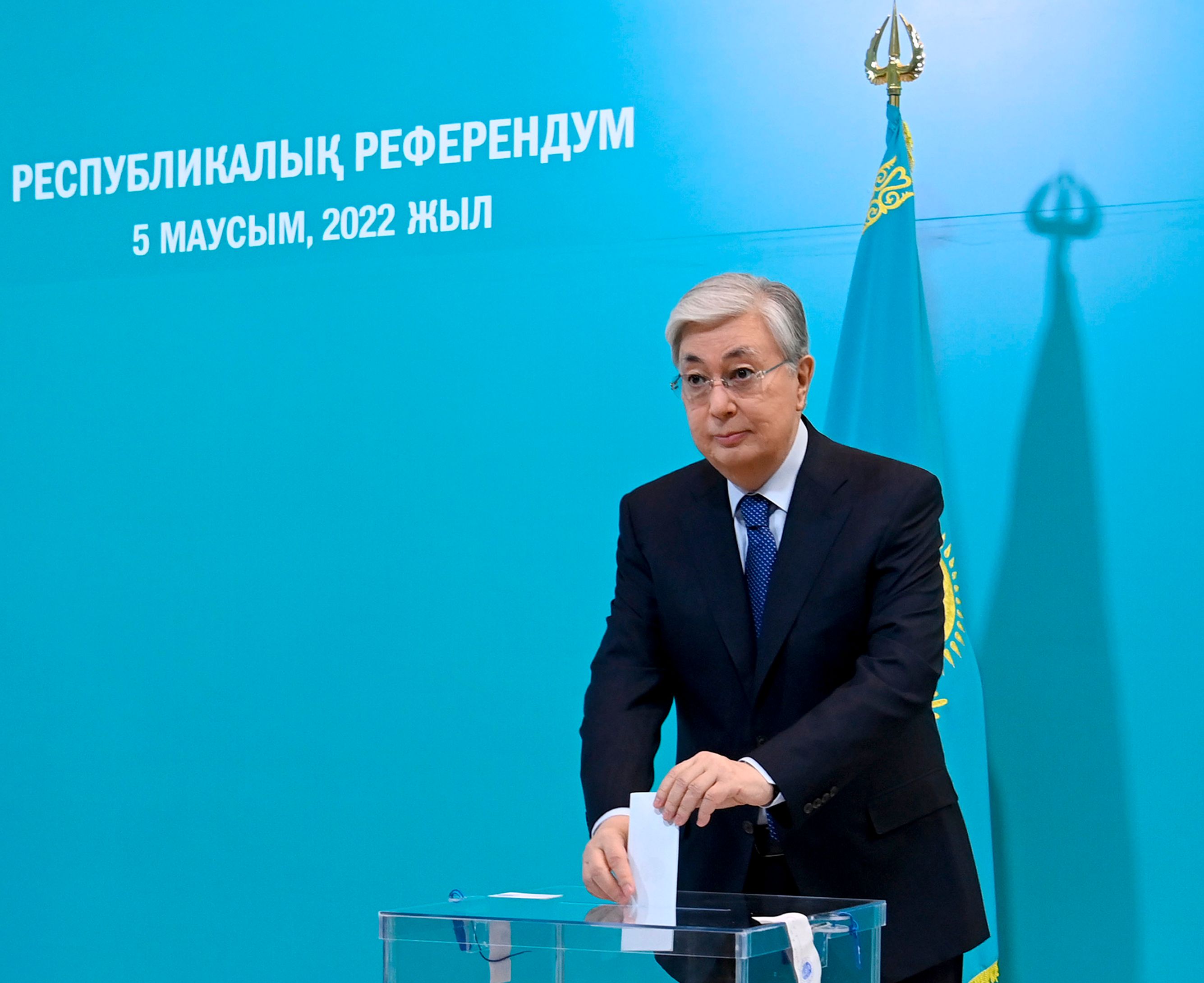
On June 5, a referendum was held in Kazakhstan on amendments to the Constitution, which was proposed by President Kasim-Zhomart Tokaev. According to the official authorities, these amendments are a serious step towards the democratization of Kazakhstan. But many political scientists, activists and ordinary residents of the country believe that the main goal of the referendum is to strengthen the power of the current president. Medusa says what happened in Kazakhstan after the high -profile January protests and the full removal of Nursultan Nazarbayev from participating in political processes, how the vote was carried out and what Kazakhstanis think about the situation in the country.
January protests
In the early days of January, in the city of Zhanaozen in the west of Kazakhstan , mass protests began, associated with a sharp increase in liquefied gas prices, which was the most popular and affordable gas fuel in this region. People in dozens of cities of Kazakhstan came out to support the inhabitants of Zhanaozen. Very soon, political slogans were added to economic slogans: people demanded the resignation of the government, the election of the Akims , opposed the first president of Kazakhstan Nursultan Nazarbayev, who spent 29 years in power.
Nazarbayev resigned in 2019, but retained a strong influence: only in November 2021 he resigned the powers of the ruling party of Kazakhstan, which he headed since 1999, and before the announcement of the results of the current referendum on the corrections to the Constitution, he retains lifelong right to head the Security Council as a chairman. In addition, relatives and close people held key posts in power and business structures.
Very soon, the authoritiesceased to control the situation, and the gained methodology for force suppression of protestswas powerless : thousands of people entered rallies, in some cities the protesters captured administrative buildings. The local authorities not ready for such a turn of events ineptly tried to build a dialogue with people, which only exacerbated the situation. In the city of Taldykorgan, the Almaty region, protesters under the singing of the anthem of Kazakhstandemolished the monument to Nursultan Nazarbayev, erected there in 2016.
In Almaty, where protests acquired the most massive character , citizens first accelerated with tear gas, and then armed people who attacked the police, took their weapons, captured the building of the national security committee (analogue of the Russian FSB) and stole the ammunition from the city. On January 5, armed people captured the building of the international airport. Police disappeared from the city streets, looting began in Almaty.
“Under my apartment there was a store of elite shoes, it was literally smashed, leaving the bare walls, and my neighbors and I were on duty in turn, made sure that the fire did not start in the store. It was very scary. We were simply left to their own devices, ”recalls a resident of Almaty named Botagoz in a conversation with a Medusa correspondent.
On January 5, the authorities announced a state of emergency, and two days later the President of Kazakhstan Kasym-Zhomart Tokaev made an appeal to the people, in which he stated that the “20 thousand terrorists” attacked the Almaty, the country was undergoing an anti-terrorist operation and that Kazakhstan turned to the heads of the CSTO state with a request to introduce a peacekeeping contingent “in order to provide assistance in the provision constitutional order. "
“Law enforcement agencies and the army is given an order to open fire to defeat without warning,” the president said. Tokaev’s words about the opening of fire were critically perceived by Kazakhstanis, since many civilians, including children , fell under the fire. According to official figures of the authorities of Kazakhstan, about 230 people died during the January events. The authorities have not yet made public a list of the dead.
Amendments to the Constitution and the project "New Kazakhstan"
While the protests were suppressed throughout the country, Tokaev resigned the government (it is noteworthy that the new government also included politicians from the former Cabinet of Ministers), reduced the prices of liquefied gas and socially significant products, and during the March Episten, he announced the construction of “New Kazakhstan” and proposed to make 56 amendments to the current Constitution, which, according to him, will significantly advance the country to the path to the path to the path to the path to the path to the path. democracy.
“Constitutional reform is aimed at a comprehensive transformation of the entire state model. The amendments are designed to fix the final transition from the super -presidential form of government to the Presidential Republic with an influential parliament and the accountable government, ”Tokaev said .
In particular, amendments are proposed to limit the powers of the president: he is forbidden to be in any political parties. The authorities want to present this as political impartiality, but in reality this does not limit his authority. Relatives of the President are forbidden to occupy political positions and leading posts in the quasi -state sector . It is also forbidden to be in political parties to judges of the Supreme and other courts, chairmen and members of the election commission, military personnel, national security officers and law enforcement officials. Previously, for civil servants, almost a prerequisite was membership in the party of the Nur Otan (“Light of the Fatherland”), the chairman of which was Nursultan Nazarbayev. By the way, after the January events, the party was renamed “Amanat” (“guarantee of ancestors”).
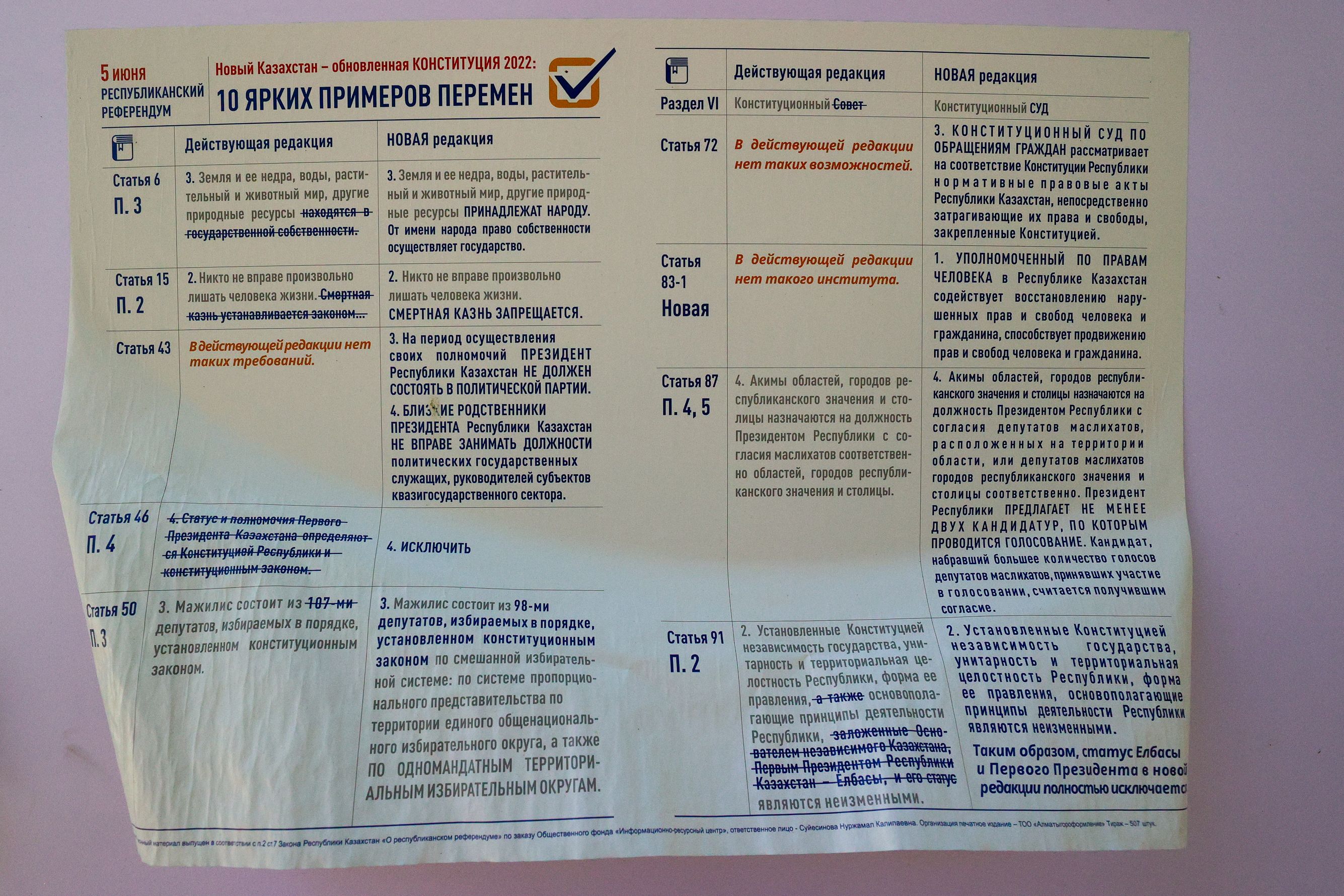
Also, amendments promise changes in the appointment of akims, which were previously appointed exclusively by the president. Now the akims will also be appointed president, but already with the consent of the deputies of local executive bodies - Maslikhats.
In addition, amendments are finally knocked out of the political arena of the first president of Kazakhstan, 81-year-old Nursultan Nazarbayev, who actually remained in power until January 2022. Amendments to the Constitution deprive Nazarbayev the status of "Elbasy" - "leader of the nation."
Finally, the amendments promise to simplify the conditions for the creation of political parties: the obligatory number of potential members of the new party decreased from twenty to five thousand people.
The authorities of Kazakhstan present this referendum as a serious step towards democratization , however, many experts of political scientists, for example, Dosym Satpaev , relate to the amendments skeptical and believe that under the current conditions the reform will be cosmetic and will not afford the foundations of Kazakhstani autocracy. “The feeling that many amendments are a package of the changes that society wishes, but with the previous filling,” Satpaev notes. Almatyan Aset Abishev, who participated in the January protests, says the Medusa correspondent:
Over the thirty years of Nazarbayev’s reign, the country has become mired in corruption and kumes, in parliament there are only loyal authorities who are not able to influence anything, and Kazakhstanis literally deleted from participation in political life. And now it’s just ridiculous to me when Tokaev declares political reforms that are going to spend together with the old team of officials who have already managed to negatively prove themselves in work: in recent decades they only did that they aggravated the political and economic situation in Kazakhstan.
Active civil society does not hide its attitude to amendments. On the eve of the elections, anonymous activists of the QAZAQ Koktemi movement (Kazakh Spring) have pasted leaflets around the city with explanations that the amendments to the constitution would not lead the country to anything good:
The amendments proposed by Tokayev are not enough to change the political system. They do not limit the powers of the president and do not increase the possibility of citizens' participation in the political life of the country. Offering a half -reform, the authorities only create the illusion of society participation in state affairs. We need not amendments to the Constitution - we need a new constitution. We will not achieve changes until we move from the superpowial republic to the parliamentary, until we get the election of Akims of all levels and the independence of the judicial system.
"This is my civic duty"
Voting on amendments to the Constitution began on June 5 at seven in the morning. The polling station at number 254, where the Medusa correspondent went first in the building of the National Library, in the very center of Almaty. Five months ago, three hundred meters from this place, the security forces dispersed the protesters with tear gas, and the looters broke ATMs and robbed road shoes. Now this is reminiscent of only traces of bullets on the granite pedestal of the Independence Monument .
Nothing happens on the site: members of the commission yawn and passing the sheets of paper on the table aimlessly, observers buried themselves in smartphones, rare voters throw ballots into the urn. In two hours of voting, they could barely cover the bottom of a transparent box.
A woman of about fifty enters the building, looking for her surname in the list of voters, examines the ballot for a long time, then for five minutes freezes at the information stand, which explains why Kazakhstanis should vote and what will change in the country after that. A sheet with a catchy heading “New Kazakhstan is an updated constitution is fixed on the stand. 10 vivid examples of change. "
Among the “vivid examples” it is mentioned that the death penalty is prohibited in the country (it was canceled in December 2021, but now “prohibited”) that now all natural resources will belong to the people (in the current version of the Constitution it is stated that the land and bowels are in state property) that the status of “Elbasy” is completely excluded.
Having read, the woman goes into the voting booth and after a minute throws a filled ballot into the urn.
- You see, I did not look at the president’s speeches, I did not delve into the amendments. But I think that it is still necessary to vote, this is my civic duty, ”the woman explains to the Medusa correspondent. Further “civil debt” is not advancing, the woman says that she is completely drawn at the stand and that she trusts her president.
Another voter, Saule Bozumbaeva, says that she came to the referendum so that the January events would not be repeated. And President Tokaev, according to her, is the same person who guarantees security to Kazakhstanis:
I live on Satpaev Street, where in January there was an epicenter of events. I no longer want to worry about what we had to endure. I hope that the authorities began to listen to people and that each of our voice is a brick in the construction of the building of democratic Kazakhstan. Of course, in five months you can not build democracy, but you can take a small step towards freedom.
At the polling station number 253, which is also located in the city center, was already more interesting. While the Medusa correspondent took pictures of the urn, three girls of about twenty -five years old with ballots in their hands approached her - they were already voted. One of them, low and talkative, is interested in:
Are you a journalist? Today my friends and I decided to vote. We specially ruined the ballots so that our voices could not steal. We are against the referendum, because no one will become better from these amendments, except for Tokaev himself.
"Perverted form of democracy"
Girls in the polling station almost a word repeated the opinion of the Kazakh political scientist Dimash Alzhanov, with whom the Medusa correspondent spoke the day before. Dimash openly calls the amendments by fiction and believes that the main goal of the referendum is not democratic reforms, but an attempt to strengthen the situation of Kasim-Zhomart Tokayev as president:
These amendments do not change the political system. They are exclusively superficial, technical, and the system of personal power that was founded by Nazarbayev will not change. Against the backdrop of dissatisfaction with the first president and the wave of hatred that was expressed in January events, Tokayev’s political regime tries to play on people's emotions and legitimize himself without Nazarbayev. Therefore, participating in this referendum, people simply legitimize Tokayev, which sounds especially wild after he gave the order to shoot people to defeat in January in January.
According to Alzhanov, the Kazakhstani people who disagree with the referendum on June 5 had several options for actions: to ignore the vote, come to the polling station and spoil the ballot or show their civic position and hold a picket against constitutional amendments.
“The elections in Kazakhstan are totally controlled by the state, and there is no way to protect their voice, except to reveal it on social networks or to speak out publicly,” Alzhanov explains.
Political activist Inga Imanbai is one of those who on the day of the referendum decided to openly speak out against. Her husband, oppositionist Zhanbolat Mamaia, was arrested in mid -March for insulting security forces and disseminating false information. Zhanbolat is one of many who were under pressure from the police after January events. On the day of the referendum, Inga put on a T -shirt with the image of her husband, ruined the ballot in her polling station and, together with several friends, went to the march to the Independence Monument:
We are definitely against this referendum. He distorts the fact of the election. This is a perverted form of democracy that Tokaev invented. I wrote so on the ballot: "Tokaev, if you want a new Kazakhstan, free the political prisoners!" How can the new Kazakhstan begin when the authorities still have not unveiled [names] of all those who died during the January events? And these are hundreds of people!
However, not all Kazakhstanis think as radically as Inga. Journalist Serikzhan Mauletbai tells the Medusa correspondent that he does not hope for radical changes in the country, but Kazakhstanis will not have another chance to influence the course of events in the country:
I go to vote out of principle so that my voice is not stolen. It is clear that in our country other changes in the near future are not expected, and most likely, I will support the amendments proposed by the President of Kazakhstan. I do not believe that this can lead to real democratic changes, but it will still be better than it is now. At least, at least a few self -nominates from among civil activists and opposition politicians can be carried out in parliament. And thus show the authorities that there is people, he sees and understands everything.
The referendum was attended by more than 68% of Kazakhstanis, that is, over eight million people. 77.18% of referendum participants (about 6.1 million citizens) voted for amendments. 18.66% (a little less than one and a half million people) opposed amendments. 2.58% of the ballots were invalid. This means that de facto amendments to the Constitution have already been adopted. In Almaty, which is considered the most politically active city in Kazakhstan, the lowest turnout of voters was recorded - 33%.
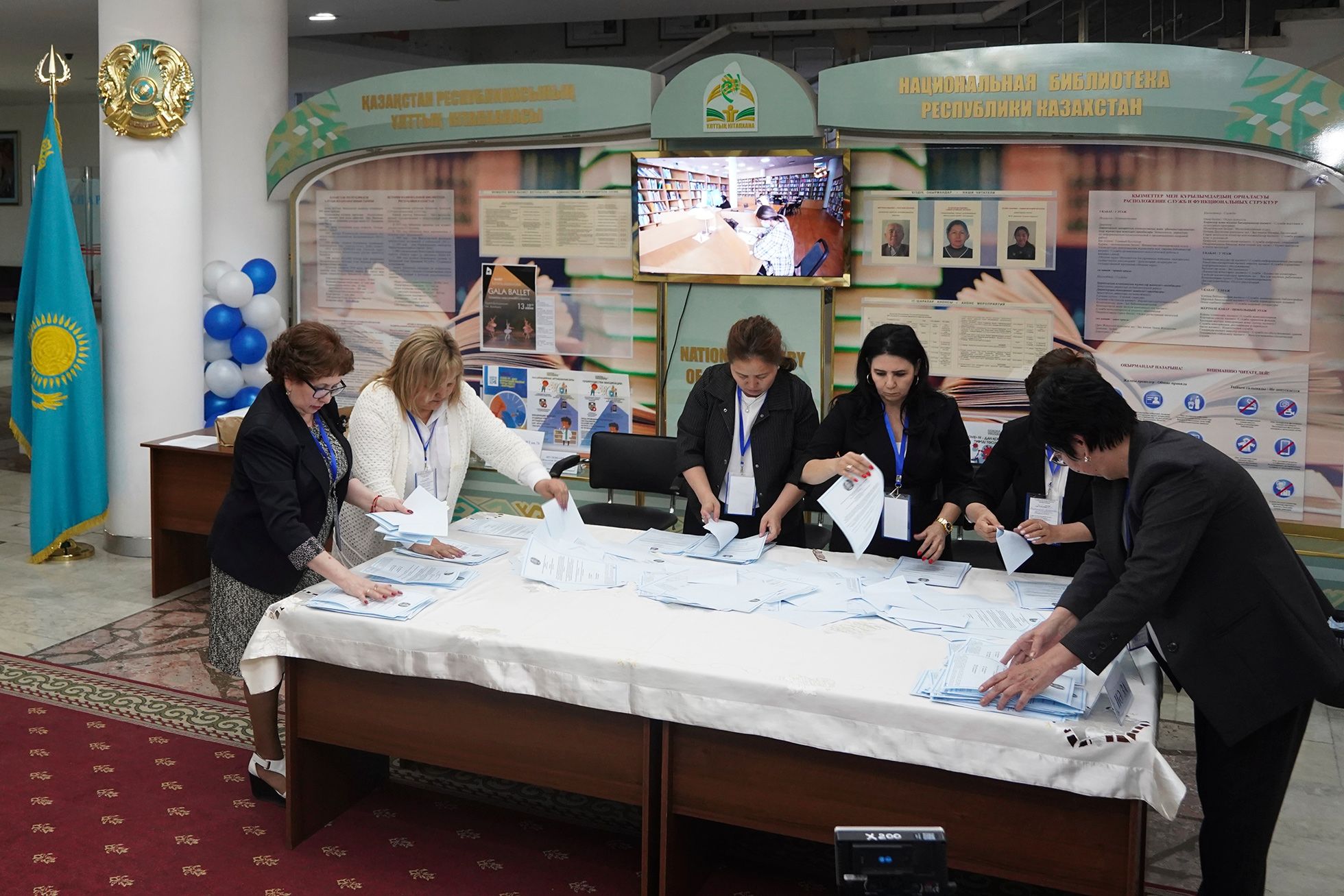
Already in the evening, when the Medusa correspondent was in a hurry to write this text home, one of the voters - a dented man of about sixty, said to him: “Whatever we choose here, all the same ***** [garbage] will turn out. Do you think this place is cursed? "
Dauren Amirkhan