
Translated material
Special operation against urban defenders
The authorities of St. Petersburg are preparing to defeat the historical city
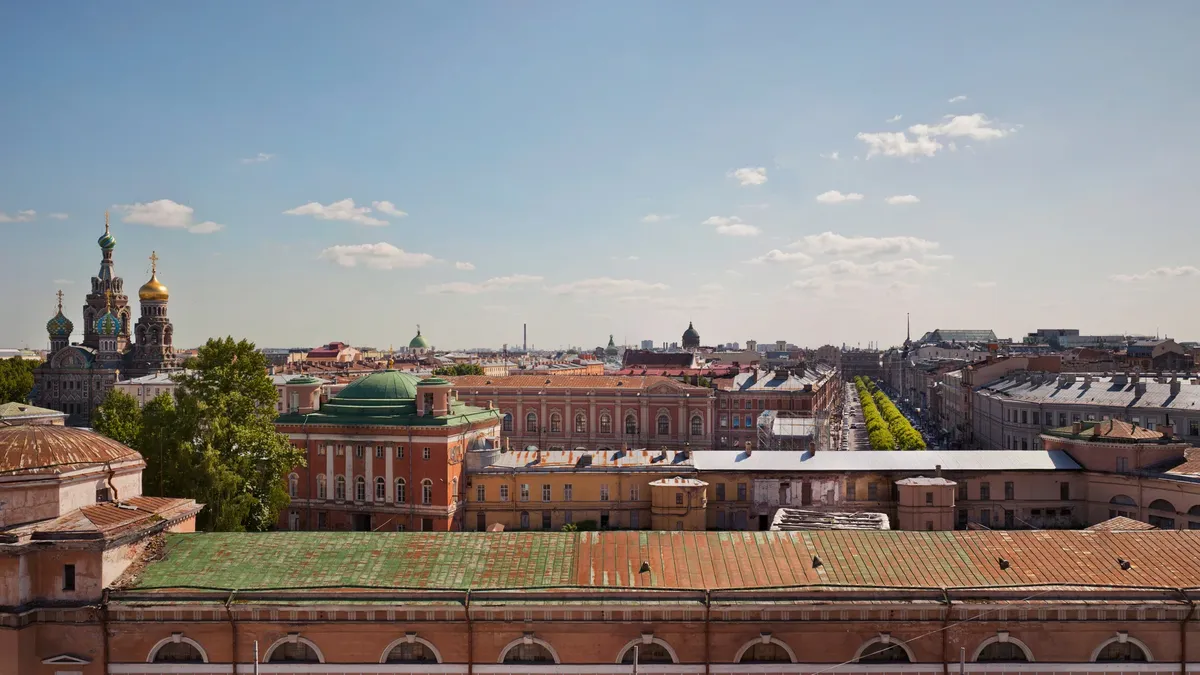
A large -scale special operation was carried out against the St. Petersburg urban protection movement - one of the most active in the country.
The leadership of the city branch of the All -Russian Society for the Protection of Monuments of History and Culture (VOOPIK) was completely replaced, and the most active city defenders from VOOPIK are generally excluded. The Council on Cultural Heritage under the city government was reformatted - almost all city defenders were replaced by people known for active participation in the removal of historical buildings from protection. At the same time, Smolny prepares amendments to the city law on the protection zones of cultural heritage objects that significantly change the principles of this protection - so that a considerable part of historical buildings may be under threat of demolition or radical perestroika. The new construction in these places promises fabulous profits - and it is not surprising that significant forces have been thrown into a special operation against urban defenders.
The city protection movement in St. Petersburg has a long history.
As the movement of civilian resistance, it was formed back in the late 80s of the last century-when a group of enthusiasts defended the Angletter hotel and Delvig’s house, which threatened destruction.
Among the achievements of city-defenders is a successful struggle against the attempt of Gazprom to build a 400-meter tower of Okhta-Center opposite the Smolny Council, preserving the Isaac's Cathedral as the State Museum, the prevention of an attempt to turn the stable department into a complex of "apartments", and maintaining many other historical buildings. Often-in a hard struggle with those who aimed at these buildings, trying to demolish them and build housing or business centers in their place. The land in the center of St. Petersburg is “golden”, there are practically no free places - it means that under the new development you need to “clean” the old one.
You can prevent demolition if the building is included in the list of monuments - then it should be preserved in its original form. And if the building is not a monument, but built until 1917 - it is considered historical, and it cannot be demolished. True, you can dismantle individual emergency structures, but with the obligatory preservation of the appearance. And it is impossible to rebuild a 4-story building in a 10-story residential complex.
Actually, there is a struggle around this. Some - an informal but united block of officials and developers - are ensuring that the obstacles for development were as little as possible. For this, it is necessary to refuse buildings that are planned by developers for demolition, or in the status of monuments, or in the status of “historical”.
The register of monuments of the building includes the KGIOP - the Committee for the Protection of the Monuments, one of the structures of Smolny. And often refuses this under far -fetched prepositions.
And the "age" of buildings establish other structures. And often they use fraudulent, in fact, reception: they declare buildings built allegedly after 1917, contrary to facts.
The city defenders are fighting against all this - including in the courts, proving the value of certain buildings, refuting the linden “examinations”, which should justify that these buildings do not need to protect these buildings, proving the fake of the construction of historical buildings. And often this struggle is successful: dozens of ships won on the account of city defenders (the author of the article and his representatives took part in many trials of this kind). At the same time, KGIOP, as a rule, finds himself on the opposite side of the barricade from us.
Think about it: the committee that the monuments must defend, in practice, often acts as a lawyer of developers, struggling against city -defenders and supporting decisions that will allow you to remove this or that building from protection. After which it can be immediately destroyed ...
Until recently, two organizations played an important role in the urban protection movement. This is the St. Petersburg branch of the VOOPIK, headed by historian Alexander Margolis, and the Cultural Heritage Council under the city government, which included many well -known city defenders, including Margolis.
Members of the VOLOOPIK (where many new, young and active people have entered the last decade), including the deputy chairman of the department, Alexander Kononov and members of the Presidium of the department Anna Kapitonova, Alexei Kovalev, Lyudmila Semykin and others, constantly took part in the courts, protecting historical buildings, and in the Council of Cultural Heritage, where these or other projects were discussed, often succeeded. To stop what threatened with historical Petersburg.
Of course, this caused serious heartburn from the block of officials and developers.
And then the “fruitful debut idea” ripened in KGIOP - to change the city law on zones of protection of cultural heritage objects. To protect from demolition not all buildings built before 1917, but only “valuable environmental development”. What to include in the list of “valuable buildings” - experts attracted by KGIOP will decide.
It is easy to predict the consequences of such a change - given how often KGIOP refuses to include buildings in the register of monuments, rejecting the examinations performed by recognized specialists, but recognizing the examination of those who suggest not to protect these monuments. It is highly likely to say that a considerable part of the buildings built before 1917 will not fall into the list of “valuables”. And it will be doomed.
The urban -haired people were mercilessly criticized the idea - in response, the “special operation” followed against them.
The “full -time” (receiving salary sitting in the office and leading the department of the department) was elected by the deputy chairman of the St. Petersburg VOOPIK Anton Ivanov. He is the owner of a restoration company, but in parallel, he leads the joint educational project VOOPIK and Smolny “Open City” - conducting excursions on monuments and a lecture on the historical places of St. Petersburg. The project receives considerable subsidies from the city budget - in 2021 they amounted to more than 21 million rubles. At the same time, Ivanov was considered a man in the Virgin, loyal resin, focused on cooperation with the city authorities, and not on disputes with its incorrect decisions.
For the time being, this did not particularly interfere with the work - the “city -protective” and “educational” directions got along inside the same organization. But in January 2022, according to Alexander Kononov, Ivanov refused to submit a financial report for 2021, and stopped going to meetings of the Presidium.
In order to get out of the impasse, at the initiative of Alexander Margolis, an extraordinary conference of the St. Petersburg Voeopik was held in February - and voted almost unanimously for the liberation of Ivanov from the post of “regular” deputy chairman. Ivanov did not come to the conference, did not recognize her results, and complained to the Central Council of VOOPIK. He requested the conference documents in St. Petersburg, received them - and did not make any complaints.
However, Ivanov refused to leave the post, moreover, according to Kononov, he disconnected all members of the Presidium of electronic passes into the office and literally “dug” in the building on Litein. He called the conference “an attempt to change management in the city department of VOOPIK”, saying that “we could receive an organization in St. Petersburg, which is not creative practical work, but only provocations, rallies, and political self-patient.” Under the “provocations”, he, apparently, had in mind the attempts of the city defenders to resist the destruction of historical buildings - caused great discontent among officials ...
And then it was February 24 - the beginning of another “special operation”. And a whole series of attacks on historical buildings on the principle of “special operation will write off everything” while society was paralyzed by what was happening (in April the author told about this in “Novaya Gazeta. Europe”).
And on May 19, the Presidium of the Central Council of VOOPIK gathered in Moscow (only Ivanov was from the Petersburgers there), and for unknown reasons (they were not officially reported), the VOOPIK was suspended, and appointed an extraordinary re -hearing conference on June 29.
The city defenders, like law -abiding people, obeyed. Meetings of the district branches of VOOPIK were supposed to be held (there are seven seven of them in St. Petersburg), where they were supposed to choose delegates to the city conference. It was then that scandals began.
Private security, hired by Ivanov, passed into the office (it was there that all the meetings were to be held) only by her own, allegedly “sent from the Central Council,” lists. At the same time, citizens who, as a rule, knew in large numbers, were in large numbers, and whom, according to the chairmen of the district departments (they keep records), no one accepted in Viropik.
The guard did not miss journalists at all, but not only them. The meeting of the Vasileostrovsky district department refused to miss Alexander Kononov (he, as the deputy chairman of the city department, had the right to participate in it with an advisory voice). And from the meeting in the Admiralty district department, the guards literally pushed the chairman of the department Anna Kapitonova.
At the meeting in the Central District Branch (the author of the article is registered in it) in the “List of the Central Council” there were as many as 78 people - despite the fact that only 46 people in this list (we all know each other).
The same thing was repeated (the author of this is a witness) at meetings in the Petrograd and Petrodvorets departments - people who never consisted in the lists of security were in the security lists, but assured that they “entered”, and that they were “notified” about this.
We managed to identify part of these citizens as employees of construction organizations or volunteers of the Open City. Including, among them was Igor Pasechnik-the general director of the NIIPI Special Reservation company, which more than once justified the withdrawal of historical buildings from security, after which these buildings were barbarously destroyed (examples-the House of Rogov on Zagorodnoye Prospekt, and the Manege of the Life Guards of the Finland Regiment on the 20th line of the Vasilyevsky Island).
Where did the “new people” come from - the riddle: the chairman of the Central Council of VOOPIK Artem Demidov (fully supporting Anton Ivanov) told reporters that in the last six months of the CS he did not accept anyone from St. Petersburg.
On June 24, members of the Presidium of the St. Petersburg branch of the VOOPIK wrote an appeal in which they called what was happening an attempt by the raider seizure of the department, saying that the purpose of this capture is a change of leadership and a change in the course of the St. Petersburg Viruopik.
In response to June 28, the Presidium of the Central Council, Vosopik, excluded from the organization Alexander Kononov, Anna Kapitonov, Alexei Kovalev (ex-deputy of the Zaks and one of the founders of the modern city-protective movement in St. Petersburg) and the author of the article. Allegedly for the "damage to the reputation of the VOOPIK." What, in addition to many years of protection of monuments, we could “cause damage to the reputation” of the Society for the Protection of these Monuments, it remains only to guess: the presidium was not only without our participation, but also without our notice of consideration of the issue ...
On June 29, before the start of the city conference, delegates, elected in five of the seven district branches - Vasileostrovsky, Central, Petrograd, Pushkinsky and Peterhof - publicly stated that they were refusing to participate in it. This automatically made the conference illegitimate - delegates should take part in it, at least four of the seven district cells.
But this did not prevent Ivanov and the company from holding a certain meeting (under the vigilant security of the police) - and then call it the conference.
Having announced the participation in the “conference” of delegates from two district branches, which (as mentioned above) announced the refusal of this participation: Petrograd and Peterhof.
On June 30, the results of the “conferences” were published - Anton Ivanov was declared the chairman of the city department, the members of the Presidium were announced, including the director of the State Hermitage, Mikhail Piotrovsky, the rector of the Semen Mikhailovsky Academy, the rector of the Polytechnic University Andrei Rudskoy and other persons, to city protection (with rare exceptions) having either a devoted exception) Attitude, or no. At the same time, Mikhail Milchik, one of the “persons”, Vosopik, the famous expert and defender of historical buildings - was “elected” without his knowledge to the Presidium, and immediately abandoned this “honor”.
But this was not limited.
On the evening of July 1, it became known that the Decree of the Government of St. Petersburg of June 24, 2022 (we note that the resolution was not published) changed the composition of the Council on Cultural Heritage.
The most active city defenders were excluded from the council - Alexander Margolis, Alexander Kononov, Alexei Kovalev and Julia Minutin.
But they included the mentioned Igor Pasechnik and Vladimir Trushkovsky (heading an organization that at one time recommended that they remove over a dozen monuments in the North Kolomna and New Holland in the region of security).
Of the people with a “city -protective” reputation in the council, only Milchik and director Alexander Sokurov remained in the council. But their voices are guaranteed to be lost against the background of numerous officials and characters dependent on them.
What next?
Courts: The decisions of the “conferences” will be disputed, the city defenders are not going to give the raiders the St. Petersburg branch of the VOOPIK. On June 27, my appeal was sent to the prosecutor’s office with a request to verify all the facts about violations when drawing up lists of participants and holding the district assemblies of Vnuopik. And the members of the St. Petersburg Council VOOPIK, elected in 2021 for a 5-year term (including the author of the article), announced the non-recognition of the results of the “conferences” and supposedly a new leadership ...
We note an important point: on April 27, when the Governor of St. Petersburg Alexander Beglov made a report on the work of the government, I asked him a direct question on behalf of the Yabloko faction: why, indulging in developers who seek to demolish the buildings for the subsequent construction of housing or business centers, the authorities are, first of all, KGIOP, or close their eyes to the frank falsification of construction years buildings, or reject professional examinations that substantiate the value of buildings and refuse to include them in the register of protected heritage? Does the administration intend to stop the practice when the KGIOP systematically acts not as a body of the protection of monuments, but as a lawyer of the developers? And he cited a number of specific addresses where this happens.
They answered me: all is not true, all our actions are legal, and in general, KGIOP tirelessly protects historical buildings.
However, exactly a month later, on May 27, having received a collective appeal (I signed it together with 55 St. Petersburg municipal deputies), the Investigative Committee of the Russian Federation opened a criminal case against the “unidentified officials of the KGIOP” under Article 286 of the Criminal Code of the Russian Federation - for promoting the removal of historical buildings from protection and their subsequent demolition. And he called exactly the same objects that I spoke about the governor.
Let's see how the investigation will end.
Last.
Under the threat today - a number of “iconic” buildings, and not only the pre -revolutionary, but also the Soviet period.
This is the house of Shagin on the Fontanka embankment, and the Basevich’s house on the Petrograd side, and the former Bans of Jimova in the same area, and the Lapin’s house on Riga Prospekt, and the medical unit of the Kalinin Plant on Odoevsky Street, and the BNII of the VNII of the Paper Industry on the 2nd Murinsky Prospekt, and others.
And if it changes, how is the Smolny (as higher) is trying to “pour” the principle of protection, dozens, or even hundreds of other buildings may be at risk.
It is not the question of which of the city defenders will be resolved what status and in what structure: what we did, do and will do to protect historical St. Petersburg, depends on our status in a particular organization.
The issue of what will happen to the historical Petersburg itself is being decided.