
Original Material
War and peace and cashback: How the Kremlin decimated Russia's financial advances
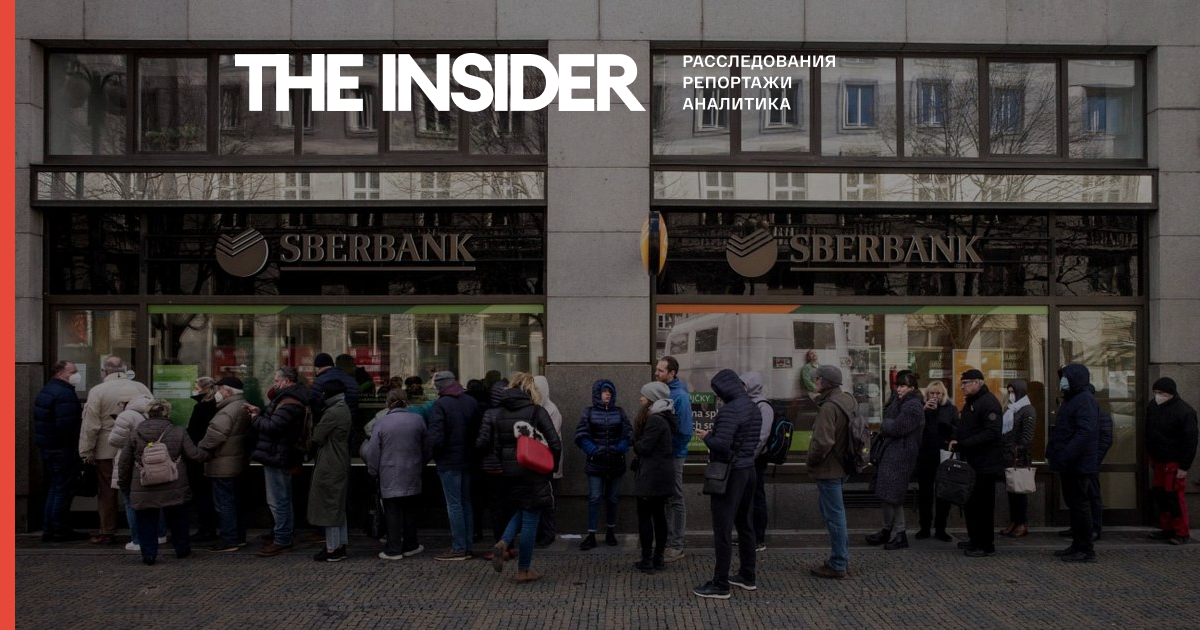
Back then, the Bank of Russia prioritized clearing the banking sector from rogue players. Over 600 credit institutions have been liquidated or stripped of their licenses since the beginning of Elvira Nabiullina’s tenure. Meanwhile, the regulator has been seeking to level out the playing field and foster competition for the remaining players. Primarily, this meant weakening the historically tight grasp of Sberbank on the market. The key factors included battling the so-called “payroll slavery” (that is, the state-owned bank controlled the majority of payroll card programs, which was an artificial barrier for client migration to other institutions) and the introduction of the FPS, which offered the opportunity for other banks to challenge Sberbank’s reign over card-to-card transfers.
Nabiullina's persistence must have spurred on the appetites of other banks. Thus, from 2016 to 2021, VTB upped the share of loans to individuals in its assets from 0.1% to 19%. To that end, the organization, led by Andrey Kostin (another 1990s official who worked at the Bank of Russia during Boris Yeltsin's first presidential term), acquired the Bank of Moscow to go into consumer banking, and finally, VTB 24. Uniting its assets under one brand, the bank started advancing digital services and topped Skolkovo’s 2020 banking digitalization rating.
Russia’s third bank by scope of assets, Gazprombank followed a similar trajectory. One thing is certain: the market evolved through competition, not administrative measures. Tinkoff’s advances in retail banking thanks to new client services pushed state-owned banks in the only right direction: toward creating analogs and exploring their strengths. As a result, Sberbank, VTB, and Gazprombank began offering both stock trading services and virtual mobile operators.
Two years ago, Nabiullina identified a new threat on the path of banking sector evolution: overly powerful ecosystems that could leave dangerously little room for competition. She was therefore at the cutting edge of banking regulation worldwide because the West has not yet resolved the challenge of overly potent ecosystems either. The situation in Russia provided perfect opportunities for experiments and practical problem-solving, as Sberbank, Tinkof, VTB, and Yandex found more and more areas for expansion.
However, February 24 made all the inroads null and void, pushing completely different challenges to the forefront. Many expected Nabiullina to step down when the war began: in particular, Bloomberg wrote early in May that the President himself refused to accept her resignation. However, even if there had been any conflicts, they ended in nothing. Nabiullina continued working in the new circumstances, trying to put out the raging fire. She stopped wearing brooches she had used as signals at press conferences and donned all-black outfits, not saying a word about the war but refraining from criticizing the government.
«Everything we've been building for 30 years has been destroyed»
The numerous transformations undergone by the banking industry after the annexation of Crimea made us lose sight of the many missed opportunities. The first such opportunity is Ukraine as a market. Despite the continued presence of Russian banks in Ukraine, their positions notably weakened, and neither Nabiullina nor their management had a say in the matter. Only Alfa-Bank, which was not sanctioned, survived the 2014 crisis – but only just barely. Gref admitted in 2017 that he was actively looking for ways to withdraw Sberbank from the neighboring state because Kyiv's restrictive policies had put his Ukrainian subsidiary at a disadvantage. In 2021, he pointed out that a viable solution was yet to present itself and that the issue remained painful. VTB’s subsidiary in Ukraine was deemed insolvent in 2018, with its assets accounting for 0.6% of the Ukrainian banking industry.
Sectoral EU sanctions against state-owned Russian banks also thwarted their development plans. No matter how hard bankers tried to deny the impact of restrictive measures on their business models, they still had to forget about international expansion. In 2014, Sberbank Europe ran a chain of nine subsidiary banks in eight countries of Central and Eastern Europe. By late 2021, the situation had gotten worse, with Sberbank still being present in eight countries but looking to sell some of its subsidiaries due to sanctions. Moreover, it had been forced to sell its Turkish subsidiary, DenizBank A. S.
Russian banking remained a thing in itself – advanced but unable to advance. Technology-intensive but unable to transform this into an international competitive edge. Looking back from 2022, their standing was good enough, but it's a matter of the past now.
The attack on Ukraine delivered a blow on the entire banking industry, and the blow was hard, almost on par with drawing the iron curtain: a ban on SWIFT transfers for the largest banks, the withdrawal of Visa and Mastercard, which made Russia-issued card useless abroad, the sanctions imposed on credit institution owners and executives, and Western organizations selling their Russian subsidiaries. Similarly, Russian institutions had to say goodbye to their scarce European subsidiaries. VTB lost control of Europe-based VTB Bank Europe SE back in April, and Sberbank decided to leave Europe in March because of the capital outflow. Further on, as Sberbank learned in June, keeping its Kazakh business was no longer an option.
Foreign banks did their best to withdraw from the toxic market with minimal damage and most likely regret having taken the risk of operating in Russia. Thus, Italian UniCredit looked for clients in India and China because Russian players weren't prepared to pay much, and the Italian top managers were concerned with mitigating sanctions risks. Vladimir Potanin’s Interros was named among the contenders, but his offer is yet to impress the Italians. Another challenge is the parent organization's desire to secure the right of buyback if the geopolitical situation takes a turn for the better.