
Translated material
In Seoul, they promised to resettle the tenants of the basement of the basement (you saw this in the film "Parasites")
During the flood in one of these apartments, a whole family died
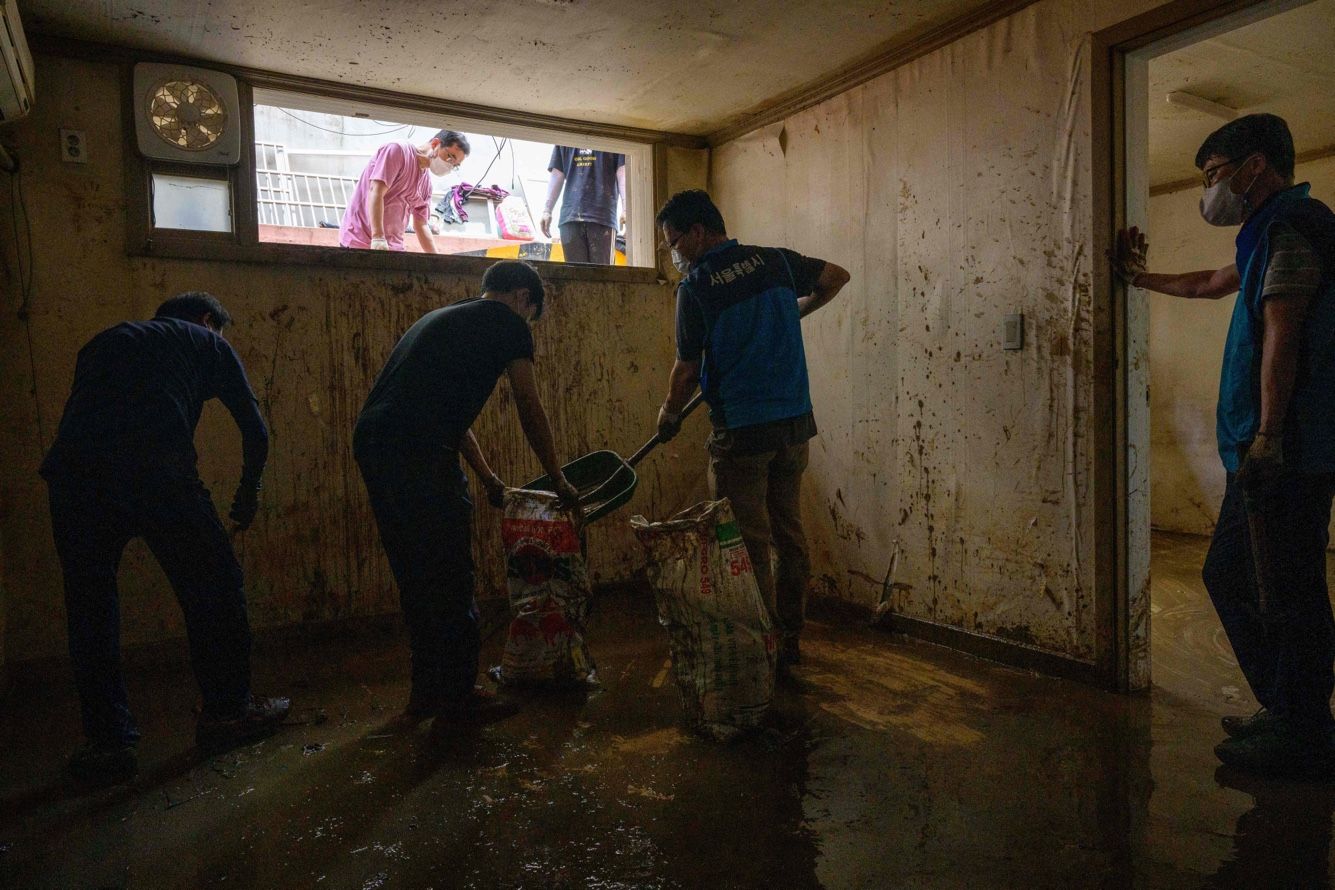
In South Korea, on August 8, the strongest rains in more than 100 years began. Thousands of houses were injured in Seoul, the streets and metro stations were flooded, hundreds of people were forced to leave their housing.
As a result of the flood, 13 people were killed , including a family who could not get out of her semi -basement apartment. The dead are a 13-year-old girl, her 40-year-old mother and aunt. Because of the rising water, they could not open the door of the apartment. The New York Times writes that women called to the rescue, but the neighbors failed to remove the window grilles. The Guardian notes that rescuers were also unable to help, and the bodies from the apartment were removed only after the police and the fire service completely drained the half -basement.
The apartment in which the whole family died was visited by President of South Korea Yun Sok Jer. “I don’t know why people were not evacuated in advance,” he said during the inspection. Eyewitnesses said that the apartment was flooded very quickly, in 10-15 minutes.
The Washington Post reports that this is not an isolated case. Many other residents of Seoul were also locked in their semi -basement apartments during the flood. Most managed to get out, but there is information that at least another person died.
The New York Times notes that people living in semi -basement apartments in Seoul annually are building small dams of sandbags around their houses before the rainy season. This time no one managed to prepare, because the danger of flooding of power warned only at 21:24. According to journalists, the family called to the rescue at about 20:40.
Semi -basement apartments, also known as Banzhikha, are in Seoul the most affordable housing for young and poor people. BBC News notes that as of 2020 in Seoul there were about 200 thousand such apartments, which is 5% of the total housing stock of the capital of South Korea. The family living in one of these apartments is described in the film "Parasites" awarded the Oscar.
Small semi-basement rooms, often unsuitable for life, began to be built in the 1970s during the aggravation of relations between North and South Korea. Fearing the possible escalation of the conflict, the authorities of South Korea updated construction standards, demanding to equip the basements in low -rise houses that could serve as a shelter in case of emergency. Initially, they were forbidden to lease, but during the housing crisis of the 1980s, the authorities allowed the use of semi-basement as housing, writes BBC News.
“Despite the darkness, musty and nonsense, it was the only available option that I could find. I agree that these are the conditions unsuitable for a person, but do we have other options? ” - said The Washington Post Student living in Seoul.
After the death of people in a flooded apartment, the Seoul authorities promised to withdraw the basement and semi-basement for 10-20 years from the housing stock. The government will help residents move to other houses, and the owners of these apartments will be required to redo them into non -residential premises.