
Translated material
Reverse evolution of manipulative dictatorship
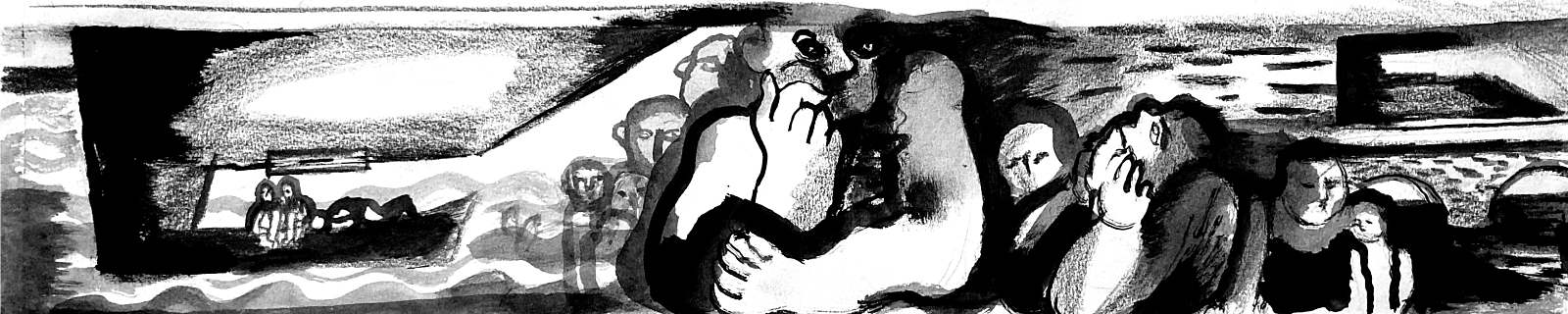
Putin goes to war
In his book “Dictators of Deception: a new face of tyranny in the 21st century”, which went out of the press six months before the Russian invasion of Ukraine, Daniel Traisman and Sergey Guriev are developing the concept of “manipulative dictatorship”, which came, as they say, in the 21st century, the classical dictatorship of fear and repressions of the 20th century. The Putin regime of the 2000s and the early 2010s served as an impetus and a key example for this theory. However, the sharp roll of the regime towards higher repressiveness at the turn of the 2010–2020s and the war, which further strengthened this trend, raised the question of the causes of the “reverse evolution” of manipulative dictatorship. In an article written specifically for Re: Russia, Daniel Traisman claims that the cause of this reverse evolution was not the conservatism and imperial ambitions of the Russian population, as is commonly believed, but, on the contrary, the continued modernization of society, with which Putin's manipulative dictatorship stopped copeing at some point.Putin's manipulative dictatorship: triumph and crisis
The political regime of Vladimir Putin has gone a long path of evolution since 2000, when he received an imperfect democracy with media magnates, dirty elections and a demoralized and polarized public as an inheritance from Boris Yeltsin. The first 12 years of his reign - including four years of the presidency of Dmitry Medvedev - were a gradual transformation of this heritage into information, or manipulative, dictatorship, “dictatorship dictatorship”.
Unlike the more familiar repressive dictatorships, “dictatorships of fear”, manipulative dictatorships are based mainly on informational manipulations than on repression and terror. Examples here are Singapore under Lee Kuan Yu and Hungary under Viktor Orban. In such systems, the regime does not kill and does not in prison thousands of its political opponents. Instead, he controls the media, even allowing his opponents to be published in niche publications. He holds regular elections, but secretly manages them to ensure a convincing victory. Political opposition is persecuted and marginalized here, but not prohibited completely. The leader of this regime creates an image of high competence and public ministry and seeks to achieve a high level of approval of citizens, avoiding aggressive rhetoric or obvious repression that could undermine this image. Manipulative dictators use corruption in the West and at international institutions to cooping allies and expanding their influence in the international arena.
Putin's team did all this very effectively. Since the end of 1999, for more than 20 years, its approval ratings have been kept above 60%. Putin became so popular that he did not need to harness the elections, although the elections that he held were still far from impeccable. State television represented the audience with a version of the world that was interesting and attractive to most spectators and flattered their national pride. Putin made friends among the Western elite, and his diplomats and spies created extensive networks abroad. Russia got the opportunity to hold the Big Eight summit in 2006 and the Winter Olympic Games in 2014.
However, over time, Putin lost faith in professionals who helped him build this sophisticated autocracy. Economic liberals who understood how markets work-from Andrei Illarionov to Alexei Kudrin-helped to manage the restoration of Russia and an oil boom in the 2000s. Agreeing with their calls for caution in the budget sphere, Putin, apparently, was tired of listening to their lectures on the need to respect the rights of ownership and keep in the depth of raiders. They lost his trust when, after the arrest of Khodorkovsky and the nationalization of his company, the markets went up sharply. Over the next three years, the cost of Russian shares has grown three times, and the flow of direct foreign investment has increased four times .
Political technologists who controlled parliament, elections and an internal public agenda - such as Gleb Pavlovsky and Vladislav Surkov - also lost Putin's confidence when they demonstrated excessive loyalty to Medvedev and could not predict and reproduce the mass protests of 2011-2012. After these protests, Putin began to tighten the nuts, pushing them to the side of the road and replacing them with more cynical techies like Sergei Kiriyenko for several years. After protests flashed in 2017 again, Putin increasingly began to resort to the help of special services and police. Over the next four years, increasing the threats of repression, the Kremlin actually transformed the manipulative dictatorship he had previously built into a more traditional “dictatorship of fear”.
Sunny divergence: modernization and intra -elite balance
Why did Putin lose faith in those sophisticated methods that worked so well for a long time? Partly because it became more and more difficult to control society. Returning to the Kremlin in 2012, Putin tried to freeze the processes of modernization, the result of which was protests against his return to the presidential chair. However, the company refused to remain in a frozen state. In 2012, the coverage of higher education was 76% (according to the Methodology of the World Bank), and by 2019 it grew to 86%. Despite the tightening of control over the Internet, its audience continued to grow. Over the past ten years, the share of those who use the Internet daily increased from 40 to 74% . By the end of 2021, 75% of the Russian population used YouTube.
All this extremely complicated the task of monopolizing the news space. In 2021, only 42% of respondents stated that their main source of information about events in the country is television. 45% replied that this role is played by Internet - social networks, blogs, messengers or news sites. A record number of people visited anti -government sites and blogs, such as the channel of Alexei Navalny on YouTube, which at the beginning of 2022 had 6.4 million subscribers.
Polls of the Levada Center indicate gradual progress in the field of liberal values. Answering the question of what rights and freedoms they consider most important, more and more Russians indicated freedom of speech (61% in 2021 compared to 34% in 2017), the right to receive information (39% compared with 25%) and freedom of peaceful demonstrations (26% compared with 13%). Even hostility in relation to the West, which increased sharply after the conflict around Crimea in 2014, has gone in recent years. Prior to the invasion of Ukraine, a positive attitude towards the United States and Europe had a tendency for growth for seven years, and by the end of 2021, the share of the citizens positively configured to the West has again exceeded the share of configured negatively.
It is very difficult to control modern society using manipulations. Nevertheless, the leaders of Singapore succeeded. One of the options for the response of the Russian regime to the modernization of society could be even more sophisticated manipulation. However, Putin chose the opposite approach. Political control has become more rude and frankly repressive.
This corresponded to the already marked trajectory of the evolution of the Kremlin personnel. As professionals in the field of economics and political technologists were marginalized, Putin’s environment increasingly consisted of representatives of the third key faction of his regime - security forces. And although Putin, of course, made the choice in their favor, this choice, in turn, increasingly influenced the worldview and management psychology of Putin. In daily mode, he listened to the argumentation of supporters of a tougher line in relation to the political opposition and much less often - those who doubted it or, at least, felt courageous enough to express such doubts.
The leaders of the law enforcement agencies, which is not surprising, considered the only effective methods to be those in which the security forces themselves specialized. Soft measures could work against the mistaken local troublemakers, but not against the focused subversive activity of foreign agents. And Putin's close assistants-Secretary of the Security Council Nikolai Patrushev and FSB director Alexander Bortnikov-is believed to convince his boss that demonstrations in Moscow were organized from abroad. The police pursuit of protests has become more tough .
Putin’s decision on the invasion of Ukraine was most likely not dictated by domestic political considerations. If he simply wanted to increase his rating, he could achieve this with a much lower risk, annexing the DPR and LPR within the boundaries, which at that time were controlled by pro -Russian forces. The Russian public was ready to rally around such “victories”, but public support for a real war in 2021 looked weak. And although later the war served as an excuse to strengthen internal repression, it was not necessary for this. Repression tended to expand for at least four years before the invasion.
Most likely, on the contrary, the tightening of domestic policy has created favorable conditions for planning foreign policy military adventures. These plans, in turn, were not subjected to critical discussion in the near Putin circle, which began to consist of almost one security forces, and as a result, his grandiose historical projects developed, more and more lost their connection with reality.
War and return to the dictatorship of fear
Foreign policy aggression is not typical of "dictators of deception." Autocrats of this type begin wars or military conflicts less often than "dictators of fear." The leaders of Malaysia did not invade Singapore, and the Hungarian leader Orban, although often complaining about historical injustice, did not send troops to return the territories that once related to Hungary. But Putin has nuclear weapons, which he often likes to remind. His appetite against risky military adventures grew, because - from Georgia to Crimea and Syria - the decisive use of force seemed to lead him to the desired result.
The period of intensive confrontation with the West at the end of 2021 and the first weeks followed by Russia's invasion of Ukraine designated the possibilities of further movement of the Russian regime from a hybrid model based on fear, to classical, based on repressions. The last remnants of the independent media - Echo of Moscow, the Rain TV channel, New Times and New Gazeta - were destroyed, and Western social networks, such as Facebook and Instagram, were blocked. The new law began to threaten fifteen years of prison to those who criticize a “special military operation” and call it a war. In the first two weeks after February 24, more than 13,000 protesters were detained. Opposition activists who still remained in Russia faced a choice-to leave (as Dmitry Gudkov and Lyubov Sobol did) or end up in prison (as Vladimir Kara-Murza and Andrei Pivovarov were there).
Is it that we see in Russia now, more than seven months after the invasion, a classic “dictatorship of fear”? In some respects, the parallels seem obvious. As already noted, all independent media were suppressed, and the Kremlin no longer pretends to suffer a political opposition. Although Putin sometimes adheres to the euphemical rhetoric of the “normality”, calling the war “special military operation” and assuring the public that “everything is going according to plan”, in other cases he splashes aggressive threats to the opposition, as it was in his call to the Russians to spit out “traitors ... like a flush that accidentally flew into his mouth”. The public talk shows on state television, which before the invasion were not an oasis of civilization, now look like a competition, which of the participants is more shocking the audience with the cruelty and aggressiveness of their proposals. The police began to pursue not only political activists, but also a much wider circle of people , trying to instill fear in all who are trying or deciding to protest.
And yet, in other respects, Russia after the start of the war seems to be a continuation of Russia of the last four years that preceded it. According to the Memorial human rights center, from 2015 to December 2021, the number of political prisoners in Russia increased from 36 to 83, as of September 2022, their number increased to 87 (in addition to them, many from the witnesses of Jehovah to the members of the forbidden Muslim groups-were in prison for their religious beliefs). Thousands of people quickly delay after any large protest, but most of them are released with a warning or fine. This is significantly different from many terrible dictators of the 20th century, when thousands or even millions of political prisoners languished for years in labor camps.
There were reports of a number of suspicious deaths in the highest business circles, which, perhaps, indicates the struggle between the groups of law enforcement agencies and organized crime for controlling the rent. The poisoning of Alexei Navalny and Vladimir Kara-Murza occurred before the last international events. Perhaps we do not have a complete picture, but judging by the available information, a surge of political killings has not yet been observed. However, it is impossible to notify the fears that the Russian regime is able to reach the level of violence characteristic of many dictators of the 20th century.
The atmosphere of fear grew before the start of the Ukrainian war. In the period from 2017 to the end of 2021, the share of Russian respondents who are afraid of the “return of mass repressions” increased from 21 to 47%. And in 2021, 84% of Russians stated that they would not publicly express their opinion about the upcoming parliamentary elections. Polls show a strange fall in fear of repression after invasion of Ukraine. The share of fear of “returning mass repressions” decreased from 47% in December 2021 to 8% in March 2022. It is unclear what this reflects: the unwillingness to frankly speak in wartime or a genuine revival of trust in the authorities.
Consequences and challenges
That the war accurately changed, and in particular its unsuccessful move, is the balance inside the pro -Kremlin elite. Now Putin is faced with indirect criticism: supporters of the tough line publicly condemn the insufficiently decisive conduct of hostilities. The persons of the Yastreb faction are the Chechen leader Ramzan Kadyrov and the founder of the Wagner PMC Evgeny Prigozhin. Both of them fell upon the highest Russian generals after the retreat from the city of Liman at the end of September. Some suggest that the pressure on this side, along with the reality of the successful occurrence of the Ukrainian army, became the decisive factor that made Putin contrary to his reluctance to declare “partial mobilization”.
Nevertheless, it is unclear how any elite group can exert pressure on Putin, otherwise by influencing the media flows with which he receives information and using his psychological sensitivity. The organization of the coup seems extremely unlikely, given the many competing law enforcement agencies created by Putin. And before the presidential election of 2024, no “constitutional” fracture point is assumed. Nationalist hawks, obviously, should be considered not as a real opposition, but only as a group that affects the agenda “roller” the possibility of certain decisions and overcoming certain taboos. For example, the more people discuss the use of tactical nuclear weapons, the less unthinkable it becomes.
The war sharply accelerated the outflow of human capital from Russia. After the outbreak of war, Russia survived two waves of flights of its own citizens. The first - immediately after the start of the war - does not have reliable statistics, and its realistic assessments make up from 100 to 200 thousand people. The second - after the declaration of “partial mobilization” - amounted to at least 250 thousand people , that is, almost as much as the Russian government intended to be drafted into the army. At the same time, as polls show , the level of education of those who left significantly exceeds the average Russian, and from the point of view of welfare, this is the most active consumer stratum with income levels many times higher than the average Russian.
Thus, the war spurred and strengthened the trend of recent years - the reverse movement towards the classical dictatorship of fear. The concomitant of this social effects, on the one hand, has become the most conservative and militaristic groups in the elites - the elite of demodernization. And on the other hand, the flight from the country of those who are the vanguard of its modernization. If in the 2010s the regime adhered to a dual strategy-pressure regarding the most politically active representatives of these groups and an attempt to cooping the rest, then the war became a lever of squeezing out of the country.
Описанная выше эволюция путинского режима подсказывает параллели между Россией и Венесуэлой при Уго Чавесе, а затем Николасе Мадуро. In both countries, a successful manipulative dictatorship could hardly cope with political challenges generated by continuing modernization - in particular, with protests organized by a highly educated, cosmopolitan part of the population. In both cases, the current president responded to this tightening repression and the expansion of the powers of security services. Доходы от продажи нефти и там и там поддерживали государство на плаву и позволяли платить зарплату полиции и военным. Both countries have suffered from Western sanctions that overwhelmed access to advanced technologies, something either accelerated the demoderenization of the economy (Venezuela), or threatens it with it (Russia). And mass emigration deprives both countries of the most educated and enterprising part of youth. Венесуэла Мадуро демонстрирует, что в таком состоянии, несмотря на катастрофическую экономическую и социальную деградацию, режимы могут существовать годами. Однако Мадуро и до него Чавес избежали войны, в то время как Путин, находящийся, по-видимому, в плену усвоенной им искаженной версии истории, подстрекаемый своими бескомпромиссными приспешниками и успокоенный ядерным арсеналом своей страны, вверг Россию в военную авантюру.