
Translated material
Race without weapons. Mobilization will provide the front with the right number of soldiers, but for them you will have to look for a materiel
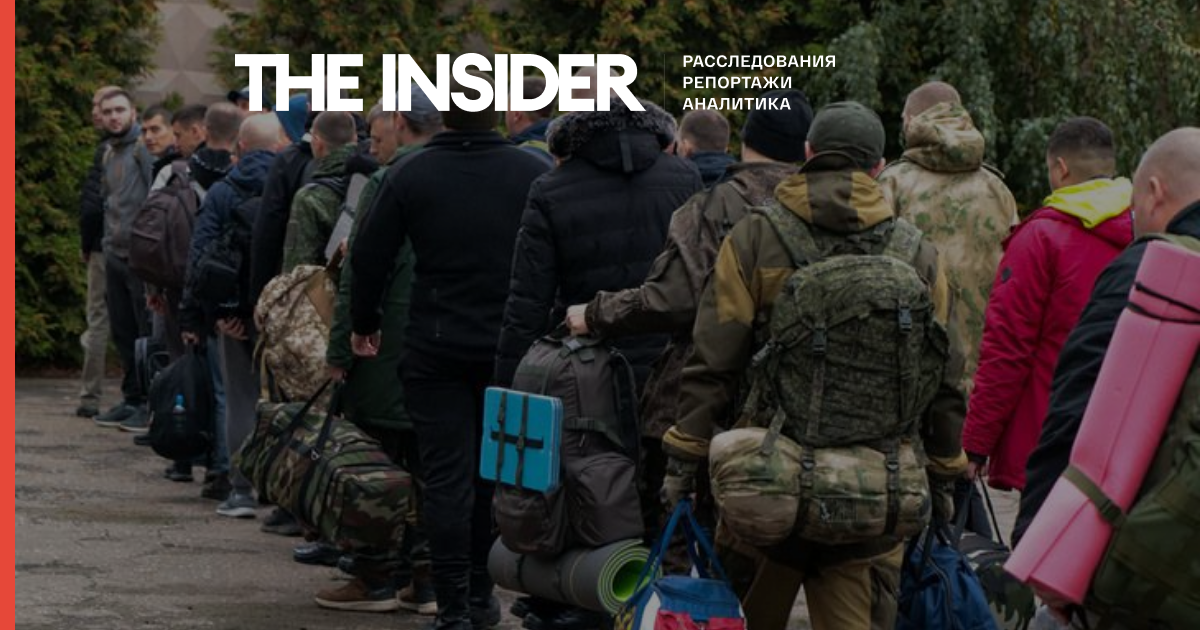
Race without weapons. Mobilization will provide the front with the right number of soldiers, but for them you will have to look for a materiel
11 October 2022David Handelman
Military expert
The Russian-Ukrainian war once again demonstrated that, despite the newfangled concepts and modern weapons, the old military truths are still true. In particular, the number of the army is still important. This truth should be correctly understood. This does not mean that who has more the army, he won - it would be too simple. This means that in order to complete the task, you must have a sufficient quantity for such a task, and not just quality. The saying of Marshal Jacques d'Etamp “God is always on the side of large battalions” does not cancel the proverbs “Hope for God, but do not flatter it.” And the saying of Suvorov “to fight not by number, but skill” also does not mean that the number does not matter - it means that the number still needs to be able to use.
The outfit of forces and funds required for the performance of a specific combat mission is calculated according to the standards adopted in each army, but in general it depends on two parameters: on the number of enemy and on the size of the territory. And according to both parameters, the Russian army did not use enough strength in this war. At the same time, it was clear in the spring that the Ukrainian armed forces in total (the Armed Forces, Teroboron and all the others) surpass by number the grouping of the invasion of the Russian army. It is because of this that all Russian problems are taking place in this war. They were faced with such a large enemy that they stained purely physically.
As you know, the operation was initially planned not as a purely military, but as a political and explorescence and propaganda: they say, after the first blow and the creation of “shock and trepid”, centralized administration of the Ukrainian army and the state will fall apart, and it will only remain to suppress focal defense and occupy the territory with the help of the fifth column. That is, it was expected that it was not really full to fight with all this large Ukrainian army as an army. And when I had to, it turned out that there was not enough strength.
Historically the main advantage, the advantage of the Russian and Soviet Army was the opportunity to throw huge masses of people and equipment to the front. All other problems are always inherent in the Russian army - logistics, communication, intelligence, interaction. They were, there are, and most likely they will still, because they lie in the character of the military machine itself. But at least they had a plus. Now they have these disadvantages, but they cannot use this plus, because they cannot mobilize huge masses that are historically familiar to the Russian army. There are no pluses - there are minuses. The equation does not converge.
When the Russian army stalled after the first throw, it became clear that without mass mobilization it simply did not have enough reserves to somehow decisively change the situation in its favor. But for political reasons, mobilization was delayed to the last.
Mobilization as improvisation
According to available estimates, Russians now use a maximum of 170 thousand people in Ukraine - both the Armed Forces of the Russian Federation itself and all other participating structures. For the front with a length of about 1300 km and for a quantitatively superior enemy, this is an impossible equation, and we see the results. The Ukrainian leadership perfectly understands that the size is important, therefore, it has carried out mass mobilization and prohibited the leave of men from the country for the following mobilizations. In general, Ukraine holds about a million people under a gun, of which about 700 thousand in the Armed Forces of Ukraine, part of the forces covers the northern borders, part in the Odessa region, some are on reserve, some are trained, but even those who are directly at the front are numerically superior to Russians, several times in the selected directions.
With such a shortage of personnel, the Russian army relied on superiority in firepower and aviation, and it carried out its slow advancements of the April -July 2022 period, focusing on a narrow section of large groups of receiver and reactive artillery, after the powerful fire influence of which the infantry and mechanized units slowly advanced forward and occupied the territory. But this method has developed itself, including because of Ukrainian shots on ammunition warehouses, and since the beginning of July, at the end of the operation in Severodonetsk and Lisichansk, there were practically no advancements, except for 2-3 km here and there in the Bakhmut and Peskov region.
Nevertheless, there was still no mobilization, Russia's political leadership continued to abandon it as an extremely unpopular step. A special military operation is something distant and limited, only professionals and volunteers participate there, ordinary people should support it from the sofa by the TV, this does not directly concern them. An announcement of mobilization is a breakdown and reformatting of the entire political-propaganda approach to war (including Putin’s promise on March 8 that reserves from reserve will not be called), and from this they fled from fire.
Mobilization announcement is a breakdown and reformatting of the entire political-propaganda approach to war
Until the fire finally caught up with the fire. If the non -passage of their troops could still be tolerated, then the successful attack of the Armed Forces raised the question by the edge. The Balaklaley-Izumsky operation showed what the Ukrainian army has forces and what it is no longer capable of theoretically, but practically: practice is a criterion of truth. Apparently, the military leadership brought to Putin that in this situation, either mobilization or folding of war - it is impossible to fight further. Therefore, mobilization was announced. All the political disadvantages of such a decision had to be swallowed.
The Soviet system of deployment of a huge reserve army in the event of a large war has long been broken, because the RF Armed Forces were not prepared for such a war, unlike the Soviet Army. Reception of the ascribed composition from the reserve, cropped divisions, the mobilization deployment of the army as such - this either does not exist at all, or the miserable remnants of the former luxury remained. The Soviet system does not need to be idealized in quality, but at least by quantity it answered the tasks, and the current system did not. The Armed Forces of the Russian Federation relied on parts of constant readiness and for short operations. Therefore, going mobilization is, in fact, improvisation. Neither the creation in 2015 of the mobilization human reserve in addition to the general human resource, nor the creation of the country's combat army reserve (BARS) in 2021 did not manage to expand into something really mass, the leopard-this is even a few tens of thousands of people on paper. And now we are talking about hundreds of thousands, in the future - about millions.
What are the mobilization needs of Russia
As mentioned above, the calculation of forces and funds is dictated by the standards accepted in each army. First of all, there is a difference between standards for defense and standards for the offensive.
According to Russian standards, the motorized rifle battalion defends a plot of 3-5 km along the front and 3 km in depth. In mobile defense, up to 10 km on the front is possible, but the RF Armed Forces did not show the skills of mobile defense, so we will remain with the traditional standard of 5 km. Based on the length of the front, 1300 km requires 260 battalions for defense. Of course, this is not a real comprehensive calculation, not all kilometers are the same, there are more and less threatened directions, plain, wooded and built -in terrain, rivers, etc., but we do not replace the main operational management of the General Staff of the Russian Federation with detailed maps and tables - we demonstrate the order of values, and not accurate calculation. Battalion tactical groups of the Armed Forces of the Russian Federation usually have 600-800 personnel; Since here we are talking about desirable, we take 800. Total 260 battalions - this is 208 thousand people. The standards imply that the battalion in defense at 5 km is not only people, but also all the firing funds, armored vehicles, etc., laid down by the battalion in the state, but we will return to this later, here is only about personnel.
In order for these 208 thousand people to be born, and not sit on the first line continuously, you need at least another quarter for rotation, that is, another 52 thousand people. In addition, operational reserves are needed for counterattacks, the second echelons, artillery and other parts of army and front -line subordination, etc. This is at least 100 thousand people. All these are only military units; In addition to them, numerous divisions and parts of the support are needed: material and technical, engineering, medical support, communication, military police, commandant's office, headquarters, protection of the rear, checkpoint, etc., etc., for such a group, this is also a minimum of 100 thousand people.
In addition to combat units, the army needs numerous parts of support
In total, we counted 460 thousand people. This is excluding pre -allocated reserves to replenish losses. In a good way, such reserves should be immediately laid at least 40 thousand only in the nearest stage. That is only 500 thousand. With such a total amount of personnel, it is possible to sharply increase operational densities at the front and reduce or eliminate weak areas, due to which there was a breakthrough of the Armed Forces in the Kharkov direction. That is, for the next offensive of the Ukrainian army in such conditions you will need more strength.
If we are not talking about defense, but about the offensive, then the Russian standard for the battalion in the offensive is 2 km along the front, and 1 km on the breakthrough area. These forces theoretically can conduct the offensive: for example, only rotational 52 thousand people are already 65 battalion tactical groups of 800 people. With the means of strengthening army and frontal submission, this is a very significant force, about half of the number of BTGs concentrated among the borders of Ukraine to the beginning of the war. Of course, they should be introduced into a breakthrough in narrow areas, and not scatter in several operational directions, as then. But this is theoretically, and the practical possibility depends on two factors: for an effective advance, a higher level of preparation and combat coordination is needed than for defense, and it is more difficult to achieve this with mobilized; In addition, these offensive groups should be fully equipped with equipment and weapons, and not just personnel, and now this is a much more difficult task than at the beginning of the war.
In general, these 260 thousand people on the first line and on rotation, which we counted conditionally, are 325 BTG with sufficiently mattress, despite the fact that in the RF Armed Forces as a whole as of August 2021 there were only 168 BTGs of constant readiness, of which about two -thirds were thrown to the war at the first stage. That is, the land forces of the Armed Forces of the Russian Federation initially had to be twice as much as possible in order to wage war, and then, perhaps, the results would be different. And now we see what we see.
The land forces of the Armed Forces of the Russian Federation were initially twice as much as possible
Total, if 300 thousand people are really mobilizing in addition to 170 thousand, then this is, in principle, the distance is small in principle - from 470 thousand to 500 thousand, the distance is small. Under these additional conditions, this may be enough for the onset. But the continuation of the war is a continuation of losses, and the Armed Forces are also not going to stop, so it is likely that they will not stop at 300 thousand and will mobilize further.
Ideally, of course, for such a front it is not 500 thousand, but a million people, including shock tank armies, so that there is no constraint in anything, but if a million soldiers can be technically recruited, then new tank armies are now unrealistic. And for half a million they have become embarrassed now, as we see.
What to do with mobilized soldiers
There are additional parameters that should be taken into account. Partly we touched them above, then expand in more detail.
Firstly, just as not all yogurts are equally useful, not all soldiers. It is clear that the mobilized are inferior in quality to personnel, and their short preparation does not allow us to hope that they will catch up with personnel. However, this is what is, and the question is not “good or bad”, but “bad or nobody”. In 1941, the Red Red Army was mostly destroyed, and mobilized fought further. Yes, all the differences are known: the Great Patriotic War against the invading evil enemy is not that a special military operation in terms of motivation, in addition, is now a different political system, in general another life, other ideology, etc. But nevertheless, the mobilized ones can also fight: who will not die right away, he will become more experienced and skilled. In the ranks of the Armed Forces of Ukraine, many mobilized without previous experience are fighting, experience for survivors is a profit.
Experience for survivors is a profit
If at the first stage of the Russian mobilized they will use existing units to replenish existing units, in which now there are often half and less personnel, this will be the most correct use, since they learn from more experienced comrades. In the new units and units, knocked out completely from mobilized ones, it will be worse in this regard. A separate question is the command staff for new parts. This will also be resolved according to the methods of the Great Patriotic War: the part is mobilized from the reserve, some will make up the accelerated issues of military schools, some will be scrapped from the army throughout the country, and there you can reach the production from soldiers to officers after brief wartime courses or field appointments.
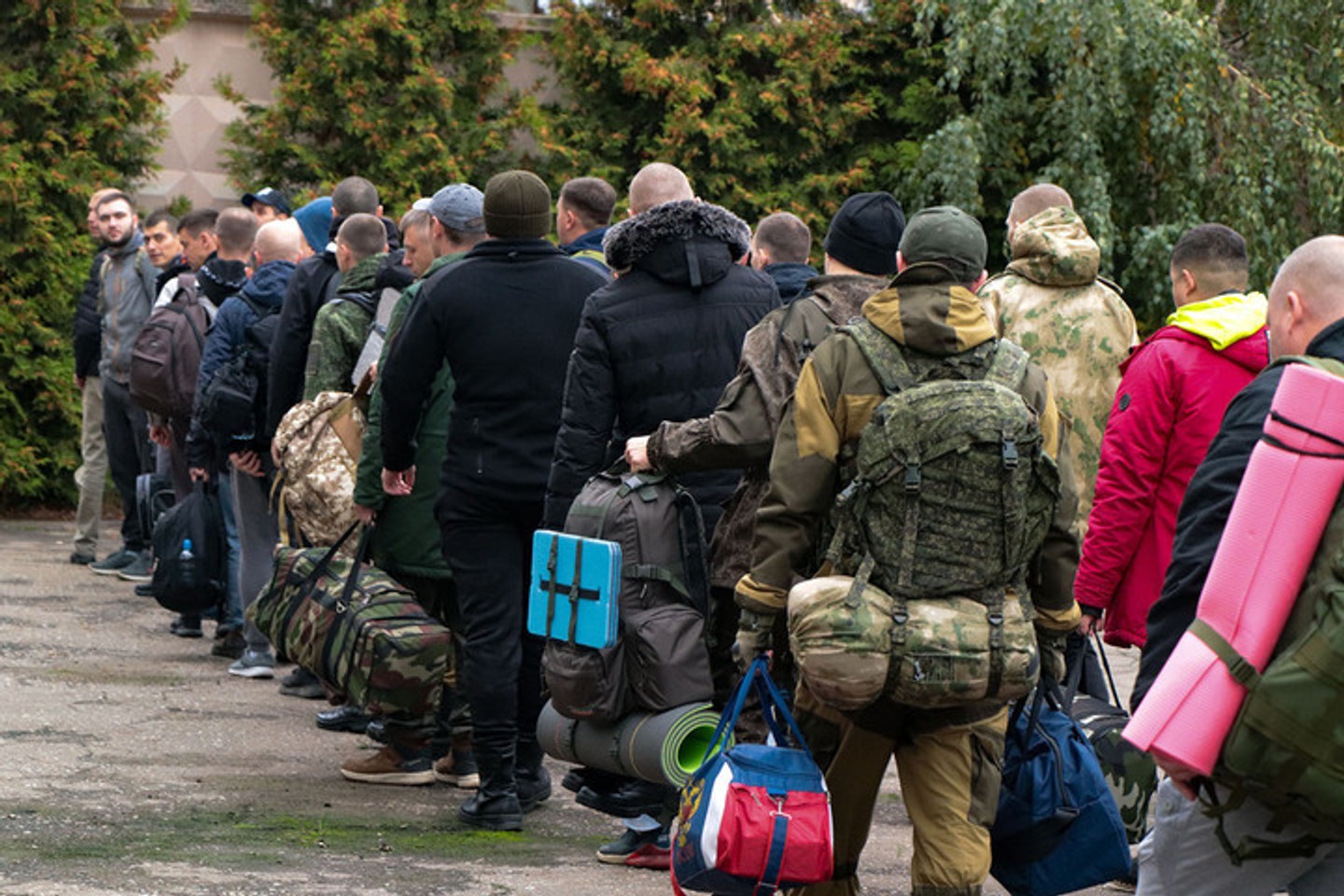
Secondly, even if the personnel are gained as much as necessary, it is required to arm and equip it. Problems with uniforms, personal weapons and personal equipment of the mobilized have already shown so clearly that the State Duma Committee appointed a hearing, despite the fact that for Russian political practice this is uncharacteristic. And the Deputy Minister of Defense of Bulgakov, responsible for all the material and technical support of the army, was removed from his post even earlier. Nevertheless, these are the problems of the first stage of mass mobilization, when a lot is needed at once, but there is a lot. In principle, these problems can be solved. The internal reserves will be taken partly, partly the mobilized will buy everything they need or will give them volunteers, partly will cost this - the Russian army always fought like this: there are many soldiers who have a lot of things necessary.
The Russian army always fought like this: there are many soldiers who have a lot of things necessary
However, problems with equipment and heavy weapons are so simply not solved. Continuation of the removal and restoration of technology from storage, deployment of repair capacities, etc., probably will make it possible to create a certain number of new parts from mobilized ones with a more or less sufficient materiel in the plan of automotive and armored vehicles, artillery, etc., even outdated samples: this war also showed that the old is better than the T-62 and BMP-1 again in the system and again in the system, and again in the system and again in the ranks. M113 with minimal upgrades. Yes, it is old, often fails, and spare parts are also not young, but it is better than nothing.
But in general, in terms of mattress for such a great war, Russia is experiencing big problems. If for defense with the corresponding amount of personnel, it may be enough, then new connections for major offenses are much more difficult to create. We have already seen difficulties with the creation of the 3rd Army Corps, with the 4th, 5th and the next it will be even more difficult. Without a sufficiently mattress, these will simply be numerous regiments of light infantry, which can be thrown forward after a fire suppression of the enemy’s positions, that is, it is really cannon meat not even in a figurative sense, but in the most direct - in the style of the First World War. We have already seen reports of this application of mobilized LDNR, here it can be repeated on a larger scale. If in defense you can rely more on field and long -term fortifications, minefields and other engineering tools, and there may be fewer equipment, especially since we counted the battalions with a margin, then in the normal offensive the masses of armored vehicles and other equipment are needed, you won’t jump forward on a concrete bunker. And the technique is now in storage not in Soviet quantities, and the industry does not promise large volumes.
The geography of the front is almost like in the Second World War, the army is not yet in the Second World War, but with mobilization it will begin to grow, and industry and economics are not transferred to military rails in general, and even the growth of military production is still within ordinary economic frames. The plants are not yet bombing, but sanctions are pressed on them, primarily in terms of components, equipment, etc. And Lend-Liz not only does not enter Russia, but enters the enemy. Comrade Stalin all this scheme of warfare would not have liked it. However, once they came to the mobilization of reservists, which many have long talked about as the only means of continuing the war, then perhaps they will further come to the mobilization of other areas - the production of equipment, weapons, ammunition in the first place. The question is that this can really give in the current conditions.
Once they came to the mobilization of reservists, then perhaps they will continue to come to the mobilization of other spheres
В-третьих, общая эффективность мобилизованной армии зависит не только от личного состава и матчасти, но и от контекста войны. Если бы мобилизацию начали несколько месяцев назад, как предлагали многие, то могли бы успеть сколотить и ввести в бой большие силы в более благоприятных условиях, чем сегодня. Прежде всего, гораздо эффективнее подбрасывать резервы для развития наступления и закрепления его результатов, чем для затыкания прорывов при отступлении. Поэтому, когда российская армия еще наступала или хотя бы стояла на месте, мобилизованные принесли бы больше пользы. Кроме того, тогда украинская армия еще не имела Хаймарсов, 155-миллиметровой артиллерии и других западных средств в таких количествах, как сейчас. То есть и в этом плане эффективность сейчас будет ниже, противник стал качественно сильнее по средствам огневого поражения и другим средствам, хотя и потерял много прежней артиллерии в боях. Российская армия со своей стороны тоже понесла большие потери и в той же артиллерии, и в другой матчасти, но качественно усиливающих средств взамен не получает, разве что иранские БПЛА.
Линия фронта в последнее время двигается — и не в пользу ВС РФ, а мобилизованные массами пока еще не поступают, так что неизвестно, где им придется стабилизировать фронт, когда они поступят, и насколько это будут выгодные рубежи. Даже в плане времени года полезнее было мобилизовать летом, тогда к осени и зиме они бы уже привыкли к полевой жизни, постепенно обзавелись и зимней формой, и другими средствами, сейчас же бросать их на фронт в холод при тамошнем медицинском обеспечении, размещении и питании — это уже большой процент больных прямо на старте, а боеспособность у них и без этого не лучшая.
В общем, удобный в военном плане момент для мобилизации давно прошел. Но, как уже сказано, российское руководство до последнего избегало мобилизации по политическим мотивам, поэтому сейчас для них это уже вопрос не эффективности, а «лучше, чем ничего, и лучше поздно, чем никогда».
Учитывая все перечисленное, с одной стороны, не надо сразу впадать в крайность «Россия снова задавит массой, как всегда», потому что с этой массой сейчас есть указанные объективные сложности, но с другой стороны, не надо и отмахиваться — мол, «всех их перебьют или они разбегутся». Все не разбегутся, а чтобы всех перебить, надо не только потратить много снарядов, но и пролить много крови — это не компьютерная игра. Любой ресурс, даже самый большой, можно бездарно разбазарить без всякой пользы, если применять его неправильно, но этот ресурс сначала надо иметь. До сих пор Россия его не имела, сейчас с началом мобилизации этот резервуар открылся, хотя и позже, чем следовало по любому военному расчету. Теперь дело за его применением и использованием.