
Translated material
Herson's delivery is the largest defeat of Russia in the whole war? And by the way, they’ll be handed over for sure?
We understand what the “difficult decision” of the Russian command will lead to
General Sergei Surovikin (commander of a “special military operation”, as the Kremlin is called the war against Ukraine) suggested the Minister of Defense Sergei Shoiga to withdraw Russian troops from the right bank of the Dnieper and received consent to this “regrouping”. The withdrawal of troops from all over the right -bank bridgehead means, among other things, the abandonment of the city of Kherson, which the Kremlin from the beginning of October considers the “capital of the new subject of the federation”. Medusa is versed in whether the Russian army could hold the city and how the decision made will change the situation on other fronts.
In this text, the editorial office is trying to evaluate the combat situation in Ukraine on the basis of available data. "Medusa" consistently opposes the war.
The abandonment of Kherson was not a surprise: for the first time, Surovikin hinted at the possibility of such a “difficult solution” back in October. Shortly before this, local puppet authorities announced the evacuation of civilians from the right bank of the Dnieper, on which the city stands. Surovikin explained the probable “solution” with the difficulties of supplying across the river in a situation where the bridges are disabled by the APU missile shelling. Probably, the “difficult decision” itself was made before the October performance of Surovikin, and after it the Russian troops prepared its execution - they exported local residents, values, documents and equipment; Along the left bank of the Dnieper, fortifications were built.
The retreat is not related to the situation at the front: the last month only local battles are on the right bank of the Dnieper. Russian sources call them “the offensive of the Armed Forces” (in “proof”, Russians presented several small columns of wound Ukrainian technology), but Ukrainian - deny that they are acting. One way or another, the Ukrainian army has no majority in this area for a month. But such successes, in principle, are quite achievable: the Ukrainian army in this area has a numerical advantage that can become overwhelming. And the Russian command can not do anything about this due to difficulties in supplying a group that do not allow to increase its number.
Thus, the true reason for the retreat is the futility of the group’s stay on the right bank of the Dnieper. His defense would require many combat -ready troops (paratroopers from Kostroma and from the Far East, a coastal defense brigade from Crimea), despite the fact that these troops are limited in resources and cannot fight at full force. They can be used more efficiently in other directions.
How did it happen that the Russian group fell into such a position? On the very bridgehead from which she was going to step on Nikolaev and Odessa?
In a difficult position, the advanced Russian group fell back in March. Then several reinforced battalions of the Airborne Forces, Marine Corps and motorized rifles of coastal defense from the Crimea, who took advantage of the collapse of Ukrainian defense, managed to capture Kherson and advance:
- to the west (on the line of the city of Nikolaev);
- to the north-west (to the bridges across the South Bug river near the city of Voznesensk);
- and north (in the suburbs of Krivoy Rog).
The main direction of the offensive was Voznesensk, from where the Russian command planned to move troops to Odessa. The entire supply of the group was carried out through several bridges: Antonovsky automobile near Kherson, a neighboring railway and double (road and railway) along the embankment of the Dam of the hydroelectric power station in the new Kakhovka 50 kilometers to the east.
However, already in early March it became clear that there was not enough strength for such an ambitious offensive. The reserves of the Armed Forces of the Russian Federation could not quickly transfer to this direction, and the troops under the blows of the Armed Forces of Ukraine were forced to retreat from Nikolaev, Voznesensk and Krivoy Rog to the borders of the Kherson region. There (as well as on the adjacent bridgehead around the city of Snigirevka, Nikolaev region), they began to build a defense with long -term fortifications. The defense was facilitated by geography: the area is a naked steppe with rare forest belts, where there is nowhere to hide in the advancing; A significant part of the defense line relied on the Ingulent River.
The Armed Forces tried to force the river in the summer, but suffered heavy losses. The offensive by Nikolaev ended in failure, where there are no serious water barriers: Russian aircraft and artillery struck the units advancing in the bare steppe. The front stabilized for a long time, and the Russian command in July and August transferred significant reinforcements to the right bank.
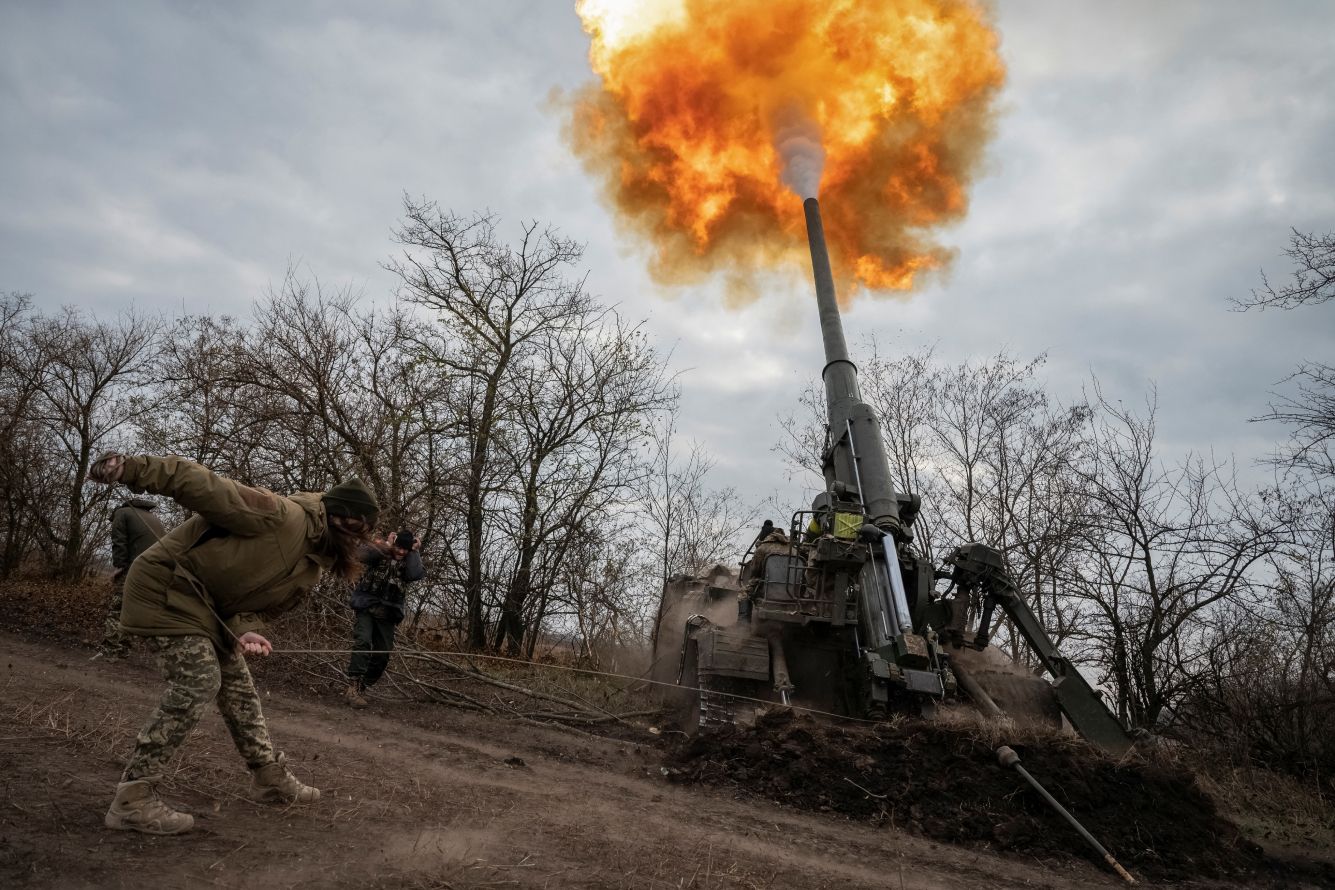
After this, the Armed Forces applied a new tactic: instead of frontal attacks on Russian positions, they began systematic destruction of warehouses with ammunition and logistics of the Russian group. Until August, this was impossible: the Ukrainian army did not have powerful long -range and high -precision means of defeat. However, at the end of the summer, the Armed Forces of Ukraine received the Himars missile systems , capable of impacts with high accuracy and far beyond the front line - using a combat -headed weight of 90 kilograms and a range of almost 90 kilometers adjustable through GPS.
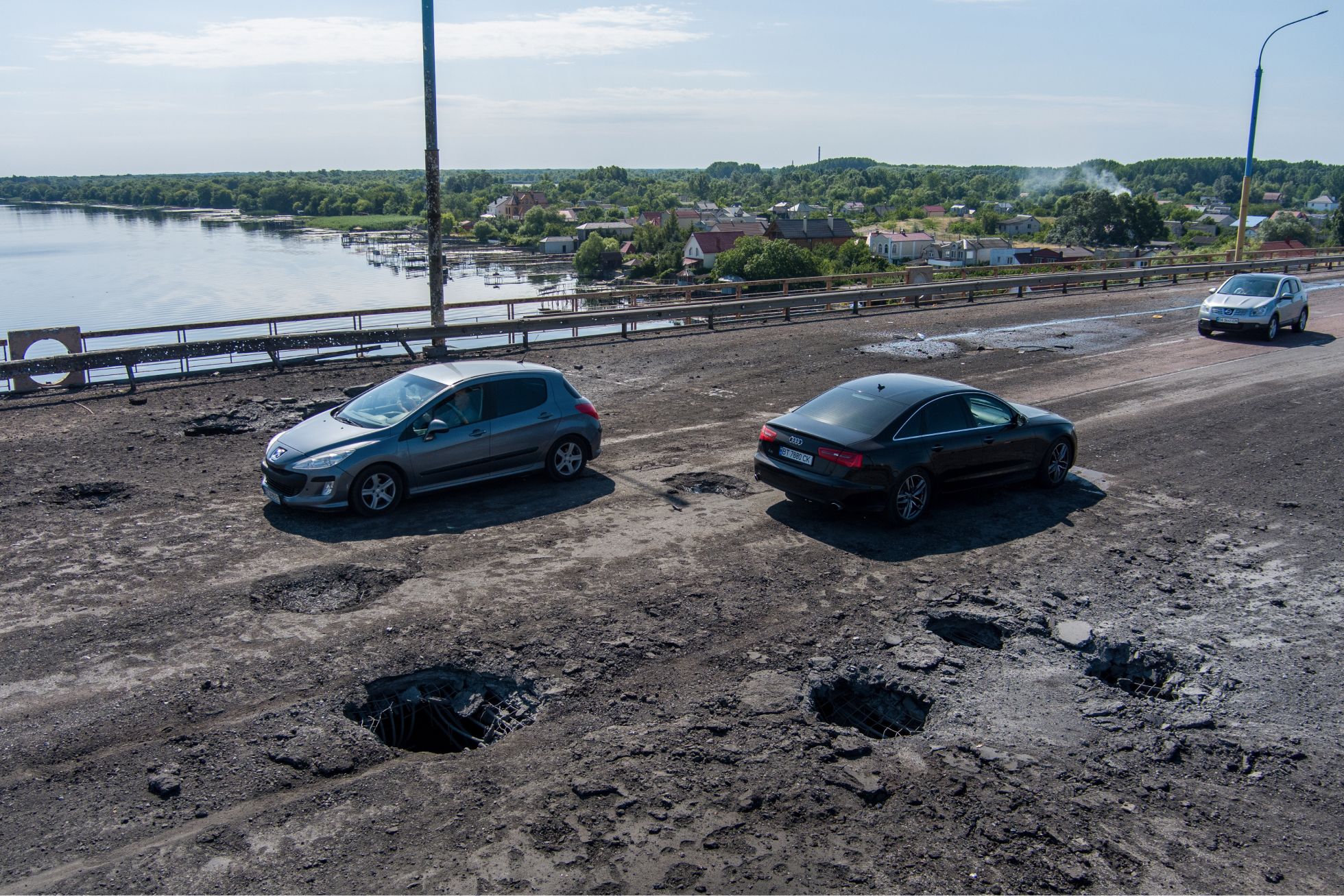
The main goal of daily missile attacks was bridges. The warheads of missiles could not completely destroy them, but the Armed Forces of Ukraine were disabled the roadway faster than Russian engineers repaired it. As of mid -October, traffic on the Antonovsky bridge was completely stopped, there was no railway message with Kherson, and it was possible to transfer trucks along the flimsy temporary bridges in New Kakhovka, which, in turn, were also bombarded.
In recent months, the supply of troops on the right bank of the Dnieper - like the civilian population of Kherson - was carried out by ferries and boats. The Armed Forces tried to strike at them, but with varying success: the high -precision missiles of the RSOs introduced using GPS are not very adapted for attacks on moving targets. Nevertheless, at least several times military ferries were damaged by blows.
But most importantly, this mode of transport was low (compared to bridges) throughput. And the Russian command could not fundamentally increase it: it was not enough vehicles (it is known that the Armed Forces of the Russian Federation requisitioned several barges, which were used as transferring funds). In addition, it was necessary to supply several hundred thousand residents remaining in Kherson and the surrounding cities (more than 300 thousand people lived there before the war, but many had long left the Russian bridgehead).
As a result, the Russian command could not radically strengthen the grouping on the bridgehead: for more troops than the current few - probably about three - tens of thousands of soldiers, there are simply not enough possibilities for the transportation of ammunition, equipment and food. All that the Armed Forces of Ukraine had to be done in these conditions for a successful offensive is to collect a group significantly exceeding Russian in number.
Such a group was collected, but the first month of the offensive (from late August to the beginning of October) was rather unsuccessful for the Ukrainian troops: the troops that broke through the Ingults were stopped by the RF Armed Forces in the steppe, artillery and aircraft were continuously striking on them. The Armed Forces of Ukraine were freed by several villages and villages, but they could not break through to the Dnieper.
In early October, the Ukrainian command, taking advantage of the initiative (that is, the opportunity to choose a place for a decisive attack) and numerical superiority, was able to find a weak place in the Russian defense: the blow was struck along the Dnieper, where the defense was held by motorized rifles from the coastal defense faceted by previous battles. The front was broken into several tens of kilometers deep into it. As a result, all Russian troops in the northern section of the bridgehead had to retreat to create a new line of defense. On it, the front as a whole stabilized, the Armed Forces began to collect reinforcements for a new offensive.
However, the situation for the Russian group continued to deteriorate:
- The Armed Forces of Ukraine are initiated and can choose the time and place for the offensive.
- It was fundamentally impossible to strengthen the grouping of the RF Armed Forces due to a lack of supply.
- Her position in the long run looked hopeless: even the intake of a large mass of mobilized to the front will not help her. Sooner or later, Ukrainian troops will be able to hold a successful offensive (according to the same methodology as in early October).
- The only thing that could save the Russian troops in Kherson was the interception of the initiative in the war as a whole (but for a major offensive of the Armed Forces of the Russian Federation, obviously is not yet capable of).
Is this the largest defeat of the Russian army in the whole war?
In the political sense - one of the most. Russian troops, according to the words of Shoigu and Surovikin, must leave Kherson - the capital annexed in October, which, from the point of view of the Kremlin, has been part of Russia for a month. True, together with the regional center, Ukraine will receive control only over 23% of the territory of the Kherson region . Most of the recently annexed Kherson region is located on the left bank. There are also the main bases of the supply of the entire group of the RF Armed Forces in the south of Ukraine (part of them are located in Crimea).
From a military point of view, everything is somewhat more complicated, since Russian troops will occupy more profitable positions that are easier to supply.
But here there are their own but:
- Obviously, at least until the end of summer, among the goals of the war for the Kremlin was the seizure of Odessa. In the case of leaving the right bank of the Dnieper, the command of the RF Armed Forces will have to abandon such a prospect (re -forcing the river is hardly possible with a massive resistance - but there is no need to count on the fact that it will stop).
- Deviation for a large water barrier (the width of the Dnieper in the lower reaches, as well as the Kakhovsky reservoir is from 700 meters to ten kilometers in some places) will release part of the combat -ready troops. But even more troops will be able to transfer the command of the Armed Forces to other sections. In addition, the RF Armed Forces will have to create a new full -fledged line of defense along the river - without a sufficient number of defending troops, even the Dnieper will not become an insurmountable barrier for the upcoming. The line of defense along the river will now increase almost half - about 170 kilometers. It is dangerous to use second -bit troops for defense of the coast.
- Under the fire of Ukrainian artillery and MLRSs, the rear bases of Russian troops will now be: in the zone of reach of the Himars RUSSO missiles, the helicopter base in the Chaherson region chaplink (it will most likely have to be transferred to another place, which will negatively affect the strength of the defense of the Dnieper) and even the city of Armenian in the northern Crimea. However, most of the territory of Crimea will remain outside the range of high -precision missiles standing in service with the Armed Forces.
- A separate headache for the Russian command is the dam of the Kakhovskaya hydroelectric power station in the new Kakhovka. In the case of departure to the left bank of all Russian formations, part of the dam will be in the hands of the Armed Forces. It is not clear what plan of defense of the left -bank part of the dam may have the Russian command. So, an explosion that will completely disable this crossing can lead to a sharp discharge of water from the Kakhovsky reservoir and flooding, including villages on the left (still occupied) river bank.
The Russian command will definitely withdraw all the troops out of Kherson? This is not a "military trick"?
After the export of part of the civilian population from Kherson, it is possible - theoretically even after the statement of Surovikin - a decrease in the bridgehead to the "fortresses" in Kherson and Berislav (opposite the new Kakhovka).
Such a plan could partly solve the supply problem: if you leave only a few small bridgeheads closest to the Dnipro, it would be possible to remove the most demanding on the supply of “consumers” - civilians and part of artillery from the eastern shore. The latter could be placed on the left bank so that it supports the defense a few kilometers from the river on the banks of the right. In addition, the defense of the Kherson Fortress would solve the main political problem - how to explain the surrender of the “Russian” regional capital. The fact that Kherson should become a “fortress” was previously said by the puppet “head of the region” Vladimir Saldo.
But such a decision is “difficult” already from a military point of view: the supply across the river under the fire of the receiver Ukrainian artillery will be even more difficult, if possible. Until now, the Russian command has preferred to completely evacuate troops from areas where they could not be supplied normally- from under Kiev in the spring, from the island of a snake in the summer or from the north of the Kharkov region in September-and not to fight in the besieged "fortresses" to the last.
Department "Parsing"