
Translated material
RUSI: The Russian plan of invasion of Ukraine was so secret that even the military leadership did not know about it. Because of this, he failed
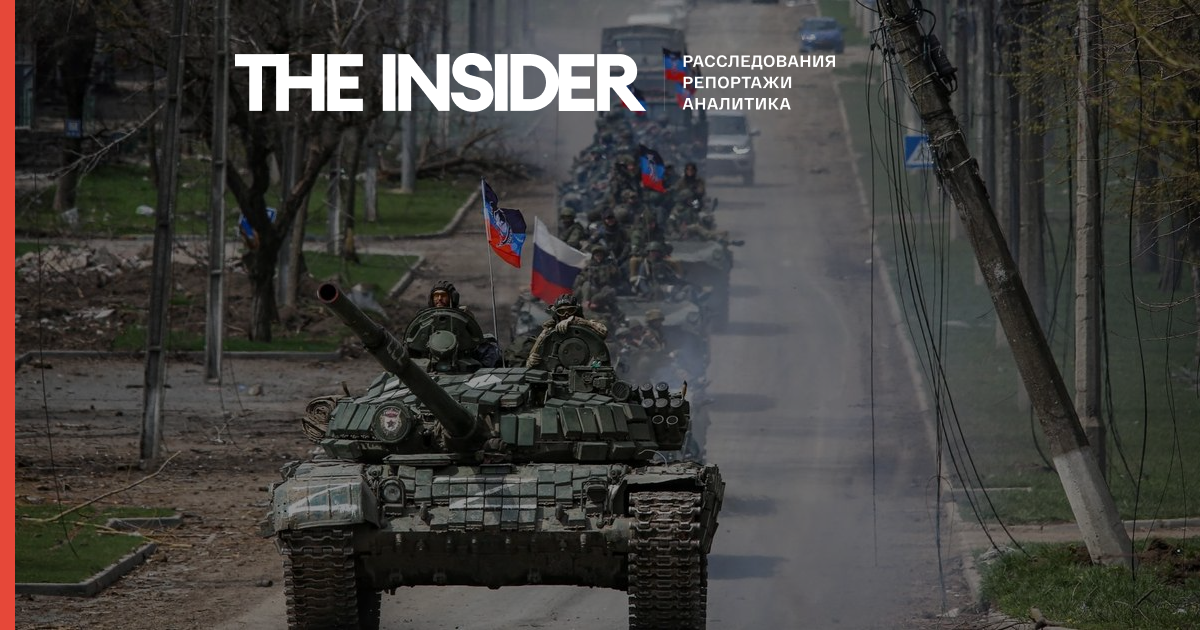
Russia planned to invade Ukraine in 10 days, to occupy it and end the annexation of territories by August, but this plan intended to use the fraud, and as a result, Russian forces were not prepared at a tactical level for its effective implementation. This is stated in the report of the British Royal Institute of United Services (RUSI), which was prepared by military experts Jack Watering and Nick Reinolds, the former head of the National Security and Defense Council of Ukraine Alexander Danilyuk and the former commander of the Ukrainian landing troops Mikhail Zabrodsky.
The authors of the report analyzed the main lessons extracted from the hostilities from February to July 2022, based on the operational data collected by the General Staff of Ukraine. They argue that the degree of secrecy of the Russian plan was so high that even the military leadership at the level of deputy chiefs of the General Staff department learned about it a few days before the start of the war.
At the same time, the report notes that this plan of deception was largely successful, and the Russians achieved an advantage in the ratio of forces 12: 1 to the north of Kyiv.
The biggest drawback of the plan, according to the authors of the report, was the lack of reverse actions. As a result, when the speed did not give the desired results, Russian forces found that their positions are steadily weakened as Ukraine mobilizes.
Despite these failures, Russia was again concentrated in the Donbass and, since Ukraine by that time had a large extent spent its stocks of ammunition, achieved success in subsequent operations, slowed down due to determination, and not the capabilities of Ukrainian troops.
The report notes that the tactical competence of the Russian military turned out to be significantly lower than the expectations of many Ukrainian, Russian and international observers. Russian weapons systems were largely effective, and the most experienced units showed that the Russian Air Force have significant military potential, even if the shortcomings in training and the context of their application did not allow them to realize this potential.
The authors of the report are distinguished by five key regions that are worth paying attention to in order to judge whether the Russian armed forces of progress are obtained in eliminating their structural and organizational shortcomings. These points should be used to assess the combat power of Russia in the future, the report says.
- Currently, the Armed Forces of the Russian Federation act according to the hierarchy of associations, in which the priorities of the land component are of paramount importance, and the military as a whole subordinate to special services. This creates suboptimal employment of other industries.
- The model of the formation of the Armed Forces of the Russian Federation is erroneous. It offers the creation of united combined arms formations in wartime, but does not have the strength of the younger leadership to rally these units.
- Failures are repeated from time to time if orders do not change at higher levels. In the Russian Air Force, this is manifested to a lesser extent than in the Ground Forces and the Navy.
- The Armed Forces of the Russian Federation are vulnerable to deception, because they lack the ability to quickly combine information, they are not inclined to provide information to those who comply with orders, and encourage the dishonest culture of reporting.
- The Armed Forces of the Russian Federation showed vulnerability in terms of incidents with "friendly fire." The electronic warfare systems and other means rarely eliminate this problem, and the methods of distinguishing between “their” and “strangers” and the military command and control of the troops turned out to be inadequate. As a result, combat capabilities designed to strengthen each other can only be used in series, [and not at the same time].
The authors of the report intend to expand this study over time in order to cover the later phase of the war when Ukraine has moved to offensive operations. However, since the Armed Forces of Ukraine spend a significant amount of ammunition and now depend on their international partners regarding equipment, it is important that these partners have removed the relevant lessons from the war, including in order to prepare for the restraint of future threats and to better support Ukraine. The victory of Ukraine is possible, but it requires serious heavy battles, researchers conclude. With appropriate support, Ukraine can win.