
Translated material
My young Nicks: Books of the Week
What to ask in book
Starting from February 24, 2022, we were all in the face of the advancing barbarism, violence and lies. In this situation, it is extremely important to preserve at least the remnants of culture and support the values of humanism - including for the sake of the future of Russia. Therefore, the editorial office of Gorky will continue to talk about books, reminding our readers that the world remains in the world and fiction.
UNELMA KONKA. Eternal sadness. Karelian ritual cries. Petrozavodsk; M.: Common Place, 2022. Fragment
 If you read new books, then these: we have work about the interesting genre of Karelian folklore - ritual lamentations, or crying. They were collected and described by Unelma Semenovna Kondka, an ethnographer and philologist of a difficult fate. She was born in 1921 in North Ingermanland in a large peasant family. She survived the link to Siberia, where her father died. She was able to learn from the teacher of the Russian language and literature, and then miraculously became the graduate student of Vladimir Propp. I released two volumes of fairy tales, organized a “complex research detachment” and generally left a big mark in Karelian folklore.
The “eternal sadness” included not only the texts associated with death; The cries were “formalized” and other rituals of the transition, such as a wedding. Kondka shows how complex, saturated with metaphors, poetic works that carry the individual handwriting of their performers and performers grow from ritual narratives. For an unprepared listener, these texts may seem enigmatical, but thanks to the comments and analysis of the UNLEMA Semenovna, everything becomes clear, then honey-pro-transparent, like Onega’s water at the July sunset.
“Let the first beautiful -faced child of the beautiful [mother], who carried me, bring me head scallops from fish bones, which, together with beautiful sea -owned shoes, like me, thin hair chicken to comb near the home of my beautiful good. At least a flock of birds that live over the windows of my beautiful good would have ascended my young yokes. Let it be brought to the beautiful light [of me], who brought it out in that bird flock, looked for my young yoke chicken. ”
Adam ace. Quarantine. Covid-19-virus that shocked the world. M.: Publisher of the Gaidar Institute, 2023. Translation from English Alla Belykh . Content . Fragment
 It seems that the 2022nd is an ice floe: it broke off with a juicy crunch, and now a break is “with the past” grows, and so black that the troubles of two years ago seem ridiculous against his background. This is an erroneous sensation, since the pandemic of coronavirus has become one of the conditions for the possibility of war, but the book of the famous English historian is not quite about that. Adam Ace puts coronavirus into the context of the global financial system, illuminating the deep cracks that arose in the life of ordinary people, dealers and entire states and macro -regions and since then has not disappeared.
Ace is pronouncing two fairly simple things. First: a new, even more terrible crisis on the planet’s scale is inevitable. The second: Western countries - first of all, the United States - reacted to the coronavirus thesis less effectively (if we count by the number of victims) than China, where quarantine was introduced by strict police measures. Will the West be able to ask a historian, answer the new ninth shaft, retaining the values of freedom, pluralism and familiar economic models?
In 2022, it sounds only sharper, although the observations of Ace did not lose its acuity too much.
“The central banks were built into the rank of fighters with modern crises thanks to the vacuum, which was formed in connection with the collapse of the trade union movement, the lack of inflationary pressure and, in a broader sense, the lack of anti -systemic challenges. The interventions of the Central Bank can reach such scale, because, by purchasing assets, the central bank seems to wave a magic wand used in the world of digital technology. <...> The monetary curse imposed on the world in 2020 led to such dramatic consequences because the most important of all markets was threatened - the market of reliable American treasury assets. And this market was threatened with a catastrophe by an order of magnitude larger than an avalanche of events provoked by the collapse of Lehman Brothers Bank. ”
Oleg Budnitsky. Red and white. M.: New Literary Review, 2023. Content . Fragment
 An excellent example of a historical scientific scientist: a collection of small essays, very balanced, without obvious copyright sympathies and antipathies, but with the results of many years of archival research. It was written simply, in places it is not even quite even, however, the portraits of the main actors of the Civil War were read by Budnitsky alive, expressive and substantial, for every ugly line of Trotsky is the ugly feature of Kolchak, but vice versa, but at the same time it becomes clear what they were for them and why, as a result, they won, while others lost. The unexpected story about Samuel Marshak, who in 1918-1920 lived in Yekaterinodar, the capital of the White movement in the south of Russia, deserves special attention, and printed in the periodic there is not at all children's poems, but rather infamous poetic feuilletons, and Kosteril in them not only Lenin with Trotsky, but also the right ones like Shulgin. This is especially successful to us this is the anti -central poem of 1919:
“The venerable Nozin told us
In a recent lecture,
What destroyed the country and betrayed
Jew, a malicious Jew.
Jews hold the whole world in the putes ...
Who will avoid their influences?
In all unrest and troubles
Cherchez Le Jew, Cherchez Le Jew!
Let the book tell us
That in the gloom of centuries
The people of the bells of Grishka were mutated,
Then - Emelyka Pugachev.
All this is a lie and overexposure,
And the fact is really as follows:
The people of Otvyv Gershka muttered
And a certain Haim Pugachev ... "
Evgeny Zashenkov. The name of the lads: the origin of the gangster from the athlete, or 30 years since the death of the USSR. M.: AST, 2022. Content
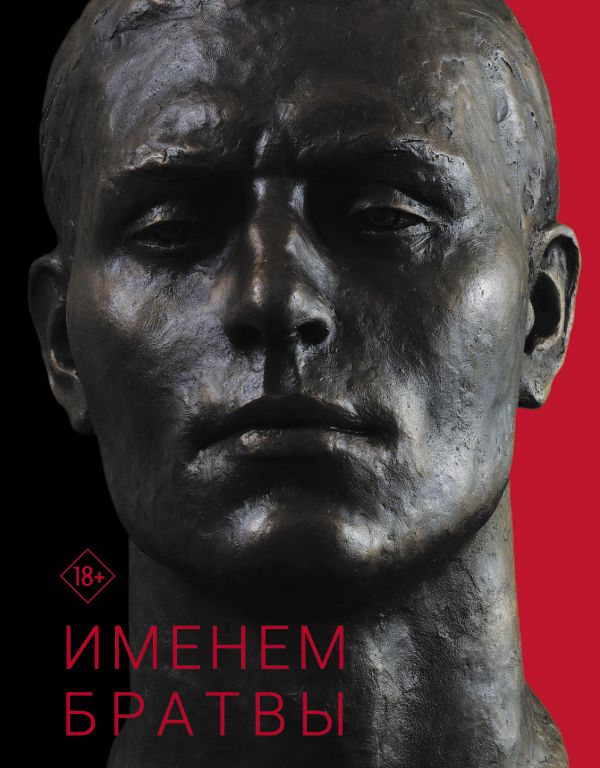 Evgeny Zashenkov made an amazing way and at the same time a typical path for his generation: in his youth he was a Komsomol member, a master of sports in volleyball, on the eve of perestroika got into a criminal investigation department, during the collapse of the USSR he changed his specialty, entering a criminal group, soon received a deadline for a racket and went to the colony. Here, in his natural evolution towards the grave, fortunately, there was a failure: when he was released, Zashenkov took up independent journalism.
Organized crime in the post -Soviet space has been overgrown with all kinds of myths for thirty years - romantic and not very. These myths have been deconstructed and reconstructed in different ways, but it seems that only in recent years related literature has finally fully began to fully conceptulate the experience of organized crime in the USSR and after it. The breakthrough book in this direction was the “ word of the kid ” Robert Garaev, followed by a number of other works: journalistic and sociological.
The "Brothers" balances somewhere between the poles of journalism and sociology (albeit in its amateur form). On the one hand, Zashenkov gives a direct speech to representatives of the criminal world - former, current and even dead; On the other hand, he tries to bring fragmented communities to a single system, built on different and extremely complex hierarchies for an outside observer. Along the way, the author gives its point of view on why the Russian state has not coped with one of its basic functions, not only without securing citizens from all kinds of groups, but also allowing their representatives to successfully integrate into managerial structures.
“No matter how absurd sounds, and at the birth of capitalism, the lads played an advanced role. So the dissertation is the “progressive role of organized crime in the period 1991-1999” is not a trick at all.
The state weakened so much that new economic relations could not regulate. Commerce is always required by the rules of the game. The lads took over not only the role of the tax inspectorate, but also the arbitration, the functions of the bailiffs, up to bankruptcy managers and the recall of licenses. The next advantage was the speed of decision -making and conflict resolution - the most important component of the service of that violence. ”