
Translated material
The roller of Europe
The American law on reducing inflation was caused by a flurry of criticism from the EU leaders. Does this threaten a trade war?
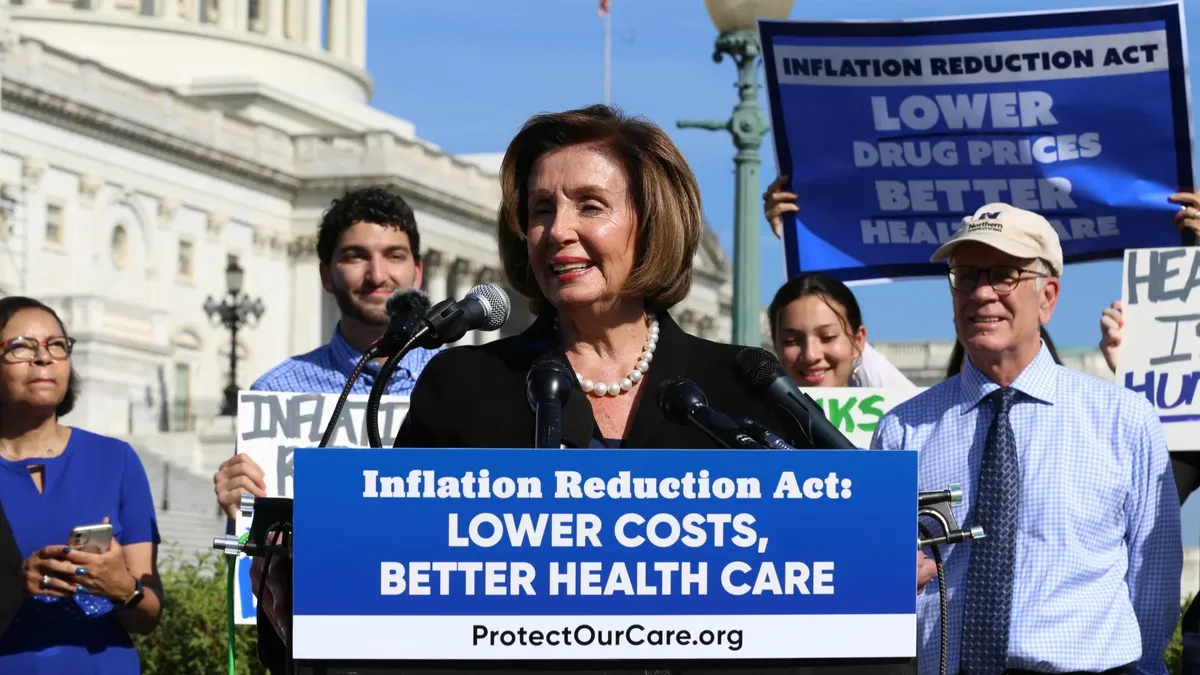
At the end of summer, the United States adopted a law on reducing inflation (IRA) - a package of measures aimed at stimulating growth, sustainable development and the creation of new jobs. By December, the decision of the Biden administration caused a wave of a negative reaction from the EU leaders who saw the poor consequences in it for the European economy, and so experiencing difficulties due to the energy crisis, war and sanctions. Against the background of the law, several large European companies have announced the transfer of production in the United States. However, the experts interviewed by Novo-Europe believe that the consequences of IRA for Europe will be more symbolic. And the violent reaction of Europeans last week is a way to increase bets before negotiations with the United States, and not a sign of a future trade war between Washington and Brussels.
The end of friendship
In 2022, Nafon of the ongoing War in Ukraine, the allied relations of the United States and European countries only enveloped. Washington and Brussels always make a single position on the ongoing conflict, almost simultaneously impose more and more sanctions against Russia, and jointly participate in assisting Ukraine. However, the law on reducing inflation (Inflation Reduction Act, or Ira), proposed as an amendment and then signed on August 16, caused serious discontent between European politicians and forced to talk about the intended discord and difficulties in the economic relations of the United States and the EU.
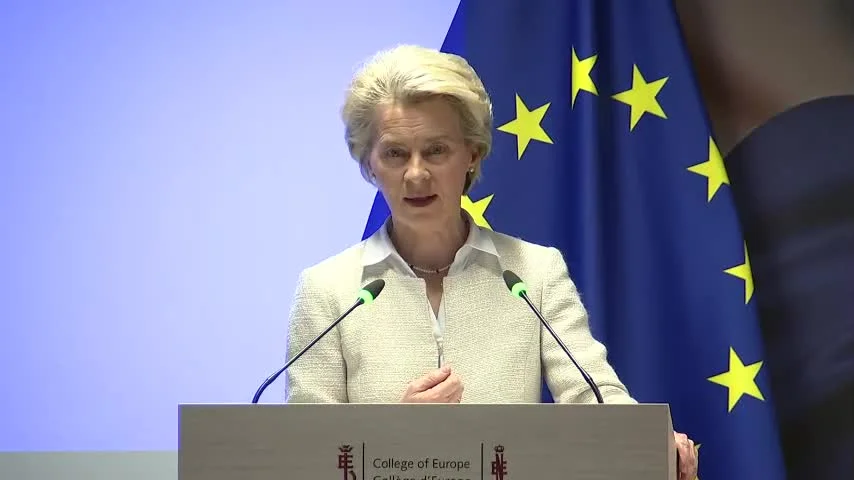
The performance of the Chairman of the European Commission Ursula von der Layen on December 4 was most noticeable. In her speech in the European College in Bruges, she stated that IRA violates the principles of honest competition that has developed between the USA and the EU, and requires a symmetrical response to Washington’s actions from Europe. As possible measures, she sees, on the one hand, the simplification of the rules for the allocation of subsidies at the national level and the increase in assistance within the European Union, on the other hand, the diplomatic work to build an “equal game field” with the United States.
The chairman of the European Parliament Committee Bernd Lange spoke even more straightforwardly on the same day. He stated that he did not see the point in negotiations and the search for a compromise, since the law has already been adopted. The politician believes that the European Union must file a complaint against the United States in the WTO.
Another European official, the Commissioner for the Unified Market Thierry Breton, announced the creation of the initiative of Clean Tech Europe - a platform that is designed to combine specialized ministers of the EU countries and business representatives to ensure the transition to pure energy. The initiative participants agreed that it is necessary to develop new measures to support key sectors to the EU, including through subsidies, which can be considered as a response to the state business support measures included in IRA.
French President Emmanuel Macron on November 26 advocated the adoption of the “buy European” act - mirroring American requirements for European manufacturers to use mainly European materials.
And during his trip to the United States in early December, the French president openly accused the accepting side of protectionism.
Germany took much more moderate positions. Chancellor Scholz limited himself to statements that the contradictions of Europe and the USA will be able to resolve in negotiations. And representatives of the German Ministry of Economics even allegedly claimed that the European industry did not need protection or additional subsidies.
Green turn
The law on reducing inflation is one of the most serious achievements of the administration of Joe Biden: the White House calls it historical. This is a comprehensive legal act that provides for a large redistribution of funds within the country to stimulate economic growth, achieve the goals of sustainable development and create new jobs. The law involves state investments in the American economy: energy, industrial production, automotive, transport. For an extremely limited level of state participation in the economy traditionally characteristic of the United States, Ira is an extremely serious change.
The main goal of investment is the “landscaping” of the US economy. Money should be aimed at expanding the use of renewable electricity sources, the production of electric vehicles, as well as production, developing green technologies such as capturing and storage of carbon or environmentally friendly hydrogen. Investments in the amount of almost 400 billion dollars will be carried out through a system of credit and tax subsidies. It is planned to spend $ 40 billion dollars from this package on individual tax benefits for the purchase of energy -efficient equipment, in particular, solar panels or geothermal heating devices.
Despite the seemingly exclusively “green” content of the package of measures in IRA, the main goal is still supporting advanced American industries. According to the initial idea, Ira is rather aimed at protecting the American economy from Chinese protectionism and is something like a more peaceful continuation of the trade war between Beijing and Washington, which was still undertaken by the Donald Trump administration.
An important feature of the law is the established restriction: to gain access to all benefits, and sometimes significant additional bonuses can only if the key components of the products are produced or mined in the USA, Mexico or Canada. This, in particular, applies to electric vehicles : their manufacturers will gain access to the benefits, provided that the batteries are produced using American materials. It was this, the most protectionist part of the package, and caused irritation of Europeans.
Europe remains alone
The adoption of the law on reducing inflation marked a steep turn in the general direction of the US macroeconomic policy. As the researcher of the Laboratory of the European and Global Economics in Brussels Niclas Poitiers emphasizes, it should be considered in the context of a great dispute about the role of the state in the economy, especially in the conditions of a threat of stability of supply chains caused by pandemia, and now the war in Ukraine. The United States, which, even under the last administration, accused the PRC of excessive state participation in the economy, made the same choice in the conditions of the crisis. Continuing to adhere to a free trade policy, Europe in this sense, notes Poitiers, remains alone.
Infusion of a large amount of money into new spheres of production - in the form of direct subsidies, loans or tax benefits that the States plan to produce, Poitier believes, in itself is hardly able to influence international economic relations. The direct threat to European economies, says the expert of the Center for Studies of European Policy Milan Elkerbout, represent the restrictive measures of the law.
The requirements for the key components of the products of new industries are produced in the USA or in USMCA ( the free trade agreement between the United States, Canada and Mexico, which was replaced by NAFTA. - Approx. Ed. ) Are pure protectionist, since they actually limit the access of external companies to the American market. The same measures, notes Poitiers, conflict with the requirements of the WTO and threaten the export of European goods in the field of automotive and renewable energy.
In particular, according to Elkerbaut, this may affect large automobile concerns of Sweden and Germany, which in recent years have been betting on electric vehicles.
Some European companies openly expressed dissatisfaction with the adopted law. For example, the vice-president of the German heating manufacturer Vieessmann Alix Chambris, who was present at the Clean Tech Europe, actively advocated the introduction of the “buy European” response.
Another threat to Europeans, according to Elkerbaut, is that some European businesses can take investments from Europe to the USA. Generous subsidies and tax benefits can make an investment direction or even the placement of production in North America relatively more profitable.
A number of European companies have already announced similar plans. For example, the German chemical concern BASF intends to reduce its European investment and redirect them to the United States. And the Swedish manufacturer of the Northvolt batteries has called into question the construction of a new factory for the production of batteries for electric vehicles in Germany: as a reason, the director of the company pointed out the more favorable conditions that the United States offers.
Niclas Poitier, however, believes that the fears of European politicians are somewhat exaggerated in this regard, and the migration of industries and investments is unlikely to take a massive nature. Firstly, those industries that support are applied are customary to have in the immediate vicinity of the location due to high costs for transportation-first of all, this applies to the production of renewable electricity capacities. Secondly, the law puts forward such difficult conditions for obtaining state support that hardly all American companies will be able to match them without significant restructuring, for European businesses this can be even more difficult. These two obstacles significantly level the potential advantages from “moving to America”.
Finally, both Elkerbout and Poitiers agree: against the background of structural changes in the global economy, which include at least a partial transition to new energy sources, such a law is unlikely to prevent the development of these industries in Europe. In addition to the obvious necessity and the general trend for the development of alternative energy, the EU has been operating in the EU for several years.
Search for a compromise
However, in a violent reaction of European politicians to adoption of a law on reducing inflation in the United States, in addition to economic fears, there may be other motives.
The tough statements of politicians at the end of November and early December prepared the necessary ground for negotiations at the next meeting of ministers of the Council for Trade and EU Technologies - the USA, which took place on December 5. This new organization began to work in 2021 and serves as a kind of forum to coordinate economic policy between Brussels and Washington.
Expressing dissatisfaction, European politicians explicitly raised bets in order to speak from a stronger negotiation positions at the meeting itself. As a result, this was really possible. The United States confirmed that they understand the claims of European leaders, and announced the creation of a transatlantic initiative for sustainable trade.
It is designed to “support the transition to a low -carbon economy and increase the trade and investment of“ green ”goods and services.”
Within the framework of this initiative, it is supposed to equalize the positions and coordination of the US and the EU policy in building a sustainable economy. Probably, the transatlantic initiative should help smooth out the contradictions of the parties and demonstrate that the compromise decision for the EU and the USA is still the main priority.
Niclas Poitier also believes that the most likely strategy that Europe will choose in response to Ira is repelled by the idea of a compromise. Brussels will develop new programs for subsidizing industry at the EU level and national states, and in the worst case, in response, will accept the laws “Buy European”. An alternative scenario - the introduction of trade tariffs for American products in the EU and actually entering a trade war with the United States - is not beneficial to any of the parties, primarily from a political point of view. “We are in a situation of war, when, I think, everyone wants to demonstrate unity,” Poitiers summarizes.