
Translated material
FSUE "GRCHC"
The department of Roskomnadzor is hidden behind this ridiculous abbreviation, which writes denunciations on “foreign agents”, hides Putin’s health data and forces Yandex to lie about the war
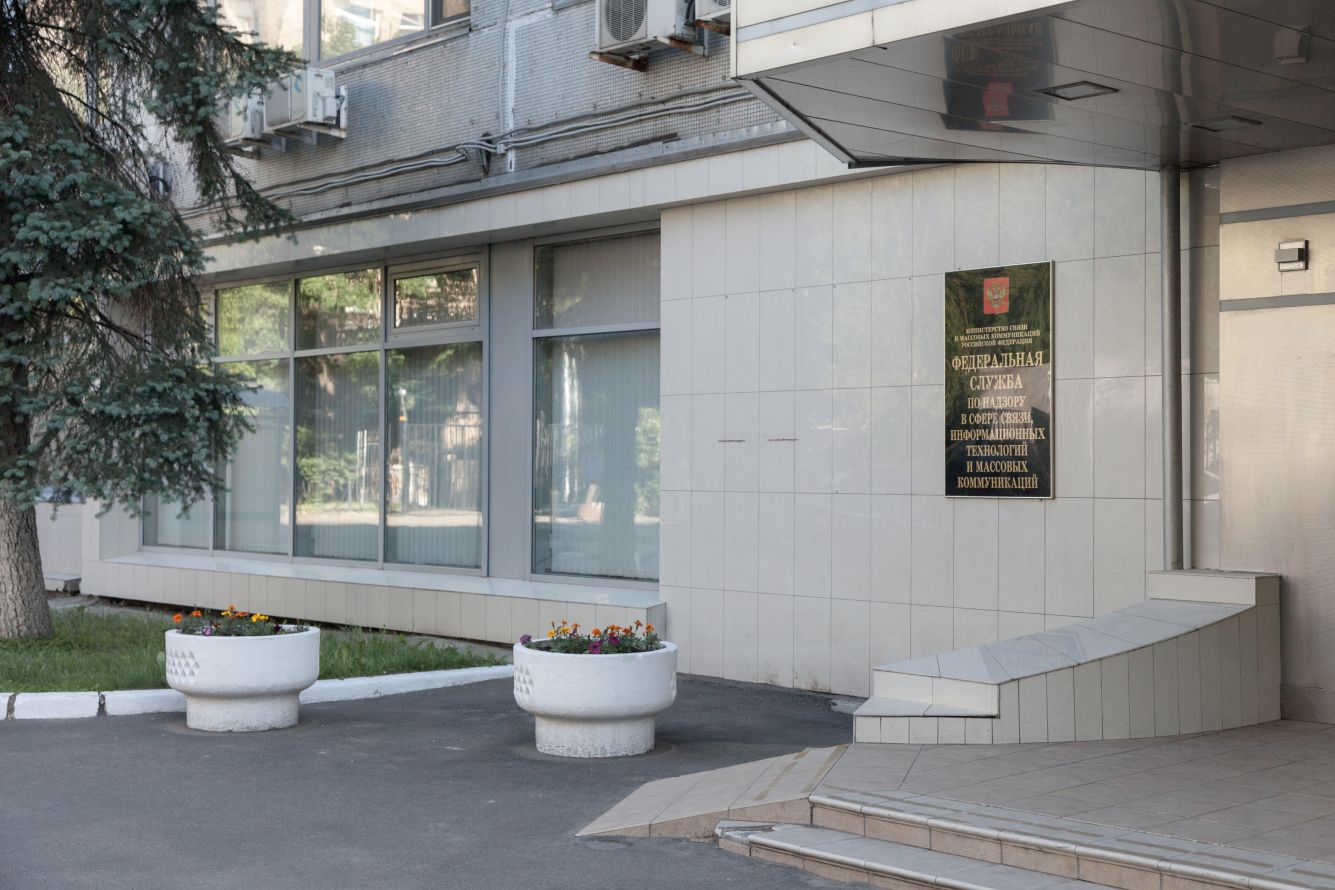
In November 2022, the Cyberpartizana hacker group from Belarus announced that she hacked the internal network and pumped more than two terabytes of documents and letters of employees of the main radio frequency center (aka FSUE GRCHC)-units of Roskomnadzor, performing control and supervision and regulatory functions. Hackers shared an archive with Russian journalists. Investigations on this array of data were published by the System (the new Russian -speaking investigative project “Real Time” and “Radio Liberty”), “Important Stories” , “Mediazons” and “Agency” . Journalists, having studied the leak, came to the conclusion that this inconspicuous structure plays a key role in the total surveillance of the state for Russians on the Internet. Among other things, the GRCHC helps to block independent media, writes denunciations on potential “foreign agents”, censors requests at Yandex about the war, seeks out reports of Vladimir Putin’s health, protest promotions and “fakes” about the army. "Medusa" retells the main from the investigation.
What is the main radio frequency center officially doing
The GRChz was created in 2000 on the basis of the abolished state reservation to monitor the use of radio frequencies by operators. In 2008, the center became subordinate to Roskomnadzor. In May 2014, the GRCC has a new task- “monitoring of compliance with legislation in the established field of activity of Roskomnadzor”. The center has eight branches in which about five thousand employees work in total. In 2022, the expenses of the GRCC amounted to 20.5 billion rubles, of which almost 16 billion was allocated from the federal budget. Beginning employees receive about 40 thousand rubles, the salary of the heads of the department exceeds 100 thousand rubles excluding the prize.
How they seek and block the "prohibition" in the RKN
The main tool for registering violations on the Internet is the EAIS (unified automated information system) "Unified Register". Employees of the GRCHC either look for the so -called “forbidden” (information containing prohibited content) on the Internet, or receive links to it at the request from the Prosecutor General’s Office or following the results of court decisions. Then they register a card about violation in the register, where it is studied by an RKN employee and decides to punish. The violator is sent a letter from the RKN with a request to remove illegal content. In case of refusal, the department blocks the page or resource whole.
Most disorders are related to the spread of content related to drugs, suicide, gambling and children's porn. After the outbreak of a full -scale war in Ukraine, GRCHC employees also monitor Fakes on a special military operation.
According to the Agency with reference to the internal document of the RKN “Results on countering attempts to destabilize the Russian society in the context of a special military operation in Ukraine”, in the first nine and a half months of the war, the Russian authorities removed 150 thousand publications on social networks. In total, the agency found 169 thousand “fakes” and 40 thousand calls for protests, which, according to the authorities, violate the law.
Messenger for security forces
In 2019, Roskomnadzor instructed his enterprise to develop a secure messenger for operational communication with representatives of the Ministry of Internal Affairs, the FSB, Prosecutor General and the Russian Guard - "To speed up the response time and take measures for various violations, rallies." The project was called the "Cabinet of Operational Interaction" (AS KOV).
The design of the messenger is not much different from public counterparts: on the left - a list of chats, in the middle - a field with messages, on the right is a sofamil list (indicating the place of work) of the participants in the viewed chat. All chats in the messenger are group and divided by topic. AS KOV has a browser version and a mobile application, as well as the ability to send personal messages.
As of November 2022, the "Operational Interaction Cabinet" included the following thematic chats:
- Protest moods
- Distribution is prompt
- Terrorism
- Protest events are promptly
- Interethnic relations
- Foreign intervention
- Extremism
For example, in the first group, GRCC employees daily publish detailed reports “On the presence of protest moods on social networks”, formed on the basis of monitoring 546 “federal” and 3000 “regional” accounts. They give an overview of the main plots of the day, including resonant information farms from “opposition sources”. A separate paragraph gives “identified materials indicating the channels of the transfer of funds to the opposition structures, terrorist and extremist organizations.” At the end of the report, information about the planned protests and links to them, which are transferred to the Prosecutor General’s Office, were presented. The return links are also listed, which, according to prosecutors, should be blocked.
In the reports of the “Distribution Operational” chat, daily employees of the GRCC are transferred accounts of “anti -Russian public opinion leaders” sent to prosecutors for “preparing the requirements in connection with the discrediting of the RF Armed Forces or the distribution of obviously false information about their in Ukraine”. For example, from November 11 to November 14, 2022, links to the accounts of TV presenter Evgeny Kiselev, opera singer Maria Maksakova and writer Anna Berseneva were sent to the Prosecutor General. In addition to famous personalities, prosecutors send links to ordinary users of “Odnoklassniki” or “VKontakte”.
The Chat “Foreign Intervention” publishes reports on “identified information containing signs of interference of foreign and international non -governmental organizations in internal affairs of the Russian Federation”.
In the Extremism chat, GRCHC employees publish short messages once every few days with a call to colleagues from law enforcement agencies “pay attention to the dissemination of this information”, for example, to the calls of representatives of the FBC to sabotage mobilization “including by solving the military enlistment offices”.
According to the data as July 2022, the number of users of the messenger "Cabinet of operational interaction" was almost a thousand people. Among them: employees of the RKN and the GRCHC, the Ministry of Internal Affairs, the Russian Guard, the Prosecutor General, the administration of the President of the Russian Federation, regional governments, the CEC, the FSB and the FSO. It is noteworthy that only one “employee” is registered from the FSB in the system - probably, special services workers use one account so as not to light their names. Among the messenger users known to the general public: Deputy Mayor of Moscow Natalya Sergunina, head of the Moscow Information Technology Department Eduard Lysenko and assistant Ramzan Kadyrov, Minister of Seal of Chechnya Ahmed Dudaev.
Over the two years of using the “cabinet”, the GRCHC employees sent more than 44 thousand messages and materials on the topics of “extremism, terrorism and protest activity” to different units of the Ministry of Internal Affairs and the Prosecutor General’s Office - an average of 90 materials per working day. And after the outbreak of war, the RKN transferred materials to the Ministry of Internal Affairs in relation to 182 “leaders of public opinion of the federal and regional level”.
"Special assassination of Yandex y"
Several Excel Tablits with the name “Special Promotion Yandex U” were discovered in the GRCHC leak (the letter U is probably “Ukraine”), which suggests that the RKN applies military censorship in relation to Yandex. In a hacking correspondence, one of the employees of the center was interested in what “special prison Yandex U” means. He is answered that these are search queries that will be redirected to Yandex to exclude the issuance. The employee clarifies whether the search queries are referred to: “Russia bombing residential buildings”, “Russia shoots civilians”, “the atrocities of the Russian military in Buch”, “Crimes of the Russian military”, “Russian conscripts in Ukraine”, “Huge losses of Russian troops in Ukraine”. And he receives an affirmative answer.
Journalists selectively checked a number of requests from the tables and did not find them in the search results. The Yandex press service authors of the investigation said that the company did not receive “no link lists” and does not remove “no links from the issuance of independently”. According to the company representative, any link may be a abyss from the search in case of entering the register of blocked sites of the RKN or by court decision.
According to the RKN, from February 24, at the request of the department of the Russian search engines Yandex and Mail.ru, more than 11.8 thousand materials containing “reports of mass losses of the RF Armed Forces in manpower and equipment, about mass surrender, as well as attacks on civilian infrastructure and murder of civilians” were removed.
How RKN monitrates "fakes" in social networks
GRCHC employees daily analyze the posts in the social networks “VKontakte”, “Odnoklassniki”, YouTube, Telegram and “Living Journal” unlotted in Russia. For each social network, a separate Excel table is created. In one shift, the employee of the center finds from 100 to 300 “fake” messages, not only in large, but even in small channels.
"Fakes" in the tables are classified according to the following topics:
- The murder of civilians
- The shelling of the civilian population
- Fields of cities
- Losses of personnel and technology
- Prisoners of war
- Marauding
- Mobilization
- Destabilization within the Russian Federation
Of the thousands of references with the revealed “negative of the and armed forces of the Russian Federation”, several dozen go to the Prosecutor General’s Office through the “cabinet of operational interaction”. From the beginning of the war to November 2022, Roskomnadzor, along with the GRCHC, revealed more than 40 thousand messages with “calls for protests against the actions of the Russian Federation in Ukraine” and 160-170 thousand materials with “inaccurate information regarding the special military operation”, the authors of the investigation calculated.
Search "foreign Agents"
The GRCC has a monitoring department for mass communication, which, at least from October 2020, has drawn up reports for the Ministry of Justice of the Russian Federation on potential “foreign agents”. The department’s employees were preparing “foreign certificates” about the publications “Project”, The Bell, “Cold”, “Open Media”, “Editor” and others. At the same time, the investigators pay attention, the preparation of the denunciation does not necessarily affect the speed of the announcement. Although the certificate of "Medusa", which was declared the media, the "ino-agent" on April 23, 2021, was compiled by the specialists of the GRCHC literally two days before the publication in the register.
Judging by the leak, the “foreign” certificates were drawn up even according to the comedian Yetuub Channel of the comedian Alexander Gudkov “Chiken Curry”, the former co-host of the propagandist Vladimir Solovyov on the Vesti FM radio, the Tsargrad television channel, the editor-in-chief of REGNUM MODOCHAROVA, the deputies And Anatoly elected.
According to “important stories”, in total, the GRCHC amounted to 804 certificates to recognize certain people “foreign agents” ( you can see the list here ). In addition, the department employees regularly monitor the social networks for accounts of at least 472 scrap (public opinion leaders).
How the negative of Putin is tracking
The employees of the GRCHC are stuck in the media and social networks any negative information, as well as publications on the supposedly “critical state of health” of the president. According to the RKN itself, the share of Putin’s health reports takes second place - after “fakes on the theme of his own” - in the total number of remote or blocked materials in Runet. To analyze these messages, the GRCHC uses the Russian Brand Analytics system, which automatically collects reports from social networks.
Reports on "Negative" about Putin are prepared by the GRCC employees on the basis of federal, regional and foreign sources. For example, an excerpt from the report for the first week of September 2022:
In the regional means of mass communication ... Putin was accused of creating such a management system in the country, in which officials and members of their families are enriched, as well as “extinction” and “impoverishment” of the Russian people. The President of the Russian Federation was blamed for the “seal” of the political opposition, the destruction of the rights and freedoms of citizens, “mass repressions”.
Judging by the leak, even small resources are monitoring. So in the regular monitoring of “Negative of the President of the Russian Federation” includes the telegram channel “Pravda City of Seversk” (377 subscriber). He belongs to the 63-year-old pensioner Marina Novikova-one of the first defendants in criminal cases of "fakes" about the army. She has been under house arrest for more than six months, she faces three years in prison.
Since September 2022, the reports on Negative began to be prepared not every day, but once a week. This is associated with a “sharp reduction in the pool of sources”, in which critical publications about Putin may appear, since most of the opposition media has already been blocked or stopped working.
Artificial intelligence involved in Putin's insults
In 2021, RKN announced the development of a system for prohibited photos and videos on the Internet Okulus. It should analyze 200 thousand pictures per day.
Among the leaked documents, journalists discovered a “classifier of graphic entities” for the training of the “Okulus” neural network to search for insults by Vladimir Putin. The classifier is divided into two types: “Offective images of the president” and “Comparison of the President with negative characters”. Among them there are such descriptions as “Putin in the image of a crab”, “president in the image of Mol”, “President in the garbage tank”, “President in the image of Hitler”, “President in the image of a vampire”.
The Okulus system will also analyze the content on the topics “Extremism”, “Calls to the riots”, “Propaganda of LGBT”, “suicide”, “drugs” and “demonstration of tobacco”. The neural network will be trained to look for “calls to unrest” by such “graphic entities” as photographs of Alexei Navalny and his associates, images of the “burning Kremlin”, “assault on the winter palace” and the white-blue-white flag, photos of rallies of different years in Russia and Ukraine.
The presentation of Okulus, prepared by the GRCC in early March 2022, directly states that the neural network will not only “recognize mass accumulations of people” in the context of calls to rallies or to overthrow power, but also recognize the faces of individuals - “taking into account the presence of a beard or mask, determine age”. When it is launched, it is unknown.
Protest sentiments in society will determine the "Vepr"
In the summer of 2022, the GRCHC began to look for a contractor to develop a Vepr system using artificial intelligence. It is positioned as a necessary tool for the early identification of “points of information tension” (TIN) on the Internet. They mean "facts of the spread of socially significant information under the guise of reliable messages, which pose a threat to a massive violation of public order and security, pose a threat of harm to the life or health of citizens."
In a flowing presentation, the threats of Russians are called materials that have “negative information and psychological impact”, such as “destabilization of the socio-political situation, manipulation of public opinion, disinformation and discrediting of traditional values”. The main tasks that the neural network should solve are the following:
- Identification of protest sentiments and facts of destabilization of Russian society (including on the topics of territorial integrity, interethnic growth, migration policy).
- Identification of negativity in relation to the first persons of the state, fakes about the first persons of the state, about the state and the country as a whole.
- Identification of manipulations by public opinion, polarization of public opinion (including on the topics of vaccination, non -systemic opposition, sanctions pressure).
- The substitution and discrediting of traditional worldview, spiritual, moral, cultural and family values (including propaganda of sexual “freedoms”, drug legalization, pro-Western values).
"Clean Internet" and "Bot Form"
The development of "Boar" is planned to be completed in July 2023. Journalists pay attention to the fact that the “Okulus” and “Vepr” largely duplicate each other's functions (the Moscow Physics and Technical Institute was engaged in the development of the concepts of both systems). Probably, they should become part of another system - “Pure Internet”, which has been created since the summer of 2020. It should automatically monitor the materials that violate Russian legislation, not only the text, but also the media content.
There is a plan in the GRCHC, according to which by May 2023, the search robots of the “clean Internet” will learn to identify violations on topics:
- mass events;
- involvement of minors;
- insulting the President of the Russian Federation;
- The president’s accusation of extremism;
- fakes about the president;
- fakes about the state and the country as a whole;
- Propaganda of non -traditional sexual relations and sexual deviations.
According to Mediazona, after reaching the design capacity, the “clean Internet” should cover 100% of the ruin. But it is impossible to look for data without cooperation with search engines. Judging by the leak, the GRCHC uses to collect the Yandex search API . Более того, компания увеличила для ведомства число возможных запросов до 300 тысяч в сутки, а также предоставила для обучения нейросетей РКН свой сервис «Толока».
Согласно паспорту проекта, дополнительным функционалом «Чистого интернета» должна стать «ферма ботов». Боты понадобятся не для того, чтобы писать по методичкам комментарии в соцсетях, а чтобы проникать в закрытые группы, которые не могут быть просканированы поисковыми роботами.