
Translated material
The second year of full -scale war began. Can he become the last?
Yes, if Ukraine begins a new powerful counterattack (this will happen almost for sure). And if it is successful (everything is more complicated here)
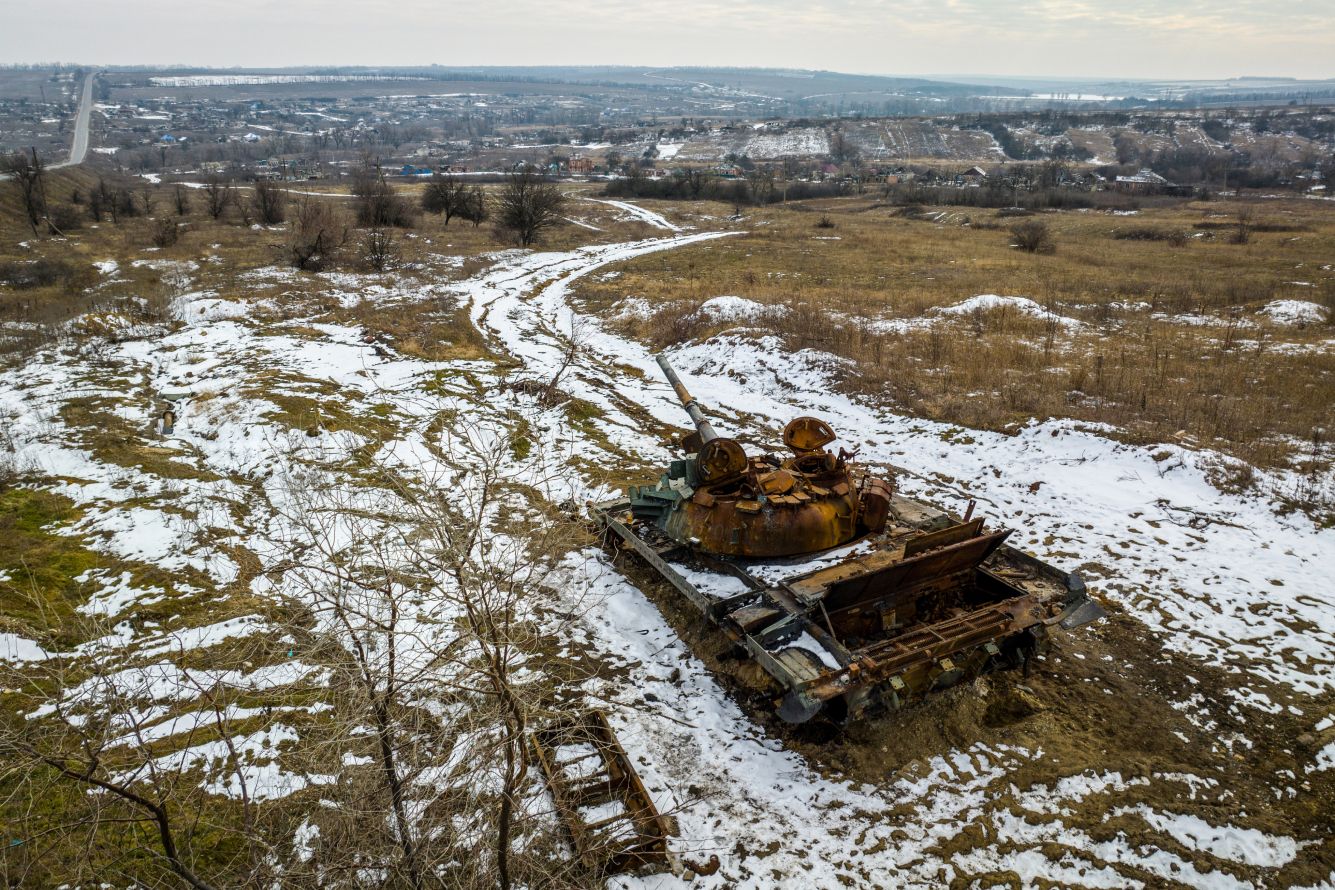
The second year of the war in Ukraine began. The reasons why bloody fighting dragged on - and now they are not visible to the end and edge are well investigated . However, when asked if the second year can become the last, a clear answer does not exist. Judging by the current dynamics of military operations, it seems that the conflict should come to a dead end and become frozen. But, firstly, it is not a fact that the hopelessness of the situation will be realized by both or at least one of the parties. Secondly, the situation for the year can radically change. Any of the parties is unlikely to achieve a complete victory, but both of them can count on a relatively successful end of the conflict: but the Kremlin is only theoretically, and Ukraine and the West are large.
What can opponents be considered a victory?
It should be remembered that, in addition to the two direct participants in the war, Western countries play an important role in the conflict. They appear on the side of Ukraine, but have their own ideas about how (and should) the war ends. And these ideas, apparently, differ from the Ukrainian ones. Meanwhile, without the powerful support of the West, the victory of Ukraine in the coming years is completely impossible due to the inability to provide itself with equipment and ammunition.
Russia
Before the Russian army was defeated near Kiev, it was possible to conclude from the speeches of Vladimir Putin that the Kremlin would only arrange a complete surrender of Ukraine. Since March, the goals of Moscow have become incomprehensible.
- After the withdrawal of troops from the Ukrainian capital and until the fall of 2022, it was clearly said only about the “liberation of the Donbass”, which could be interpreted as the exit of the RF Armed Forces to the borders of the Donetsk and Lugansk regions.
- The second goal is to preserve the corridor from Donbass to Crimea through the territory of the Zaporizhzhya and Kherson regions.
- After the “referendums” about the annexation of the four southeastern regions of Ukraine, their preservation under the control of the Armed Forces of the Russian Federation, obviously, became the priority purpose of the war. The abandonment of these territories (now requiring the revision of the Constitution of the Russian Federation) will clearly be considered a defeat in the war, which, as Putin said on February 21, 2023, during the message to the parliament, is “impossible”. His deputy in the Security Council Dmitry Medvedev specified that in order to avoid “strategic defeat”, Russia can use any weapon, including nuclear.
True, it is not quite clear in which borders the Kremlin is going to protect the Zaporizhzhya and Kherson regions by any means - probably, the Russian leadership is ready to approach this issue. Moreover, in the case of two regions of Donbass, it itself deprived itself of flexibility a year ago, before the start of the invasion. Then Moscow, after a small period of ambiguity, announced that she recognizes the “people's republics” within the borders in which they were proclaimed in 2014, that is, throughout the territory of Donetsk and Lugansk regions.
In reality, even the achievement of “victory” in this understanding (in the case of freezing the conflict, when no one in the world does not recognize the annexation) will mean the Kremlin’s defeat. He will receive the worst world than he had before the war: the country was in isolation, the basis of its well -being - the export of energy in Europe - collapsed, the Russian army showed its weakness, Ukraine became close to the West both politically and in the military sense. Finally, Russia will receive an unresolved conflict with an extremely hostile state near its borders. Four Ukrainian regions and a corridor in Crimea are too small compensation for such political and economic losses.
But as “fixations of losses” (that is, stopping combat operations in order to avoid new losses), such a “victory” is theoretically the best that the Kremlin can count on in the coming months and years. Moreover, the path even to this result may be long: the Russian army showed that it was able to squeeze out Ukrainian troops from the agglomerations of Donbass, but extremely slowly and with losses, which actually require a set of a new army instead of an exhausted old one. The first episode of such extrusion (with the capture of Severodonetsk, Lisichansk, almost the entire territory of the Luhansk region, as well as the city of Liman in the Donetsk region in the spring - in the summer of 2022) ended with the defeat of the RF Armed Forces in the Kharkov region and near Kherson in just a couple of months. Judging by the dynamics of promotion and fixed losses, the second episode of the offensive in the Donbass, which we are observing now, is not much different from the first.
Other Victory options suggest the defeat of the Ukrainian army. It is possible only in case of refusal of Kyiv or West (or both) of resistance. Meanwhile, Kyiv, that the West is configured in the war to win, although they understand this a little differently.
Kyiv
After the withdrawal of Russian troops from the Kyiv region at the end of March 2022, the Ukrainian authorities decided on their understanding of the victory: it will be a complete restoration of sovereignty over the entire territory in the international recognized borders of 1991 (that is, with the entire Donbass and Crimea). As for the Crimea, at first there were doubts - whether it was necessary to achieve his return by force or through negotiations (which, even in case of the Kremlin defeat, promised to be long). As Western assistance grows in Kyiv, it was determined: Crimea should be returned to the Ukrainian army. This maximalist position is supported by the successes of the Armed Forces on the battlefield (although their scale has not yet promises an easy path to such a victory) and the support of the West.
It is easy to understand that such a difference in understanding the favorable outcome of the war excludes even talking about a compromise between Moscow and Kiev.
West
The West in words is in solidarity with Kiev that the country's sovereignty over its territory should be completely restored. However, there is no unity of ways to achieve this goal of the West politicians. There is (visible) consensus on one question: Putin should not defeat; For the upbringing of an aggressive war, he must be punished (to the edification of other dictators). The preservation of the role of the West - and above all, in the future world, depends on this.
Since Putin should not receive any reward for his adventure, the minimum condition for the victory sufficient for the West, will squeeze the Russian army over the contact line that existed before the invasion; The issue of Crimea and the part of the Donbass occupied until 2022 should be resolved “through negotiations”. These goals were declared by the US and the UK authorities officially at the end of 2022 - that is, after the autumn attack of the Armed Forces.
A more radical “punishment” for the Kremlin contradicts the strategy of the West (and above all the United States): the coalition of countries and politicians supporting Ukraine is trying to control mutual stress from the very beginning of the war. The United States and allies themselves increase the level of escalation only in response to the actions of the Kremlin. So, after the mobilization and formal annexation of the four regions of Ukraine, the coalition is not immediately, but sharply increased the volume of military assistance to Kiev and expanded its nomenclature.
But the West does not want to move upwardly up the “ ladder of the escalation ”: it, according to the coalition, can lead to uncontrolled exacerbation of the conflict. At the same time, the West, it seems, is more afraid that the Kremlin, how Putin hints and openly threatens Medvedev, uses tactical nuclear weapons, and the fact that the Russian leadership will expand the conflict beyond Ukraine, with a threat of complete defeat. As an option, it will hit the logistics bases of NATO in Eastern Europe, from which the Armed Forces of Ukraine are supplied. This in itself would put the world on the brink of nuclear war and force the West to conduct negotiations with Russia on an equal footing.
Washington, apparently, made it clear to Ukraine that the volume of military assistance would be reduced if Kiev, without coordination with the allies, tries to cross the pre-war line of contact and return the Crimea and the Donbass occupied until 2022.
What in the end
It is easy to notice that a year after the start of the invasion of the war, for all participants, they got into the control of territories. The Kremlin, it seems, was forced to abandon the ambitious idea of the destruction of Ukraine as a state (although Moscow still does not announce the new goals of the war). In reality, the RF Armed Forces lack the strength and effective tactics to achieve even the “modest” goal of the capture of the entire Donbass. Kyiv does not leave ambitions to completely restore sovereignty, but at the moment it does not have the opportunity to satisfy these ambitions due to the position of the West, which is completely dependent on. The caution and slowness of the West leads to the fact that the Armed Forces have not yet resources in order to free even the territory that Russia has captured over the past year.
All this, at first glance, promises a continuation of a protracted war of exhaustion, which will not end even in the next year. Nevertheless, the chances that war will end until February 2024 exist.
What can lead to the end of the war in the coming year?
In the war for exhaustion, which has been in Ukraine in the last months, there may be several outcomes.
- One of the opponents will be in a situation of critical (relative to another opponent) resource deficiency. That is, either itself will exhaust the resources so much that the resistance will become impossible, or the second side will gain access to the source of resources that significantly exceeds the reserves of the first. In both cases, the playing side will be forced to either look for peace on compromise conditions, or tolerate a military defeat and accept the will of the winner.
- If both enemy exhausts resources to continue the war (or if they realize that further spending of resources will not pay off potential military success), the conflict will be frozen.
- One of the opponents will come up with a strategy that will allow him to spend resources much more efficiently than he does a visa. Or find a way to just as effectively destroy the enemy’s resources. Then this side will stop the war for exhaustion, proceeding to the crushing of the enemy.
Judging by the path situation on the fronts, the resources that Russia and Ukraine have are approximately equal, and it seems that the conflict is slowly moving towards frost. However, the parties - with all resource and political restrictions - have the opportunity to proceed to crushing the enemy this year. The level of these possibilities is different.
Russia
After mobilization, the Armed Forces of the Russian Federation got rid of the main problem of the first year of the war - they reduced the numerical lag from the Armed Forces of Ukraine, which mainly completed the first stage of mobilization by mid -summer. It is obvious that the Armed Forces of Ukraine will now be difficult to advance as they did in September and October in the Kharkov region and in the Liman area - then after the first line of defense, which was occupied by the extremely weakened units of the RF Armed Forces, Ukrainian troops were able to advance tens of kilometers to Svatovo and Kremennaya, almost without meeting resistance.
But immediately after mobilization, new problems arose.
- The new army, where mobilized, created instead of depleted months of contracts of the pre -war, is previously unable to conduct offensive military operations. This was clearly visible during the February failure under the Ugled Brigades of the Marine Corps and motorized riflers of the Eastern Military District, which received replenishment from among the mobilized ones.
- In defense, parts of the mobilized manifested themselves better. But, despite the overall success in the defense near Svatovo and Kremennaya in late autumn and at the beginning of winter, there are doubts that such parts will be able to withstand a more powerful blowing of the Armed Forces (and under Svatovo with Kremennaya they had many local failures).
- The Armed Forces of the Russian Federation lost the main tool of warfare, which she used in the spring of 2022 both in the offensive and in defense, artillery fire with a huge expenditure of ammunition. More and more often in the discussions of the war participants on the Russian side, military bloggers and “military commissars”, “shell hunger” is mentioned, caused by too active expenditure of ammunition in 2022, insufficient production and the blows of long -range Ukrainian missiles in warehouses. The scale of the crisis is not clear (since there are no accurate data on the growth of shells and their remaining reserves). It is unlikely that Russian artillery will be left without shells at all. However, it is clear that to fight in the old way, shooting tens of thousands of shells per day against several thousand Ukrainian, the Russian army will no longer be able to.
- Artillery is the basis of Russian defense: it stopped the Ukrainian offensive in the Kherson region and helped to avoid the collapse of the front under Svatovo in the fall. But artillery (and a large consumption of shells) for the Russian offensive is even more important. Thus, sources in the units of the Armed Forces of Ukraine, fighting under Bakhmut, note that it is on artillery fire to suppress Ukrainian defense that the tactics of the assault groups of the PMC of Wagner are based. The insufficient norms for the leave of shells as the reason for the failure of the offensive are indicated by the military, who participated in the assault on Ugro.
- The success of the Wagner PMC - today the only unit of the Russian forces conducting a full offensive operation - is based not only on the large expenditure of ammunition. PMC actively “spends” another resource - personnel, which is used as assault groups for pushing Ukrainian defense. This tactics cannot be scaled throughout the Russian army. In addition, there are great doubts that such a consumption of human resources is the modest success that have been achieved by PMCs (even if Bakhmut is likely captured).
The only resource that is now used by the RF Armed Forces is not fully, but theoretically could change the situation in favor of the Russian army is aviation. The aerospace forces (VKS) of Russia still have several hundred modern aircraft that showed their effectiveness during the war in Syria, where they could strike from medium heights. But the Islamic and Al-Keda did not have adequate air defense with the Islamists opposing them from the groups, and in Ukraine it remains, despite all attempts to destroy it at the beginning of the war.
Since March 2022 (after the first large losses in aircraft), Russian aviation is rarely used at medium heights, even less often - behind the front line in the near Ukrainian rear. This makes it possible for the Ukrainian command to freely supply troops and transfer reinforcements to areas where the Russian troops are planned. It is with this that the inability of the RF Armed Forces is primarily associated with the offensive operations with the front breakthrough.
In the fall, the Russian command made another attempt to suppress the air defense of Ukraine. For this, the new command, led by General Sergei Surovikin, began the “strategic bombing” of Ukrainian energy infrastructure. The idea was that Ukraine could not afford not to protect critical objects; The air defense forces will be distributed throughout the country - to the detriment of the front and the front -line regions. Air defense units will be forced to spend scarce ammunition. In addition, during operation (that is, with the radars turned on), they can be attacking with anti -radar missiles.
In case of success - that is, the exhaustion of the resources of Ukrainian air defense - such a strategy could return Russian aircraft on the battlefield. The West responded to this threat to the supply of its air defense systems. But, since NATO itself experiences a shortage of such complexes (imposing the functions of air defense for aviation), the Russian army had a chance to win this part of the war of exhaustion.
In 2023, the intensity of attacks on Ukrainian infrastructure decreased. It is unclear whether this is due to the fact that the RF Armed Forces are experiencing a shortage of missiles and drones to continue bombing, or the military leadership was disappointed in the idea of decommissioning Ukraine. General Surovikin himself was reduced to the position with the commander of the “Special Military Operation” (as the Kremlin is officially called the war) to the deputy.
In any case, the Russian army never showed that it is able to effectively advance in the conditions of a relative shortage of ammunition. The current attempts of the offensive, perhaps, only harm her: consuming resources without great success, it can approach the weakened one when the Armed Forces will again go on the offensive.
However, Russia will always have a resource in which it surpasses Ukraine. The mobilization reserves of the Armed Forces of the Russian Federation (that is, the number of citizens who may be drafted into the army) exceed the reserves of the Armed Forces by several times. Due to the inability of the Russian army, to crush the enemy at the front, this resource will probably be in demand, which means a high probability of a new wave of mobilization in 2023.
But this advantage does not guarantee the Kremlin’s victory at all due to the lack of other resources-trained officers, production facilities for modern equipment and ammunition and, finally, money in the budget.
Ukraine and the West
The Ukrainian command, obviously, is going to repeat what he did in the summer and in the fall of 2022: force Russian forces to exhaust in the offensive in order to attack them later with the help of prepared reserves. Об этом свидетельствует тот факт, что даже в важной битве за Бахмут ВСУ не задействуют все наличные силы (бóльшая часть участвующих в сражении бригад представлена далеко не полным составом; ходят слухи о формировании новых соединений в тылу).
Такая стратегия несет серьезные риски: прошлым летом ВСУ, ожидая, когда выдохнется российское наступление в Донбассе, потеряли агломерацию Северодонецк — Лисичанск, а также город Лиман. Лиман им позже удалось вернуть, но Лисичанск остается под контролем ВС РФ и служит важной тыловой базой для наступления на Бахмут. Теперь же ВСУ могут потерять уже сам Бахмут. Под угрозой остается и важнейший укрепрайон в Угледаре, на котором держится вся оборона к западу от Донецка. Есть риск, что ВСУ будут оттеснены от Кременной и потеряют большую часть плацдарма на реках Оскол и Северский Донец, с которых они планировали наступать вглубь Луганской области.
Однако риск может быть оправдан, если украинской армии удастся вывести войну из патового положения и разгромить российские войска в Запорожской области.
Осенью ВСУ провели две очень разные операции.
- В августе украинские войска начали заранее анонсированное наступление на российский плацдарм на правом берегу Днепра у Херсона и Берислава. Важной составляющей этого наступления стали удары по переправам через Днепр, которые начались еще в июле. Из-за того, что ВСУ не пытались скрыть подготовку наступления, российское командование смогло к нему подготовиться. На правый берег были переброшены боеспособные десантные полки и бригады. В самом начале наступления они сразу купировали украинский прорыв. Части ВСУ понесли большие потери от огня российской артиллерии и бомбардировок ВКС РФ. Более успешный прорыв на северной части плацдарма в октябре (когда российские войска уже страдали от недостатка снабжения) тоже был остановлен артиллерией и минными полями с большими потерями ВСУ. Сокрушения не случилось, но сработала ставка на удушение: без необходимого снабжения пребывание российских войск на плацдарме становилось все более рискованным. В ноябре ВС РФ покинули правый берег Днепра с Херсоном (единственным областным центром, захваченным в ходе этой войны).
- В Харьковской области разведкой был найден слабый участок фронта. Совсем скрыть подготовку наступления на него ВСУ не удалось. Однако у российского командования, занятого обороной под Херсоном, резервов для противодействия новой угрозе больше не нашлось. Украинские бригады (вероятно, их было более десяти) прорвали фронт к северу от Балаклеи и устремились во фланг и тыл крупной российской группировки, все лето пытавшейся наступать на Донбасс из района Изюма. Под угрозой окружения группировка отошла за реку Оскол, бросив значительную часть своей техники. Резервов, чтобы остановить ВСУ на рубеже рек Оскол и Северский Донец, у российского командования снова не нашлось, а потому ВСУ захватили город Лиман и продвинулись к городам Сватово и Кременная в Луганской области. Только тогда на этот участок фронта стали прибывать значительные российские резервы, в том числе сформированные за счет мобилизованных граждан, не получивших почти никакой подготовки.
Вероятно, после завершения российской мобилизации ВСУ будет намного труднее найти ослабленный участок фронта. Тем более такой участок вряд ли найдется в Запорожской области, где российское командование собрало крупные резервы и выстроило запасную линию обороны с бетонными сооружениями, окопами и минными полями. Положение в Запорожской области сейчас напоминает не то, что сложилось к осени в Харьковской области, а то, которое было в августе на правом берегу Днепра: ВС РФ готовятся к обороне, местность — голая степь — этой обороне благоприятствует, российская армия имеет преимущество в артиллерии и авиации.
Однако и украинская армия весной будет сильнее, чем была в конце прошлого лета. Запад в начале 2023 года принял решение поставить Киеву сотни БМП и танков (последние, правда, не все прибудут в Украину к весне). Судя по номенклатуре и количествам обещанной техники, Киев вместе с поддерживающей его коалицией планирует создать несколько ударных маневренных соединений. При этом — даже несмотря на «снарядный голод» в ВС РФ — перехватить преимущество в огневой мощи ВСУ не удастся, а значит, наступать новым маневренным силам придется в условиях превосходства ВС РФ в артиллерии.
Военные на Западе, как сообщают СМИ, считают , что ВСУ вообще должны отказаться от использования артиллерии в советском стиле (так, как ее продолжают использовать ВС РФ) — для временного подавления обороны противника и с большим расходом боеприпасов. Огонь должен вестись по конкретным целям (с широким использованием высокоточных управляемых боеприпасов), войска должны полагаться не на мощь залпа, а на маневр, как это делают армии НАТО. В общем, украинская армия, по их мнению, должна лучше реализовать то, что у нее не получалось в аналогичных условиях под Херсоном в начале осени.
Проблема в том, что в армиях НАТО большую часть целей при наступлении должна уничтожать авиация, которая в случае Украины еще больше отстает от российской, чем артиллерия. Предоставлять же Украине боевые самолеты Запад пока не спешит — опять же, опасаясь спровоцировать неконтролируемую эскалацию конфликта со стороны России.
Однако у Украины остается еще одна проверенная стратегия — удары по уязвимым местам логистики российской армии. В случае запорожского фронта это крымские перешейки, по которым проходят пути, связывающие фронт с тыловыми базами, а также склады в Мариуполе, через который проходит автомобильная дорога из Ростовской области. Крымский перешеек в районе Чонгара (около 120 километров от передовой) сейчас находится вне радиуса действия украинской реактивной артиллерии. Однако США готовятся передать Киеву более дальнобойные боеприпасы для HIMARS — Ground-Launched Small Diameter Bomb (GLSDB) с дальностью до 160 километров.
What follows from this
По всей вероятности, весной ВСУ применят комбинированную стратегию:
- удушать с помощью дистанционных ударов по логистическим центрам и складам российской группировки;
- пытаться с помощью новых механизированных соединений, вооруженных западной техникой, совершать глубокие прорывы.
Тем не менее по совокупности наступать ВСУ будет сложнее, чем осенью, считают западные военные эксперты. Но это наступление необходимо, если Киев и поддерживающая его коалиция не хотят дождаться момента, когда Кремль накопит ресурсы — технику и боеприпасы — для новой волны мобилизации. Это может затянуть войну еще больше — при сохранении всех рисков неконтролируемой эскалации конфликта, которых так боится Запад.
Облегчить задачу ВСУ мог бы более смелый подход Запада к оказанию помощи Украине — например, максимально быстрая передача боевых самолетов (хотя в любом случае она не поспеет ни к весеннему наступлению, ни к лету из-за долгого обучения пилотов). От решительности западных стран и будет зависеть то, как далеко на второй год войны смогут продвинуться ее непосредственные участники и какие условия будут диктовать друг другу.
Department "Parsing"