
Translated material
"The uprising of terminators is actually not excluded"
Interview by the creator of the mobile Utuub Andrei Doronichev. After the outbreak of war, he decided to fight misinformation with the help of neural networks
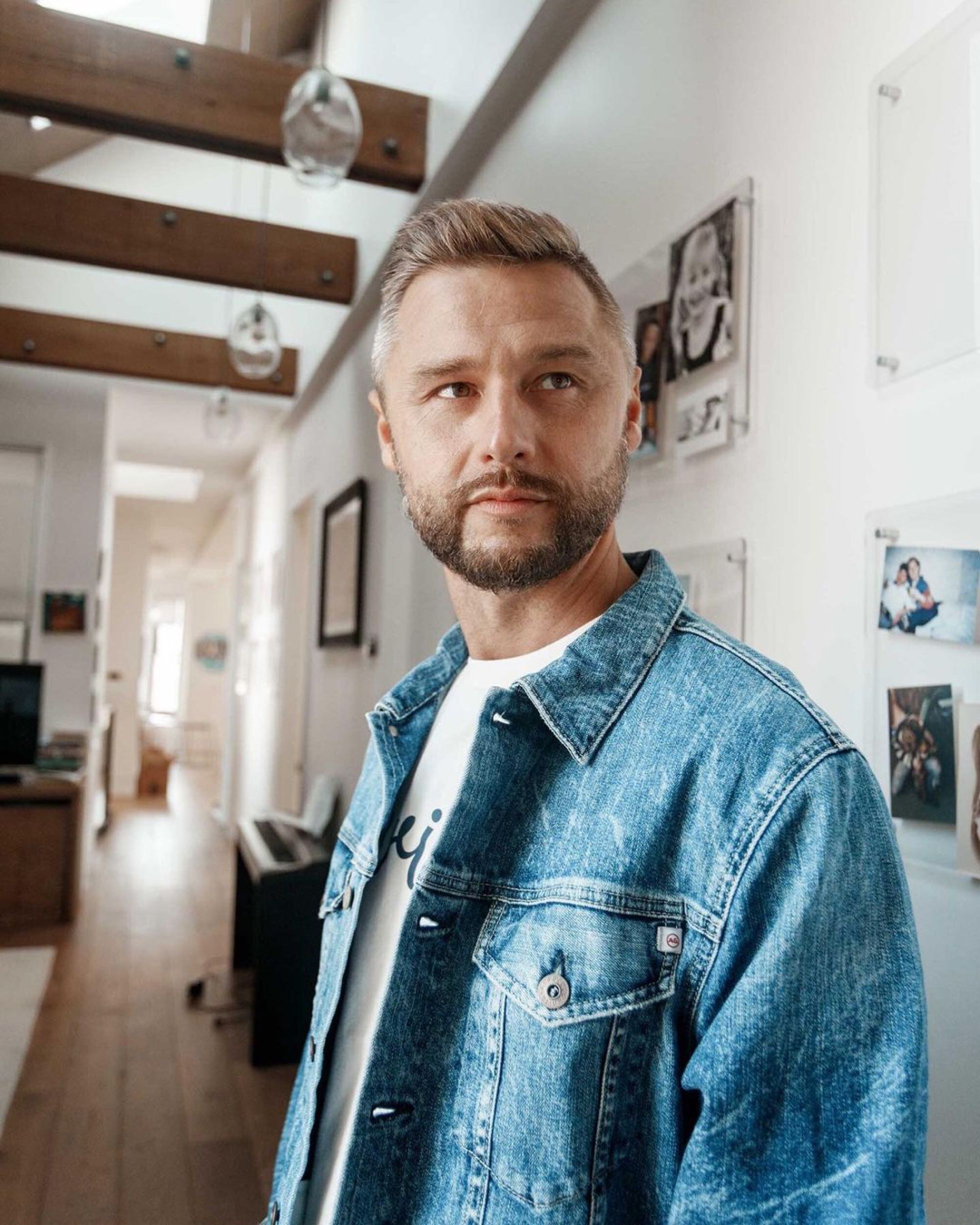
Over the past year, the progress in the field of artificial intelligence has been incredibly accelerated. Now neural networks are used both to write songs and to create a video (including the most crazy ), and, of course, for publishing fake news . One of those who decided to deal with misinformation in this area was the former top manager of Google, the creator of the mobile Utuub Andrei Doronichev. His company OPTIC began with the identification of NFT submit, and in April launched a service-an recognizer of images created by neural networks. Now the Doronichev team is developing a service with a working name BIAS-O-METER (another option is a “propagandrometer”), which gives a “assessment of bias” to media publications. Medusa talked with the entrepreneur about the prospects for the development of neural networks, their role in the information war and how humanity should react to this threat.
- How did the Russian -speaking community in Silicon Valley survived the first year of the war?
- A hard year for everyone. All in the valley on one wave is against the war, it doesn’t matter whether the Russian you, Ukrainian or Belarusian. From the very first day of [war], Ukrainians held meetings, to which the entire Russian -speaking population came. All, at least of those who are familiar to me, were in the same camp and opposed [Vladimir] Putin, against Russian aggression. It was and is difficult, but antagonism is not felt.
- What role did the Russian -speaking community of Mesto entrepreneurs played in your participation ?
- Mesto does not play in the [silicon] valley of such a big role as beyond. Already in the first weeks of [full-scale war] we created a volunteer telegram channel. And although Mesto is a closed community to get into which moderation must be passed, Mesto Help was conceived as a channel, where anyone and needy could write for help in connection with the war: “I am looking for where I need a lawyer”, “Meet me on the border of Poland”. Other people wrote than and where - in various countries of the world - they can help. A huge number of people met and helped each other.
- How did you yourself have changed this year?
- Of course, I have changed. This year turned life over from everyone - regardless of who was involved in the war and its consequences]. I just lost the opportunity to be neutral. War is the moment when you can no longer remain "sitting on the fence." You must choose which way to jump.
My position is understandable: Russia commits an act of military aggression, an infinite number of crimes in the territory of another country, waging a aggressive war. Therefore, despite the fact that I am still a Russian citizen, I oppose current policy, against any military aggression in the 21st century.
This is extremely difficult - as many of your readers know - to oppose [the state], when your values and attitude to life completely diverge from the policy of the country in which you were born. In general, I always treated Russia positively, I had the understanding that Putin’s country and politics were different things. But now is not the time of nuances. Now is not a time when you can share good and bad Russians. Now Ukrainians are killed at their home every day. I perfectly understand that I myself in the eyes of millions of Ukrainians are part of this aggressive power, although I have nothing to do with it at all.
- What exactly in the year of the war has changed for startups with a Russian passport who want to launch their project in the United States?
- It is now difficult to do with the Russian passport - whoever you are, whatever opinion you have [on political issues], no matter what you do, no matter how much you help Ukrainians. During this year after the [beginning] war of war, I was a kofounder in two projects, where citizens of the Russian Federation performed my co -owners. Both of them did not live in Russia - and this is a key moment.
The presence of Russian citizenship has become a difficulty [when startup startup]. Nevertheless, everything is possible if you are not Russian residency, you are not connected with the state, your parents do not work for Putin and you are not involved in the country's policy. All this you can calmly explain [for example, investors]. In my experience, even after [the beginning of a full -scale] war you can establish a company, attract investments - everything will be fine.
Of course, I will not say that nothing has changed. Of course, it has changed. They look at the Russians more carefully. And they more thoroughly check if they carry with them some complex and dumb baggage. Honestly, they do the right thing. I understand why so - and now there will be many more years now.
- By “dumb baggage” do you mean the toxicity of investment?
-You may have some kind of dumb story, you can be connected with political, “missile” movements, you may have money that you took from some oligarchs, investors associated with [different] governments.
The potentially toxic stories that can reach for your Russian background is a bunch. For example, as an American bank or as an American investor, I just may not want to understand this. I have a choice: invest in one of five projects. One of them requires some complicated process to find out that a person does not pull a kind of ugly story or even more so sanctions. And there are other projects where such a risk is much lower. A normal, natural reaction [conditional investor] - to choose a business where it is easier.
- How does music help you experience everything that is happening and continue to work at this time? Are you still engaged in it?
- Yes, I sing. This is my other side, which allows you to express emotions more expressively. Everything is at the level of the human “Blutus”: your emotion is encoded directly into sound and then perceived by another person, regardless of the meanings and words in which the emotion is sewn. It seems to me that this is the meaning of singing, because people sang long before words or notes appeared. So yes, music, of course, helps not to become close.
- After leaving Google, you were going to relax, but suddenly launched a new business, invested in neural networks. What influenced your decision?
- From Google, I left with full confidence that I no longer want to work: I want to enjoy life and engage in creativity. Everything was according to plan, I really liked such a life, I enjoyed a feeling of research on the world. He was surfing and was going to buy a hotel in Costa Rica: he was at the last stage of the transaction when the war began.
When this happened, it became completely unbearable to sleep, there is and just live. Then it became clear that if I have learned to sleep and I have learned, it will simply be impossible to enjoy life for the coming months, and maybe years. You can, of course, pretend that you enjoy life, but in fact it is impossible not to act in this situation. It is required to do at least something, but I like to do what I can. The cat climbs a tree in case of danger, because it is instinct. My instinct, as it turned out, is to assemble a team and start some kind of activity.
In January [2022] I wrote a letter to my future coaur (we were not going to be co -owners). I had an idea, and the guys had the opportunity to build [project]. I invested in many different teams, and this was one of the business ideas that I could throw. Because of the war, I realized that I [again] need work. Actually, [in March 2022] we launched Optic .
- What problem does Optic solve? Why did you start with a startup to combat fake NFT, although it seems that interest in them fell along with the collapse of the market ?
- Optic began with a simple thesis: digital information has become very important in our lives. Important differently: because it can start a war, because it costs money, because it is important for you personally. Digital files recorded in bits and bytes began to play a large role in our lives.
Therefore, the reliability and safety of these data over the years increases in price. Digital information is so important for us that we are ready to pay hundreds of thousands of dollars for the JPEG-image. Someone is ready to go to the streets and kill neighbors because of the texts published on Facebook. Since this information is so important, it makes sense to invest in proved [its reliability] and catch low -quality, dishonest, inaccurate.
Since YouTube, it was clear to me that in AI, which modrates or analyzes [data], not enough money and effort is invested. Basically, everyone is invested in creating something semi-synthetic [using neural networks], and in generative neural networks, which create everything from scratch.
More and more companies attracted a lot of money [to develop projects in the field of artificial intelligence] and built talented teams to generate information [using neural networks]. And I did not particularly know companies that were engaged in helping people to distinguish the present from fake. Our thesis is that the world needs artificial intelligence, which will help separate the good [that is, reliable] information from the bad.
When Trump's fake photograph appears in the media, at best, even if a revolution occurs [reaction responsible for the spread of the fake will be as follows]: “UPS, the incident has occurred.” And who specifically is ready to pay so that this does not happen again? It is incomprehensible. It seems that all [potential users] are ready to throw off the dollar, but there are especially no people who want to pay a company that will not allow this.
In the case of NFT, a person who is going to buy an object of art in digital form for 100 thousand dollars wants to make sure that this subject of art is real. The store that sells this item sells this, because they will then be condemned for fakes. [Our] NFT project initially became a business approval for technology, that's all.
Art is an understandable business in which you can quickly achieve monetization and in which we [Optic] have already achieved good success. Now all NFT, which are exhibited at Opensea , the largest site, first pass through [check in] Optic. But our project is much wider. We built an awesome product, very scalable, earn money and expand.
- The main next product is AI or not , which recognizes images created by artificial intelligence?
- Yes, they just launched.
“Can he recognize as a fake of the same Trump in handcuffs or Pope in a down jacket ?”
- Yes, and yes. You need to try, but yes, of course.
- You indicated that AI or not is intended for journalists. How should he help fight disinformation and propaganda?
- Generative artificial intelligence is very cool. As cool as the camera on the phone. Previously, only a photographer with a large lens could create a quality photograph, and there were units. And now any iPhone owner [can do it]. Previously, only a rare professional could create a photorealistic illustration, and now any person enters Midjourney and creates anything. Very cool. When we create more tools for creativity, we all win as a result. The democratization of the tools for creating content is good .
But every time such tools appear, Bad Actors also appear. A color printer appears - people begin to print counterfeit money. Deepfake technology appears - people are trying to manipulate public opinion. For example, in the early days of the war, creating fake videos of Zelensky, where he [supposedly] surrenders.
With generative networks, such a risk increases significantly. Because such prevalence quickly enables a huge number of attackers to experiment and find ways to show why our society is not ready for a particular technology.
Trump in handcuffs is a great example. In order for a new narrative to appear, which will spread very quickly and affect the wide masses, it is enough to create a fake asset on a very loaded political topic. And it will not matter whether the picture is true or not, because it will already give an effect. It is terrible to imagine what will happen when fake evidence of war crimes from one or the other side begins to generate, [arrange] manipulations with elections.
It is cool that humanity has tools that allow you to imagine anything, but it is also very important that we have reliable tools that can distinguish the imaginary from the real one. And this is what we created Optic and Ai or not for. We trained a neural network that has learned to visually distinguish [real photos from fake]. The attacker can erase JPEG headers and all special markers that Midjourney puts in his images, but Optic will still understand that this picture is generative.
- I understand correctly that you updated Ai or not so that it recognizes the images generated by the new Midjourney?
- Yes.
- How successfully AI or not now can you fulfill its task? Is it possible to somehow deceive him?
- There is always where to strive. It is like a virus and antivirus - an eternal arms race. New options for neural networks will constantly appear, and we will constantly catch up with them.
Right now I opened the statistics of our accuracy. The lowest indicator is 97% - for [images generated with the help] Stable Diffusion . The highest rate is 99% - for Midjourney. It is clear that something new will come out now-and we will take time to collect data and practice.
“I can’t help but ask if you kept in your head when creating AI or NOT, a fictional startup Hotdog or not from the series about Silicon Valley?”
- No. But now, thank you very much, Hotdog or not will be in my head.
- Your next project is a "propaganda" . Surely it is associated with the flow of misinformation during the war. Why created such a project?
-Firstly, it is not connected with the war. Secondly, he was born on Hakaton one and a half to two weeks ago, when the team and I gathered and began to drink ideas to each other. More precisely, one of the engineers suggested [the idea of the service that conducts] a factory -based fact based on artificial intelligence, which is extremely difficult. I suggested something else. You can always understand whether the author is trying to sell you something with his text or not, just looking at the tongue. You can analyze the text and say that it shows only the arguments of one side or the manipulative words are used, which are clearly trying to convince you of something.
In general, any texts are trying to convince you of something-this is normal. You need to understand that Bias is not necessarily bad or good, but it is important to know about its presence. [This will help to] distinguish the text that sells something to you, from the text in which the facts are stated as neutral as possible.
In fact, the “propaganda meter” is a comic name that has taken root thanks to the light hand of Medusa. The task of the Bias-O-Meter is its original name-to accustom people reading the media, to ask yourself the question: "And in which direction this text is inclined?" Even if you write the most positive thing, for example, about a healthy lifestyle, you need to eat well and live long-Bias-O-Meter will most likely show a high level of Biasʼ, indicating that the text pushes you to a certain point of view.
- How does the “propagandrite” work? Are there any words-triggers?
- He uses the engine and all the power of the GPT , that is, he analyzes the text for Biasʼ, which includes all sorts of trigger words, the versatility of arguments and other factors that we are developing. As a result, BIAS-O-METER gives an assessment [from one to 10, where 10 is the most prejudicized text] and the explanation.
Sometimes it turns out curious. You take the text of the "Medusa", which [tells how] Putin said something and in which there is little assessment of "Medusa", but there are a lot of words [spokesman for the President of the Russian Federation Dmitry] Peskov from Putin. If you read the words of Peskov [without an additional context and an alternative point of view], then they [will look] superpropaganda, therefore, Bias-O-Meter will say that he sees a very biased text. I understand that [journalist] means [when he writes news based on Peskov’s words], but such curioses are taking place. In this case, it is necessary to read the explanations [of the service that are demonstrated along with the evaluation of the text].
In fact, the assessment is not very important. Bias-O-Meter does not present her in court. The most important thing you achieve with the help of this tool is that you ask yourself a question about neutrality and get used to critically evaluate the texts.
How BIAS-O-METER works
BIAS-O-METER, or “propagandrometer”, OPTIC, Andrei Doronichev, is not yet available for a wide audience. There is no exact release date.
Medusa received from Doronichev access to an early alpha version in the form of an extension for Chrome. The service operates on the basis of GPT-3.
The extension must be launched on the tab, where the media website is open with one or another text. After a few seconds-if everything works as it should-Bias-O-Meter will give an estimate from one to 10 points, where 10 is the maximum level of bias, and an explanation of its decision in English.
According to the observation of Medusa, the best Bias-O-Meter works with short texts (news), however, in the case of them, the context does not always correctly read. При попытке анализа больших статей или других сложных материалов нейросеть часто выдает ошибку. Ее оценки пока не всегда репрезентативны, а критерии «предвзятости» могут показаться неочевидными. Счесть многие нюансы новостных материалов нейросеть еще не способна. Все это объяснимо: нынешняя версия сервиса пока предназначена только для его разработчиков.
Here are a few examples.
Если запустить Bias-o-meter на новости русскоязычной «Медузы» с заголовком Bloomberg: министр обороны Китая отметил «важный вклад» Путина «в обеспечение мира во всем мире» , то сервис выдаст оценку в 7/10 и объяснение об «одностороннем представлении отношений России и Китая», несмотря на подробный раздел с контекстом в конце материала.
При анализе новости русскоязычной «Медузы» « В посольство Франции в Москве пришла из Крыма посылка с костями. Ранее дипломатам уже присылали такие отправления от имени умершего продюсера из Италии» Bias-o-meter показывает «нулевой» уровень предвзятости.
Оценка «предвзятости» одного из материалов The New York Times, в котором разбираются слитые секретные документы Пентагона, составила 4/10. Нейросети не понравилось в том числе то, что NYT — американское издание — уделяет основное внимание решениям и последствиям именно внутри США.
Материал англоязычной версии RT о мобилизации в Украине получил от Bias-o-meter оценку 8/10. Но не по той причине, по которой можно было бы подумать. Сервис увидел в материале «предвзятость в пользу Украины и противостоящих России сил» и «сочувствие тем, кто пытается избежать призыва [в Украине]».
— Многие, на кого пропаганда нацелена, вряд ли воспользуются Bias-o-meter и, наверное, даже не почувствуют в нем нужды. Ты думал о том, что эффективность такого сервиса может быть не очень велика в этом случае?
— Я не думаю о Bias-o-meter как о способе решения мировой проблемы. Это прикольный прототип, который помогает увидеть, на что способны современные нейросети на фоне поляризации мира.
Что делает LLM -ка типа GPT? Она читает огромное количество текстов (по слухам, GPT прочитала треть всего интернета), а потом занимается проблемой компрессии. То есть создает статистическую модель: что человечество сказало на какую-то тему, что наиболее вероятно следует за определенным вопросом, какими должны быть следующие слова [в диалоге с пользователем]. То есть она генерирует не смыслы, а текст, похожий на смыслы.
Другими словами, LLM — это усреднитель человечества. Это не очень хороший инструмент для креативности, потому что гениальность — это вайб, а она (языковая модель, — прим. «Медузы») тебе генерит все время «среднесть».
Но именно для деполяризации общества искусственный интеллект может быть очень полезен, потому что он всегда создает центральную, среднюю позицию, на которую можно ориентироваться вне зависимости от того, в какую сторону ты [политически] отклонен: вправо или влево. Искусственный интеллект может создать привычку для нас, сидящих в эхокамерах в фейсбуке или «Одноклассниках»: у нас будет голос «среднего» ИИ, который скажет: «Классно, что вы тут дискутируете, но помните, что у вас тут левацкий или правацкий чатик и вообще-то не весь мир такой, как вы тут обсуждаете». Не знаю, как это должно быть устроено, но вот Bias-o-meter — это одна из ранних ласточек, примеров того, что такое возможно.
— В сторис ты показывал, что проверял Bias-o-meter на русскоязычной ленте новостей. Можно ли ему доверять при работе не на английском, а на русском языке?
— Надо больше тестировать. Наш главный рынок все-таки англоязычный. Мы просто имеем российский бэкграунд, поэтому и тестируем и на англоязычных, и на русскоязычных новостях.
— Кратко вернемся в март этого года. День, когда закрыли SVB , — это худший день в твоей профессиональной жизни?
— Да ну брось. Of course not. Это очень интересная история, чтобы вспомнить, но худшие дни в твоей жизни — это когда ты принял плохие решения и понимаешь это. А тут просто случилось событие вне твоей зоны влияния.
— Деньги, около 10 миллионов долларов, вернули, ничего в процессах не сломалось?
— Да, все хорошо.
— Какие уроки вы извлекли для себя из этой ситуации? К примеру, ты писал, что в будущем нужно больше «жечь» деньги стартапов и меньше держать их в банке.
— Это и есть первый урок. Если бы мы не вернули эти деньги, то самое большое, о чем бы я жалел, — что мы сожгли так мало. Могли бы тестировать еще и Bias-o-meter вдобавок к NFT, но не делали этого, откладывали на потом. Как вы видите, сразу же после всех этих событий мы стали параллельно инвестировать еще в два-три направления и быстрее проверять большее количество гипотез за единицу времени, а не растягивать runway .
— Решили ли диверсифицировать свои активы? Может, сделали что-то еще, чтобы обезопасить себя в будущем?
— Да, мы открыли несколько счетов в разных банках, раскидали там кеш. Это не что-то, о чем было принято думать раньше, а теперь принято.
— Людям в индустрии ИИ, наверное, уже надоело отвечать на вопросы про « восстание терминаторов ». Чего стоит на самом деле ожидать от бума нейросетей и искусственного интеллекта?
— Восстание терминаторов на самом деле не исключено. За 25 лет в индустрии я никогда не видел чего-то похожего на то, что происходит сейчас, этой степени изменений и их скорости. Это больше, быстрее и значительнее, чем все, что мы до сих пор видели в компьютерных технологиях, начиная от распространения персональных компьютеров, интернета, айфонов и заканчивая социальными сетями.
Все эти бумы, которые сильнейшим образом изменили нашу жизнь, — вспомни мир до айфона и сейчас — на мой взгляд, ерунда по сравнению с тем, как все теперь изменится из-за бума генеративных нейросетей. Изменения, которые нас ждут… Мы еще даже не поняли, до какой степени все будет меняться. Поэтому люди, которые относятся к этому с опасением, правильно делают. Наше общество во многом не готово к тому масштабу изменений, который грядет. И опасность, скорее всего, исходит не от терминаторов, а от способностей человечества адаптироваться к технологическим изменениям.
Когда придумали паровой двигатель и электричество, началась индустриализация, общество ожидали огромные потрясения. Когда огромное количество работников осталось без работы, потому что они были заменены машинами, случились революции . Сейчас нас ждут изменения такого же уровня.
— Что мы должны сделать в плане разработки дальнейших инструментов на основе искусственного интеллекта, чтобы совсем страшных ситуаций не произошло? Поменять правила разработки? Сделать упор на этику в ИИ? Повысить прозрачность?
— Очень важное слово, которое повторяется в индустрии, — alignment . Как человечество мы должны «заалайниться» по поводу того, какие правила — окей, а что — не окей. И [мы должны] применять эти правила при разработке каждого искусственного интеллекта.
В частности, моя компания Optic предпринимает попытки участвовать в этой дискуссии, потому что остановить, замедлить, перестать исследовать [искусственный интеллект] — это бессмысленно, этого не случится. Джинн выпущен из бутылки, и теперь мы [Optic] будем ускорять прогресс по улучшению этих нейросетей.
То, что мы обязаны сделать, — это очень быстро адаптироваться. Во-первых, адаптировать наши социальные институты, обучение, бизнес-правила. А во-вторых, адаптироваться как ресерчеры [исследователи] и технологи. Другими словами, быстро анализировать новые риски и учитывать их при разработке.
Но все, кто сейчас участвует в разработке ИИ-продуктов, должны задавать себе вопросы: а как это может сработать неправильно? что будет плохим исходом того, что мы делаем, и как мы его можем предупредить и избежать на этапе разработки?
— Тот же Bias-o-meter работает на основе GPT. А как ты используешь ChatGPT в своей жизни?
— Очень много как использую. Он помогает мне писать имейлы, помогает писать юридические документы. Вот недавно мне надо было сделать оффер сотруднику. Вместо того чтобы обращаться к юристам, я обратился к ChatGPT.
То есть ChatGPT уже плотно вошел в мою жизнь — и жизнь моей команды. Более того, часть кода первой версии Bias-o-meter была написана [с помощью] ChatGPT. То есть во время хакатона я сам написал первую версию на базе того кода, который сгенерировал ChatGPT. Я бы писал расширение для Chrome день, а с ним получилось за час. Это [ChatGPT] штуковина, которая обязательно должна быть в инструментарии каждого человека.
Беседовал Сергей Звезда