
Translated material
Physics Today: Scientists came up with two -dimensional superconducting ink
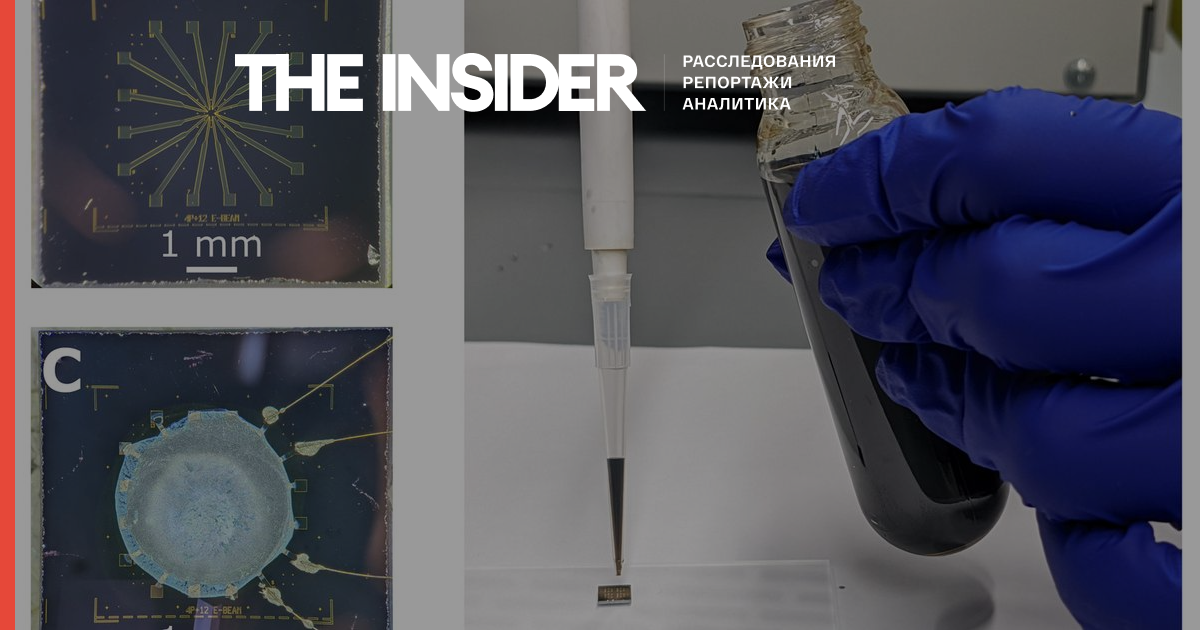
Scientists from Princeton University have invented superconducting two -dimensional ink, which can be easily stored, applied and put into practice, writes Physics Today. This technology, designed by a graduate student of Siao Sleep, its leader Leslie Shoop and their colleagues, can make a revolution in the production of chips and flexible electronics, as well as open the road to quantum computers.
Ink two -dimensional ink, allowing to apply a layer with a thickness of one molecule. The creation of two -dimensional objects with the help of such ink does not require complex technology, and the resulting “drawings” are resistant to environmental action and do not require protective coatings. Thanks to these ink, those two -dimensional materials that were previously available only in the laboratory can become commercially available. Using ink conducting electricity, you can draw an electrical conductive pattern. They are used to apply microcircuits to flexible surfaces and can be useful in various areas, from household electronics to supercomputers.
The material for ink, which was synthesized by the Princeton Working Group, was the WS2 tungsten disulfide. It is known in the form of several modifications - the same in their chemical composition, but different in the crystalline structure of substances. For ink, the so-called 1t′-disulfide tungsten was used. It is quite difficult to get it, since ordinary methods give a mixture of various crystalline structures. It was previously predicted that two -dimensional “scales” 1t ′ tungsten disulfide can have the property of superconductivity. However, there was no convenient way to receive these “scales” on an industrial scale.
The technology for obtaining “scales” was previously worked out on a similar substance - Ditelluride Wolfram. But two-dimensional ink from it turned out to be unstable in the air and demanded complex organic stabilizers molecules. And existing methods did not allow to distinguish the pure 1t′-phase of two-dimensional tungsten disulfide; She was contaminated with other crystalline phases.
As an initial substance for the synthesis of tungsten disulf, scientists usually used potassium volfram disulfide, but they could not create a monomolecular tungsten disulfide with the desired crystalline structure. The Princeton graduate student guessed to prepare the original substance at high temperature, which created the desired crystalline structure with ordered layers of WS2. To remove potassium ions, the resulting substance was immersed in acid, and to spread into monomolecular layers, they irradiated ultrasound. So the monomolecular layers of tungsten disulfide with the desired structure were obtained. Then the monops were centrifugated and placed in ordinary water.
The obtained ink, as it turned out, have a number of amazing properties. They were stable at room temperature and did not deteriorate for a month. Such ink can be created “patterns” that are also resistant to external influences and do not require protective coatings. They can be applied to a variety of substrates: silicon waffles/silicon oxide, India-Olov oxide, borosilicate glass, polymeric materials.
But the most valuable is the superconducting properties of these ink. They have the properties of the conductor at room temperature and go into a superconducting state at a temperature of 7.3 ° Kelvin, which is above all values for the dichlcogenides of transition metals (chalcogenids - compounds with gray and its analogues according to the Mendeleev table). At the same time, it is important that the resulting tungsten disulfide has the desired crystalline structure, otherwise superconductivity will not work.
The resulting ink of tungsten disulfide is a good candidate for topological insulators, that is, such substances that are arranged as an insulator in volume, but as a conductor on the surface. Topological insulators are considered promising material for non -dispensing transistors in quantum computers working on the quantum effect of the Hall. (The Hall effect is the occurrence in a conductor located in a magnetic field, an electric motion force perpendicular to the directions of the current and magnetic field.)
The stability of two -dimensional ink to external influences makes them interesting material in order to study the ratio between topological properties and superconductivity. The simplicity of the synthesis and stability of the resulting ink assumes that they can be used in a variety of areas, such as quantum calculations, the manufacture of integrated microcircuits, as well as flexible devices.