
Translated material
Terrorists, drug dealers, cashes. How Binance Exchange Administrators turned a blind eye to crimes


Terrorists, drug dealers, cashes. How Binance Exchange Administrators turned a blind eye to crimes
The Insider
April 27, 2023The creators of the cryptocurrencies are accused of illegal activities in the United States, as well as in insider trade and insufficient counteraction of money laundering. The US authorities believe that Binance management knew that Hamas and Russian criminals used the services of exchanges, but deliberately ignored this information. Moreover, if in the United States, the Binance management tried to bypass the requirements of the regulators, then in Russia without hesitation went to cooperate with Rosfinmonitoring and agreed to drain it of customers.
Content
Binance tricks
How managers turned a blind eye to crimes
What will happen next with Binance
Cooperation of Binance with Rosfinmonitoring
On March 27, the US commodity futures commission sent a lawsuit against the Binance cryptocurrency exchange, its founder Chanpan Zhao (known by Nickname CZ, SIS) and Samuel Lim's compliance director. Businessmen are accused of massive violation of American legislation on exchange trade. If the court agrees with the arguments of the regulatory organization, large fines are waiting for the exchange, and its employees are a ban on such activities.
The Binance exchange is the world's largest in the world in the volume of daily trading in crypto. Its founder is Chanpen Zhao, a Canadian businessman of Chinese descent. The personal state of ZHAO in April 2023 is estimated at almost $ 30 billion. Binance exchange revenue was estimated at $ 12 billion in 2022.
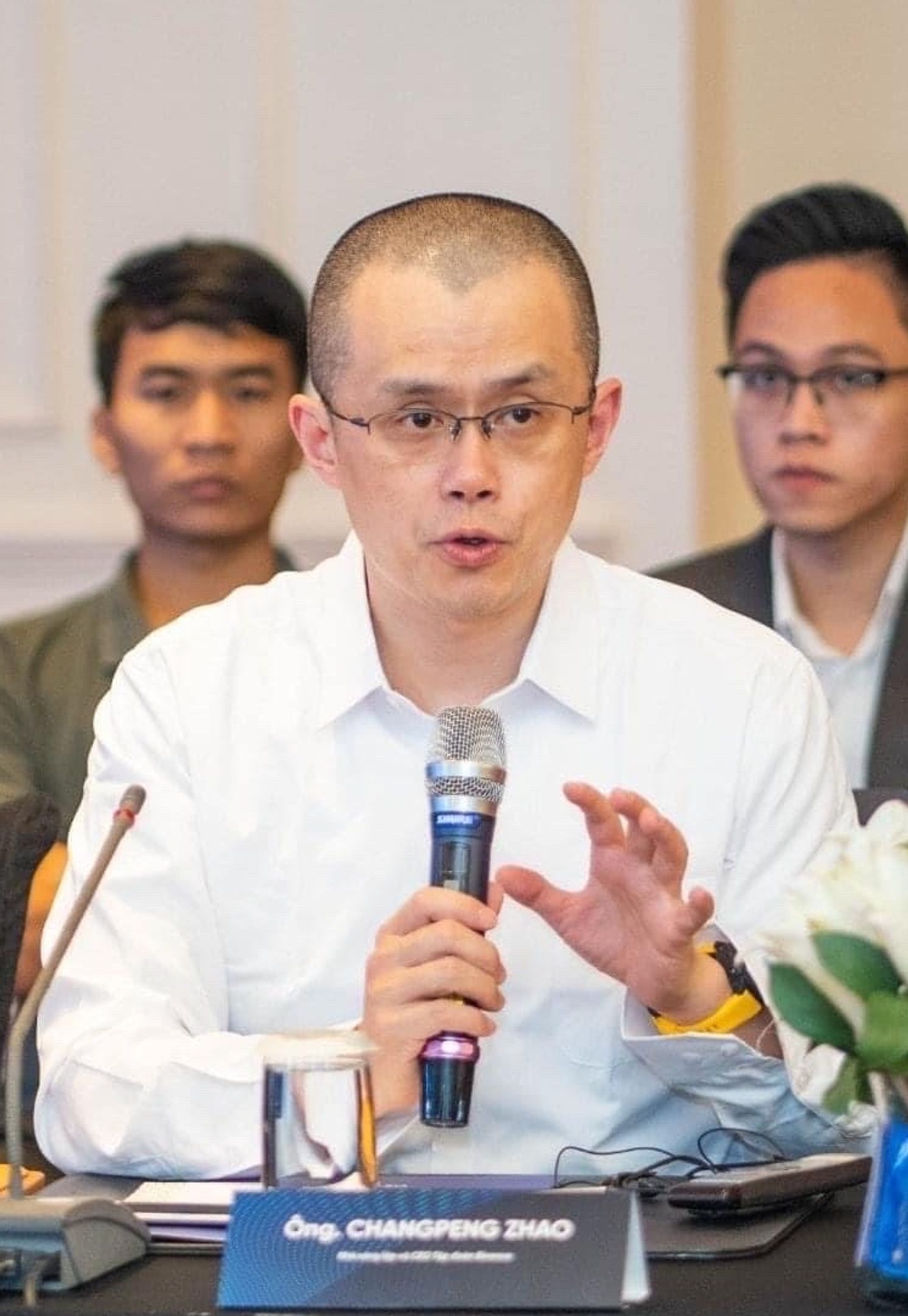
Chanpen Zhao
The commercial in trade in commodity futures is accused by Chanpan Zhao and Samuel Lim that Binance worked illegally in the United States. Binance revenue from trading with Americans was larger than representatives of other countries: in 2019, according to the correspondence of top management, 22% of Binance received from American users and companies. According to the law, Binance cannot work in the United States, as it sells cryptocurrency tools - futures, options and others. For this, America requires registration with a regulator that Binance did not receive.
Among other accusations against the top management of the crypto-tank are insider trade and insufficient counteraction of money laundering. The text of the lawsuit was at the disposal of The Insider. There are instructions in it that the owner of the exchange knew that money received by criminal means passing through it, but turned a blind eye to it.
Binance tricks
To circumvent the restriction on trading in the American market, the crypto -streak introduced primitive “self -suction” users. When trying to create an account, a window appeared that “strictly” asked the client if he was a citizen or resident of the United States. If he answered “no”, he was allowed to register. Subsequently, to create the visibility of compliance, the Binance website began to block American IP address users. However, this problem was easily solved by the inclusion of VPN, Binance itself gave instructions for setting it up. One of the accusations of the regulator in a lawsuit against the exchange is that the company taught users how to hide its location, that is, use the VPN.
They listen to you! How to create your own VPN, bypass the deep filtering of traffic and prepare for the complete closure of the Internet in Russia
Any operations in the financial market suggest the implementation of the KNOW YOUR Customer procedure (“Know your client”, KYC). However, the Binance site completely ignored this requirement for customers who displayed less than two bitcoins per day. In April 2023, it is about $ 56 thousand, and in 2021–2022 - $ 40–130 thousand. The lawsuit of the commission with reference to Lima says that "to give priority to commercial success over the compliance of the US laws was a business solution of Zhao."
For large customers who were initially registered as American persons, Binance also offered such a service as the creation of manufacturing companies in other jurisdictions-in the British Virgin Islands, Kayman Islands, in Malta and so on. At the same time, a new account was not even created to trade financial instruments, but simply renamed the existing one.
In addition, Binance was convicted that the exchange traded against its own customers. She carried out operations on her own platform on behalf of approximately 300 accounts. Zhao was directly or indirectly owned by some of them. To manage such trade, the company even established a special department. In addition, Zhao traded on his platform under two personal accounts. This can be regarded as insider trade. Binance did not reveal to customers that she is selling in her own markets.
How managers turned a blind eye to crimes
However, the most remarkable in the lawsuit of the American regulator is not a violation of the financial legislation of the United States, but the correspondence of Zhao with the Lim and other top managers of the exchange.
According to the commission, this correspondence was taken, in particular, from the Signal messenger. We do not know how it became available to commissions on commodity futures. The lawsuit mention that the employees' chats included the function of automatic removal of messages. Cyber-Advocat Sarkis Darbinyan, Head of the legal practice of Roskomvoboda, believes that this could be the result of the drain:
“The information could be received from the employees themselves who drained these data. Or we can assume that someone intercepted Sizi's messages on a mobile phone. We are talking about PEGASUS. However, the import of such programs in the United States was prohibited by presidential decree Joe Biden. It can be assumed that some licenses were purchased and thus employees of the state department had access to this correspondence. This is by no means compromising Signal: it has a sufficiently persistent cryptography and the possibility of encrypting chats. And, as far as I know, there is not a single technology that could, in fact, infiltrate in the middle between the two subscribers, intercepting the signals and decrypting these messages. ”
Articles on the topic
Hungary, Israel and other countries used PEGASUS programs to track journalists
Phones of the head of the government and the Minister of Defense of Spain were hacked using the Pegasus program
Even before the lawsuit, the Reuters agency and the Wall Street Journal published reports, which referred to the correspondence of the company's employees in Telegram and the documents received by the editions.
The top management of the exchange knew very well that some users use the platform to transfer money received by criminal or doubtfully. For example, when lawyers asked what to do with the client’s account, whose transactions by $ 5 million “were very closely related to illegal activity,” and the money was “received for dubious services”. Of the options for “banner” and “offer the client to create a new account”, Lim chose the second: “You can tell him to be more careful with receipts, especially from the“ Hydra ”type of drugs and other illegal goods - The Insider> . He can register a new account. But this one must be removed, he is already stained. ” This is echoing with the policy of Zhao himself. The lawsuit provides the words of one of the employees of the company: “Do not very strictly. The ban on the platform is bad in the eyes of Sizi. ”
The top management knew that some users transfer money received by criminal
Samuel Lim understood that some clients, in particular from Russia, can engage in money laundering using Binance. In February 2020, in correspondence with an employee responsible for identifying such operations, he wrote about such customers: “Come on, we understand that they are with criminal purposes.” To which the employee replied: "We see the bad, but we will close our eyes to this." In another case, she complained that she needed to compose a “fake annual report to counteract money laundering for the board of directors of Binance, WTF”. Lim replied to this that he was ready to give management to the signature of the fake report. At the same time, Lim knew that Binance had no board of directors. In their correspondence, they also discussed the opportunity to hire an auditor who, for a formal verification, “hastily boiled an individual partial audit” to satisfy the requirements of blockchain platforms.
Journalist-investigator Andrei Zakharov, author of the book on the history of the cryptocurrency movement in Russia, claims that in Russia, Binance is unlikely to use money:
“If you need to withdraw some large amount of money, you can come to the“ Federation ”or crypto exchanger in another place, with a cold wallet on a flash drive and a cash suitcase, you do not need an exchange services. If some large amounts go through Binance, and this is evident in the blockchain, it can be seen when the “crypt” comes, which is laundered through the Binance wallet, then it is believed that you can find out who is behind the wallet, and the security forces can also find out. ”
Lim knew that there were accounts registered with the Palestinian organization Hamas, in the USA and other countries recognized as a recognized terrorist. In one of the correspondence in 2019, he explained to his colleague that terrorists usually send “small amounts”, because “large amounts mean money laundering”. To this, a colleague replied: "It is hardly possible to buy AK47 for 600 bucks."
Judging by the correspondence presented in the lawsuit, the top management of Binance knew and that some customers are on the sanctions lists of the United States and other countries. In 2018, Lim asked Zhao: “Are we going to block the IP addresses of countries that have fallen under sanctions? <...> The risk is that if the FINCEN <USA Directorate for Combating Financial Crimes - The Insider> or OFAC <Foreign assets control of the US Treasury - The Insider> will have concrete evidence that sanctions users are registered on the exchange, they can start an investigation or shaking about this whole light. "
For VIP clients, Binance had a service such as "a notification of law enforcement requests." In the case of blocking the user account at the request of law enforcement agencies, the VIP client managers should have “contacted him in all available ways”. “There is no need to tell the client immediately to run: just tell me that the account was blocked and that he is investigated by the XXX agency. If the user is a large trader or just smart enough, he will understand a hint, ” the instructions created by Lim at Zhao said.
Lim understood that all the behavior described above could bring him and other employees to an American prison. In 2020, when the company already had many customers from the United States, he noted that due to the lack of a correct KYC policy, they could face a criminal case. He wrote about this in October 2020 - probably, after the founders and top management of the crypto-foreign cryptocurrency, Bitmex received not only a civil lawsuit from the Commission on the trade in futures, but also a criminal case, were arrested .
Messages that hackers, fraudsters and drug cartels have been laundering money on Binance have been in the media for a long time. In June 2022, Reuters reported that in five years a total of $ 2.35 billion of dubious origin passed through the exchange. CEO Indefibank Sergey Mendeleev said that among the wallets that start money on the exchange, they belonged to the "lumberns" of schools and stations.
What will happen next with Binance
After the charges, Sizi posted on Twitter “4” - a code word denoting “ignore the fud”, that is, “forget it for manipulations”.
4
- Cz 🔶 binance (@cz_binance) march 27, 2023
The market really almost never reacted: the price of the two largest cryptocurrencies - Bitcoin (BTC) and Ether - remained about the same. However, the Binance Coin (BNB) of the own currency sank by 7%. In the appeal published by the company on the day of the lawsuit, Zhao cited the arguments that the company did not do anything bad, complies with the laws and monitors its own transparency. He did not comment on the reliability and source of the merged correspondence.
The main accusation of the lawsuit is that Binance was traded derivatives without having permission in the American market. According to the cryptor expert Mikhail Medikorni, in this case, it is more likely that American regulators claim to be controlled by the whole cryptot. Since the beginning of the year, the securities and exchanges commission (SEC) has already filed several such claims against other leading crypto players.
The fact is rather that American regulators claim to be controlled by the whole cryptot
“For the market, this looks pretty bad, as the state wants to control all the processes in general. In addition, the reason for the filing of these claims may be the machinations of competitors - other large crypto -streaks, such as Coinbase, ” says Rudokormmov. According to him, the fact that the regulator filed a lawsuit not against the American “daughter” of Binance.us, but against a global player, can only be regarded as pressure on the market as a whole. Talking about the prospects that the founder of Binance can wait for a criminal case on the mentioned “closing your eyes” for money laundering, so far, it is too early, the thin Kormrov believes. The regulators will not succeed in presenting something binance.us, as the American company operates in accordance with the law, and global is not in the jurisdiction of the United States to regulate it, the expert claims. “< Chanpan Zhao and Samuel Lim - The Insider > will threaten not only fines, but also sanctions. The United States will make business left to work in America, with American users, and possibly even outside of America, ”said Irakli Ablotia, representative of the crypto exchanger.
Binance also filed a lawsuit against $ 1 billion - American law firms Moscowitz Law Firm and Boies Schiller Flexner claim that the exchange participated in the trade in unregistered securities and paid influential persons for illegal promotion of such services. In addition to SISI, the defendants in the case are called three cryptocurrency influons: the famous basketball player Jimmy Batler, video bloggers Graham Stefan and Ben Armstrong. This lawsuit is essentially provoked by the lawsuit of the commissar for commodity futures. The lawsuit was directed against Binance.us, therefore, if it is satisfied, it will not be able to work on the American market, says Irakli Ablotia.
Cooperation of Binance with Rosfinmonitoring
It is noteworthy that the desire to bypass the requirements of regulators in Binance arose against American but not Russian government agencies. According to Reuters in their investigation, in 2021, Binance managers met with representatives of Rosfinmonitoring for the transfer of client data, in particular names and addresses. According to the investigation, the head of the Binance unit in Eastern Europe and Russia Gleb Kostarev agreed to provide client data with the Rosfinmonitoring requirements. This became known due to the fact that Kostarev wrote in the messages to his business partner, with whom it was possible to talk to Reuters that he had “no special choice” in this matter. From the messages of Kostarev studied by the agency, it also follows that Binance agreed with the demand of the Russian authorities to open the regional branch in Russia through which Russian regulators could request the data on clients.
Binance agreed to provide customer data with the requirements of Rosfinmonitoring
In response to the Request, Reuters Binance said that in the case of a division in Russia, Binance "will never share [with the authorities] data without a legitimate request from law enforcement agencies." Translating from the bureaucrat to Russian, we understand that in Russia this means “we always merge your data to Rosfinmonitoring”, since it is well known that “all requests of Russian law enforcement agencies are legitimate.”
The interest of Rosfinmonitoring in Binance is understandable: the accounts in it were actively used by the supporters of Alexei Navalny to finance the activities of the Corruption Fund and were recommended by the Fund as a safe way to make donations. Through donations in the cryptocurrency, the fund collected more than 670 bitcoins, which at present would be equivalent to about $ 19 million.
After the start of the war, Binance blocked the possibility of trading for those Russian customers of the site in which the total cost of crypto assets exceeds € 10 thousand. However, in April 2023, these restrictions were removed. Russia is included in the top 5 crypto-tanks in the world, but these restrictions, according to Bloomberg, affected approximately 0.5% of users. To bypass the KYC procedure, unlike Americans, the Russians had to buy already created accounts in a darknet or “draw” documents, said information security experts. In March 2023, in connection with the tenth package of the sanctions of the European Union on Binance, the purchase of euros and dollars by Russian persons was prohibited .