
Translated material
Karabakh dead end. When the long -awaited world comes
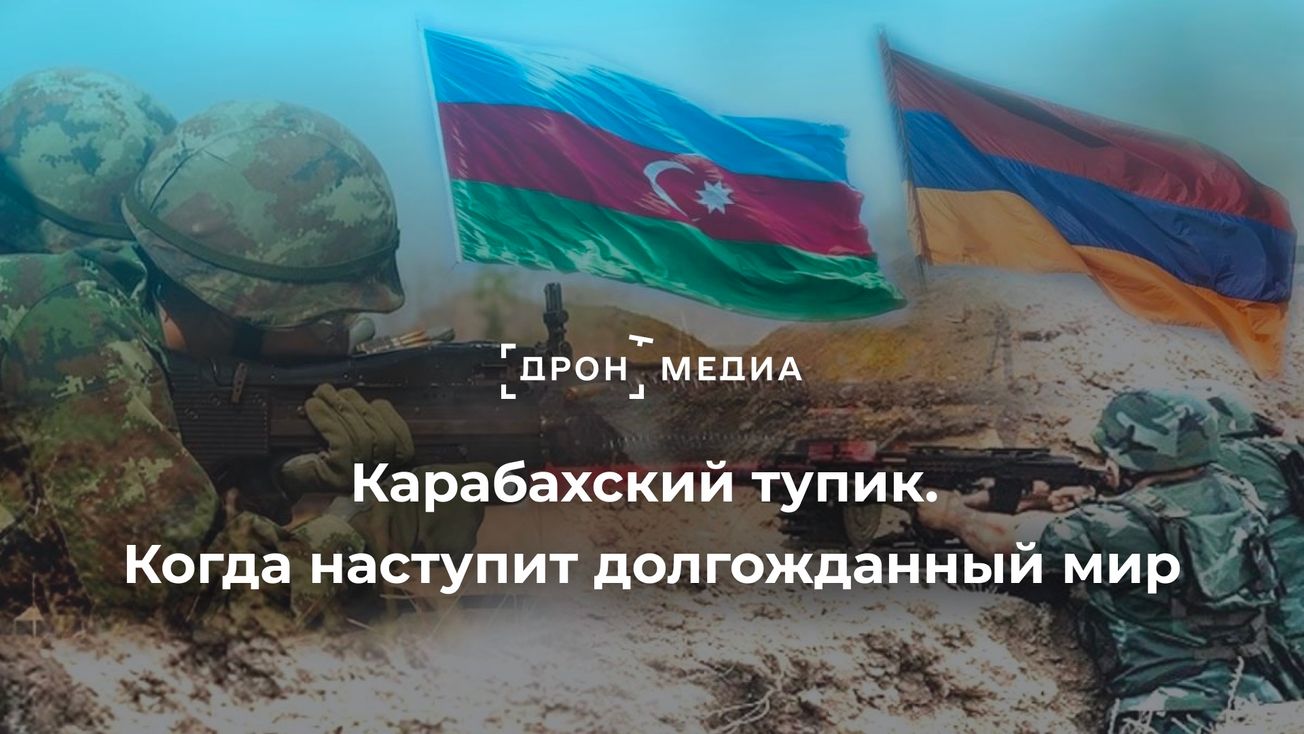
A little more than two years ago, the Second Karabakh war ended. The armed confrontation ended with the victory of Azerbaijan, which returned almost all of the territory he lost in the past. But Armenia and Azerbaijan have not yet signed a peace agreement, on the border of the two countries each shoots, sometimes growing into full -fledged battles, and the Armenian population of the Nagorno -Karabakh is in the humanitarian blockade and is faced with the threat of ethnic purges. So why can't Armenia and Azerbaijan agree?
Background
The confrontation of the two countries is inextricably linked with the conflict around the Nagorno -Karabakh, so we will begin with him.
With the beginning of perestroika in the USSR in many republics, the rise of nationalist sentiments began. Azerbaijan and Armenia were no exception. In 1988, the Armenians of the Nagorno -Karabakh, who made up the majority of the population of the autonomous region, wished to separate from Azerbaijan and join in Armenia, believing that they were discriminated against Azerbaijanis.
In Baku with all this, they did not agree. The conflict flared up stronger against the backdrop of the collapsing Soviet Union. Against the background of tension from Armenia, the Azerbaijani population began to expel, and in Azerbaijan similar processes were accompanied by two large Armenian pogroms. In Karabakh itself, clashes began between Azerbaijani residents and Armenian armed groups. The latter regularly received weapons and volunteers from Armenia. This was the reason why the troops of the Ministry of Internal Affairs of the USSR and the Soviet Army, together with the Azerbaijani riot police, conducted an operation “Ring”. The goal was declared the fight against Armenian armed detachments. The operation was accompanied by ethnic purges of the Armenian population of Karabakh and violence. According to the human rights organization Memorial, the Soviet and Azerbaijani security forces deported 10 thousand of 19 Armenian villages.
These actions led to a further escalation of the conflict and even more active actions of the Armenian militia detachments. After the final collapse of the USSR in 1991, the new republics received a huge amount of weapons and equipment from the Soviet Army that left the region. The conflict in Karabakh grew into a full -fledged bloody war, in which both sides committed ethnic purges, war crimes and murders of civilians. Armenia did not act as an official side of the conflict, but she supported Nagorny Karabakh with fuel, weapons, food and volunteers. The divisions of the Russian army, which remained in the region, episodically took part in the war on the side of Azerbaijan and Armenia.
For example, the Russian 366th motorized rifle regiment at the end of February 1992 took part in the assault on the city of Khojaly by the Armenian troops, which ended with massacres of the Azerbaijani civilian population. According to Human Rights Watch, 161 peaceful resident were killed. The Azerbaijani authorities claim the death of 613 people.
A year later, in the summer of 1993, fighters of the Russian 328th Guards Parachute Parachute Regiment, together with the Azerbaijani army, held a successful summer offensive. Russia then disowned from the participation of its soldiers, calling them mercenaries, with whom the Armenian military can do everything they want. In response to this, the Armenian side announced that she would shoot captured Russians.
In 1994, the war ended in the announcement of the ceasefire. Both sides were exhausted by military operations. According to the results of the war, the Armenian armed groups managed to win and occupy almost the entire territory of the former Nagorno-Karabakh autonomous region, as well as large territories around it, in particular, between Karabakh and Armenia. Azerbaijanis, who made up the majority in these areas, were forced to escape under the threat of violence. So the Nagorno-Karabakh Republic (NKR) appeared, which no one recognized. Azerbaijan and Armenia agreed on the “ceasefire” through the mediation of Russia, and the conflict was “frozen” for many years. Since the theater of military operations was limited to Nagorno -Karabakh, the rest of the borders of Azerbaijan and Armenia did not undergo serious changes.
More than 11 thousand troops became victims of a bloody war from Azerbaijan. This figure does not take into account the losses among numerous volunteers and mercenaries whom Azerbaijan recruited in Ichkeria and Afghanistan. More than 16 thousand civilians died. Thousands of Azerbaijani military and hundreds of civilians are still missing missing.
According to official figures, Armenian troops lost more than 6 thousand people killed. More than 4 thousand civilians died. Hundreds are missing missing.
Hundreds of thousands of Azerbaijanis and Armenians became refugees.
Between the first and second
After the conflict, the parties began to establish life after the collapse of the Soviet Union. In Armenia and Karabakh, an economic situation worsened due to the war. Many settlements of the latter were devastated by the war. For example, the city of Agdam previously inhabited by Azerbaijanis was abandoned and turned into a “ghost city”. The flow of goods and fuel, which before the war went from Azerbaijan to Armenia, has stopped. Türkiye, supporting Baku, also stopped trade with Yerevan, closing the border. In Azerbaijan, the population was in a humiliated, injured state. A large number of refugees and families in whom someone died in the war served as an extra reminder of a painful defeat. The formed authoritarian power of Heydar Aliyev, and then his son Ilham Aliyev, used these injuries to control and strengthen.
While in Karabakh they enjoyed a victory, revenge was preparing in Azerbaijan. The independent press and the opposition were suppressed, and the authorities built an increasingly tough management system, deprived of competition, but based on corruption and non -custody.
From 1992 to 2017, negotiations were held through the mediation of the Minsk group of the OSCE as part of Russia, the USA and France, but they did not give results. The proposed compromise, which was supposed to arrange both sides, rejected the unrecognized NKR and, representing it in the negotiations, Yerevan. The Armenian side wanted to maintain the status quo, being confident that Russia would not allow Baku to unleash the war. Aliyev later refused to make concessions, because he firmly decided to use the conflict to strengthen his own power and resolve domestic political issues.
The situation has not changed after the 2018 revolution, when Prime Minister Nikol Pashinyan came to power. Despite the democratic transformations in the country, the authorities also did not want to make concessions in the Karabakh issue, including fearing the negative reaction of society and the opposition. The relationship between Baku and Yerevan continued to deteriorate.
At the same time, shootings regularly occurred on the contact line, in which soldiers on both sides died. Clapses also occurred on the state border of Armenia and Azerbaijan.
While there was a sluggish negotiation process, Baku signed profitable contracts with Western countries, held various international events in Azerbaijan and rebuilt the city center so that the guests were beautiful. Aliyev tried to be friends with everyone and tried to form the image of a “dictatorship with a human face”, with which you can agree.
The high oil price, which has been holding for a long time, made it possible to concentrate huge amounts of money in Baku. Success in the diplomatic field was achieved, including with the help of corruption , when European officials were captured in large bribes. For example, in this way, in 2013, a resolution on political prisoners in Azerbaijan was blocked in PACA. Then this allowed Aliyev to practically destroy civil society in the country.
In Azerbaijan and Armenia, a real cult began to be created around Karabakh. The region seemed almost a cradle of two peoples, although in fact before the war it was not for those or others. In Azerbaijan, propaganda became an instrument of the state machine. In the media, culture, in education there was an active work on creating an image of a historical enemy represented by Armenians, who are represented as a newcomer. In kindergartens and schools, children were instilled in hatred of Armenians. There was an active propaganda of militarism. In parallel with this, the army grew and reformed, replenished with modern weapons. The armed forces become almost the only state institution, almost deprived of corruption. Most modern equipment to Azerbaijan is sold by Russia, Türkiye and Israel. The Turkish military actively engaged in the training of Azerbaijani colleagues. Later, during the war of 2020, Ankara will even bring to the aid of Azerbaijan of Promotoretsky mercenaries from Syria.
Many Armenian monuments on the territory of Azerbaijan are destroyed. For example, in the early 2000s, a large ancient Armenian cemetery in Julfe was destroyed , whose tombstones dated to the 9th-XVII centuries. Baku as a whole denies the presence of any Armenian cultural heritage in Karabakh. Churches and other cultural and religious objects recognized throughout the world part of the Armenian cultural heritage, Azerbaijani authorities declared the inheritance of the ancient state of the Caucasian Albania, which once existed on the territory of modern Azerbaijan.
Over time, it became necessary for Aliyev to arrange a “small victorious war” to divert the attention of the population. Despite the outwardly rich species of the center of the capital of Azerbaijan, the standard of living in the country has gone not far from its non-tapped neighbors. Due to theft and impractical waste of money, the country survived two devaluation of the national currency during a drop in oil prices.
Baku unleashed hostilities in Karabakh in April 2016 after the country survived the second devaluation of the currency and a fall in the standard of living. Four days of hostilities and several dozen dead soldiers of Azerbaijan, with the mediation of Russia, restored the ceasefire.
Despite heavy losses in the absence of any serious advance, Aliyev presented what happened to the population as a major military victory. The surge of patriotic moods smoothed the internal problems of the country.
But the dissatisfaction of the population over time continued to grow and reached a peak in 2020 due to unsuccessful decisions of the Azerbaijani authorities during the Pandemia of Coronavirus.
The people were also disappointed that for many years, hatred of the Armenians, promised to take revenge on the dead and return the lost lands, but still did not start the war. In the summer of 2020, this resulted in many thousands of march in Baku during an armed clash on the border with Armenia. People demanded Ilham Aliyev to start a war in Karabakh. They did not have to wait long.
The second Karabakh war
The end of September 2020 was the perfect time in order to start the desired “little victorious war”. The world was busy with the struggle against coronavirus and dissatisfied Locksuns, negotiations between Baku and Yerevan finally came to a dead end and ceased, as the parties refused compromises. Early on the morning of September 27 in Karabakh, guns rumbled again in Karabakh. Aliyev spoke on television and stated that the army, which in the last days was drawn to the combat zone, was impacted from Karabakh and went on a counterattack (two years later Aliyev openly admits that he began the war). After 44 days, it was all over. The army of unrecognized Karabakh and the sent troops of Armenia were defeated by overwhelming forces. Azerbaijan returned the areas around Karabakh, and also occupied a significant part of the former NKAO, along with the second large city of Shusha, which was mainly inhabited by Azerbaijanis before the war.
The war was finished by President of the Russian Federation Putin. Under his control, the head of Armenia and Azerbaijan entered into an agreement on a ceasefire. The part of the Karabakh, which the Azerbaijani troops did not manage to take, entered the contingent of Russian peacekeepers. The only connection of the unrecognized state with Armenia was the “Lachinsky corridor” - the road under the control of peacekeepers, which runs through Azerbaijani territory.
The war claimed the lives of 3625 Armenian military and 60 civilians. Azerbaijan lost 2908 soldiers. 101 peaceful resident died. Both sides again committed war crimes in relation to each other. Azerbaijani military executed some prisoners of war, and some of them are still held hostage, sheltered by artillery settlements, there were cases of decapitating of civilians who were in the way of the military. The Armenian population fled from areas that were controlled by Baku, fearing reprisals.
The Armenian Armed Forces fired at the rockets of the city of Azerbaijan, which led to great victims. Both sides used cassette ammunition.
After the war
The war not only did not solve the conflict, but aggravated it. The new surge of violence only increased hostility and hatred. Ilham Aliyev bathed in the rays of fame, regularly went to occupied territories, dressing in camouflage. If earlier, because of his low popularity, he rarely gave an interview to the press and performed, then during and after the war he began to appear more often in public, making warlike statements.
In Armenia, Prime Minister Nikol Pashinyan had to face accusations of defeat and surrender to Karabakh to Azerbaijan. The Armenian authorities during the war, until the very end, lied to the population about the situation in Karabakh and society was shocked by the fact that the war was eventually lost. Nevertheless, in the next elections he won, largely due to the fact that the main opposition was made up of pro-Russian forces, which before the 2018 revolution were in power there.
Azerbaijan began to invest huge amounts of money in projects for the restoration of some settlements in Karabakh and the construction of roads there. Despite the fact that many areas of the country have problems with economic development and infrastructure, the authorities wanted to demonstrate to the population and the world that the region was restored. True at the moment, only one village was again populated by refugees who left the region during the First Karabakh war.
Since the army and war were virtually the only large and serious successes of Aliyev for all his 20-year presidency, he could not allow the conflict to subside. Military and xenophobic propaganda in Azerbaijan after the end of the war not only did not decrease, but also intensified, despite the statements of the authorities about the onset of peace. Further armament of the army, as well as repressions against civil society, continued.
At the same time, Aliyev began to make the territorial claims of Armenia, stating that Zangezur (the Armenian province of Sunik, separating the enclave of the Nakhichevan Autonomous Republic from the main part of Azerbaijan) and even the capital of the country of Yerevan are the "historical lands of Azerbaijan", where it is necessary to "return".
According to the tripartite agreement, Armenia and Azerbaijan were obliged to carry out demarcation and delimitation of the border, which in Soviet times was conditional, as well as to open communications for each other for the transit of cargo through the territory of both countries. The last point of Baku and Yerevan is interpreted differently.
Azerbaijan demands to provide him with the so -called “Zangesur corridor” in the Syunik region of Armenia in Nakhichevan. Yerevan claims that he is ready to unlock communications, but refuses to provide Baku with a corridor, which implies the loss of the country's sovereignty in this territory and cutting off Iran.
Baku also insists that Karabakh, which he considers to be his territory, enters his composition without providing autonomy. Azerbaijan inhabiting the region to the Armenians promises “equal rights” with the rest of the country's residents and security guarantees. It is difficult for residents of Karabakh to believe in Aliyev’s promises because of Armenianophobia reigning in the country, which state propaganda continues to warm up, as well as due to serious problems with the protection of the rights of other national minorities living in Azerbaijan.
Also, the Karabakh Armenians are not conferred by the fact that the Azerbaijanis themselves are very few right in their own country, which international organizations, such as Amnesty International and Freedom House , classify as an autocracy in which freedom of speech is suppressed, the elections are falsified, and civil society is subjected to repression. According to Freedom House, Armenia and even the unrecognized Nagoric Karabakh are ahead of Azerbaijan in the areas of democracy and human rights. Baku also did not submit any plans for the integration of Armenians, as well as how the regional management and interaction with the local population will be carried out.
At the same time, negotiations are periodically in the fields of the European Union and the Kremlin, on which the parties say that they work on a peace treaty and settlement processes, however, two and a half years after the end of the war, neither a peace treaty, nor clause on the unlocking of communications and determination of borders were fulfilled.
Negotiations between Baku and Yerevan are difficult due to mutual conditions that the parties put forward to each other. Враждебная риторика и агрессивные действия Баку также не способствуют деэскалации.
What is happening now? Почему мир так и не наступил?
Пока стороны на переговорах говорили о мире, перестрелки на границе и в самом Карабахе не прекращались . Гибли военные и гражданские с обеих сторон. Российские миротворцы чаще всего проявляли себя пассивно, ведя вялые переговоры со сторонами во время обострений и занимаясь, преимущественно, сопровождением колонн. Азербайджанские военные периодически стреляют по мирным жителям в Карабахе. Иногда даже в присутствии миротворцев, которые не делают ничего, после получения от Баку обещаний провести расследования. Каких-либо данных о расследовании азербайджанской стороной военных преступлений и убийств мирных жителей во время 44-дневной войны и после нее, нет.
Чувствуя пассивность российских миротворцев азербайджанские военные постепенно продвигают свои позиции в некоторых местах линии соприкосновения. В одном из мест азербайджанские войска даже применяли мобильные громкоговорители для психологического давления на жителей Карабаха и также перекрыли в холодное время года подачу газа из Армении по трубопроводу, который проходит по территории, контролируемой Баку. Через некоторое время газоснабжение было восстановлено.
22 февраля 2022 года Ильхам Алиев и Владимир Путин подписывают Декларацию о союзническом взаимодействии. Помимо прочего, документ предписывает странам не предпринимать враждебных действий по отношению друг к другу. Благодаря новому союзу, а также, вторжению России в Украину, которое отвлекло от региона внимание Кремля и стран Запада, Азербайджан начинает действовать увереннее.
Летом того же года Европейский Союз заключил крупную газовую сделку с Азербайджаном. Глава Еврокомиссии Урсула фон дер Ляйен назвала Алиева “надежным партнером Европы”. Баку обязался значительно увеличить поставки газа Европе.
В августе 2022 года Азербайджан развязывает в Карабахе боевые действия, которые продлились 3 дня. Баку тогда занял небольшую часть территории Карабаха и заставил армянскую сторону перенести часть маршрута Лачинского коридора в другое место с целью взятия под контроль города Лачин. Российские миротворцы заявили, что конфликт был урегулирован при их посредничестве.
В следующем месяце Азербайджан обвинил Армению в “вооруженных провокациях” и атаковал уже непосредственно суверенную территорию страны. Спустя несколько дней боев, стороны потеряли десятки человек убитыми. Азербайджанские военные захватили часть приграничной территории Армении, а также, предположительно, совершили военное преступление - расстреляли группу армянских пленных. Баку снова пообещал провести расследование, но как и ранее, данные о его ходе отсутствуют.
Международное сообщество осудило вооруженную агрессию против Армении и призвало Баку воздержаться от подобных действий. Во время боевых действий руководство Армении, обратилось за помощью к России через Организацию договора о коллективной безопасности (ОДКБ), членом которой является Армения. Согласно одному из пунктов соглашения, блок обязан оказать военную помощь в случае нападения на одну из его стран-участниц. Однако ОДКБ отказалась оказывать военную помощь или называть Азербайджан агрессором. Ранее Алиев даже шутил , что у него в ОДКБ “больше друзей, чем у Армении”. После этого Ереван начал попытки отдалиться от Кремля и отказался проводить учения военного блока Путина.
Примечательно, что в самом Азербайджане нападение на Армению уже не вызвало такой бурной и однозначно положительной реакции, как действия в Карабахе. Многие общественные деятели, которые ранее поддержали 44-дневную войну, выступили против войны с Арменией. Правящей партии даже пришлось провоцировать кампанию травли противников войны в соцсетях под названием “#знайпредателя”. Подобные небольшие эскалации все больше вызывают недовольство в азербайджанском обществе, которое начинает уставать от бесконечной войны, ухудшения уровня жизни и смерти солдат.
Не получая никакой жесткой реакции на свои действия от России, которая занята пошедшей не по плану войной в Украине, а также от Евросоюза, направляющего ресурсы на поддержку Киева, Алиев понял, что может действовать дальше.
12 декабря 2022 года группа азербайджанцев, называющих себя ”экоактивистами”, перекрыла единственную дорогу, связывающую Армению и Нагорный Карабах. Примерно сто тысяч жителей самопровозглашенной Нагорно-Карабахской Республики оказались в блокаде. В регионе возникла нехватка медикаментов, некоторых продуктов, начались перебои с подачей газа и электричества.
Предполагаемым основанием для их протеста была “незаконная добыча полезных ископаемых” в Нагорном Карабахе, а требование собравшихся заключалось в том, чтобы азербайджанские специалисты были допущены к одному из золотых рудников, находящихся под контролем армянской стороны.
“Эко-активисты” утверждали, что предприятие незаконно добывало золото для экспорта в Армению при поддержке российских миротворцев. По их словам, основной проблемой и причиной протеста было предполагаемое воздействие добычи на окружающую среду.
Власти Азербайджана заявили, что протестующие являются независимыми субъектами, использующими свое право на гражданское неповиновение и публичное выражение мнений и не связанными с правительством.
Но по всем признакам акция была спланирована и поддерживалась властями. Блокада привела к дефициту некоторых продуктов питания, медикаментов и предметов гигиены. Местные де-факто власти ввели систему талонов для продовольствия. Также начались перебои с подачей газа и электричества, так как обе коммуникации идут по территории Азербайджана. Российские миротворцы, в чьей зоне ответственности находится дорога, не предпринимали никаких действий для снятия блокады. Они лишь занимались транспортировкой гуманитарных грузов и мирных жителей, с которых, по некоторым данным , брали крупные суммы денег за проезд.
Международный суд ООН и Евросоюз в своих решениях призывали Азербайджан разблокировать дорогу, но Баку заявлял, что никакой блокады нет. В это же время Баку стал утверждать , что российские миротворцы помогают армянам перевозить военные грузы и солдат через коридор в Карабах, но никаких доказательств наличия таковых представлено не было, кроме кадров передвижения грузовиков.
Спустя 138 дней Азербайджан в присутствии российских миротворцев установил КПП на въезде в Лачинский коридор, а также паспортный контроль. Параллельно Баку предложил армянам Карабаха принять гражданство Азербайджана или уехать. Армянская сторона восприняла действия и заявления Азербайджана, как подготовку к этнической чистке региона. Ереван обвинил Баку в нарушении одного из пунктов Трехстороннего соглашения, согласно которому стороны обязуются обеспечить беспрепятственное движение по Лачинской дороге.
Сразу, после установки КПП “эко-активисты” объявили о “приостановке” своего “протеста”. Командование российского миротворческого контингента не предприняло никаких действий с целью помешать Азербайджану и взять под контроль дорогу, находящуюся в их зоне ответственности. Оно лишь провело очередные “переговоры” с азербайджанскими военными, которые, как и ранее, ни к чему не привели.
В начале мая в Вашингтоне прошел новый раунд переговоры между главами МИДов Азербайджана и Армении. Стороны не подписали никаких соглашений, но заявили о прогрессе в переговорах. Запланирована новая встреча в Москве, но уже глав государств. Ранее главы государств уже встречались на полях Кремля и Евросоюза и также озвучивали оптимистические прогнозы, но вернувшись в свои страны не предпринимали никаких действий для деэскалации конфликта.
Перспективы этих встреч туманны несмотря на то, что Пашинян обещает подписание мирного договора уже в ближайшее время. Но этот документ, скорее всего, будет касаться отношений Еревана и Баку, но не Карабаха, представители которого отказываются идти на уступки Алиеву, не жедая расставаться с собственной властью и оставлять население на милость авторитарного государства. По словам армянского премьера, Баку настаивает на признании Карабаха в составе Азербайджана.
Таким образом Карабахский конфликт продолжается, а попытки той или иной стороны решить его военным путем приводят лишь к его усугублению и новым жертвам. Выгода, которую Россия и Евросоюз получают от сделок с Баку, а также отвлечение их внимания на войну в Украине, позволяют Азербайджану действовать агрессивно, что рушит баланс и тормозит мирный процесс. Отказ азербайджанской и армянской стороны идти на уступки раз за разом на протяжении уже трех десятилетий приводит к тому, что в регионе вспыхивают боевые действия, уносящие тысячи жизней.
Также остается неясным, закончится ли конфликт после подписания мирного договора, который может быть лишь бумажкой, наплевав на которую, выгодополучатели войны могут раз за разом развязывать боевые действия, встречая равнодушие всего остального мира.