
Translated material
Russia is not one. Vladimir Milov about why it is not necessary to demand from the Russian opposition to unite


Russia is not one. Vladimir Milov about why it is not necessary to demand from the Russian opposition to unite
11 May 2023Vladimir Milov
politician, economist, public figure
Recently, a wave of discussions about the fragmentation of the Russian opposition has gone through social networks again. It sounds quite strange today: by historical standards, the level of interaction and cooperation between various opposition groups is quite high. There are scandals, but neither the split of large opposition groups, nor the depleting wars on mutual destruction (there is a periodic tingling of each other for some reason, but this does not look like total obstructionism that we knew in the past). Different opposition groups do quite a lot of practical useful work in about the same areas-mass political broadcasting in Russia, international diplomacy, assistance to Russians abroad, discussing the image of the post-Putin future-and there are no global contradictions. When you look around, what colleagues are doing, it is clear that everyone constantly and works a lot, often in active interaction with each other.
Everyone constantly and works a lot, often in active interaction with each other
Where does this set of stereotypes about eternal swearing and the inability to unite? There are two main reasons - but first we will analyze what is really happening.
Disputes in social networks - a swollen problem
First of all, it seems, a serious scandal is a collapse of some large project, a split in the organization, a political war on mutual destruction (when the main meaning of someone’s activity becomes harm to the opponent), active actions to torpedoing each other. Nothing of the kind is happening at present. Mostly periodic exchange of critical statements occurs.
How dangerous is this? Yes, no. Acute criticism at someone’s address can become a problem only if the criticized is offended and in response makes the meaning of his activity the desire to take revenge. If he simply spits everything on this, he will say to himself “here is an asshole” and continue his work, then nothing will happen, and mutual criticism itself, even if acute, will not receive any negative consequences. Yes, we have heard from the opposition recently a lot of each other. But what specific efforts and projects do this interfere?
In general, among free people, mutual criticism, even sometimes reaching a loud controversy, is a normal phenomenon. It can be unpleasant, but there is nothing fatal about it. We are all living people, everyone is often a very different vision of the events and the world as a whole. It is often not easy to accept someone else's point of view, especially in critical circumstances as today. People react emotionally. This is their right.
Among free people, mutual criticism - even reaching a loud controversy - is a normal phenomenon
It is much more dangerous when some sharp words begin to inflate to the scale of the universal conflict. I will give a simple historical example. In 1989, the democratic opposition achieved the first major success in the struggle against the Dictatorship of the CPSU-the election of democrats deputies in the election of the Congress of People's Deputies of the USSR-and formed the interregional deputy group. There was a serious tension between the two potential leaders of the opposition, Boris Yeltsin and Andrei Sakharov. In principle, this could end with a serious conflict and a split among the opposition. And, although this did not happen partly due to the death of Andrei Sakharov in December 1989, among the dissidents of the old hardening, skepticism was preserved against Boris Yeltsin. Nevertheless, there was no major split, and the Democrats were waiting for success and victory over the CPSU. Two circumstances then were seriously different from today.
First of all, then there were no social networks. Frankly, if they were then, it is very likely that Yeltsin and Democratic Russia did not succeed and we would still live “with a scoop”. There was no mass platform where some contradictions were trampled daily (and then they were, as they say, above the roof), creating supporters of changes in the impression that the opposition is “some kind of not like” and it is not worth supporting it, because it “curses all the time”. They swore then, I repeat, no less than the current one. But we, ordinary citizens, first of all looked at the affairs of opposition politicians, and not at who said to whom. There was simply no platform for this. And thank God.
If we are transferred to date, it is clearly clear that some separate event, albeit unpleasant, in most cases does not carry such a mass negative charge for the opposition as its subsequent promotion and discussion in social networks. Thousands of anger-revealing posts are written, they are followed by an even more emotional reaction-a spiral of confrontation is spinning.
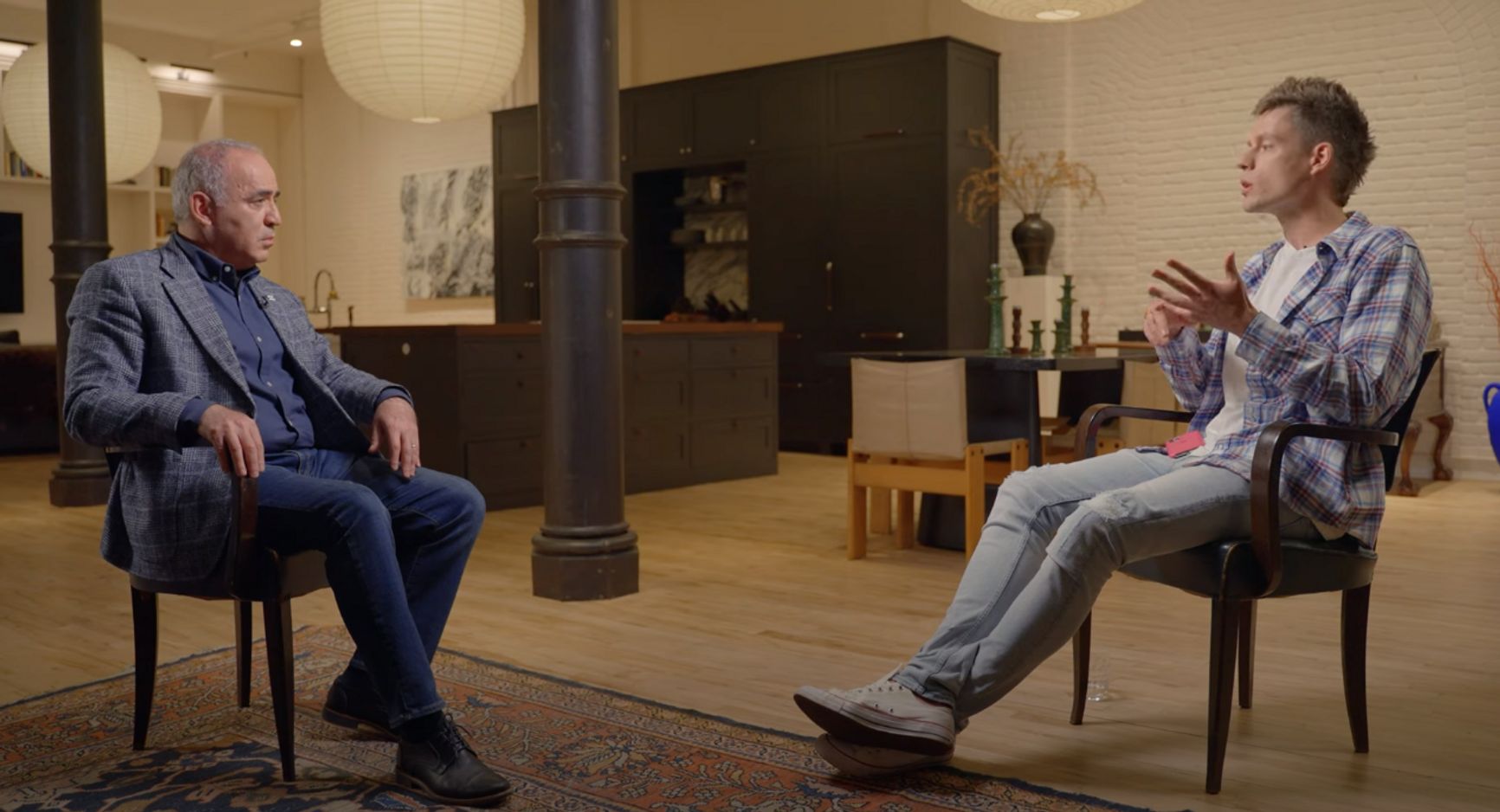
Look, for example, at the notorious interview of Harry Kasparov Yuri Dudu, where Kasparov spoke a lot of unpleasant about other oppositionists. Neither I nor many of my colleagues were looking at this interview and are not going to, because we have long known Kasparov and we roughly understand what he can say. This does not really bother us, we do not think that it has some great importance and will affect something, and Kasparov is a free person and has the right to say anything. But in social networks, still, after two weeks, there is a bloody cabin about this interview. And this is very sad, because the information water is not even close to be so hot.
Try to conduct an experiment: not to go a week not like on social networks, but at least only on Twitter. And on Facebook to deploy those authors who constantly write pathetic and revealing posts. And you will see that the scale of “quarrels and scandals in the opposition” is not as large as you think. That many oppositionists continue to release their analytics about the situation in the country, their proposals for the arrangement of Russia of the future, act on international sites, carry out events for Russian activists abroad and much more. What you will not see is the notorious “scandals”.
I do not want to say that social networks are an absolute evil and you have to get rid of them. But such an experiment will show that the notorious “scandals” are more a product of spiral inflating than an element of real life. Try for a month not to communicate with an annoying grandmother who constantly itchs in your ear: “Daughter, you should get married, otherwise you won’t get it and no one will take it,” and you can calmly look around and independently understand whether you need to marry or not and is it in principle a problem for you. The recipe here is simple: how Taylor Swift sings, “You Need to Calm Down - You're Being Too Loud”. Before presenting to opposition politicians for “scandals”, we must calm down a little and take a rule not to disperse conflicts in social networks.
Are the journalists to blame?
The second problem-and someone must say about this out loud, although this is not accepted-the attitude towards the opposition of an independent Russian press. Although it has recently softened-in many ways due to the general burdens of emigration-nevertheless, it is still radically different from the democratic press of the 1980s. Then the oppositions, and the same Yeltsin, could have scolded, but in general, everyone who dared to raise their voice against the CPSU were first perceived as heroes, and only then there was criticism.
Modern Russian journalistic culture, formed in the well -fed and relatively free "zero", is completely different. She is full of contempt and arrogance to the opposition, they are constantly subjected to a public and humiliating examination. They cling to some unsuccessful (and often just overwhelmed) statements and inflate them, but do not notice large political achievements. Recently, only Alexei Navalny has become a certain exception, who (often through his teeth) pay tribute for the formation of truly massive resistance movement and for his personal courage - but the rest often gets against this background even more, they say, well, we recognize Navalny, but all the rest are “not pulling”.
Journalism today is full of contempt and arrogance for oppositionists
This is a very harmful attitude. The culture of popularizing scandals against the background of silence of achievements - hence. Everyone willingly write who Kasparov scolded how and how it was better to write at least what important work to create another, humane image of Russia in the international arena does the same Kasparov (here he is certainly worth paying up). No, there are no articles about this in independent Russian media.
This attitude is unacceptable and in many ways is the root of the problems. Remember the same Economic Program of Navalny before the 2018 elections. It can be criticized as much as you like, and much of criticism can be fair, but in general it was an absolutely suitable, worthy document, certainly no worse than government programs. How many publications in independent media described it like that? About zero: in the reviews there was a continuous negative, the critics of the program were provided with a disproportionate large rostrum. Bottom line: despite the completely working program, it was possible to sow doubts about the heads of a large number of people.
It is necessary to be aware of: the image of the opposition as a “constantly scandalous” is, first of all, the result of acceleration and promotion in social networks and independent media. You can see my last interviews and make sure: no matter how you explain to reporters that you don’t want to comment on someone’s scandalous statements, you will still ask questions about it first of all.
The image of the opposition as a “constantly scandalous” is the result of promotion in social networks and independent media
Colleagues, de -escalation of conflicts is needed primarily among you. Among politicians, tension is not critical. There will always be disagreements. We have the right and sometimes quarrel. Disputes and criticism will not cause some fatal damage to our activity. The constant transformation of disagreements, in general, does not exceed the “natural radiation vona”, into a certain “plot of the century”. Learn the democratic press of the 1980s, which ultimately helped get rid of the KPSS dictatorship, and did not interfere.
Association does not solve problems
Further, about the "unification of the opposition." As I already emphasized, coordination is today at a rather high level by historical standards. We normally communicate with each other, with the same Mikhail Khodorkovsky, we personally saw each other in Berlin at the end of April, we plan to soon meet again. At the beginning of June, a large conference in Brussels was planned with the participation of both the leadership of the European Union, and a wide range of various Russian independent democratic politicians, journalists, and experts.
The most important thing is that different groups are virtually one in what we do. We say the same thing in communication with international circles. We help Ukraine, help Russian activists. We are conducting a large -scale broadcasting on Russia, which has no analogues. Influence on public opinion is obvious. It is not necessary to belittle and depreciate it with jokes about “turned into YouTube bloggers”: by all historical standards, the broadcasting of Western “votes” on the USSR during the Cold War is considered a superuspatic project, and today we have a collective coverage of the audience in Russia, and Russians broadcast for Russians, and not some representatives of the Western countries.
We are conducting large -scale broadcasting on Russia, which has no analogues
The essence of our positions broadcast to Russia is similar. We preach a decentralized state, parliamentarism, federalism, the need to abandon the omnipotence of officials and special services, similar ideas in the field of economics, social policy. We have absolutely general solidarity with Ukraine, a common position on the punishment of Putin’s war criminals, assistance to Ukraine, and the dissociation of future Russia from imperial ambitions. What is the "split"?
Some people persistently require the creation of a “democratic CPSU” - a single organizational structure, with a single presidium, where democratic L. I. Brezhnev, Democratic M. A. Suslov, and so on, would sit together. I carefully observe people who are actively agitating for something like that, and I see that this acquires the character of a manic idea, a certain fetish. There are some strange hopes that if you create a “democratic CPSU”, then, as if by the wave of a magic wand, the war will end, Putin will disappear and the good old calm times will return.
Such ideas about the “magic wand”, which will change everything and stop the nightmare at once, periodically replace each other with enviable regularity. A little more than a year ago, commentators rushed on the Internet and created petitions demanding to disconnect Russia from SWIFT - almost every second question on the air was asked on this topic. People believed that if Russia is turned off from Swift, then Putin would immediately turn into pumpkin and surrender. When the Swift was turned off and this did not happen, the idea of an oil embargo was replaced. When the oil embargo was introduced, but Putin did not surrender again, everyone began to pour curses to Olaf Sholts and demand to put the “leopards” to Ukraine. Now Swift (in general) is disabled, the oil embargo is working, the “leopards” are being supplied, but the miracle never happened. After that, the holy place is increasingly occupied by the requirements of the “opposition to unite”.
But no magic wand exists. Putin wages against the democratic world a complex hybrid war in a huge number of directions, has huge resources, and it can only be defeated by a long stubborn work in all these areas. Yes, I am an experienced person, I know Russia well and am aware that the phrase “long hard work” drives into discourage and depression, and many are looking for a magic wand again - who runs to the professor, who repeats the mantra about the “unification of the opposition”. But even if the opposition is suddenly united tomorrow, create a “democratic CPSU” and will, like “United Russia”, will vote unanimously on all issues, Putin will not disappear from this, the war will not stop, this will not change anything, and you will still have to return to the idea of long hard work.
“In parts are more expensive”: why the Russian opposition should not be united
As for the associations, we already had such an experience - roughly speaking, before Navalny appeared. “Committee-2008”, the united civil front, “other Russia”, “solidarity”, the Party of People’s Freedom and as an apotheosis of everything-the coordination council of the opposition, which in the first flight collided with the iceberg and sank, not sailing to the destination. Alas, this was in many ways a lost decade: huge resources spent on all these unification conferences and congresses, but did not reach a qualitative breakthrough. It even hurts to remember: then it was really possible to spend a day (and often several days) on the coordination of some banal joint statement on the relevant occasion, where everyone offered their amendments, considering them the most important.
What is the problem of this approach? The fact that with extremely meager resources you spend 95% of them on overcoming internal contradictions (which will inevitably be, because the opposition are free people, and the presence of different views in them is normal). When you stop doing this and simply do, together with a group of like -minded people, what you do best, the effectiveness increases at times. Actually, this happened when Navalny appeared and laid the end of all this unification case and kaleidoscope of one-day committees. The effectiveness and authority of the opposition did not even grow at times - by magnitude. Marvelous? Not really. Let me remind you of a quote from the film “Beauty”, where the heroine of Julia Roberts asks the hero Richard Gira, and he replies: “I buy companies and sell them in parts, so they are more expensive.” In parts - attention - are more expensive!
With the advent of Navalny, the effectiveness and authority of the opposition did not even grow at times - by magnitude
It is strange to ignore the existing negative experience of organizational associations - negative for objective reasons. “Just find the strength to overcome your differences” is a frivolous and naive approach. Disagreements are natural and inevitable. Someone believes that you do not need to do anything else but the support of Ukraine-and someone wants to first think about anti-war Russians and a change in public opinion in Russia. Someone wants to engage in the image of the future of Russia (absolutely necessary work), and someone considers it a useless dream and requires concentrating on purely practical current things. For some, the issues of the economy are priority, and for some LGBT. And so on. All this comprehensive and complex range of opinions will not be possible to overcome the simple “find the strength to coordinate the position” - this is extremely naive. All forces will go to the development of a unified position on all issues. There will be no remaining to fight with Putin. We have already tried it, we know.
Куда эффективнее координировать усилия уже сложившихся и доказавших свою состоятельность отдельных групп, состоящих из единомышленников, которым не надо тратить время на согласование позиций. В электоральной политике это называется «избирательный блок». Не зря Путин и Сурков запретили в России избирательные блоки аж в далеком 2005 году — они как раз и хотели, чтобы демократические политики, реагируя на прямолинейный запрос избирателей «просто преодолеть разногласия и объединиться», потратили все ресурсы и стесали все языки, пытаясь создать единую организацию, но потерпели неудачу. Так в итоге и вышло.
Давайте оценивать эту ситуацию комплексно и не хвататься за первую попавшуюся примитивную идею, как за несуществующую «волшебную палочку». На эту тему у Артура Конан-Дойла есть замечательный диалог между Шерлоком Холмсом и доктором Ватсоном, где Холмс, пораженный новостью о том, что вращается все же Земля, восклицает: «Но мои глаза говорят мне, что скорее Солнце вращается вокруг Земли... Впрочем, может быть, он и прав, ваш этот, как его, Коперник». Другая версия схожей ситуации — анекдот про обезьяну и полковника ФСБ, где обезьяна додумалась взять стоящую рядом палку и сбить банан с дерева, а полковник на предложение подумать продолжал отвечать: «Что тут думать, трясти надо!»
Не надо трясти. С объединением оппозиции надо обращаться нежно. Имеющийся опыт — преимущественно негативный, и на это есть объективные причины. Не надо пытаться усадить нас в единую «демократическую КПСС», которая голосует единогласно. Такого и без нас хватает. Наша ценность — в разнообразии идей и приоритетов, но при этом в общем векторе видения будущего. Мы имеем право и на гибкость организационных форматов, и на разногласия, и даже на скандалы. Дайте нам возможность выбрать лучшую форму для достижения нужного результата. Мы не так мало добились: у нас есть многомиллионная аудитория в России, признание и поддержка в мире, общее видение будущего. И все это — несмотря на попытки огромной, богатой и до зубов вооруженной путинской мафии нас уничтожить и раздавить. Нас есть за что покритиковать, но российская оппозиция заслуживает далеко не только критики. Она заслуживает поддержки.
С объединением оппозиции надо обращаться нежно
Хотим победить Путина? Давайте заканчивать бесконечно цепляться к оппозиции, раздувать какие-то противоречия в СМИ и соцсетях выше их реального уровня значимости, выдвигать наивные и нереалистичные требования создать некую «демократическую КПСС» только потому, что это соответствует вашим личным представлениям о том, как все должно быть правильно организовано. Давайте лучше работать — каждый на своем участке. Понимаю, обмусоливать скандалы интереснее, а работа — это скучно и вгоняет в депрессию. Но работать придется. Берите с нас пример и помогите нам в этом.