
Original Material
Norwegian scientists say Kakhovka dam detonated from within, Russia hampers Kherson evacuation. What happened on the front line on June 8?
In today's summary:
- Evacuation of the Kherson region;
- Seismic readings point to Kakhovka dam being blown up;
- Ukrainian President Volodymyr Zelensky visits flood-affected areas;
- Residents of occupied Dnipro left bank barred from evacuating from the area;
- Crimea prepares for drought.
What destroyed the Kakhovka dam
What exactly caused the destruction of the dam at the Kakhovka Hydroelectric Power Plant (HPP) is still not clear. The UK, following the US, has refused to blame Russia for the destruction of the dam and the subsequent flooding of the Kherson region. Prime Minister Rishi Sunak said that British intelligence services were processing information about the dam's collapse in a joint effort with the country’s military.
“I can't say that definitively yet. You know, our security and military services are working through it. But if true, if it does prove to be intentional, it will represent a new low. It's an appalling act of barbarism on Russia's part,” Sunak told ITV.
Meanwhile, NORSAR, a Norwegian independent seismic monitoring foundation whose primary mission is to monitor compliance with the Comprehensive Nuclear-Test-Ban Treaty (CTBT), says seismic signals indicate that there has been an explosion at Nova Kakhovka Dam.
Mykola Kalinin, deputy technical director and chief engineer at Ukrhydroproekt, commented that the destruction could not have been caused by a strike from the outside. According to Kalinin, the destruction was caused by a deliberate explosion from within the dam itself.
“I assume that there must have been several simultaneous powerful explosions from the inside. Most likely, the dam itself and the HPP building, where the hydroelectric units are installed, were mined. I emphasize again – mined from the inside. The fact that you did not hear a powerful explosion can be explained by the fact that the explosives were placed deep inside the hydroelectric plant, in the interior rooms, below the water level.”
Situation on the front line
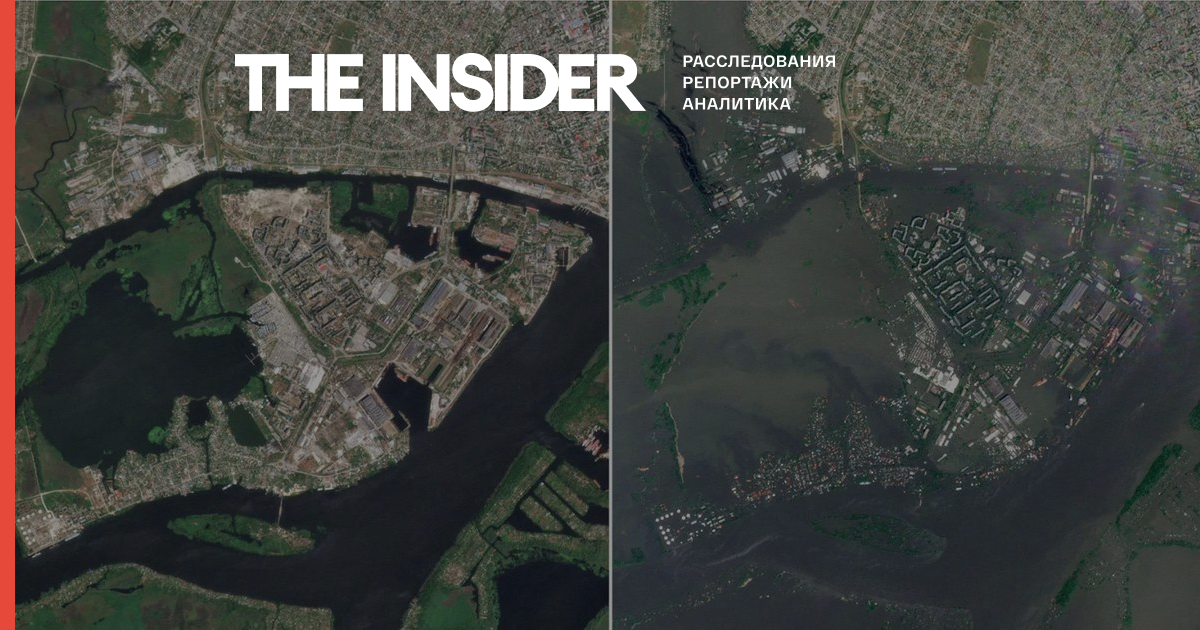
The evacuation of residents of the Kherson region on both banks of the Dnipro River continues. Residents on the Russian-occupied left bank of the Dnipro are faced with the fact that the occupation authorities do not allow rescuers – particularly volunteers – to enter the flooded area for fear of sabotage groups passing through. Because of this, many local residents are unable to leave the flooded areas, with many sitting on the roofs of houses. Many messages with requests for rescue are coming from the town of Oleshky.
30 people with hypothermia were taken to a local hospital, according to a report by the head of the Oleshky Civil-Military Administration, Tetiana Hasanenko. According to Hasanenko, local residents simply cannot leave the flooded area, as the Russian military is not letting them through.
Initial data on flood-related deaths is also starting to appear. Oleshky Mayor Yevhen Ryshchuk said that at least three people are already confirmed to have died. He added that the city was 90% flooded.
Ukrainian President Volodymyr Zelensky has already visited the Kherson region. He discussed issues of evacuation and the prospects for restoring and rebuilding the affected areas.
“It is important to calculate losses and allocate funds to compensate residents affected by the disaster and to develop a program to compensate losses or relocate businesses within Kherson,” the president's press service said in a statement. He also visited the crossing in Kherson, which is used to evacuate people from the flooded areas.