
Translated material
Return and shoot. How the Soviet government lured emigrants back and how it ended for them

Return and shoot. How the Soviet government lured emigrants back and how it ended for them
The Insider
June 26, 2023 Trying to return to Russia who left for the war and mobilization of specialists-primarily ITSHNOV-the authorities appeal to the fact that there is nothing to be afraid of. " Officials report on the successful return of the railceptors, calling it undeveloped invented numbers. Presidential Assistant Maxim Oreshkin talks about 50%, Prime Minister Mikhail Mishustin- about 85% , Komsomolskaya Pravda publishes a “letter of prodigal ITSHAN”. The Soviet government lured beautiful promises of emigrants, and then it was important not so much to return the “brains” as to show the world how, having lived in the West, people eventually chose socialism. As the fate of the returning people was, it is known - at best, they could not get a job in Soviet realities, in the worst - they were waiting for camps and executions. So, during the “Harbin case” (when employees of the Sino-Eastern Railway returned to the USSR, who massively issued citizenship in a simplified procedure) 21 thousand people were shot. Few of Stalin returned to death survived and free; And although under Khrushchev and Brezhnev returning, as a rule, they did not plant, there were already few people who wanted to repatrium.
Content
"Soviet ark"
Return of white emigrants
Repatriation after World War II
The last attempt to return emigrants to their homeland
"Soviet ark"
Demographers and historians traditionally divide emigration from the USSR into three waves. The first (1918-1922) - those who fled after the revolution. During this period, the country left , according to various estimates, from one and a half to three million people. The second wave (1941-1944) includes USSR citizens who were in the third Reich during the war - as a rule, as an Oustrinus or prisoners of war - and then refused to return. Although this wave was quite numerous (some historians believe that there were no more than 700 thousand people, others - that one and a half million and even more), it turned out to be the most invisible. Fearing that they could be given to the USSR, where the camps were most likely awaited, the emigrants tried not to attract attention. The third wave (1948-1989) is called the entire emigration of the Cold War. A significant part of it is Jews, which in the 1970s, the Soviet authorities finally allowed to leave. This wave is not too numerous - about half a million people.
The emigrants sympathizing with the Communists were the first to return to Soviet Russia, who left the country even before the First World War. True, not all of them came of their own free will. So, three years before in 1922 the Soviet authorities sent a politically unreliable intelligentsia abroad, the American authorities did about the same with the communists-immigrants from the Russian Empire. It all started with the adoption of Woodlon Wilson in 1918, the “ Law on Enjoying the Rebel ”, which allowed, among other things, to deport radically configured immigrants. Soon, Prosecutor General Alexander Palmer, along with the immigration authorities, using the new law, opened a real hunt for trade unions and communist organizations. As a result of the so -called Palmer raids by the end of 1919, 249 immigrants from the Russian Empire suspected of relations with the Communists were arrested. Most of them were indeed members of the anarcho-syndicalist emigrant organization “Union of Russian Workers of the United States and Canada”, the Communist and Socialist Parties, but several people were not related to politics at all. The detainees were first placed in an immigration prison, and on December 21, 1919 they put in the hold of the Baford army ship and sent to Soviet Russia under the escort through Finland. American newspapers immediately christened Burford with “Soviet (or red) ark”.
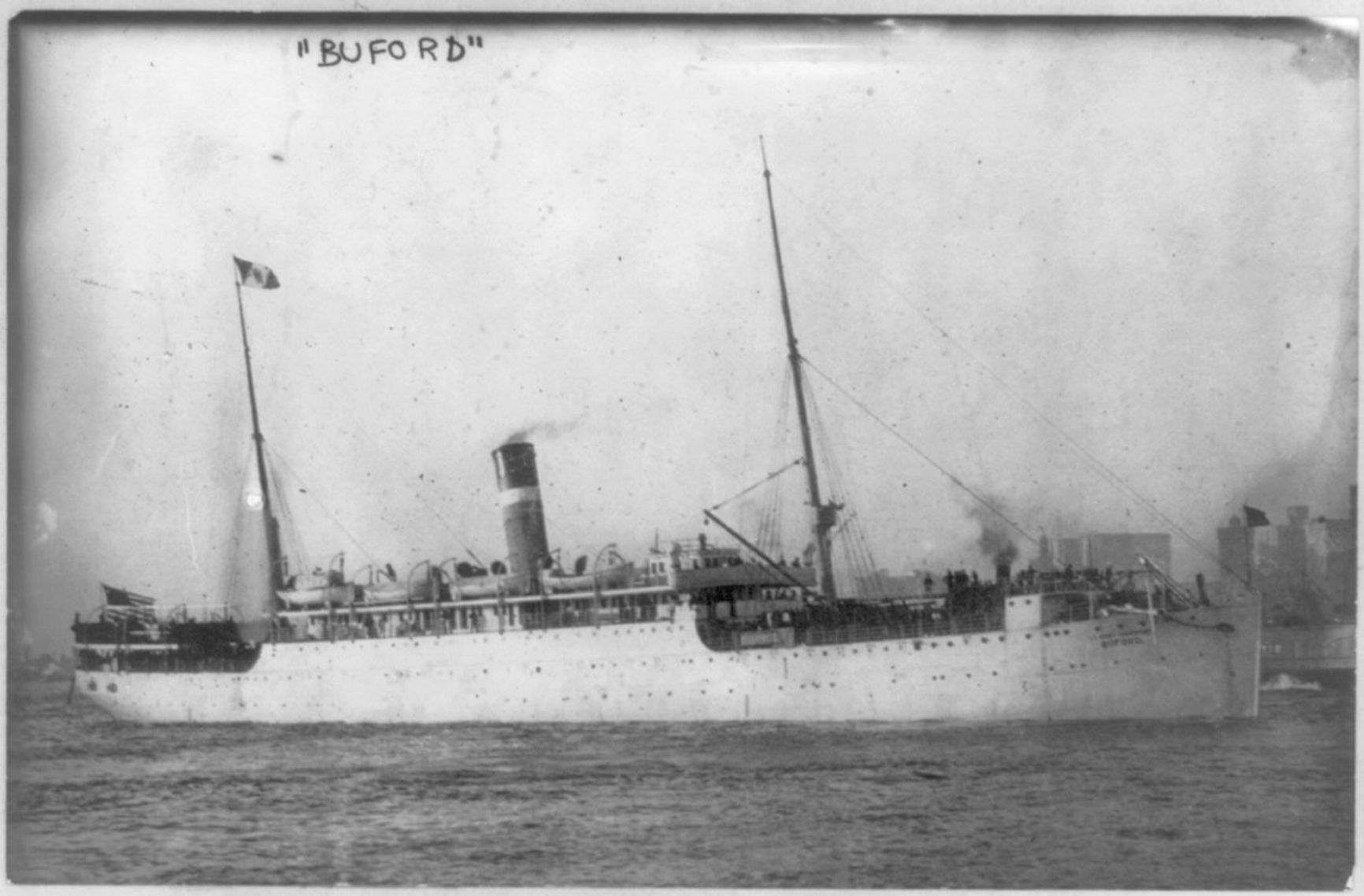
BULORD Trading Ship (Soviet Ark)
George Grantham Bain Collection (Library of Congress)
On the Soviet-Finnish border, the deported was met by the Soviet delegation, headed by the secretary of the Petrograd city committee of the RCP (b). However, further disappointment was waiting for the arrivals. The most famous passengers of the Ark, political activists of Emma Goldman and Alexander Berkman , hastily left the country after the harsh suppression of the Kronstadt rebellion in 1921. Soon they published unflattering memories of Soviet Russia. Many other returning were later arrested.
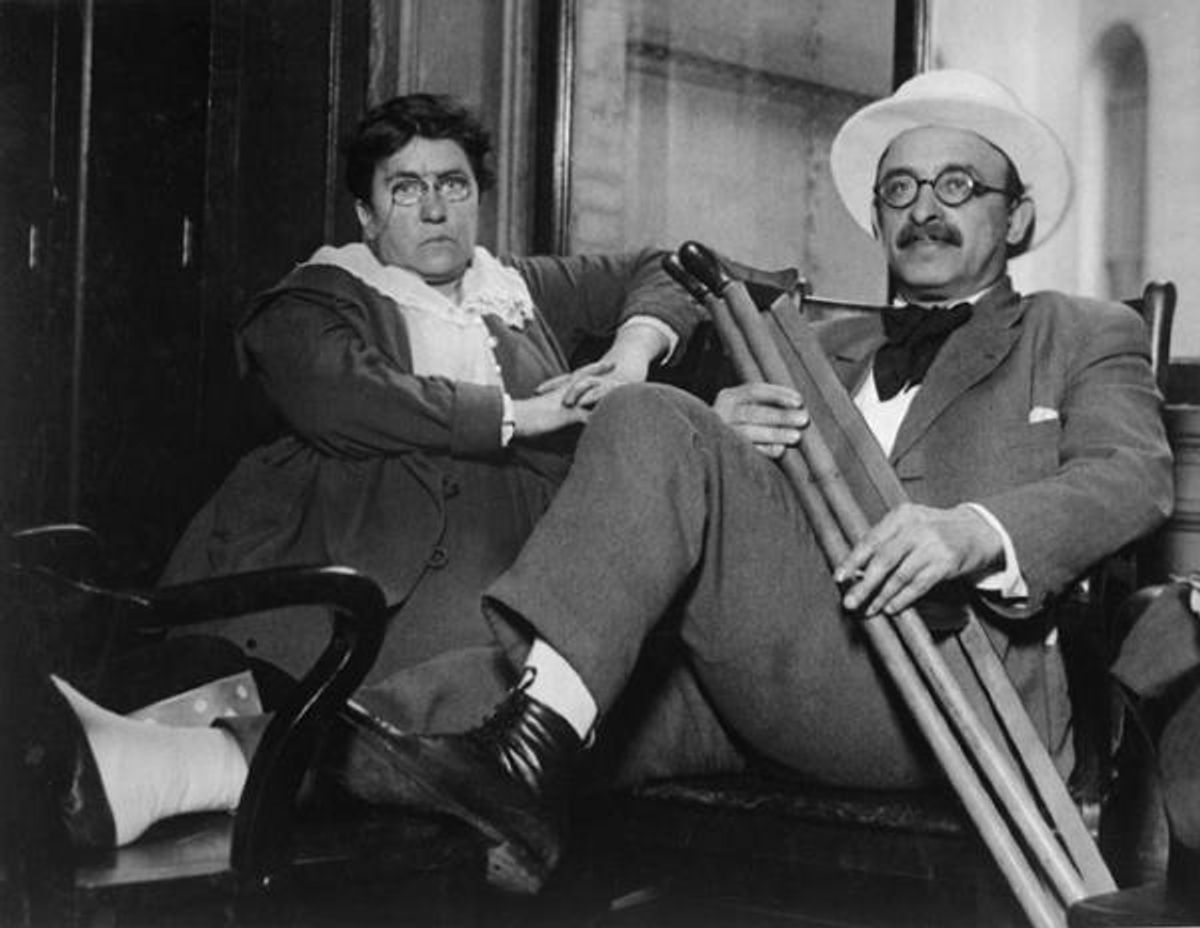
Emma Goldman and Alexander Burkman
Corbis / Getty images
The prosecutor Palmer was going to send several more “arks” to Russia, but this did not happen. Firstly, even the first deportation cost the country too expensive. And secondly, soon a new leader appeared in the immigration service, which turned out to be much more loyal to the candidates for expulsion.
Return of white emigrants
Already in the first years of Soviet power, the government began to reflect on the return of "class enemies." In November 1921, the decree “Amnesty was issued to persons who participated as ordinary soldiers in the White Guard military organizations”:
“The Soviet government knew that thousands of Russian workers through deception and violence were drawn into the fight against the workers' and peasants on the side of the tsarist generals, landowners and manufacturers. These deceived people were introduced into battle for a business alien to them, and when they had to find themselves in a foreign land, they were thrown to their fate. They were now thrown out of their native villages, villages and villages. A cruel fate scattered them on various corners of the world. Constant deprivation, systematic mockery of Russian and foreign White Guards, hard labor, illness and death in a foreign land - this is the lot of those who succumbed to the provocation of enemies of workers and peasants. ”
The decree promised the persons complete amnesty, “by deception or forcibly drawn into the struggle against the Soviet regime,” but so far only by ordinary and only those who were currently in Poland, Romania, Estonia, Lithuania and Latvia. The officers who proved their loyalty, however, also had the opportunity to return, but each such case was considered separately, through appeals to the Soviet environments. In 1924, the circle of amnestied expanded: now the Soviet government “forgave” those White Guards who, after civilian, settled in China and Mongolia.
Soviet agents conducted active work in the deployment centers of emigrants: they delivered campaign literature, published letters that had already repatriated with stories about how remarkably they lived under the Soviets. In the centers of concentration of white emigrants, unions of returning to their homeland began to appear - organizations that helped to return to Soviet Russia. In addition, the unions carried out propaganda work: they distributed leaflets, printed their own newspapers, organized meetings, showed films, “exposed the slander” of the emigrant press. In Paris, one of the activists of the Union of Return to his homeland in the 1930s will be Sergey Efron, the husband of Marina Tsvetaeva. His further fate (arrested in 1939, shot in 1941)-an eloquent illustration of what awaited many "returners" to their homeland.
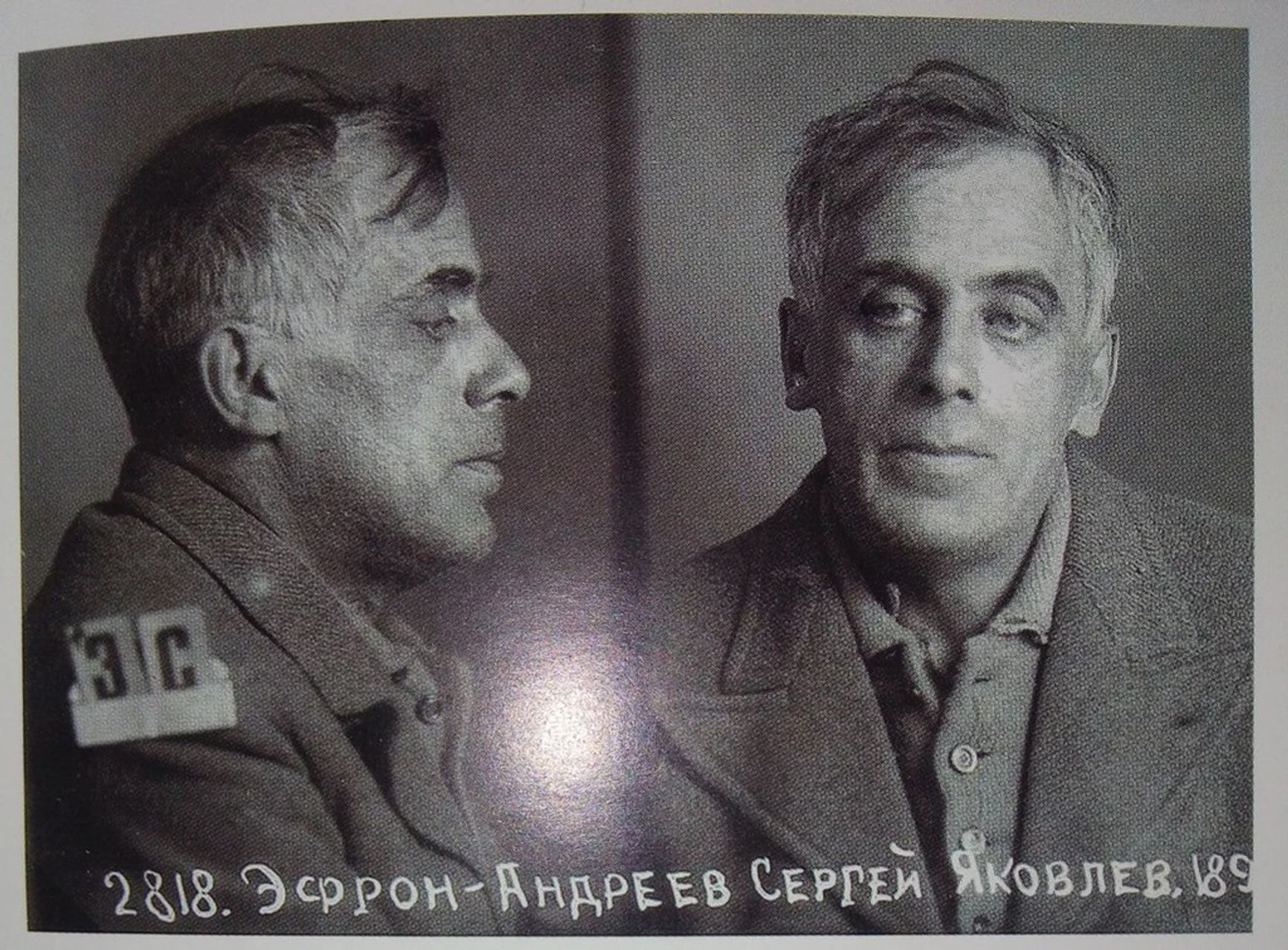
Sergey Efron. Prison photo, 1939
Wikipedia.org
The Bolsheviks and the “ shifters ” - an emigrant course, whose ideologists called for reconciliation and cooperation with Soviet Russia, actively supported. The name of the movement came from the collection “Change of milestones” published in 1921, where the main ideas of the current were set out. According to the shift people, the victory of the Bolsheviks was historically logical, it was time to recognize her and stop fighting the white movement, the intelligentsia should be with their people, which means - with the Bolsheviks, since the people chose them. “After all, it is clear as God's day that Russia is being revived. It is clear that the worst days have passed that the revolution, out of the power of decomposition and decay, spontaneously turns into a creative and zigative national power, ”Nikolai Ustryalov wrote optimistically. True, the cooperation turned out to be short -lived: the Bolsheviks did not like the idea of the shiftnesses about the "rebirth" of the Soviet regime.
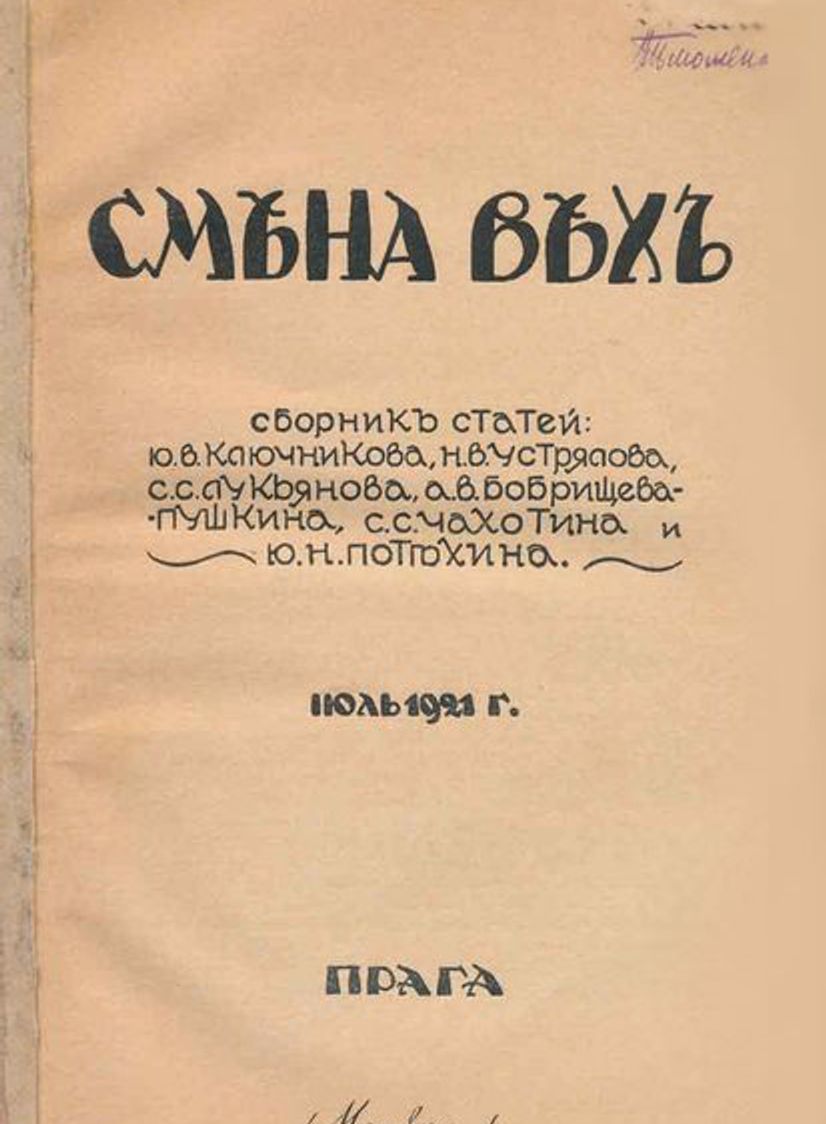
Cover of the magazine "Change of milestones". July 1921
Wikipedia.org
There are several reasons why the Bolsheviks needed emigrants. Firstly, in the 1920s, when the young country had not yet had a full-fledged personnel training system, she really needed qualified specialists in all areas. And secondly (and many historians consider this reason the main one)-for propaganda purposes. People who lived in the West and chose socialism - a convincing argument of the superiority of the Soviet lifestyle.
However, this wave of reemigration has not become mass. It is known that many White Guards did not trust the promises of the Bolsheviks too much. The story of the army of Baron Wrangel was still fresh in the memory: in 1920, the Bolsheviks published an appeal “ to the officers of the army of Baron Wrangel ”, who promised a complete amnesty to everyone who would go over to the side of the Soviet regime. However, after Wrangel left Crimea, the officers and soldiers remaining there were victims of mass red terror.
In addition, the policy of Soviet power regarding emigrants was quite inconsistent. And the conditions that were proposed to return were not too tempting. In the same letter where Dzerzhinsky calls to return emigrants, he suggests :
“It is necessary for us to give individual forgiveness and admission to Russian citizenship so that they must work for a certain time (1-2 years) to work where we indicate that we prove our sincerity of remorse.”
Nobody was going to return the property of those who left for the time to return. It was also important that the position of most emigrants in relation to the USSR was irreconcilable, and they considered any cooperation with the Soviets (not to mention the return).
And yet, from 1921 to 1930, about 180 thousand emigrants returned. At the same time, the peak of reemigration came in 1921. True, for the most part these were peasants or Cossacks, and not the "specialists" on whom Dzerzhinsky counted on. It is impossible to track the fate of all “returners”, but it is known for sure that many during the years of large terror were still injured in their White Guard past: forgiveness turned out to be temporary.
A jerky example is the story of employees of the Sino-Eastern Railway (CCH) who have returned to the USSR. The railway connecting Chita with Vladivostok and Port Arthur and passing through the territory of Manchuria once belonged to the Russian Empire and was mainly served by its citizens. After the revolution, the CRC has repeatedly become the subject of military conflicts between China and the USSR, and in the early 1930s Japan was sold (formally created by the Japanese administration in the occupied territory of Manchuria to the state of Manzhou-Ga). “Russian Harbinists” began to massively evacuate in the USSR, introducing for this a simplified procedure for obtaining citizenship.
At first, the Kvzhdins were positioned in the press as heroes forced to escape from Japanese aggression. They were willingly employed : in railway transport, in the chemical industry, in defense enterprises. But in 1937, the former KVZHDI people became cleaning objects. True, their arrests began earlier-from 1935, but on September 20, 1937, the operational order of the NKVD No. 00593 was published , which declared the need to "eliminate sabotage, spy and terrorist personnel from the" Harbinians "." From that moment on, the “point” repression turned into mass cleaning, the victims of which were even the children of the Kvzhdins who were born in China. According to the researcher Sergei Pudovsky, 21 thousand people during the Harbin case were sentenced to higher, 10 thousand to camps.

The fate of the six ideologists "Change of milestones" is also indicative. Yuri Klyuchnikov returned to the USSR in 1923. He made a wonderful career: he was a professor at Moscow State University, worked as a consultant in the People's Commissariat of Foreign Affairs, was actively published, published books. In November 1937, he was accused of participating in a spy-terrorist organization; Two months later, shot.
Many reemigrants during the years of large terror suffered for their White Guard past
Nikolai Ustryalov worked in Soviet institutions of the CRC; After the sale of the Japan, Japan returned to the Soviet Union, was a professor at the largest Moscow universities. In June 1937 he was arrested on charges of espionage; In September, shot.
Sergey Lukyanov, upon returning to the USSR, was seven years old as the head of Le Journal de Moscou - a weekly weekly for a French audience. In 1935 he was arrested "for participating in the counter -revolutionary group" and sentenced to five years; Already during the retirement, he was sentenced to execution "for counter -revolutionary campaigning and glorification of the fascist regime."
Alexander Bobrishchev-Pushkin returned to Soviet Russia in 1923; The following years he worked as a lawyer. In 1933, his son was arrested and soon shot; In 1935, they arrested and later sentenced to shoot himself.
Yuri Potekhin in 1923 also returned to the USSR, where he was offered to head one of the departments of the Supreme Council of the National Economy (VSNH). In November 1937 he was arrested on charges of “counter -revolutionary agitation”; Ten days later, shot.
Thus, only one survived from the six shift people - Sergey Chakhotin. And even then only because he turned out to be more careful than colleagues and returned to the USSR only in 1958, under Khrushchev.
Repatriation after World War II
At the end of World War II, the country's authorities, which suffered huge human losses, faced a new task: to return Soviet citizens moving to their homeland during the war. According to the then estimates, about 5 million people remained. For the most part, these were Ostarbaiters. To do this, in 1944, the relevant authority was established - the Office of the Commissioner of the Council of People's Commissars of the USSR for repatriation matters.
This repatriation was far from always voluntary. It turned out that many Soviet citizens do not want to return to their homeland. Some of these defectors were collaborators who collaborated with the Nazis and then voluntarily left with them. But, according to historians, there were a minority. More often, prisoners of war and Ostarbaiters, not without reason, believed that in their homeland they were also awaiting repression.
Prisoners of war and Ostarbaiters, not without reason, believed that in their homeland they were also awaiting repression
To return them, the Soviet authorities had to enlist the support of the Allies: the agreements of the Yalta Conference of 1945 and the additional agreements signed with the French and British governments were prescribed that all citizens living in the USSR at the time of the Second World War were transferred to the Soviet authorities, regardless of their desire. At the same time, citizens who until September 1, 1939 lived in territories that had not yet been part of the USSR at that time, were not subject to violent repatriation. An exception - if they were accused of collaboration.
The allies could be afraid that the Soviet authorities would artificially detain the return of American and British prisoners of war home if there would be problems that ended up in their occupation areas of Soviet citizens. According to another version , they simply did not know how to provide so many potential emigrants.
Soviet citizens who were in the Soviet occupation zone were sent by default to the USSR. Those who ended up in American, English and French were more fortunate: if they did not want to return, they had the opportunity to impersonate the inhabitants of the territories attached to the USSR after September 1, 1939, or for emigrants of the “first wave”, or hide in private apartments. At the same time, the emigrants of the “first wave” actively helped the “defeators” of the “second wave” hide and simultaneously defended their rights to the allies.
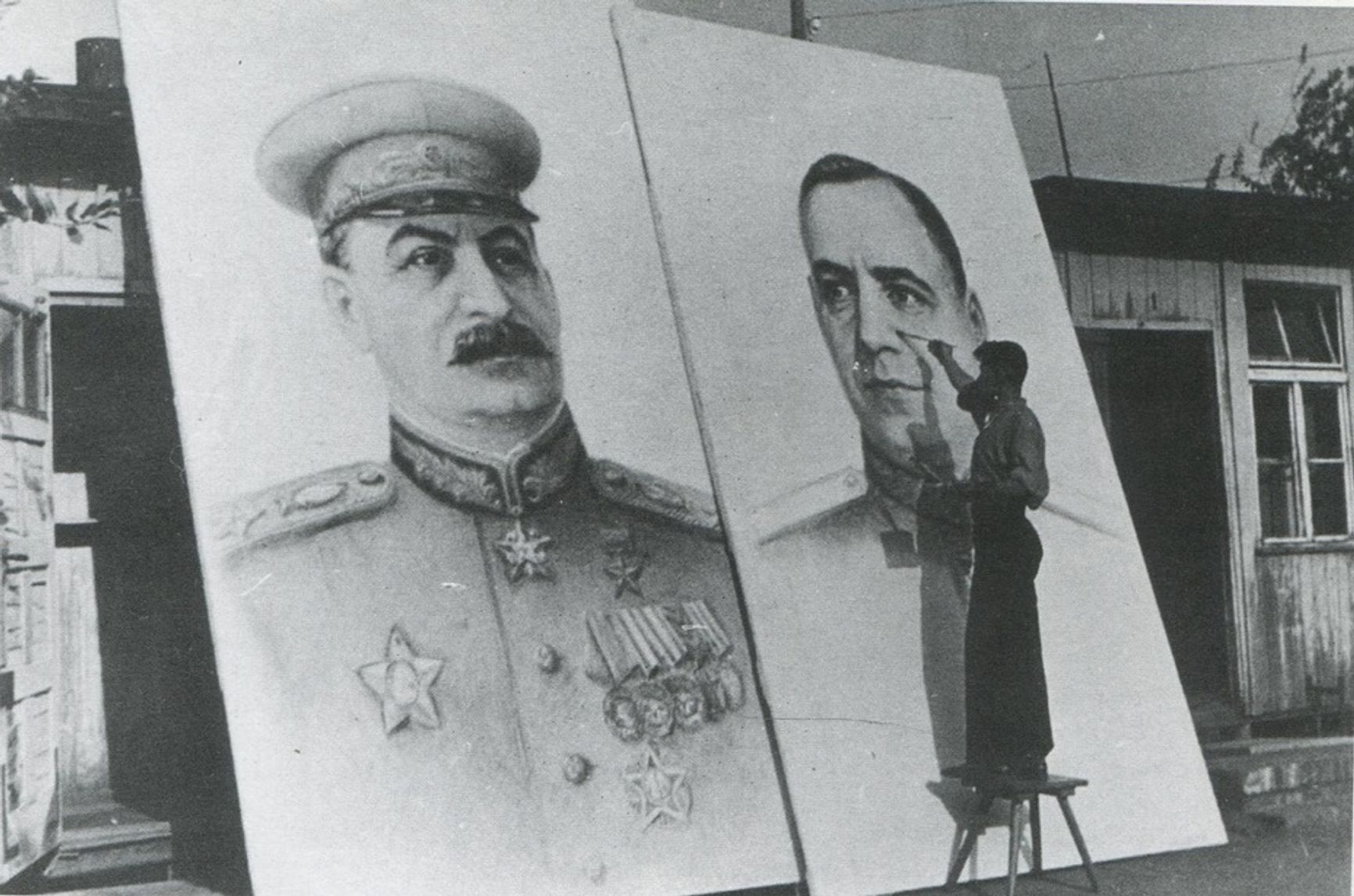
Visual agitation in a repatriate camp
By the way, the emigrants of the “first wave” often also became victims of violent repatriation, although formally it should not have conceded them. One of the most high -profile stories is the arrest of Vasily Shulgin. A deputy of the State Duma, a person who took from the hands of Nicholas II, one of the ideologists of the White movement, Shulgin (like many “white emigrants”) in the 1930s hoped that Hitler would help put an end to Bolshevik rule in Russia. But with the beginning of the Second World War, he sharply changed his views and did not collaborate with the Nazis during the war. Nevertheless, when the Soviet troops entered Yugoslavia, where Shulgin lived, he was detained, exported to Moscow, arrested and sentenced to 25 years for “anti -Soviet activities”. The 67-year-old Schulgin will survive the conclusion at that time, in 1956 he will be released, in 1961 he will publish the book “Letters to Russian Emigrators”, where he will admire the Soviet Communists and Personally Khrushchev, in the same year, as a guest, at the XXII Congress of the CPSU, will shoot in the documentary “ before the court of history ” and will die in the age of 1976 at the age of 1976 at the age of 1976 at the age 98 years. He will not accept, however, Soviet citizenship - as he had not accepted foreign before.
Однако советские власти не дремали, они выявляли граждан, скрывающихся от возвращения, отправляли агентуру в лагеря для перемещенных лиц, составляли списки, устраивали облавы. Бывало, что скрывающихся от репатриации просто похищали из «чужих» оккупационных зон и увозили в советскую. Однако от такой практики всё-таки пришлось отказаться — это вызывало слишком большую шумиху. Поэтому советские власти чаще действовали убеждением. Государство, заинтересованное в том, чтобы вернуть как можно больше рабочей силы для восстановления страны, декларировало распространение на репатриантов всех гражданских прав, обещало им всевозможные льготы и блага, пособия, предоставление жилья, обязательное трудоустройство и, конечно, бесплатный проезд к месту жительства. Порой в ход шли письма от родных «невозвращенцев», написанные под диктовку МГБ.
Оценки исследователей расходятся в том, сколько человек всё-таки смогли остаться на Западе. Официальные источники эту цифру занижали: если верить им, «невозвращенцев» было всего 450 тысяч человек. Историки называют другие цифры: от 700 тысяч до полутора миллионов.
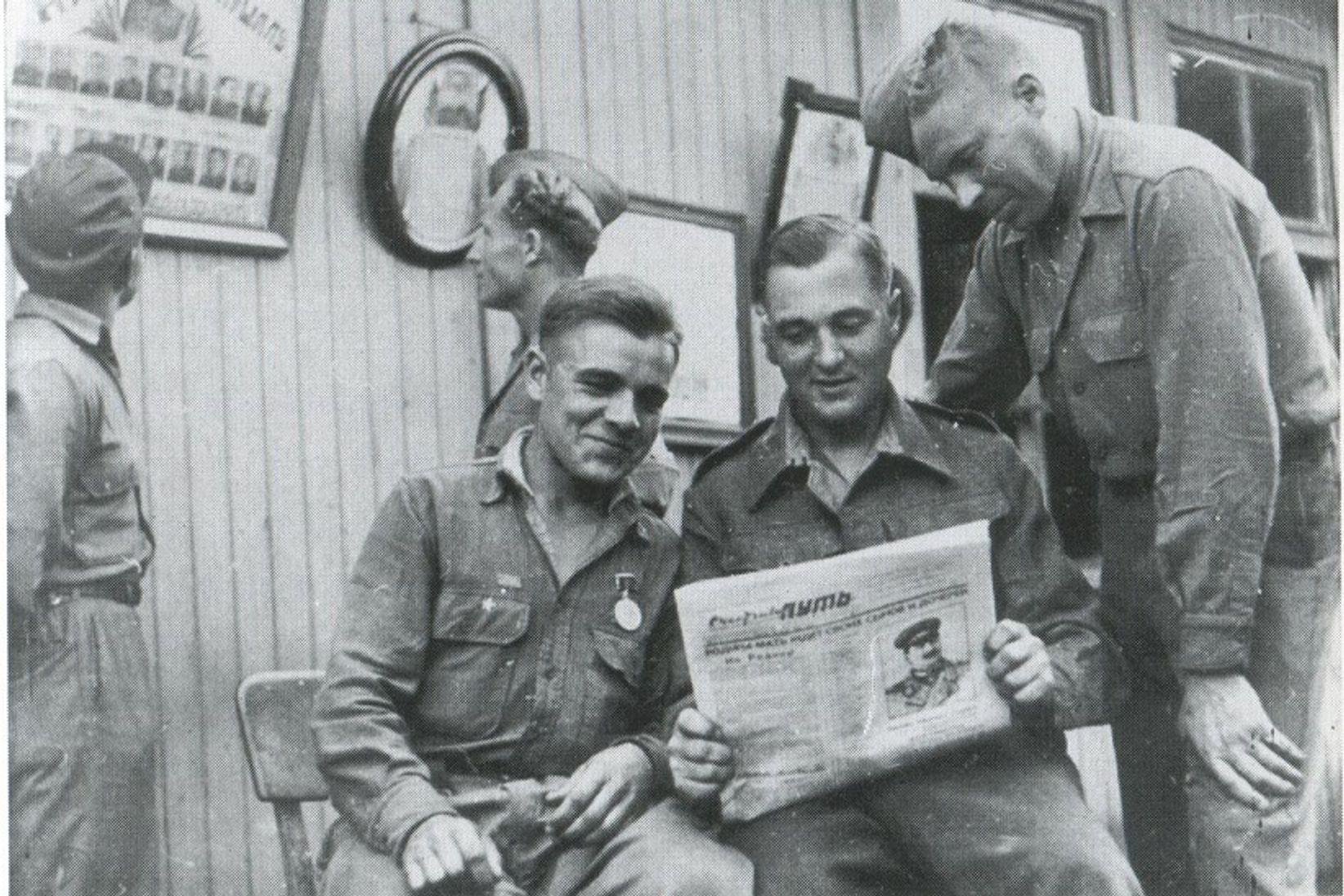
За чтением газеты для репатриантов «Счастливый путь»
Интересно, что параллельно с этими зачастую вынужденными репатриантами в СССР стали активно — и абсолютно добровольно — возвращаться эмигранты «первой волны». Вторая мировая война разделила русских эмигрантов на два лагеря. Одни считали, что «против большевиков — хоть с чёртом» (читай — с Гитлером). Другие были убеждены, что если родина (какая уж она ни есть) в опасности, ее нужно поддержать. Тем более тогда казалось — по крайней мере, со стороны — что советская власть трансформируется. Ведь и православную церковь признали, и патриаршество восстановили, и «интернациональную» риторику сменили на патриотическую, и стали постоянно апеллировать к славной российской истории. Взять хотя бы названия появившихся в СССР в годы войны наград: ордена Александра Невского, Суворова, Кутузова.
В итоге многие эмигранты были настроены на сближение с советской властью. И та охотно шла им навстречу. В 1945 году для лояльных советской власти эмигрантов устраивали приемы в советском посольстве в Париже. А 14 июня 1946 года вышел Указ Президиума ВС СССР «О восстановлении в гражданстве СССР подданных бывшей Российской империи, а также лиц, утративших советское гражданство, проживающих на территории Франции»: эмигранты «первой волны» теперь могли без проволочек получить советский паспорт и вернуться на родину. Аналогичные указы были приняты и по эмигрантам, осевшим в других странах — Болгарии, Югославии, Чехословакии и Китае.
После Второй мировой войны многие эмигранты были настроены на сближение с советской властью
Однако эта волна не была массовой. В общей сложности, в период с 1945 по 1949 гг в страну въехали 106 тысяч бывших эмигрантов, но большая их часть — армяне, бежавшие в начале XX века от турецкого геноцида, и их потомки. Непосредственно «белоэмигрантов» и их детей, приехавших на ПМЖ в СССР в этот период, было всего несколько тысяч.
Судьба переселенцев этой волны также оказалась незавидной. Некоторые позже получили сроки, другие просто оказались совершенно не в тех условиях, о которых им рассказывали, — но уже не имели возможности вернуться обратно.
Лилиан Монит-Прокопович, которая в детстве вместе с родителями-репатриантами приехала в СССР из Франции, вспоминает :
«Была очень успешная работа советских дипломатов во Франции, которые на все лады расписывали зажиточную жизнь людей в первой социалистической стране».
Семья, вдохновленная советской пропагандой, вернулась в СССР в 1947 году. «Куда он попал, отец понял уже на вокзале в Пинске, когда увидел, как во что попало одетые женщины метут перрон, — вспоминает Лилиан. — Он стал искать пути возвращения, еще не понимая, что таких путей в Советском Созе просто не было». История очень типична (многие репатрианты, поняв, что их обманули, обращались в МИД с просьбами разрешить им уехать обратно) — с той разницей, что Михаил Монит не смирился, а попытался бежать. Во время перехода белорусско-польской границы был задеран и осужден на 10 лет.
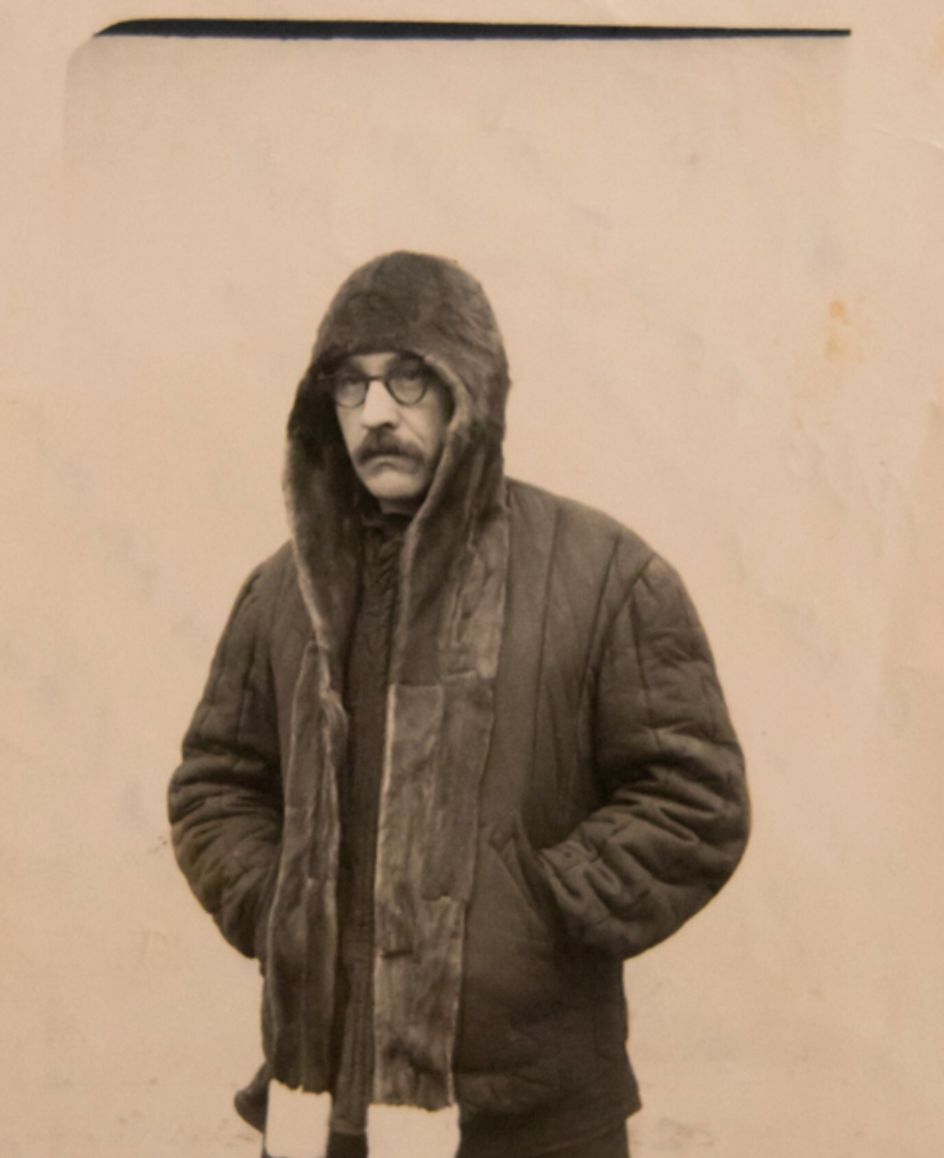
1 июня 1949 года Михаил Монит был осужден «по делу МГБ СССР по ст. V. 22-63-1 и 72-а УК БССР к лишению свободы на 10 лет»
В начале 2000-х французский журналист Николя Жалло снял про французских реэмигрантов этой волны документальный фильм и выпустил книгу «Заманенные Сталиным».
Последняя попытка вернуть эмигрантов на Родину
Последняя попытка вернуть эмигрантов случилась уже после смерти Сталина и была нацелена во многом на «невозвращенцев» «второй волны». Их реэмиграция, по мнению историков, опять-таки имела скорее пропагандистское, чем экономическое значение. Желание советских граждан остаться на Западе било по престижу советского режима, поэтому власти очень старались убедить мировую общественность, что все советские граждане хотят вернуться на родину.
Желание советских граждан остаться на Западе било по престижу советского режима
17 сентября 1955 года вышел Указ Президиума ВС СССР «Об амнистии советских граждан, сотрудничавших с оккупантами в период ВОВ». В том же 1955 году в Восточном Берлине был создан комитет «За возвращение на Родину» под руководством генерала Николая Михайлова. Формально это было «добровольное объединение», якобы созданное самими эмигрантами, но ни для кого не было секретом, что фактически комитет находился в ведении КГБ.
Комитет издавал одноименную газету, наводил мосты с эмигрантами и вел активную пропагандистскую деятельность, а Михайлов раздавал интервью западным СМИ, в красках рассказывая, как замечательно живется реэмигрантам. Даже если они сотрудничали с нацистами, родина простит всех, кто искренне раскаивается, убеждал он. Когда Комитет освоил радиовещание, пропаганда стала еще разнообразнее: тут были и музыкальные подборки с ностальгическим уклоном, и культурно-просветительские передачи, и увлекательные репортажи о советских достижениях и, конечно, трогательные рассказы о счастливой жизни тех, кто вернулся из-за границы — особенно бывших военнопленных. Иногда в передачах в качестве гостей участвовали сами реэмигранты или родственники тех, кто еще оставался за границей (или читались письма от них со слезными призывами возвращаться домой). Заканчивались передачи примерно такими призывами: «Дорогие земляки! Торопитесь возвратиться на Родину. И вы сможете принять участие в этом важном строительстве».
Интересно, что параллельно эмигрантские организации активно вели на Западе контрпропаганду против Комитета за возвращение на Родину. Так, Центральное объединение послевоенных эмигрантов из СССР (ЦОПЭ) в 1955 году опубликовало брошюру «Комната № 6: свидетельства очевидцев о восточногерманском ”Комитете за возвращение на родину”». Там опубликованы рассказы тех, кто «поверили заманчивым обещаниям комитета генерала Михайлова и решили возвратиться в Советский Союз», но «через короткий срок бежали обратно в свободный мир».
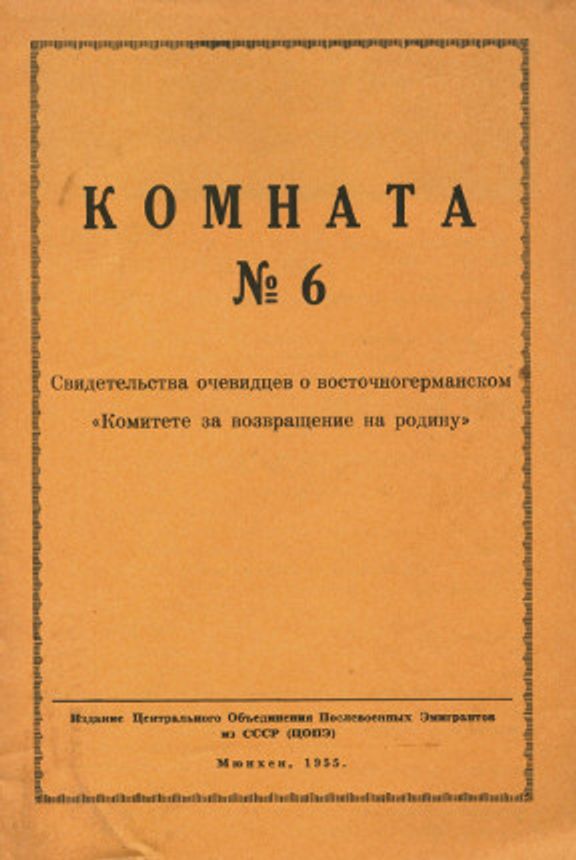
Комната № 6: Свидетельства очевидцев о восточногерманском «Комитете за возвращение на родину», 1955 год
vtoraya-literatura.com
Чтобы вернуть из эмиграции военнопленных, нужно было в первую очередь показать им, что родина их больше ни в чем не винит. Поэтому 29 июня 1956 года было принято специальное постановление ЦК КПСС «Об устранении последствий грубых нарушений законности в отношении бывших военнопленных и членов их семей», где, помимо прочего, говорилось:
«Министерству культуры СССР по согласованию с Министерством обороны СССР включить в тематические планы издательств, киностудий, театров и культурно-просветительных учреждений подготовку художественных произведений, посвященных героическому поведению советских воинов в фашистском плену, их смелым побегам из плена и борьбе с врагом в партизанских отрядах. Публиковать в партийной, советской и военной печати статьи, рассказы и очерки о подвигах советских воинов в фашистском плену. Обязать Комитет госбезопасности через “Комитет за возвращение на Родину“ <...> довести мероприятия ЦК КПСС, изложенные в настоящем Постановлении в отношении бывших военнопленных, до сведения советских граждан, находящихся за границей, с целью ускорения возвращения на Родину».
Действительно, вернувшихся в СССР в тот период уже не сажали, как это зачастую случалось при Сталине. Но и обещанных материальных и карьерных благ на реэмигрантов по прибытии не сваливалось: даже обещание обеспечить их работой и жильем выполнялось далеко не всегда. Как бы там ни было, активных попыток массово вернуть бывших соотечественников на родину советское государство больше не предпринимало, очевидно, понимая всю бесперспективность этого мероприятия.