
Translated material
"Please do not come"
"Please do not come"
Interview with political refugees and emigrants from Belarus, Russia and one of the countries of Central Asia
On January 25, 2024, Doxa was recognized as an “unwanted organization”.
If you are in Russia or plan to return to it, you can not replace our materials on social networks, refer to them and publish quotes.
Read more about what is possible and impossible, read in the cards .
At the beginning of March, the first stream of post -war migrants left Russia was fulfilled a year from the moment. Many of them decided not to return to their homeland until the end of the war or the fall of the regime. For activists and journalists, such an visit home can threaten a criminal case.
Russian migration is not the first case of a large -scale departure from the country for political reasons. Ingorevna talked with political refugees and emigrants from Belarus, Russia and one of the countries of Central Asia about why they left, how they are experiencing long -term separation from their homeland, hoping to return and what they can advise recently.

Editor
Editor
AnastasiaIllustrator
Illustrator
Ira GrebenshchikovaPublication
March 20, 2023
Anastasia [name changed at the request of the heroine]. Belarusian journalist and activist
I left Belarus fifteen years ago at work: to develop a media project abroad, but with a focus on Belarus. It was before the 2006 presidential elections, I just graduated from the university. The “Revolution of Roses” was held in Georgia, in Ukraine there was the very first “Maidan”, there were changes The "bulldozer revolution" in Serbia. There was a hope that Belarus would follow this trend - and then we will all return home, we will develop an independent media market inside the country. Unfortunately, this did not happen either two years later, nor five years later, nor fifteen.
Until 2020, I went to Belarus at least once a year. The last time I was at home two and a half years ago. I had the opportunity to move to America, but I did not want to. It was difficult for me to accept that I could not, as before, to take the train and come to my parents, if suddenly something happens to them. Before that, I went quite often. I was not a political refugee, but I was always ready for the fact that I could check a computer or phone on my border - I went with a “clean” technique. It was relatively safe to come home, but even then it was clear that it was better not to talk about politics in a cafe in the center of Minsk, because they were all on wiretapping. Now in Russia a similar situation, with the exception of the factor of war.
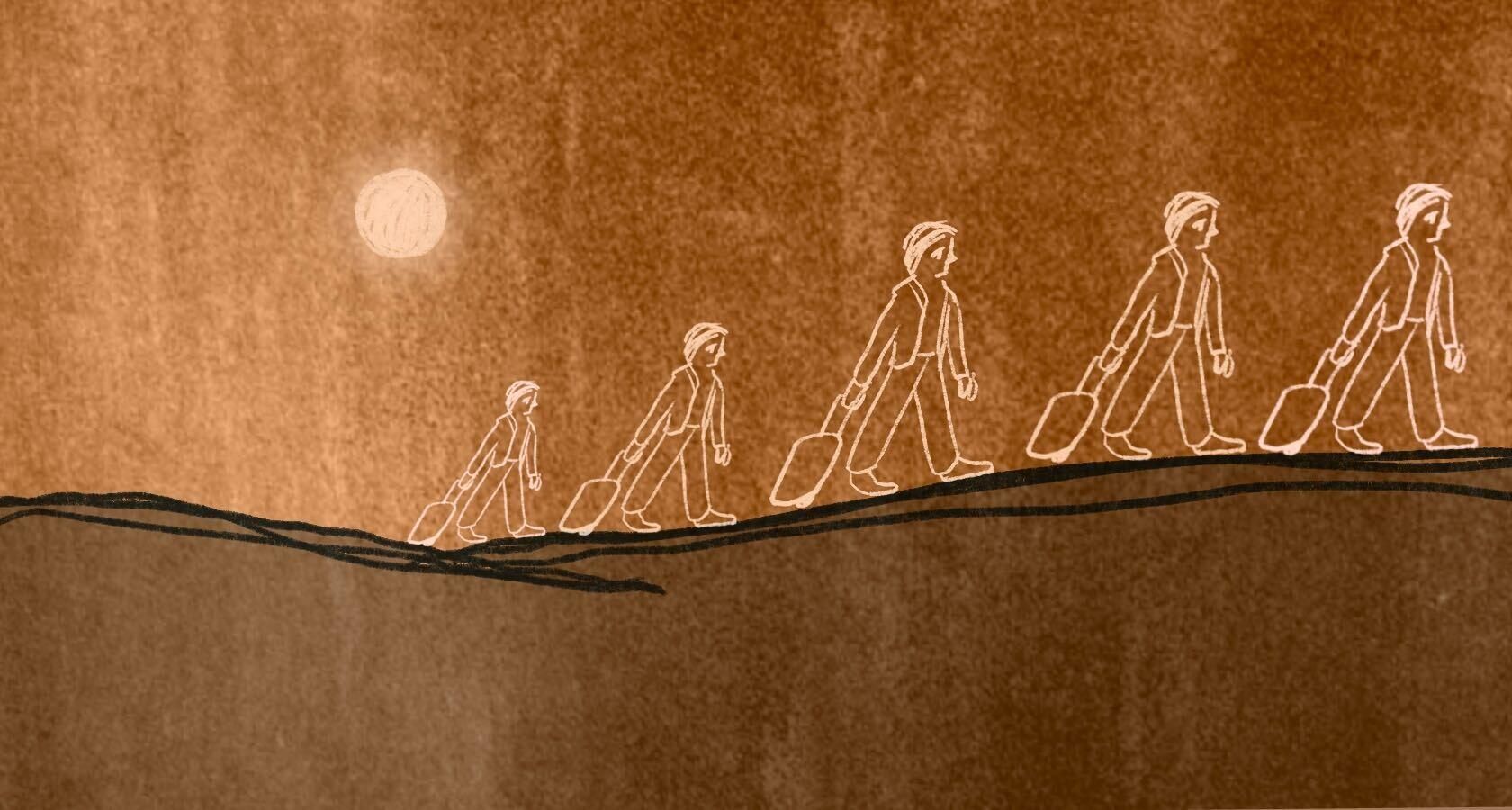
The level of danger has increased since 2020. Many initiatives recognized as extremist, delayed even those who briefly came to Belarus for the funeral of their parents, someone was shot right on the border. I stopped driving. Even my family told me: “Do not come, even if something terrible happens. Please just don't come. ” From this moment, from the beginning of 2020, I first felt in real political emigration. Even if something very bad happens-the funeral-or even good-someone’s wedding-I can’t come.
After the authorities of Belarus deployed the plane of the Ryanair airline under the pretext of the fact that there was a bomb, the air traffic stopped and the railway almost stopped. In fact, for almost two years in Belarus you can only get a bus or car. Now, due to the deterioration of relations with Poland and Lithuania, even terrestrial transitions are closed. And now my colleagues, relatives, friends within the country are feeling more and more forced isolation: there are fewer and less ways to leave.
I thought about my identity for a long time. I am a Belarusian who is trying to integrate into local society with her agenda? Or am I already more a European citizen who is actively involved in the life of the country that sheltered me? It probably turned out something hybrid.
My husband and I are both Belarusians, but we already consider our home the city where we live now. I understood this when I returned from a trip to the USA. Here everything is already familiar to me, all sellers in stores greet you, and in the cafe they say: "Something you have not been visible for a long time." This feeling appeared only five years after moving.
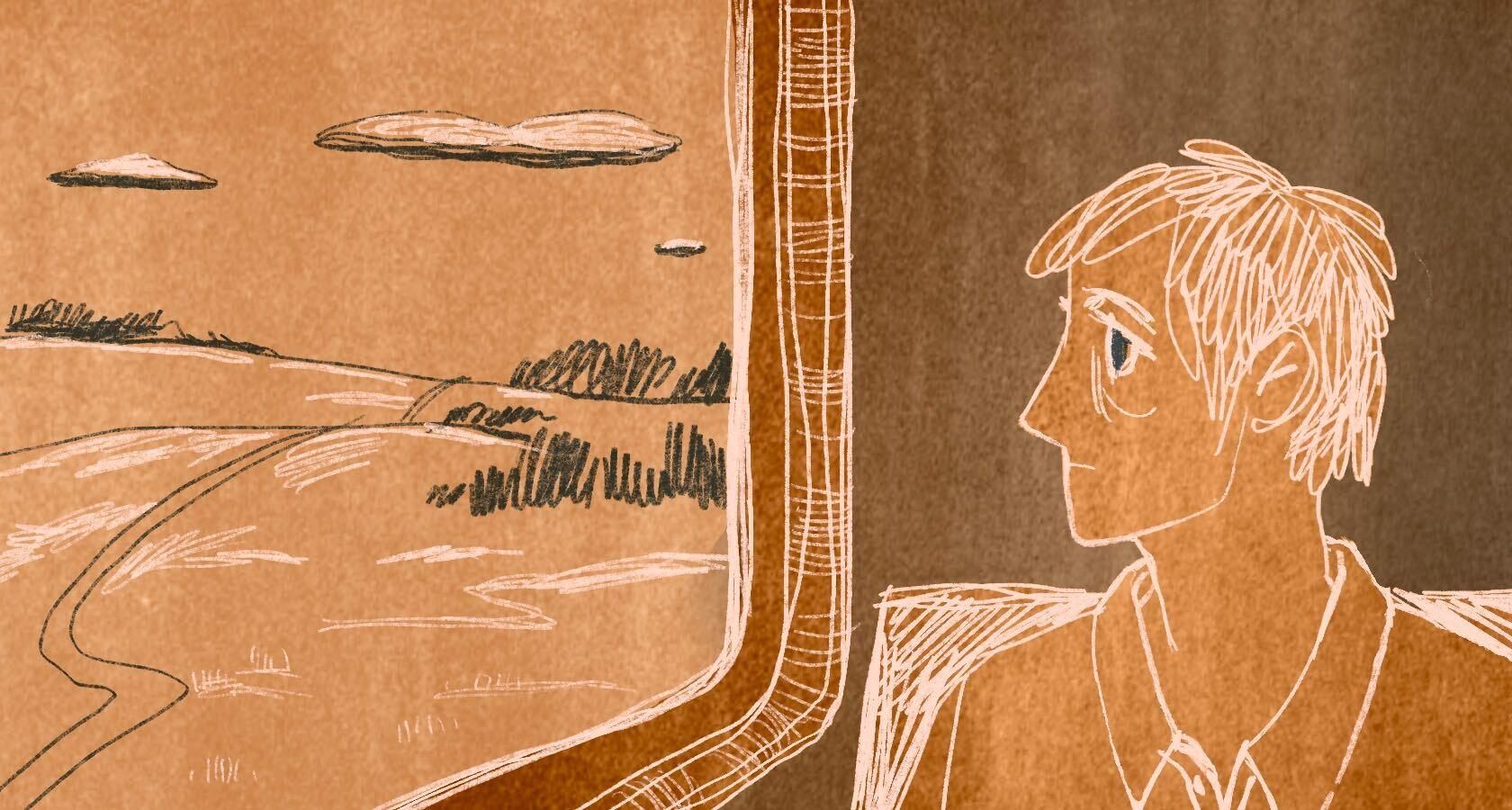
I really miss Belarusian nature, forests, lakes. Sometimes you go to Sweden - and outside the window, a landscape that reminds you of your dear, and it seems that you are going to Nesvizh. This is such a beautiful city near Minsk. And such a nostalgia will overwhelm.
Belarusian musical culture is missing, when every village has its own dialect, its own songs. Whoever ask, all my familiar Belarusians cry when they hear the Belarusian song “Kupalinka”.
One of my friends said that it would be easier for her if she knew when she could return. It is really psychologically difficult when you do not know whether it will happen tomorrow, in two years or never. Now I just keep in my head that this will not happen soon. Because if you think about it, then you can sit before retirement and wait for this return, and when you return, to understand that you are another person and was waiting for a completely different one.
I have friends from Burma who lived 25 years in Norway. They were repressed during student protests, they could be shot. When the thaw began in Burma, many returned to their homeland to see their relatives, but no one was left. In an extreme case, they moved closer to their homeland to Thailand, because Burma during this time did not advance either in education or in medicine - and they already have children who went to the Norwegian school and grew up in another culture. They themselves became more Europeanized. They changed, and Burma only left the dictatorship.
It is important to understand that there is an opportunity to go home. It is important to be able to choose a place for life. It is important to have freedom of choice. We do not have this yet.

We talk about Russia's military invasion of Ukraine, protests and repression. We believe that now, when dozens of media have closed or ceased to cover the war, access to independent information is more important than ever.
It helps that someone needs to survive until we see how all this collapses. When I was a student, in 2002, and worked in the analytical group of one of the presidential candidates, almost everything in my team was older than me. And seven out of ten people have already died. With all of them, of course, we planned with hope that we would still have a drink of champagne, when this regime would finally fall apart.
Let one generation leave, but my generation is still here, and you need to transfer this energy and your faith to free Belarus to young people. I now work and help people in more than twenty countries with very different experience: both a very strong autocracy and democracy. It is important not to get hung up on your case as super unique, not to think that no one understands us. There are a bunch of countries and peoples with no less important problems, suffering and dreams. The wider the horizon, the more you can then bring back and give to the culture that raised you.
Philip Galtsov. Political refugee in the swamp business. Lives in Sweden ten years
I left Russia on January 20, 2013. Since then, I have not been there and have not seen my relatives, I saw my mother very shortly.
I still want to return and I hope that this will happen.
I left because of the risk of being arrested and accused of participating in organizing riots on Bolotnaya Square on May 6, 2012. Three times they came to me home, but I was not there. In October 2012, a search was searched in my apartment, then they were taken to the UK, where they interrogated, beat and demanded testimony for my friends. I had already traveled out of the country before, but returned, hoping that this was all over.
A few days before the departure, one familiar journalist showed me a page with the text from the case of another person involved in the swamp business Leonid Razvozhaev, where I was indicated as a person who headed the anarchist column: supposedly this column of the beginning of the riots in Bolotnaya. I did not lead any column and decided that I had to leave. Just a day after I left, I became aware that employees of the Ministry of Internal Affairs came to my address in Balashikha and were looking for me.
I did not think that I was leaving forever or so long. I was 19 years old, I have never been abroad and did not want to go anywhere at all, I wanted to live in Russia all my life, where my friends and all my activity were.
At first I left for Belarus, from Belarus to Ukraine and spent some time there. In Kyiv, at that time, Yanukovych was in power. The special services of Ukraine and Russia were closely collaborated. A familiar journalist reported that he became aware that Russian special services could steal me from Kyiv. At some point, I began to live in the UN UN Office The Office of the Supreme Commissioner of the United Nations for Refugees , which was in the Kiev Pechersk Lavra. A few months later I was moved to Sweden on the UN refugee mandate.
I still want to return to Russia. And so it was all these years. Even considering everything that happens, I believe that all my actions should bring my return to Russia closer.
Now I am working in the Swedish NPO, which is engaged in the support and dissemination of information about human rights traffic in Ukraine, Belarus and Russia. I learned the Swedish, it is well included in the local context, but this does not prevent me from wanting to return to Russia and work for this. I cannot forgive them for the persecution, searches and landings of my friends and, of course, what my parents survived. My close friends are still in Russia, and I consider it important to support them. Now such thoughts are probably not very popular, but in a sense, my homeland was stolen. To forget Russia for me is to forget myself. “Civil Defense” and Russian punk rock are part of me, my childhood, my background. This is my culture, which is somehow connected with Russia, and you can’t take anywhere.
For ten years in Sweden, I saw that there are things that cause me a protest: for example, social inequality, poor and rich areas, and so on. Until February 24th, I said that if a revolution takes place in Russia, then I would like Russia to become the outpost of direct democracy and social justice. But now it’s hard for me to talk about it.
After February 24, I have no idea what will happen to Russia. Russia for me is not a territory or a state, but primarily people. And I am only worried about what will happen to people.
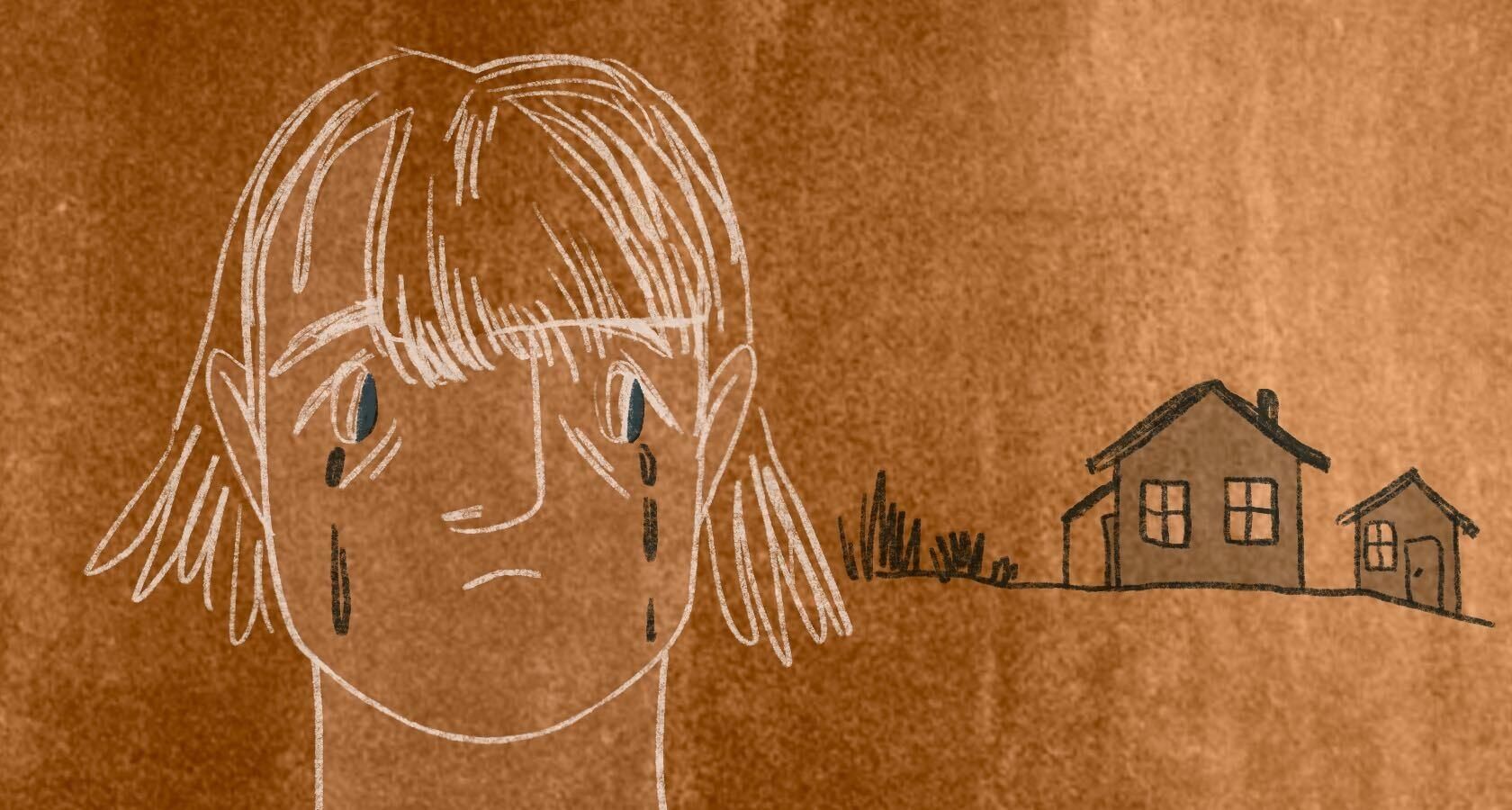
I am not a supporter of the beautiful Russia of the future. But if there is an opportunity to come, of course, I will return. I do not exclude the fact that I will come and immediately run back to my Swedes, because everything has changed and I have changed myself. But to come - I will definitely come.
Take care of the "cuckoo" and do not build illusions. It is necessary to treat each other as careful as possible, support and create an environment that will not be toxic and reproduce twitter. Maintain ties with those who stayed, do not close in yourself and look for a balance between integration and support of ties with your own country. And we will all be back.
Rustam. Human rights activist from the country of Central Asia.
I left my home country eight years ago. From friends who worked in state bodies, I learned that there is a document in which they are asked to evaluate the possible reaction of the international community to my arrest. I was told that I have a few days to leave. At that time, a lot of people who worked in the civilian sector and loved ones to the opposition fell under the blow in my country. People received life sentences simply because they were in some kind of political party. Could beat on the street.
I worked in an NPO, which was financially associated with an international organization with headquarters in America. We implemented projects aimed at supporting the media and access to justice for people in rural areas. For example, the payment of alimony for women or protection against domestic violence. By current standards, these are very “vegetarian” projects, but it was not clear to the government why we were doing this, why I managed large budgets - so I was threatened. Then I was young enough, but at the same time communicated with ambassadors when Hillary Clinton arrived, I met with her.
I had a lot of friends abroad, and they suggested that I help with departure and admission to study in the European magistracy. In one day I gathered and left.
It did not seem to me that I would never return or return only after many years. I rather felt that this is an understandable and logical situation in something-I would still engage in the country, study, see my friends. At that time, from our country there was a very large outflow of educated young people, this did not surprise me. And almost all my friends with whom I was friends from childhood and from the university were in Europe. Now it’s easier for me to gather childhood friends in a hypothetical Berlin or Vienna. Everyone lives in a maximum of two hours of flight or several hours by bus. My closest family - children and spouse - moved with me. In this regard, I was lucky.
My friends often went home, and I had the most difficult case: I can’t come at all. But friends tell me stories about their families, we maintain contact with those who remained. There is an Internet, I am constantly in context, I see what is happening in the country. Sometimes there is some momentary desire “what if you go”, but this moment.
I don’t really miss my homeland, but sometimes nostalgia arises. For example, in language: I have not spoken in my native language for a long time, I have always been using Russian or English in work. I notice that I began to forget the language. For me, this is always a big event when I manage to talk on it - after that it is so good at heart. At the same time, I never really miss and do not think that I need to return right now. Rather, I will continue to do what I am doing, and to work in order to make everything good in my native country. And for this we must say what is now bad and what needs to be improved. This is impossible in homeland. I could not stay in the country, be silent and change my principles.
I do not understand the Russians who have now left the country, because they are against the war, but do not speak out. As if just left to sit out. We went to the principle, but half. I’d better say everywhere that I am against this power, and to change something with this.
I would return if all political prisoners were released. But I am not alone: I have children who speak another language. They know their native language, but they grew up in another country - it is difficult for me to imagine that we will all return there. Their mentality is already different. I would return when the children grow up and will not need parents.
After leaving, you need to look for alternative spheres of interests. To leave the comfort zone - their bubble, a closed space, inside which Russians and Belarusians often live with whom I talked. To learn local languages, communicate with local and people from different countries. And help: help your country and other countries, realize yourself in this. And, of course, not to idealize the past - a person is inclined to do this and forget all the bad things in his native country.
Other materials
As artist Dima Stalover began to export people from Russia who was facing a prison
“You think that they will never come to you. But it works as a rand as a rand "
Aitvo movement

As an IT specialist_ki donate time and effort to charity and why do they need it

"We had so little time outside the empire, and now she came to us again"
A resident of the countries where the Russians are fleeing, they talk about their experience of interacting with them and advise how not to screw up in a foreign country

View from the special receiver: restrictions and opportunities
Collective Essay-Maintenance about the experience of concluding Sakharovo in the special flower

"We stay here"
Monologists of LGBTIC-LUBS about life in today's Russia

