“There is a question whether Israel will remain liberal democracy” is an expert. The opposition appealed in court an amendment to the law on the judiciary • The Insider • RIMA — Russian Independent Media Archive
“There is a question whether Israel will remain liberal democracy” is an expert. The opposition appealed in court an amendment to the law on the judiciary
“There is a question whether Israel will remain liberal democracy” is an expert. The opposition appealed in court an amendment to the law on the judiciary
July 24, 2023
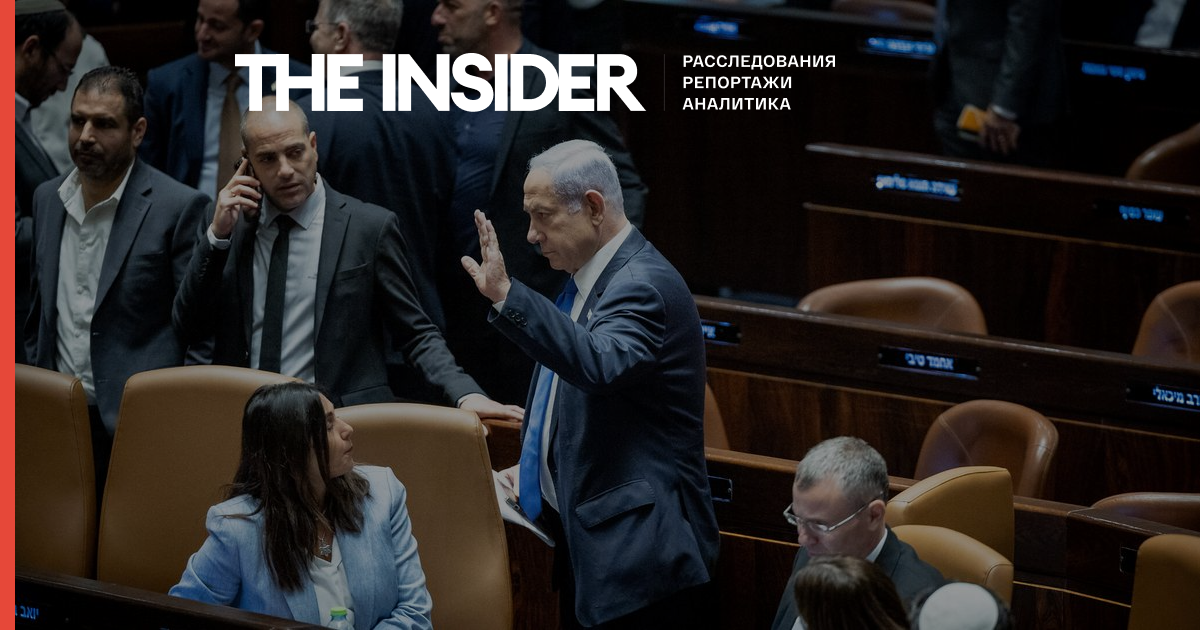
The Israeli opposition filed an appeal to the country's Supreme Court of the country on the City on July 24 to amend the Basic Law on the Judicial power prohibiting the Supreme Court to discuss the decisions of the government. As the Israeli political scientist and public figure Mikhail Pellvert said in an interview with The Insider, the documents for the appeal were prepared in advance and submitted “just a few minutes later” after the end of the vote in parliament.
“The court has legal grounds and powers to intervene in this process. They can use a variety of prepositions: they can recognize this law and its adoption hasty, decide that it was adopted without considering all the consequences, despite the fact that this is amendments to the basic law, and so on. The problem is that we did not have a precedent in Israel, and this will be the first case when the Supreme Court will consider the Basic Law for constitutionality.
Whatever the solution, it will produce the effect of an exploding bomb and will be political in any case. It is possible that the court from the very beginning will say that he is not authorized to consider such cases. The first stage is the adoption of this case for consideration by the Supreme Court. ”
According to Pellivert, the document adopted by the Knesset in the third reading is already considered the entering into force, but the Supreme Court may recognize it not valid for the time of consideration of the appeal. Only the Knesset can make changes to the already adopted law.
The interlocutor The Insider explained the opposition’s decision to boycott the vote on the adjustment of the desire to create a picture of “unilateral voting” for the media. <The amendment to the Basic Law was adopted by 64 votes “For” and 0 votes “against”. There are 120 deputies in the Knesset - The Insider> . The opposition had no chance of rejecting the bill in the process of voting, since the ruling coalition had more places in parliament, and it performed consolidated.
“From the very beginning today it was clear that the opposition and the coalition would not compromise. Both sides raised the bets too high. The opposition stated that it would not agree to less than a stop-stain of the judicial reform, and the coalition stated that it would not act under the barrel of the gun. I would say that everything that happened today is an attempt in response to the question "Who is to blame?" To demonstrate to its voter that each side did everything to achieve a compromise, which initially had no chance.
It is now unclear whether the TV affects political leaders or leaders on the TV. There is no single decision -making center. Even in the ruling coalition, which is more monolithic than the opposition, there is no one person who would fully determine the agenda and principles of voting. In addition, we see a huge number of non -profit and public organizations, various trade unions, which are also interested in becoming part of this political process. As a result, the decision -making process turned into chaos.
This is indicative for a country, in which for at least five years an acute political crisis has been going on, the symptoms of which were five election campaigns, which took place one after another in Israel since 2018. Our crisis continues, it has not gone anywhere. ”
At the same time, according to Pellivert, thanks to mass protests that do not stop in Israel since the beginning of the year, the draft judicial reform has become much less radical. Initially, the project was inquisitive to change the rules for the appointment of judges and a complete ban on the court to interfere in the decision of the executive branch, it was also supposed to allow the Knesset to make decisions contrary to the opinion of the judiciary.
“The question is whether the coalition is ready to coordinate the following stages of judicial reform with the opposition or will make decisions unilaterally. There are more conservative forces in the coalition, which believe that in no case should you dwell on what has been achieved, and more moderate forces, such as the Minister of Defense of Yoav Gallant, who today tried to achieve some compromise. ”
According to Pellvert, today the Knesset decision made the court in Israel less independent.
“The court will be less able to intervene in the decisions of ministers, prime minister, government. Considering that the coalition is at the head of the coalition, ultra -religious and fanatical people, in any secular, liberal person, the reputation of these people causes doubts and fears. People who come to protests feel a threat to their lifestyle. I would say that on the agenda there is a question whether Israel will remain liberal democracy or will turn into a very conservative democracy with a religious slope? Given that the secular population in Israel is reduced, and religious is growing, I assume that in the near future both protests will continue, and the polarization of society will not go anywhere. ”