
Translated material
Bone
How Putin used the royal family of the Romanovs - both living and the dead - first for foreign policy benefits, and then - to legitimize his regime through imperial history
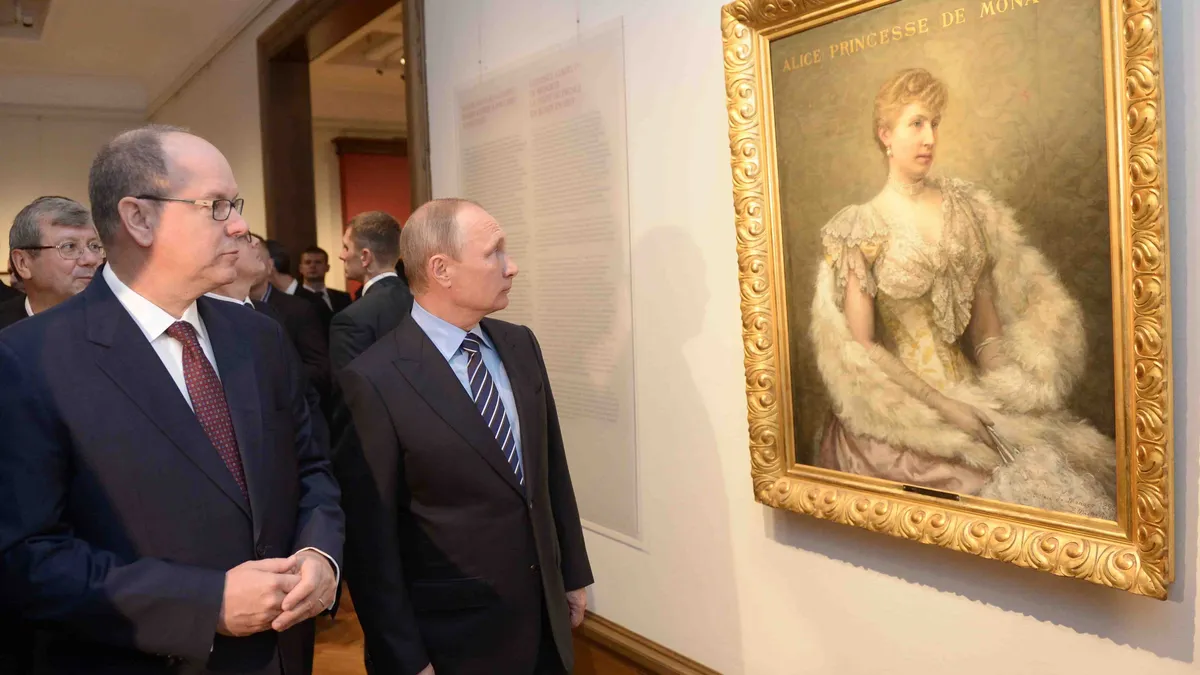
Vladimir Putin at the exhibition "Romanovs and Grimaldi. Three centuries of history. XVII -xx centuries ”in the Tretyakov Gallery, 2016. Photo: EPA / ALEXEY NIKOLSKY / Sputnik / Kremlin Pool
In July 2023, 105 years old was the execution of the royal family in Yekaterinburg. In the same year, in addition to the family of the last emperor and his servants, Grand Duke Mikhail Alexandrovich (native brother of Nicholas II) was killed in Perm, eight members of the royal house in Alapaevsk were destroyed. The brutal murder of the Romanovs has become one of the symbols of large -scale, terrible repressions through which the peoples of the former Russian Empire and the Soviet Union passed in the 20th century.
After the bloody experience of the 20th century, the President of Russia in 2000 became a native of the KGB. Even then, there were perspicacious people who spoke of the dangers of such a development of events. But at the beginning of his presidential career, Vladimir Putin avoided a direct connection with the history of the Cheka-OGPU.
The new president went in the other way: honoring the memory of the scout-glassists, he tried to decorate his regime with gilding, sovereign and glory of the Romanov empire. And in this Putin the real Romanovs, the descendants of the royal surname, with whom he had known since 1991, helped.
Paradox: the coffins of the Romanovs who died in a foreign land returned to Putin Russia to Putin. But at the same time, monuments continued to stand to those who participated in the destruction of the Romanovs during the Civil War.
So Putin tried, without abandoning the Soviet heritage, to appropriate himself and Imperial. In the end, it was from this alloy of the Empire of the Romanov and the Soviet Union that his idea of “historical Russia” was born.
Vladimirovich meets Kirillovich
“History made a new symbolic leap forward in early November, when Leningrad regained its original name-St. Petersburg. <...> Grand Duke Vladimir Kirillovich, the son of the brother of the last king, who was born in Finland in 1917, flew to St. Petersburg to pay his first visit. He was met by Sobchak and his deputy Vladimir Putin. ”
So the November days of 1991 in St. Petersburg, the then ambassador of Great Britain to Russia, Sir Rodrik Braitwait, recalled. For the first time since 1917, a representative of the Romanov dynasty, “Emperor in Exile” Vladimir Kirillovich Romanov, officially came to St. Petersburg. His father Kirill Vladimirovich Romanov was the cousin of Nicholas II. One of the few Romanovs who saved in exile, Kirill Vladimirovich declared himself the “Emperor of All -Russian” in 1924.
The initiator of the invitation of the Grand Duke to St. Petersburg was the mayor of the city Anatoly Sobchak. Vladimir Putin, who then managed the department of external relations of the city hall, organized the arrival of Vladimir Kirillovich. And Vladimir Churov helped him, then the head of the Department of International Cooperation of the City Hall.
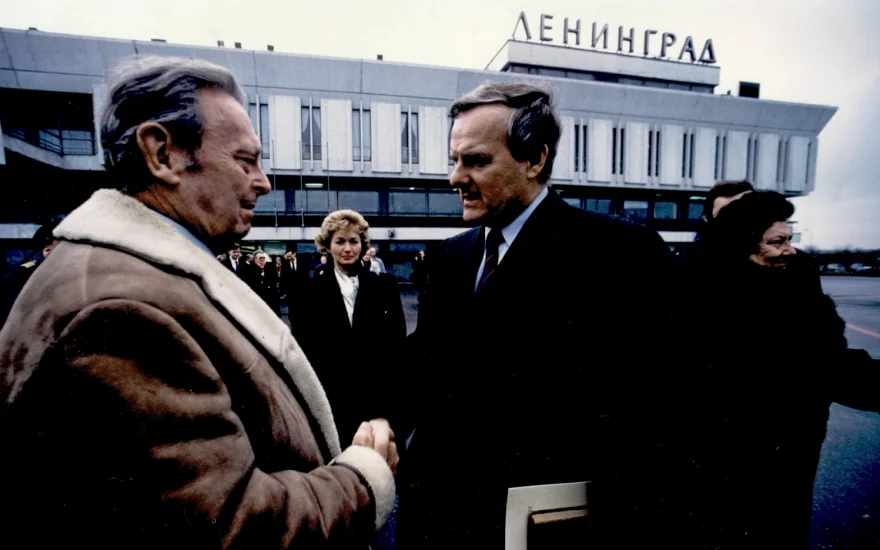
Grand Duke Vladimir Kirillovich died in April 1992 - and bequeathed to bury himself in the northern capital. The city authorities (in the person of Vladimir Putin) went to meet his last desire. Maria Vladimirovna Romanova, daughter of Vladimir Kirillovich, met Vladimir Putin exactly then, in 1992. She recalled : "We are very grateful to him for his help on those mournful days when we arrived, accompanying the coffin of my father, Grand Duke Vladimir Kirillovich."
The Romanov clan in Russia is represented by two competing organizations: the Imperial House of the Romanovs and the association of members of the Romanov House.
Despite mutual claims and squabbles reminiscent of personnel from the film “Crown of the Russian Empire”, both Romanov organizations maintain warm relations with the political elite of Russia.
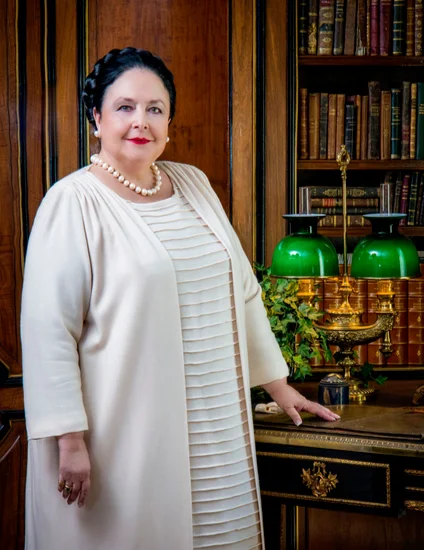
Since 1992, the Imperial House of the Romanovs is headed by the Grand Duchess Maria Vladimirovna, daughter of Vladimir Kirillovich. At one time, she filed claims for the rehabilitation of the royal family, visited Crimea together with her son George Mikhailovich and was engaged in charity in Russia. Her son Georgy Mikhailovich solemnly married his bride in the Isaacievsky Cathedral in 2021 ( with the support of the “Orthodox businessman” Konstantin Malofeev, the owner of “Constantinople” and one of the beneficiaries of war . - Ed. ).
A competing organization, the unification of members of the Romanov House, for a long time was headed by two brothers - Dmitry and Nikolai Romanovichi. They were one of the first to come to Russia after the collapse of the USSR, participated in the ceremony of reburial of the remains of the royal family in 1998. After 2000, Dmitry and Nikolai Romanovs did a lot to give the Russian regime the appearance of “communication with the historical past”.
Plot I. Empress Maria Fedorovna. Chechen separatists, family tradition and "just business"
Maria Fedorovna, before marriage, the Danish Princess Dagmar, lived a very long and dramatic life. She survived her husband, Emperor Alexander III, was under the arrest and threat of reprisals in 1918. In the same year, she left Russia forever, not yet knowing about the murder of both her sons - Mikhail and Nikolai - together with the whole family. Maria Fedorovna died in Denmark in 1928 and was buried in the royal tomb in Roskill as a Danish princess and the Dowager Russian Empress. There her remains were until the beginning of the 2000s.
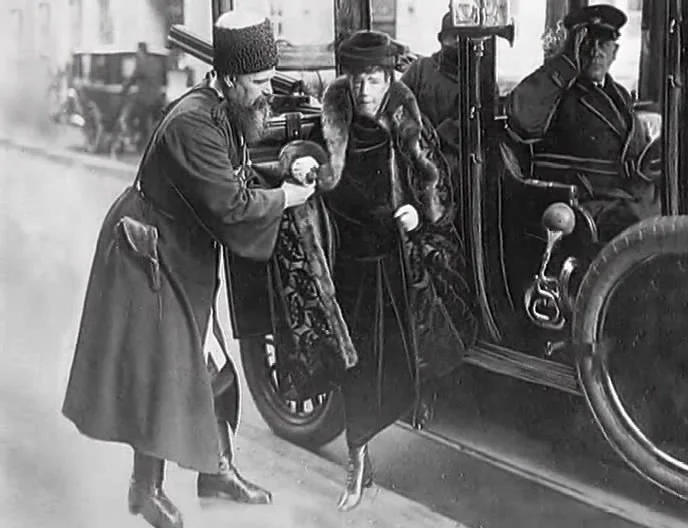
The issue of moving the remains of Maria Fedorovna to Russia arose in 2001 seriously. Then the head of the association of members of the Romanov House, Prince Nikolai Romanovich, turned to the governor of St. Petersburg Vladimir Yakovlev with a request for assistance in an important matter. Yakovlev discussed this issue with the president, and Vladimir Putin expressed support for the initiative of reburial.
In March 2002, preliminary consent to reburial by Queen Denmark Margret II was already obtained. In addition, the royal persons of Europe and the Patriarch of Moscow and All Rus' Alexy II planned to participate in the ceremony. True, the Ambassador of Denmark to Russia Lars Vissing noted that Maria Fedorovna did not leave a will about where she wants to be buried.
According to the ambassador, Denmark considers this issue an internal affair of the Romanov family.
Since the request of the Romanov brothers was previously voiced, in August 2002 Vladimir Putin wrote an appeal addressed to Queen Denmark Margret II with a request to consider the possibility of returning the ashes of Maria Fedorovna to Russia. In addition, the queen herself planned to come to St. Petersburg in June of the following, 2003. By this time, the Russian side hoped to solve the main issues related to reburial. An interdepartmental commission was created under the leadership of the Deputy Prime Minister of the Russian Federation Valentina Matvienko, the ceremony was planned in September 2003. However, then the case of reburial unexpectedly “got up”.
The problem was that in the fall of 2002 the first World Congress of the Chechen people was supposed to be held in Denmark. Both representatives of the peaceful opposition and the participants in armed resistance to the Russian troops were going to take part in it. In particular, Ahmed Zakaev, whom the Russian state accused of involvement in preparation for the Dubrovka terrorist attack, was to participate in the work of the Congress. Congress was planned in Copenhagen on October 28–29, 2002. On the same day, the Danish capital intended to visit Putin, whose visit was scheduled in advance.
On October 24, the Russian Ministry of Foreign Affairs stated a decisive protest of Denia's Service in Russia. It was noted that the conduct of the Congress will have “serious consequences for both the further interaction of Russia with the Danish chairmanship of the EU and for Russian-Data relations.” The Danish authorities did not prohibit Congress, and in response Vladimir Putin canceled his trip to Denmark.
Over the next months, relations between the two countries continued to be complicated. After Denmark’s refusal to give Russia Ahmed Zakayev (the Danish side announced a lack of evidence of his involvement in the organization of terrorist attacks) in December 2002 the Russian Foreign Ministry called Denmark “the supporting point of the Chechen terrorists”.
The Ambassador of Denmark to Russia in 2005-2010 Mr. Pen Karlsen recalled the “quarrel” of the two countries as follows: “After the refusal of Denmark, Ahmed Zakayev, Relations between Denmark and Russia, worsened for three or four years. In fact, relations between our countries became cold.” He noted that relations again warmed up after the Danish queen gave the final consent to the re-surplus of the remains Maria Fedorovna in Russia, "this was the right decision, because in Russia it was perceived as a sign that we again want to become friends."
Indeed, in October 2003, a year after the “quarrel”, the Ambassador of Denmark to the Russian Federation Lars Vissing announced the consent of Queen Margret II to reburial the ashes of Maria Fedorovna. Contradicting his words about the absence of the Empress’s will, said a year earlier, Lars Vissing noted that "the desire of Maria Fedorovna was to be transferred to St. Petersburg after death and buried in the family tomb near the spouse when conditions are created for this."
Already in January 2004, the ceremony was again announced. Prince Dmitry Romanov, one of the initiators of the reburial and the “negotiator” with the Danish side, said that Denmark has positively relate to the idea of reburial of the dust of Empress Maria Fedorovna in St. Petersburg. The support of the Danish Royal House also managed to enlist thanks to the efforts of his brother Dmitry, Prince Nikolai Romanov.
In December 2005, plans for the media -enlightenment of the event appeared . The reburial was supposed to be used as a PR project to form a positive image of Russia abroad and the image of the Russian authorities within the country. To work on the project, several federal government structures were united.
According to their plan, the main idea of the future event will be the theme of the construction of the New Russia. 360 journalists from around the world were accredited to the ceremony, a special press center was opened.
True, some trouble to the organizers of the ceremony was delivered by the State Duma deputy from the Rodina party, the Legitimist monarchist Andrei Saveliev. He asked a number of inconvenient questions, including the following: “What regulatory acts or other grounds are regulated by the existence of burials in the Cathedral of the Peter and Paul Fortress and the holding of new burials in it?”
Indeed, today the Peter and Paul Cathedral is not a cemetery, but a museum, part of the Complex "State Museum of the History of St. Petersburg." Thus, the question arose, on what legal grounds on the territory of the museum can a burial, even a historical person? However, the organizers of the deputy actually ignored - too much has already been done to prepare the ceremony to interrupt it in such trifles.
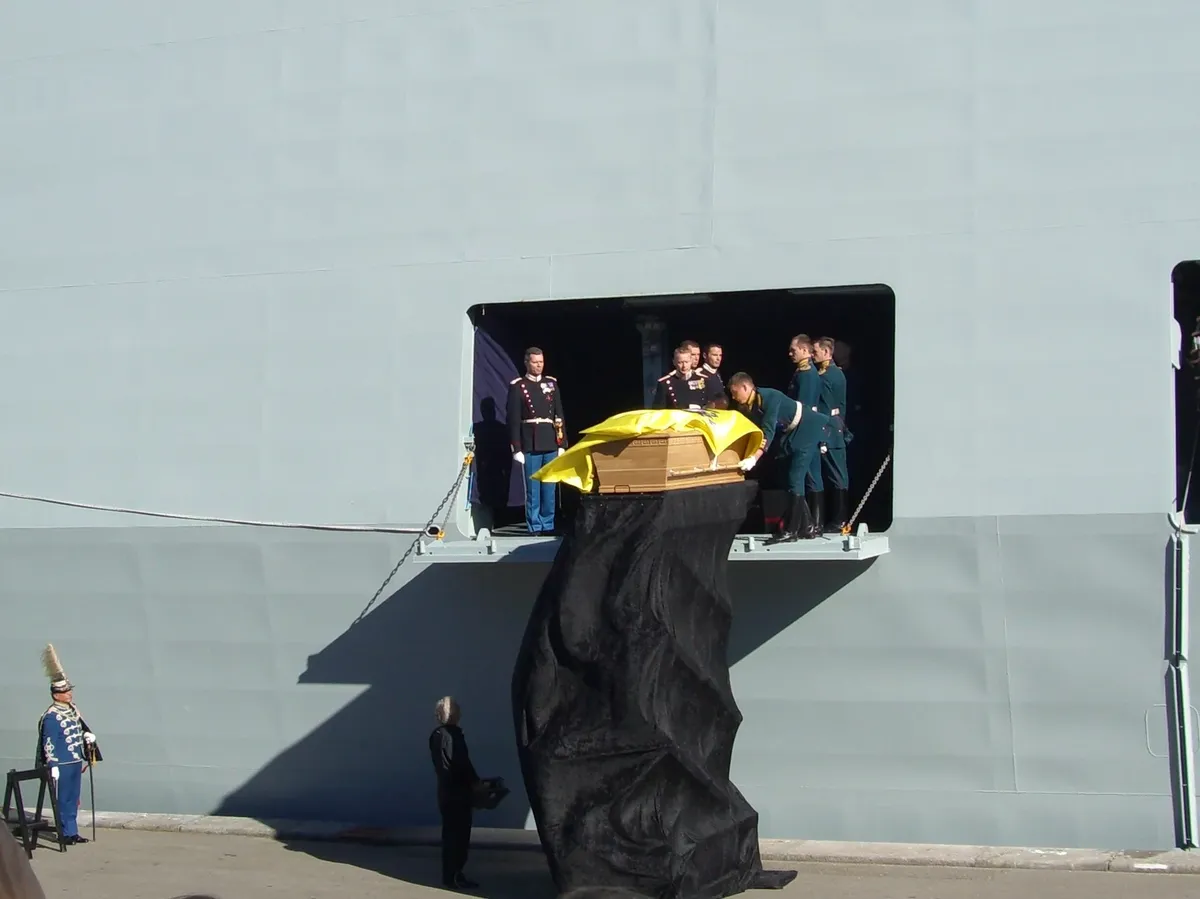
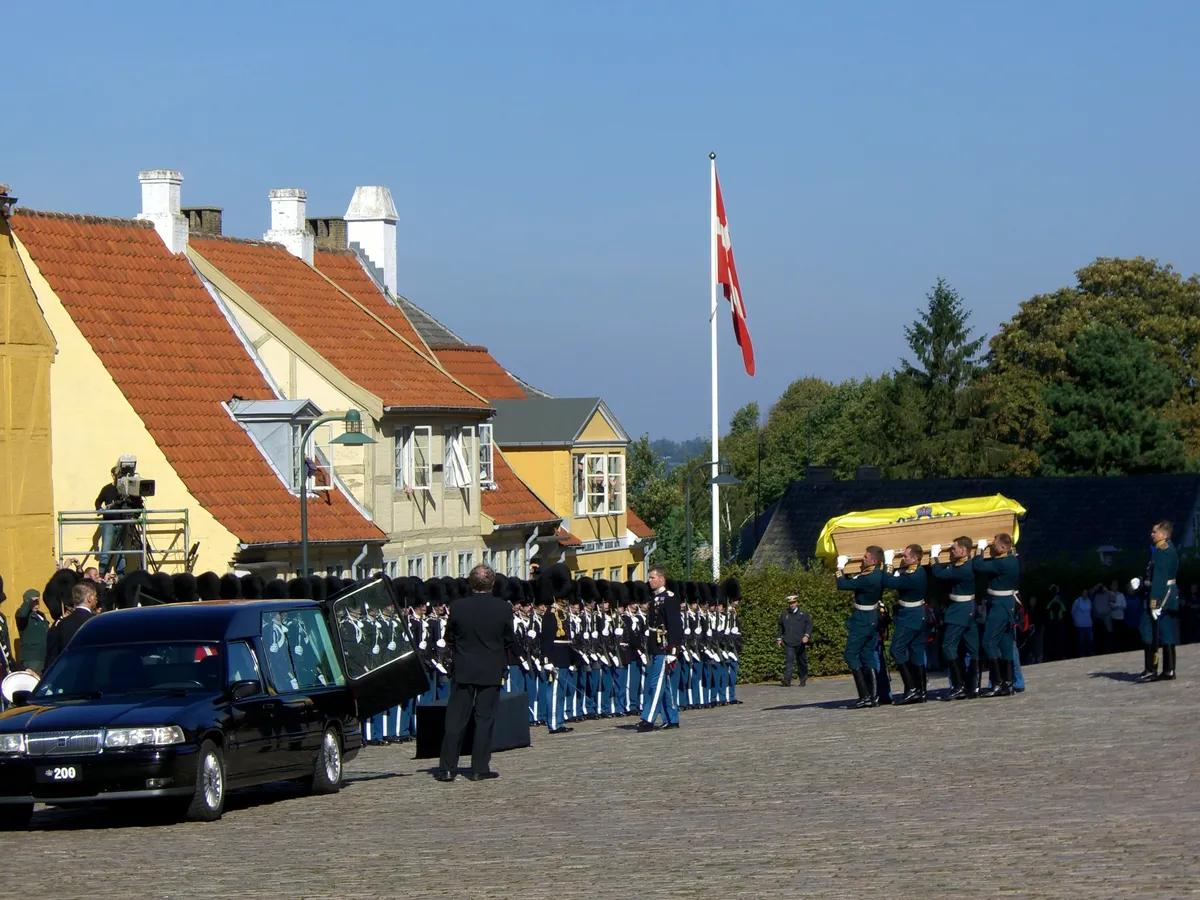
On September 26, 2006, the process that began in distant Denmark successfully ended: the coffin with the body of Empress Maria Fedorovna was solemnly delivered to Russia and buried in the Peter and Paul Cathedral of St. Petersburg. The speeches of those present by senior faces were sweet to disgrace. Valentina Matvienko said that “the ceremony has become an important act of restoring our historical memory, which should unite the nation, remind you of our great history. This is another sign that we live in another, new Russia. ” Deputy Minister of Foreign Affairs of the Russian Federation Viktor Titov even noted that "the event is able to give a good charge for the progressive development of the entire complex of Russian-house cooperation."
Indeed, the reburial of Maria Fedorovna became the foundation on which the “reboot” of Russian-Dat relations was carried out. In April 2010, President of Russia Dmitry Medvedev arrived in Copenhagen on an official visit. In the spring of 2011, Prime Minister Vladimir Putin also visited Denmark.
Soon, the Queen of Denmark Margret II arrived in Russia on a return visit. She was accompanied by 90 representatives of the Danish business. According to the Danes themselves, it was the most solid business derivation that ever accompanied the royal couple on a foreign trip. The Russian Foreign Ministry regarded the Queen's visit as a sign of the final reconciliation of Russia and Denmark. As part of the official events, Queen Margret II laid a wreath to the grave of Maria Fedorovna.
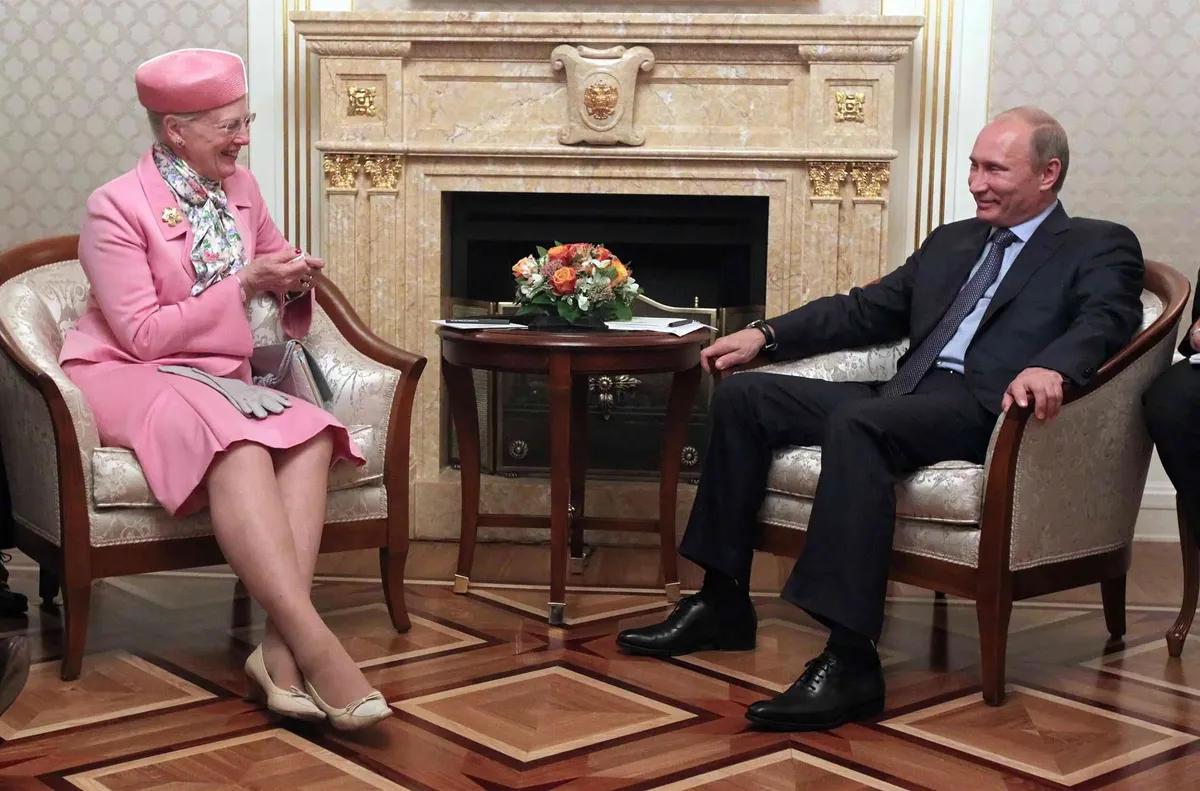
Ultimately, the body of a woman born in Denmark, who loved Denmark and who died in her, was transported to Russia not because of respect for her last will, which we will never know. Conceived as a symbolic action demonstrating the restoration of communication with the past, the transfer of the body of Maria Fedorovna actually became an exchange coin in Russian-Data negotiations. True, for the implementation of the plan, I had to go to the silence and forgery with the "last will." But, judging by the amounts of contracts between the businesses of Russia and Denmark, the game was worth the candles.
Plot II. Nikolai Nikolaevich-the youngest: Russian-French fraternity, war and "Mistrall"
Grand Duke Nikolai Nikolaevich (younger) - uncle of Nicholas the Second. In 1914-1915 he was the supreme commander of the Russian Imperial Army, then the governor in the Caucasus. After the February Revolution, he lost all posts, in 1919 he emigrated with his family to France. In recent years, he lived in Cannes, died there and was buried in the Orthodox Church of the Archangel Mikhail in 1929.
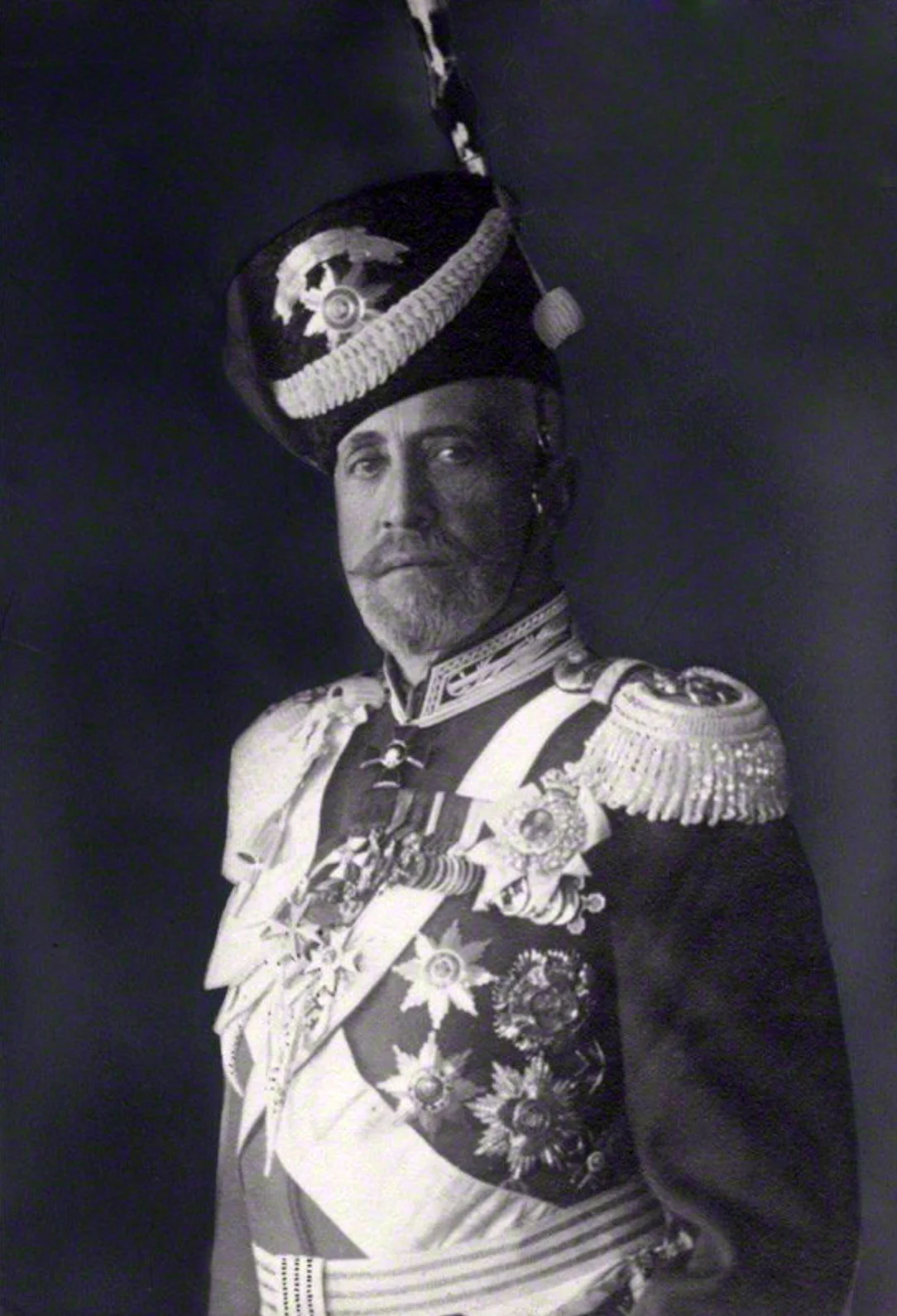
For the first time, Nikolai Nikolaevich and his wife in Russia were first about the possibility of reburialing between Nikolai Nikolaevich back in 1998. Prince Nikolai Romanovich spoke about this: “If there was a real desire in St. Petersburg and Russia to reburiate Nikolai Nikolaevich and his wife here, we, I think, our other relatives could agree to this.” Again, he touched this topic in 2005: “If the question of the reburial of Nikolai Nikolaevich (the youngest) is raised, then we can talk about this.” As you can see, neither in 1998 nor in 2005 Nikolai Romanovich did not speak with such an initiative and allowed the possibility of such an event from state power.
But in December 2013, Nikolai Romanovich, along with his brother Dmitry, themselves turned to the Russian government with a request to reburial the remains of Grand Duke Nikolai Nikolaevich and his wife, Grand Duchess Anastasia Nikolaevna in Moscow. Since in 2014 in Russia, large-scale events were to be held related to the 100th anniversary of the beginning of the First World War, the authorities reacted very seriously to the request of the brothers. State Duma speaker Sergei Naryshkin supported the initiative with reburial.
It went quickly - the experience gained during the reburial of Maria Fedorovna affected the experience. In October, Naryshkin made a report to Putin on the progress of the preparation of reburial.
On December 5, Prime Minister Dmitry Medvedev ordered the creation of an interdepartmental working group for organizing the P-Porce transfer ceremony from France and burial in Moscow.
On December 24, the Russian Ambassador to France, Alexander Orlov, said that the main legal and organizational issues related to reburial were resolved. According to him, the French side expressed their readiness to ensure the holding of the relevant ceremonies. Part of the negotiations remained “behind the scenes”: according to the ambassador, “the solution of the issue took a fairly long period.” Moreover, his discussion took place at the highest level. So, after a conversation between Putin and Hollande, it was decided to hold a ceremony in the house of the disabled in Paris.
Then Sergey Naryshkin talked about the fact that "the relatives of the Grand Duke, the family retained the tradition that his last will was the desire to find peace on his native land and be buried next to his soldiers." In other words, the wills of Nikolai Nikolayevich, as well as in the case of Maria Fedorovna, did not exist in nature. And the family, “retaining tradition”, again were brothers Nikolai and Dmitry Romanov.
It was decided to reburrow the ashes of the Grand Duke at the fraternal military cemetery in Moscow. ( During the First World War, the dead Russian soldiers and officers were buried on it, the cemetery was thoroughly reconstructed to the anniversary of the First World War in 2014 - approx. ). The justification of the choice was Moscow by the representative of the Russian Military Historical Society Vladislav Kononov. According to him, "Moscow was chosen as a place of repose due to the fact that Nikolai Nikolaevich wanted to be buried with his soldiers." ( The written will of Nikolai Nikolayevich does not exist on this issue - approx. Ed. ). Правда, выбор Москвы критиковали многие в монархическом лагере: почти вся жизнь Николая Николаевича прошла в Петрограде, и с Москвой его мало что связывало.
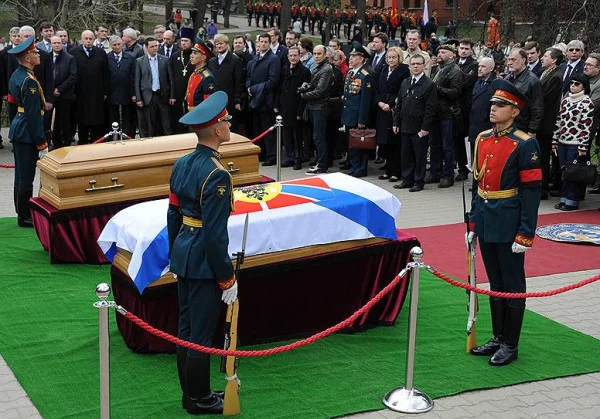
В апреле 2015 года правительственная комиссия отчиталась о проведении «целой серии международных переговоров с властями Франции, как на муниципальном, так и на правительственном уровнях». Сергей Нарышкин отметил , что перезахоронение останков Великого князя «станет особым событием и для России, и для всего Русского мира».
24 апреля тела Николая Николаевича и его супруги были выкопаны из могилы в Ницце, над ними была проведена панихида. 27 апреля они были перевезены в Дом инвалидов в Париже, где впервые прошла панихида по русскому военачальнику. Присутствовавший на церемонии епископ Вооруженных сил Франции Люк Равель выступил с короткой речью, назвав панихиду «данью памяти главнокомандующему союзной армии». В тот же день глава российской делегации Владимир Мединский возложил цветы к памятнику солдатам Русского экспедиционного корпуса в Париже и заявил французским журналистам: «Нас связывает удивительная история союзнических, братских отношений и в Первой, и во Второй мировой войне. Память мы проносим через годы, она крепко соединяет наши страны». Вечером того же дня самолет российской делегации с телами Николая Николаевича и его супруги отправился в Москву.
Завершилось всё торжественной церемонией 30 апреля 2015 года в Москве. Присутствовавший на мероприятии Сергей Нарышкин поблагодарил власти Французской Республики за содействие в возвращении праха. Позднее исполнительный директор фонда «История Отечества» Константин Могилевский рассказывал , что захоронению предшествовала почти двухлетняя подготовка. Православная церковь в Каннах, в которой были похоронены Николай Николаевич с супругой, относилась не к Московской, а к Константинопольской патриархии.
Поэтому организаторам пришлось провести «серьезную дипломатическую операцию», чтобы «желание» Великого князя «похоронить его рядом со своими солдатами» реализовалось.
Что ни говори, а церемония была проведена помпезно и с размахом. Учитывая осложнение отношений между Россией и Францией на фоне аннексии Крыма и войны на Донбассе, подобные мероприятия несколько сглаживали «шероховатости» в партнерстве двух стран. Уже с сентября 2014 года тянулась история с отказом Франции передавать России два вертолетоносца «Мистраль» из-за агрессии против Украины. Так, в день вскрытия могилы Николая Николаевича в Ницце, 24 апреля 2015 года, президент Франции Франсуа Олланд заявил , что готов вернуть России аванс из-за намерения Франции разорвать контракт в одностороннем порядке.
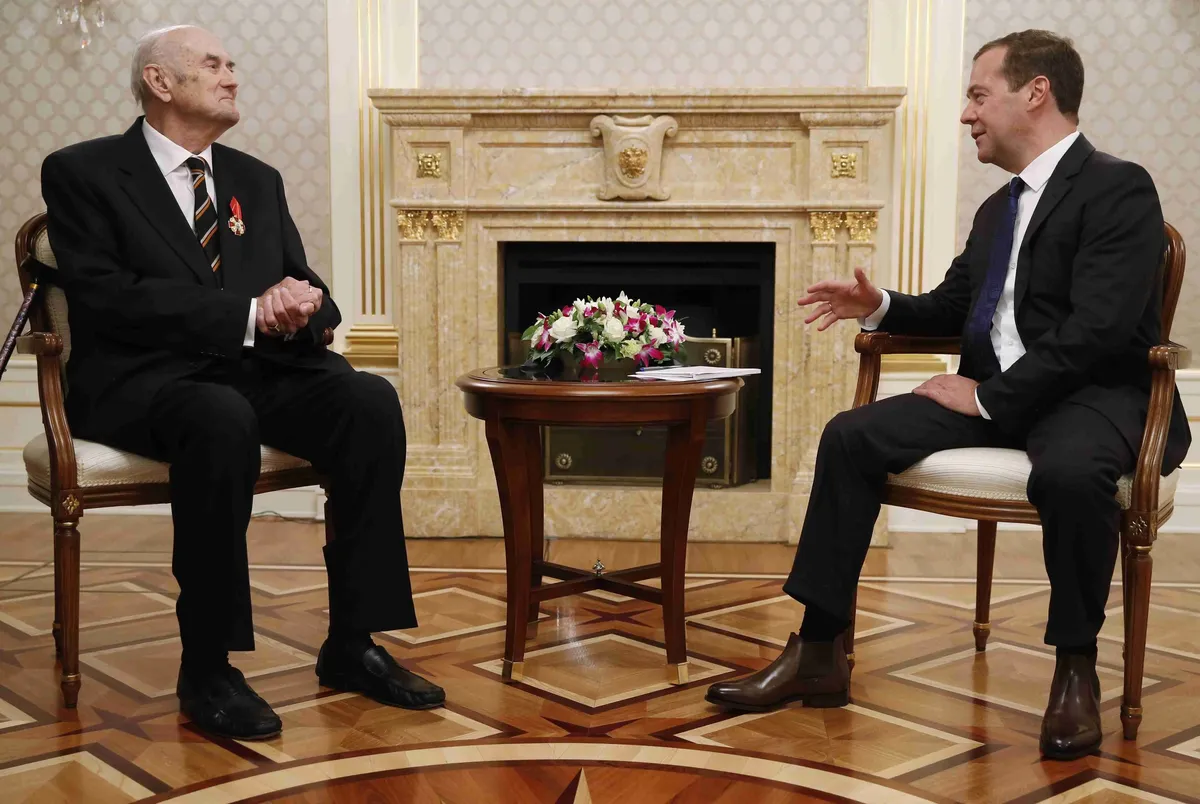
Оба брата Романовых, Николай и Дмитрий, поддержали присоединение Крыма к Российской Федерации. Старший из братьев, Николай Романов, скончался в сентябре 2014 года. Младший, князь Дмитрий Романов, посетил Крым с супругой в августе 2015 года. Год спустя указом президента он был награжден орденом Александра Невского. Скончался в декабре 2016 года в возрасте 90 лет.
***
В современной России так и не произошло масштабной оценки событий XX века — революций, Гражданской войны, двух мировых войн и страшных репрессий. Владимир Путин не пытался провести такую оценку — он лишь брал из истории то, что могло бы принести ему пользу. А остальные «сложные вопросы», будь то реабилитация жертв репрессий или реституция, просто игнорировал.
В чем, например, циничность истории «перезахоронения» Марии Фёдоровны? Ее сыновей, невестку и внуков жестоко убили люди, чьим именем в России до сих пор названы улицы, города, площади и станции метро.
В этом цинизме и состоит символическая политика путинского времени — когда гроб с телом давно умершего монарха и бравурный марш заменяют разговор о жертвах репрессий и преодоление травм страшного XX века.
Автор — Докторант Боннского университета, отделение истории Восточной Европы. Стипендиат Фонда Герды Хенкель по программе «Scholars at Risk» .